Caudex Plants Light Management Guide: Preventing Etiolation and Leaf Scorch
Tips for light management of caudex plants. This guide explains proper light intensity to prevent etiolation, causes and solutions for leaf scorch, how to use LED grow lights for indoor cultivation, and seasonal adjustments to daylight hours.
Key Takeaways
Tips for light management of caudex plants. This guide explains proper light intensity to prevent etiolation, causes and solutions for leaf scorch, how to use LED grow lights for indoor cultivation, and seasonal adjustments to daylight hours.
Related Species
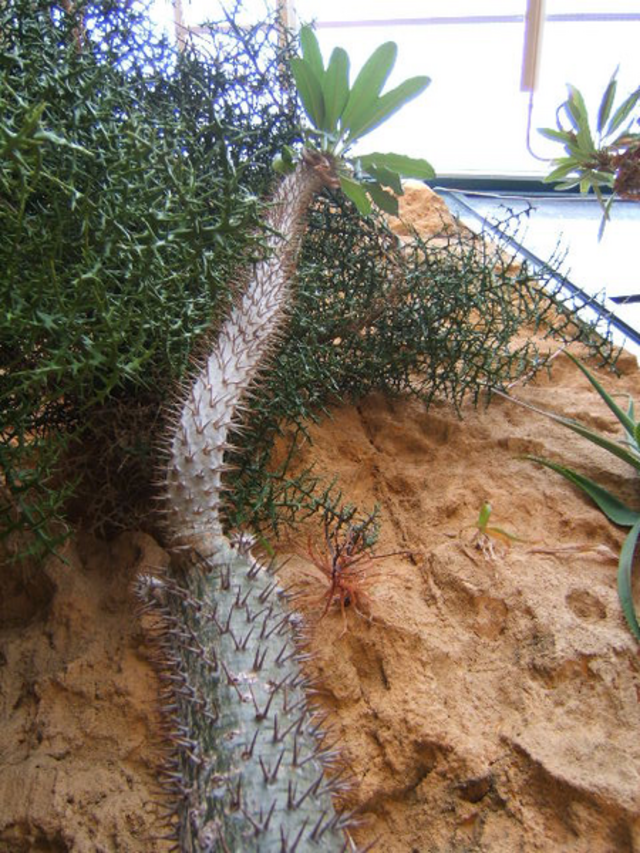
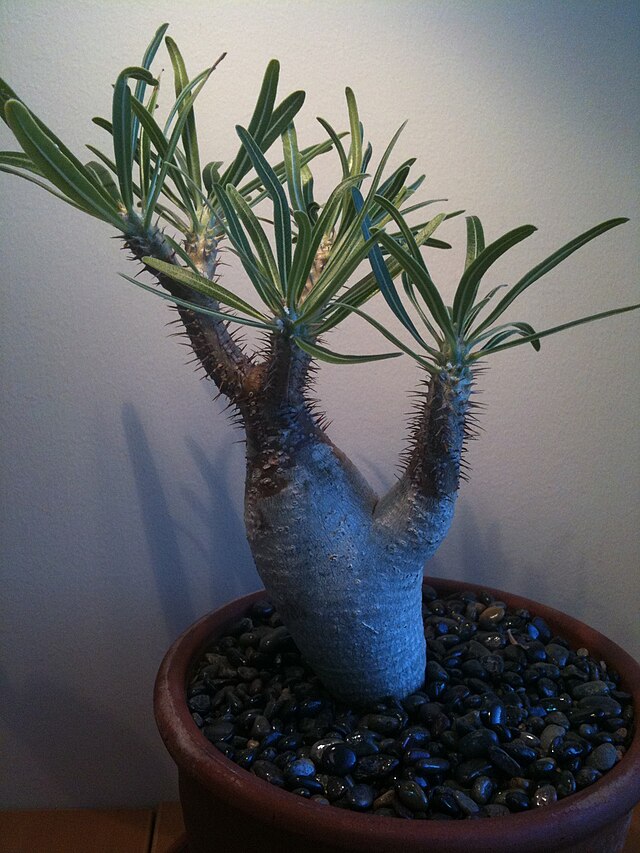
The charm of caudex plants lies in the sculptural beauty of their thick trunks and roots. However, light management is extremely important to maintain that beautiful form. Insufficient light causes internodes to elongate, resulting in "etiolation," while excessive light causes "leaf scorch," browning and damaging the leaves.
Most adeniums, pachypodiums, and other caudex plants originate from arid regions of Africa and South America. These plants have evolved to adapt to intense sunlight and drought. For example, Pachypodium gracillis develops a beautifully compact, thickened caudex only under strong light, while rare species like Adenium socotranum can maintain their characteristic form only with sufficient light intensity. Being mindful of their native habitat while adapting management to Japan's four seasons is the first step to raising healthy plants.
What Is Etiolation? Causes and Prevention
Etiolation is a phenomenon where the stem and internodes elongate excessively. As the plant grows rapidly upward in search of light, the stem becomes thin and weak, resulting in an overall spindly and weakened appearance.
Main Causes of Etiolation
- Insufficient light: The primary cause. Even at a window indoors, light intensity drops significantly compared to outdoors
- Excess nitrogen: Excessive nitrogen in fertilizer promotes overgrowth of leaves and stems
- Overwatering: Watering excessively disrupts the growth pace, making etiolation more likely
- High temperature and humidity: Etiolation is especially likely when high humidity during the rainy season combines with insufficient light
Damage Caused by Etiolation
Once a stem becomes etiolated, it cannot be reversed. Softened tissue makes the plant more vulnerable to pest damage and disease. The risk of root rot also increases, making "creating an environment that prevents etiolation" the most important factor.
Proper Light Intensity Guide: Differences Between Outdoor and Indoor Cultivation
Most caudex plants prefer strong light year-round. However, optimal light intensity varies depending on the variety and growth stage.
Outdoor Cultivation
Outdoor cultivation most closely mimics natural conditions and promotes caudex thickening and enlargement.
- Growing season (spring–fall): Ideally, provide direct sunlight for 6–8+ hours daily
- Early spring (March–April): Typically no shade cloth is needed, but adjust based on plant condition
- Midsummer (July–August): Light-loving species like Pachypodium tolerate direct sun without shade cloth. However, consider 30–50% shade cloth for certain shade-preferring caudex varieties
Indoor Cultivation
Light is typically severely insufficient indoors.
- South-facing windows are where light intensity is easiest to maximize
- Window glass filters ultraviolet light and reduces overall light intensity to roughly 1/3–1/5 of outdoor levels
- Supplemental LED grow lights are strongly recommended (discussed below)
Leaf Scorch: Causes, Prevention, and Emergency Care
Excessive light also causes problems. Leaf scorch occurs from sudden changes in light intensity or direct sunlight when the plant is in a dry state.
Conditions Prone to Leaf Scorch
- Sudden moves from indoors to outdoors: Large differences in light intensity damage leaf cells
- Just after the rainy season ends: Be especially careful when strong sunlight suddenly returns after prolonged cloud cover
- Strong light during drought: Low internal plant water makes the plant more susceptible to light damage
Prevention and Solutions
- Acclimate your plants: When changing environments, gradually increase light intensity over 1–2 weeks. The key is to increase gradually—"1 hour today, 2 hours tomorrow," and so on
- Use shade cloth: During midsummer or just after the rainy season, use 20–30% shade cloth to buffer sudden changes in light intensity
- Time your watering strategically: Avoid watering during peak sunlight hours; water in the early morning or evening instead
If Leaf Scorch Occurs
- Scorched leaves do not need to be removed immediately. Forcibly picking them off can actually damage the plant further
- First, move the plant to a shaded location and allow it to recover
- As new growth emerges, old leaves will naturally be shed
- If damage spreads throughout the plant, also check the condition of the roots
Choosing and Using LED Lights for Indoor Cultivation
LED grow lights are essential when bright light cannot be secured or during winter indoor management. High-quality models are now available at reasonable prices, expanding the possibilities for indoor caudex plant cultivation.
Key Points for Choosing LED Lights
- Select lights with PPFD (photosynthetic photon flux density) of 100–300 μmol/m²/s or higher
- Full-spectrum types (containing white, red, and blue light in balanced proportions) are effective for growth
- Use a timer (built-in or external) to keep the light on for 12–14 hours daily
Installation and Adjustment Tips
- Distance between the light and plants varies by model, but 20–50 cm is a general guideline
- If leaves lose color or internodes begin to elongate, move the light closer or switch to a higher-intensity model
- When managing multiple plants together, regularly rotate the pots to ensure even light distribution
Seasonal Light Management Calendar
Spring (March–May)
This is a crucial period as plants awaken from winter dormancy and growth resumes. Starting in April, move plants outdoors and begin in partial shade, gradually acclimating them to direct sunlight. Careful acclimation is important because sudden strong light causes leaf scorch.
Summer (June–August)
This is the most vigorous growing season for caudex plants. Providing ample direct sunlight allows the caudex (trunk and root swelling) to develop fully and form its characteristic shape. Just after the rainy season ends, watch for leaf scorch; use shade cloth or placement adjustments to avoid sudden changes.
Fall (September–November)
As temperatures and daylight hours decline, growth slows. Gradually reduce watering frequency and tighten up the plant toward dormancy. Beginning in October, prepare to shift to indoor management before minimum temperatures drop below 15°C.
Winter (December–February)
Most varieties enter dormancy. Manage them indoors in a warm, bright location, supplementing with LED light to provide minimum light levels. Limit watering to once or twice a month to prevent root rot.
Summary: Light Management Brings Out the Beauty in Caudex Plants
The key to caudex plant light management is controlling two risks: etiolation and leaf scorch.
- Light too dim → etiolation, weakened growth, reduced pest and disease resistance
- Light too intense or changing suddenly → leaf scorch, tissue damage
To avoid both extremes, the key is to "observe the season and plant condition, then adjust the environment gradually." Drawing on their native habitats while flexibly adapting to Japan's climate is the secret to enjoying beautiful caudex forms long-term.
Beginners should start with outdoor placement in a bright, south-facing location. As you gain experience, challenge yourself with seasonal fine-tuning. With consistent, proper light management, caudex plants will increasingly showcase their unique sculptural beauty.