Winter Caudex Plant Care | Watering and Placement During Dormancy
A guide to watering frequency, placement, temperature management, and leaf-drop care during the winter dormancy period of caudex plants, explained by variety.
Key Takeaways
A guide to watering frequency, placement, temperature management, and leaf-drop care during the winter dormancy period of caudex plants, explained by variety.
Related Species
Many caudex plants stop growing in winter and enter a dormant period. Management during this time significantly affects growth from spring onward, so it is important to respond with proper knowledge. This guide explains management methods by variety and key points for winter survival.
Understanding Caudex Plant Dormancy
Most caudex plants have the characteristic of entering dormancy to coincide with the dry season in their native habitats. In Japan, autumn through winter corresponds to this dry season, and the drop in temperature and shortening of daylight hours trigger dormancy.
Signs of dormancy
- Leaves turn yellow and fall (the clearest sign)
- Growth of new shoots stops
- The plant stops absorbing water (soil remains wet)
- The plant appears generally lifeless
The importance of dormancy Dormancy is a natural cycle for plants and an essential process for growth and flowering in the following year. It is possible to manage without inducing dormancy by maintaining a warm and bright environment year-round, but this places stress on the plant and can weaken it over the long term.
Winter Care by Variety
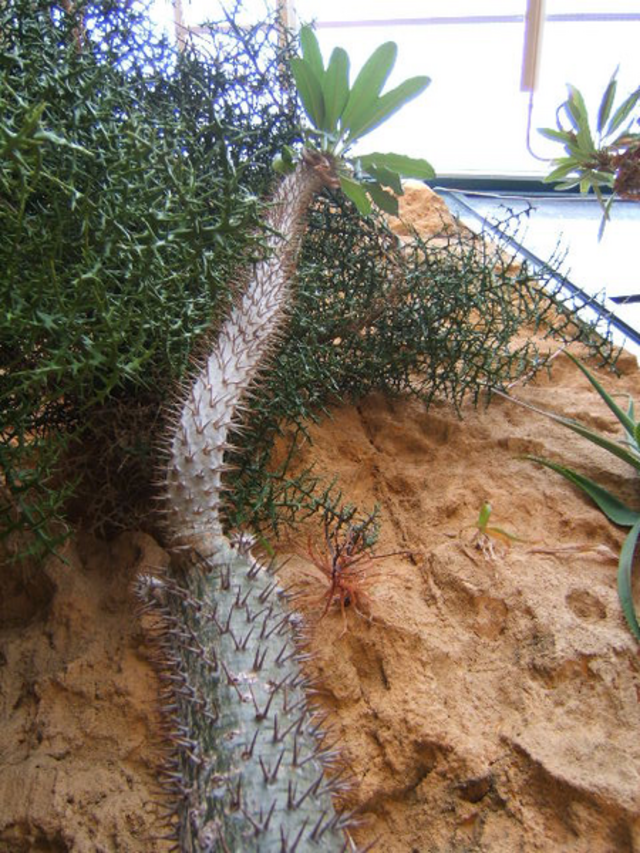
Pachypodium genus (gracilentum, brevicaule, rosulatum, etc.)
- Once leaves fall, reduce watering to near-zero. Mist lightly with a spray bottle approximately once per month on warm days
- Minimum temperature: maintain 10℃ or above
- Light: provide as much sunlight as possible even in winter. A south-facing window is ideal
- Complete leaf drop is normal. If the stem shrinks excessively, give a small amount of water
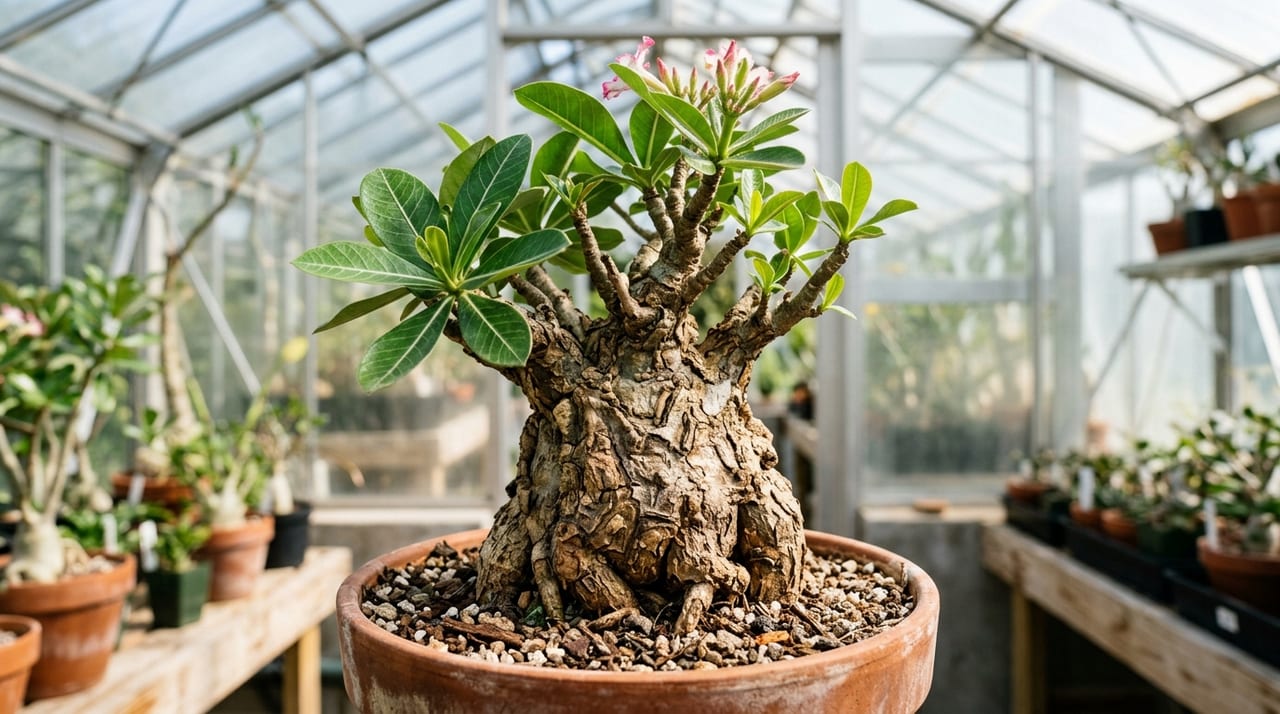
Adenium genus
- Manage similarly to Pachypodium. Almost no watering once leaves fall
- Minimum temperature: 10–15℃ (slightly warmer than Pachypodium)
- If the stem becomes too soft, give a small amount of water
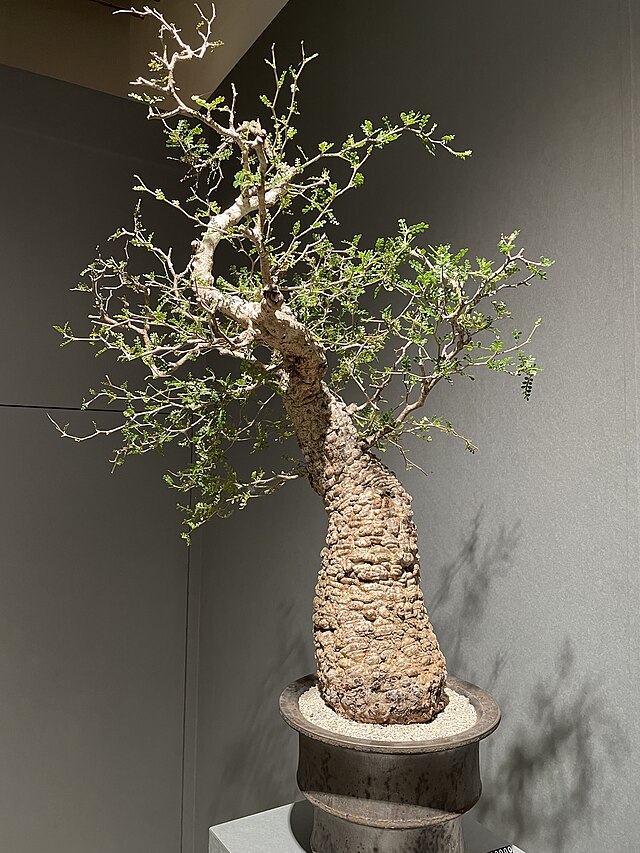
Operculicarya pachypus
- Deciduous; sheds leaves completely in winter
- Stop watering. Mist lightly with a spray bottle approximately once per month
- Minimum temperature: 15℃ or above is safest
- Temperature management should be careful due to the high cost of this species
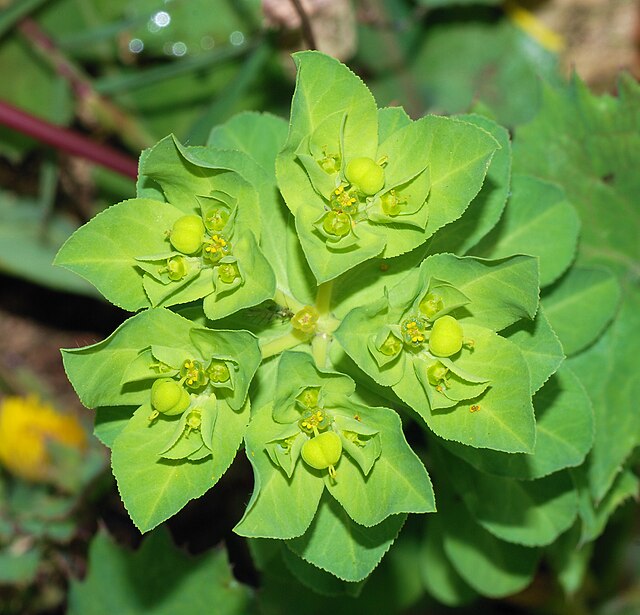
Euphorbia genus (obesa, horridus, etc.)
- Some evergreen varieties do not enter complete dormancy
- Reduce watering to approximately 1–2 times per month (avoid stopping water completely)
- Minimum temperature: 10℃ or above
- Ensure light exposure even in winter
Dioscorea genus (Dioscorea elephantipes, etc.)
- Note: Dioscorea elephantipes has both summer-type and winter-type forms
- Winter-type (African D. elephantipes) continues normal management since winter is its growing season
- Summer-type should be kept dry after leaf drop
Watering Details
Basics of minimal watering Stop watering does not mean zero water; it is recommended to water lightly once per month on a warm, sunny morning, just enough to lightly dampen the soil. Complete water stoppage can cause root death and may delay spring growth or cause poor rooting.
Amount of water You do not need water to drain from the pot's drainage hole. It is sufficient to dampen the soil surface lightly, such as with a spray bottle to wet the top layer.
Care after watering After watering, place the plant in a well-ventilated location and allow the soil to dry quickly. Allowing the soil to remain wet increases the risk of root rot.
Placement
Indoors by a window A south-facing window is most suitable. However, at night the cold air from the window can cause a rapid temperature drop, so move the plant away from the window before bed or insulate it with cardboard or foam panels.
Use of plant LED grow lights If the light by the window is insufficient, supplement with a plant LED grow light. Light is important for plant maintenance even during dormancy. Aim for approximately 4–6 hours of light per day.
Use of heat mats A heat mat under the pot is effective for maintaining root temperature. It is particularly useful for species like Operculicarya pachypus that prefer warmth.
Awakening from Dormancy
When spring arrives and the minimum temperature consistently exceeds 15℃, begin post-dormancy care.
Resuming watering Do not give a large amount of water all at once; increase gradually from a small amount. Begin by wetting about one-third of the soil, and transition to normal watering once new shoots begin to emerge.
Increasing light Do not suddenly expose the plant to strong direct sunlight after weeks of weak winter light, as this can cause leaf burn. Gradually increase light intensity.
Practical Checklist for Successful Winter Survival
Use the following checklist to ensure successful winter survival.
October preparation
- Secure an indoor location for cold-sensitive varieties
- Prepare frost protection materials (non-woven fabric, mulch)
- Gradually reduce watering frequency
- Apply fertilizer for the last time (do not fertilize again until spring)
November–December care
- Place indoor plants in a well-lit window
- Choose a location away from direct heater air
- Reduce watering to approximately 1–2 times per month
- For outdoor plants, watch for frost forecasts and protect as needed
January–February care
- The coldest period. Ensure room temperature does not drop below 5℃
- Keep watering to a minimum. Maintain a dry state
- Indoor heating dries the air, so mist foliage to add humidity
- Plan for repotting in preparation for spring growth resumption
The most important thing for winter survival is to avoid overprotecting. Watering too much in a room that is too warm will prevent dormancy, resulting in weak, leggy growth. In winter, manage plants with three elements in mind: dryness, coolness, and light.
Common Beginner Mistakes and How to Avoid Them
Mistake 1: Stopping water based on the calendar If you stop watering simply because November has arrived, you risk damaging the roots of plants that are still active. The signal to reduce watering is not the calendar but yellowing and leaf drop, and the minimum temperature. Once nighttime temperatures drop below 15℃ and leaves begin to fall, gradually reduce watering.
Mistake 2: Placing the plant in a heated room and partially waking it from dormancy An environment where daytime is 25℃ and nighttime is 10℃ exhausts the plant because it is neither dormant nor growing. Either keep conditions cool and stable for dormancy, or provide adequate heating and light for growth—committing to one approach is the correct strategy.
Mistake 3: Watering heavily when the plant wakes in spring Giving a large amount of water all at once to roots that have been dry for months can exceed the plant's water-uptake capacity and cause rot. Confirm that new shoots are emerging, then return to watering gradually, starting small and increasing every few days.
Find Caudex Plants Easy to Maintain on GrowerDirect
On GrowerDirect, you can consult with specialized caudex plant growers, including advice on winter survival. Beginners can be recommended varieties that are relatively easy to overwinter, so you can start your caudex plant journey with confidence.