A Complete Guide to Overwintering Caudex Plants | Managing the Dormant Season
A guide to overwintering caudex plants. We cover dormancy watering frequency, minimum temperature management, timing for bringing plants indoors, identifying normal leaf drop, and other key winter care tips.
Key Takeaways
A guide to overwintering caudex plants. We cover dormancy watering frequency, minimum temperature management, timing for bringing plants indoors, identifying normal leaf drop, and other key winter care tips.
Related Species
Why Overwintering Caudex Plants Is Critical
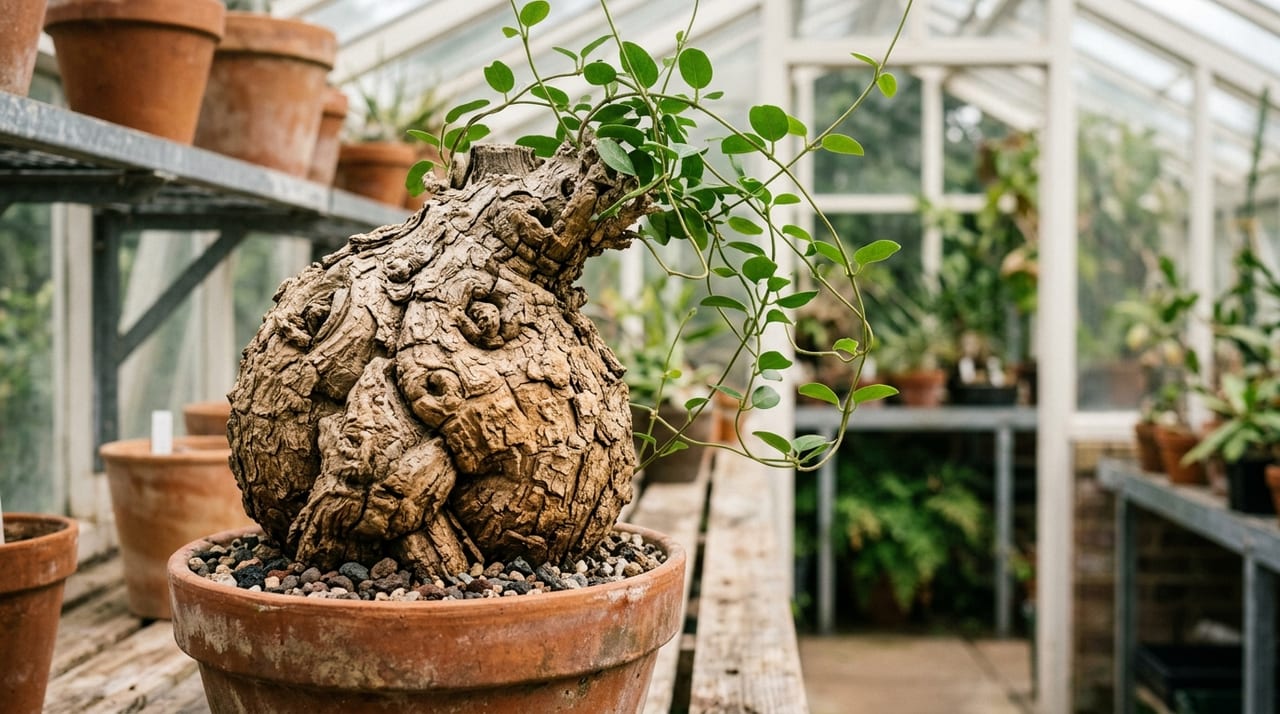
Most caudex plants originate from arid regions of Africa, Madagascar, and Central/South America, where they have adapted to the dry season by storing enormous quantities of water and nutrients in their roots and stems. This "caudex" is their life-support system—an evolutionary adaptation that allows them to survive harsh seasons.
However, Japan's winter differs drastically from their native habitat. The combination of low temperatures, short day length, and high humidity creates a triple threat that many consider the most challenging season in caudex plant cultivation. The three main problems are:
- Physiological damage from low temperatures: Most species require a minimum of 5°C (ideally 10°C or higher). Below 5°C, cells begin to die, potentially causing irreversible damage
- Frost damage and death: Direct frost exposure can kill not just the leaves but the stem and caudex itself
- Root rot from excess moisture during dormancy: When plants stop absorbing water during dormancy but the soil remains wet, root rot can spread rapidly
Conversely, if you manage these three risks properly, caudex plants can successfully overwinter in Japan.
Timing to Bring Plants Indoors: By Type
Caudex plants are broadly divided into "summer-dormant" and "winter-dormant" types, each requiring completely different seasonal management. Identifying which type you are growing is the first step to successful overwintering.
Summer-Dormant Types (Pachypodium, Adenium, etc.)
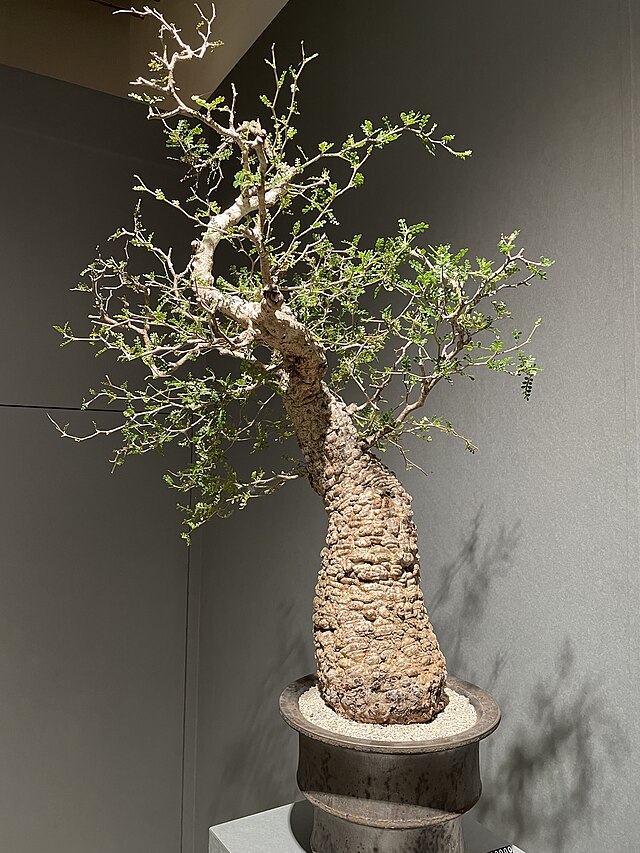
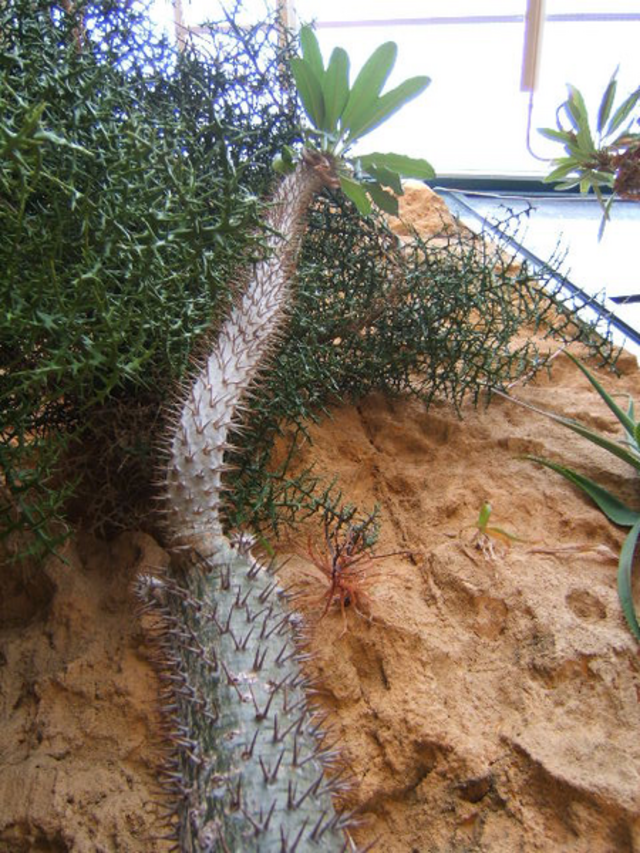
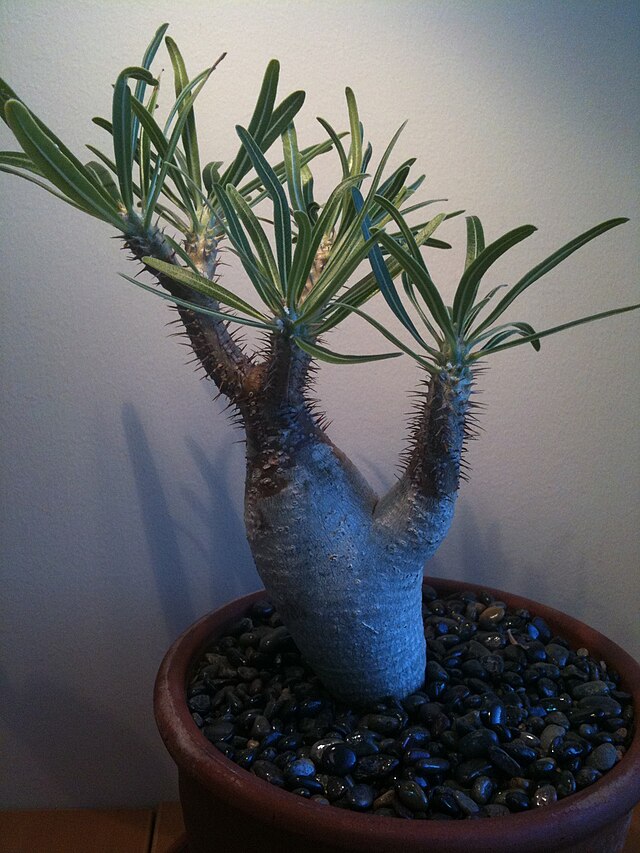
Summer-dormant types grow actively in spring through autumn and rest in winter. Most caudex plants popular in Japan belong to this category, including Pachypodium gracilius and Operculicarya pachypus.
- Timing to bring indoors: Before the minimum temperature drops below 15°C. Generally, early to mid-October is ideal—when you first notice chilly mornings and evenings, it's time to start preparing
- Best location: A well-lit indoor space is essential. A south-facing windowsill is ideal; even lace-curtain-filtered light will suffice as long as light levels are maintained
- Minimum temperature maintenance: Keep it above 10°C, ideally 15°C or higher. If placing in a heated room, watch for excessive drying
Winter-Dormant Types (Cape Bulbs, certain Euphorbias, etc.)
Winter-dormant types do the opposite—winter is their active growing season. Cape bulbs from South Africa, such as Lachenalia and Ornithogalum, are prime examples.
- Active management in winter: Resume watering once temperatures drop, and provide good light to support growth
- Dormancy and shade in summer: During summer dormancy, withhold water and keep plants in a cool location away from direct sunlight
Since management methods differ entirely by type, always confirm whether your plants are summer- or winter-dormant before purchasing.
Watering and Soil Management During Dormancy
The most common overwintering failure is overwatering, which causes root rot. Dormant caudex plants have essentially stopped absorbing water, so continuing to water on a normal schedule leaves soil perpetually damp and roots rot quickly.
Fundamental Watering Rules
- After leaf drop, reduce watering to once monthly or suspend entirely: Some species are best left completely dry; others benefit from minimal monthly water. Adjust based on your specific plant
- Wait 1–2 weeks after soil is completely dry before watering again: The surface may appear dry while the interior remains moist. Lifting the pot to feel its weight is an effective check
- Water on sunny mornings only: Afternoon watering, or watering on cloudy or rainy days, slows evaporation and increases root rot risk when combined with cold nighttime temperatures
- Do not water when temperatures are 10°C or below: Cold temperatures reduce uptake capacity, making watering in cold weather strictly off-limits
Choosing the Right Growing Medium
For successful overwintering, fast-draining soil is essential. Start with commercial succulent or cactus soil as a base, then mix in 20–30% pumice, perlite, or akadama to increase drainage. The ideal mix flows out of drainage holes almost immediately after watering.
Leaf Drop, Plant Condition Checks, and Recognizing Problems
Summer-dormant caudex plants like Pachypodium shed all their leaves in winter and enter complete dormancy. First-time growers often panic, thinking the plant is dying—but this is normal physiology. However, abnormal leaf drop can signal serious problems, so learning to distinguish between the two is critical.
Signs of Normal Leaf Drop
- Leaves gradually turn yellow as temperatures fall, then drop naturally
- The stem and caudex remain firm and turgid (not mushy)
- After leaf drop, the stem remains green to gray
Warning Signs of Abnormal Leaf Drop
- Leaves drop suddenly in large quantities or turn black before falling
- The stem and caudex feel soft; pressing yields an indent (possible root rot)
- Dark discoloration appears on the stem (active rot progression)
What to Do If Root Rot Is Suspected
If a pot feels surprisingly light when lifted, the plant is too dry; if it feels heavier than expected, overwatering is likely. If root rot is suspected, carefully remove the plant, inspect the roots, trim away rotted sections, allow to dry, and repot. Early detection dramatically improves recovery odds.
Heating and Grow Lights: Increasing Winter Survival Odds
Even in a bright indoor space, Japan's winter offers short days and window light that may be only 1/10th of summer levels. For added security, consider investing in heating and supplemental lighting.
- Heat mats (seedling heat pads): Warming roots from below maintains more active roots than ambient temperature alone. Especially effective at night when room temperature drops
- Plant grow lights (LED grow lights): A standard solution for poor winter light. Running 12–14 hours daily prevents stretching and supports dormant-season survival
- Simple greenhouses or row covers: Ideal for large collections. Compact versions are readily available online and take minimal space while managing dozens of pots
Balance cost and effort against your collection size and living space to choose the right setup.
Summary: Mastering Overwintering Through Knowledge and Healthy Stock
Overwintering caudex plants is not difficult. Here are the key points:
- Bring indoors early: Use 15°C minimum as your target. Avoiding frost exposure is the top priority
- Drastically reduce watering: Suspend or water only monthly. "Err on the dry side" is the rule
- Maintain adequate light: Poor light causes stretching and weakens the plant
- Leaf drop is normal; soft stems are abnormal: Judge plant health by touch, not appearance
- Detect and address root rot early: When in doubt, remove the plant and check the roots
One more critical factor in successful overwintering is selecting quality stock. On GrowerDirect, you can purchase caudex plants directly from growers with proven winter survival records. Plants already acclimated to Japan's climate have vastly higher overwintering success rates in their first year, and you can ask growers directly about care. With options ranging from seedlings to field-collected specimens to cuttings, you can choose exactly what suits your needs. Give it a try!