Orchid Keiki (High Bud) Management & Utilization Guide—How to Identify Development, Cultivate, and Establish Independent Plantlets
A comprehensive guide to the nature of orchid "keiki (high buds)" that develop from flower stems and nodes, their causes of development, cultivation management, how to separate them from the parent plant, and the process of establishing independent plantlets. We also introduce variety-specific approaches including Phalaenopsis and Dendrobium.
Key Takeaways
A comprehensive guide to the nature of orchid "keiki (high buds)" that develop from flower stems and nodes, their causes of development, cultivation management, how to separate them from the parent plant, and the process of establishing independent plantlets. We also introduce variety-specific approaches including Phalaenopsis and Dendrobium.
Related Species
Keiki (High Bud)—What Is It? Orchids' Remarkable Reproductive Strategy
"Keiki" refers to small plantlets that develop from the flower stems or nodes of orchids. The word derives from Hawaiian meaning "baby," and is widely used in the orchid cultivation world. In Japanese, it is also called "high bud" (takame).
Keiki is a form of asexual reproduction in orchids, producing genetically identical clones of the parent plant. Small leaves unfold from the nodes of flower stems or along the stem, eventually developing their own roots and growing. In nature, keiki separates from the parent plant and attaches to new locations, making them an important reproductive strategy for increasing the number of individuals.
Keiki development occurs in limited varieties, with the most common being Phalaenopsis orchids and Dendrobium. They occasionally develop in Epidendrum and Vanda species as well.
When beginners first discover a keiki, they sometimes wonder, "What is this? Is it a disease?" but there's no need to worry. Keiki is a sign that your orchid is showing vitality, and with proper care, it's an opportunity to obtain a new plant for free.
Causes and Conditions for Keiki Development
Keiki development follows several patterns. By understanding the causes, you can intentionally induce keiki production or, conversely, prevent their development.
Natural Development from Flower Stem Nodes (Common in Phalaenopsis)
After Phalaenopsis blooms have faded, leaving the flower stem intact can cause keiki to develop from the nodes. This occurs because the energy remaining in the flower stem is directed toward keiki growth rather than flower bud formation.
Development is more likely under the following conditions:
- Warm temperatures: Environments maintaining 25°C or higher. Development rates increase especially during summer.
- Flower stem cutting position: When the flower stem is cut leaving 2-3 nodes rather than removing it entirely.
- Plant stress: Cases where root rot or plant decline trigger keiki production as a survival instinct to preserve the species.
Development from Stem Nodes (Common in Dendrobium)
In Dendrobium nobile types, keiki frequently develop from the stem (pseudobulb) nodes. Instead of flower buds, which normally form at these nodes, leaves and roots appear on keiki.
In most cases, Dendrobium keiki development results from insufficient winter cold treatment. Dendrobium nobile types require exposure to temperatures below 10°C for a certain period in autumn and winter to differentiate flower buds. When this cold period is insufficient, what should become flower buds develops into keiki instead.
- Overwintering indoors in heated spaces: Insufficient cold stimulus.
- Continued fertilizing after autumn: Continued nutritive growth prevents flower bud differentiation.
- Excessive watering: Insufficient winter drying stress.
Ethylene and Hormone Balance
Plant hormone balance also affects keiki development. Keiki tends to develop more readily in areas with high cytokinin (cell division-promoting hormone) concentration. The keiki paste discussed later utilizes this mechanism.
Intentionally Inducing Keiki Development
Using a product called "keiki paste" containing cytokinin plant hormones allows you to intentionally induce keiki. This technique is effective when you want to propagate your favorite orchids.
How to Use Keiki Paste
- Select the flower stem: Choose a node on a Phalaenopsis flower stem after flowering, where the stem is still green and living.
- Remove the node sheath: Gently peel away the thin bract covering the node using a sterilized pair of tweezers. A small dormant bud will become visible underneath.
- Apply the paste: Using a toothpick, apply a very thin coat of keiki paste to the exposed dormant bud. Applying too much can result in abnormal growth—approximately half a rice grain's worth is sufficient.
- Management environment: Place in a warm location maintaining 25–28°C with bright indirect light.
- Monitor progress: The bud will begin to swell within 2–4 weeks, and small leaves will unfold within 6–8 weeks.
Precautions
- Limit keiki paste application to 1-2 locations per flower stem. Applying to too many sites spreads the parent plant's energy too thin, resulting in underdeveloped keiki.
- Do not use on weakened plants. Keiki growth requires energy from the parent plant, so attempting to force keiki production on an already-declining plant will weaken it further.
- Keiki paste is rarely stocked in domestic garden centers and nurseries, so online retailers are the main source.
Methods Without Keiki Paste
To increase keiki development rates without chemical agents, focus on the following environmental conditions:
- Leave the flower stem intact after blooming, retaining 3-4 nodes rather than cutting them all off.
- Maintain a warm environment at 25°C or above (summer is ideal).
- Keep humidity at 60-70%.
- Lightly cut the tip of the flower stem to remove the growth point, promoting lateral bud activation.
Success rates are not as high as with keiki paste, but this is a convenient, natural method to try.
Keiki Cultivation Management: Growing While Attached to the Parent Plant
Once keiki develop, it is important not to separate them immediately but to allow them to grow adequately while still attached to the parent plant. If separated while immature, they lack the strength to survive independently and will wither.
Identifying Growth Stages
Early Development (1–2 months)
At this stage, 1–2 small leaves have begun to unfold. Roots have not yet appeared. Under no circumstances should you separate keiki at this stage.
Growth Phase (3–6 months)
Leaves increase to 3–4, and roots begin to emerge. Roots initially appear as small protrusions, gradually lengthening. At this time, misting the area around the keiki's roots will accelerate growth.
One technique to promote root development is the "air layering" method: wrap damp sphagnum moss around the keiki's base using soft twine. This provides appropriate moisture to the roots and speeds root elongation.
Ready for Separation (6 months–1 year)
The keiki is ready to separate when it has 3 or more leaves and 3 or more roots at least 5 cm long. Meeting these conditions indicates the plantlet has sufficient vigor to thrive independently.
Impact on the Parent Plant
Because keiki growth uses energy from the parent plant, the parent may bloom less readily while keiki are developing. This is a normal response.
If the parent plant is your priority, remove keiki early by cutting off the entire flower stem. Conversely, if you prioritize keiki, accept skipping the next bloom and direct the parent's nutrients to keiki growth.
Separating Keiki and Establishing Independent Plantlets
Preparation for Separation
- Sterilized tool: A craft knife or garden scissors sterilized by passing through a flame or wiping with alcohol.
- Charcoal powder: Dust the cut surfaces to dry them (Note: Benlate is not registered for use on orchids, and applying it to cut surfaces is not indicated on the label).
- New pot and medium: A small pot 2–2.5 inches in diameter—clay or plastic—and fresh sphagnum moss or bark (S size).
- Label: Record the parent plant's variety name and separation date.
Separation Procedure
For Phalaenopsis Flower Stem Keiki
- Confirm that the keiki has 3 or more roots at least 5 cm long.
- Using a sterilized tool, cut the flower stem 2–3 cm below the keiki. Leaving a small portion of stem makes the keiki more stable.
- Dust charcoal powder on both the parent plant side's cut surface and the keiki's stem cross-section.
- Allow the cut surfaces to dry in a well-ventilated location for 30 minutes to 1 hour.
For Dendrobium Stem Keiki
- Confirm that the keiki's roots are well developed.
- Locate the junction between the keiki and the parent plant's stem (pseudobulb), and cut carefully without damaging the keiki's roots.
- Dendrobium keiki often have finer roots than Phalaenopsis, so handle more delicately.
- Dust the cut surfaces with charcoal powder and allow to dry.
Potting
- Soak sphagnum moss in water to rehydrate, then gently squeeze out excess water to achieve appropriate moisture.
- Gently wrap the keiki's roots in sphagnum moss. Maintain natural root orientation without forcing bends.
- Carefully press the moss-wrapped keiki into a small pot. Avoid packing too tightly; a slightly loose fill is better.
- Lay a thin layer of sphagnum moss on the pot surface for stability.
For bark planting, place coarse gravel or large bark pieces at the pot bottom, then wrap the keiki's roots with S-size bark and pot accordingly.
Post-Separation Recovery Care
Newly separated keiki are sensitive to environmental changes. Observe these key points during recovery:
- Location: Bright shade only (direct sunlight prohibited). Maintain temperatures between 22–28°C.
- Watering: Withhold water for 3–5 days after separation to allow the cut surface to dry, then resume. Thereafter, water thoroughly when the moss surface feels dry.
- Humidity: Ideally 60–70%. In dry environments, cover with a clear plastic bag or the upper half of a plastic bottle to create a simple humidity chamber.
- Fertilizer: Do not fertilize for 1 month after separation. Begin with diluted liquid fertilizer (1/4 strength) once new roots begin appearing.
- Duration: Maintain careful management for 2–3 months during the recovery period.
By Variety: Keiki Responses and Utilization Tips
Phalaenopsis Orchids
Phalaenopsis keiki typically develop from flower stems. While multiple keiki can develop from a single stem, considering the parent plant's burden, it is preferable to limit development to 1–2 keiki.
Plants raised from Phalaenopsis keiki will produce flowers identical to the parent. This is the most reliable method for propagating your favorite flower colors and patterns. Plants grown from keiki typically take 2–3 years to reach blooming size.
Dendrobium nobile Types
Dendrobium keiki are often the inverse of "not blooming." To achieve flowering next year, management that prevents keiki development is crucial.
- Completely stop fertilizing from autumn (around October).
- Overwinter in an unheated location (5–10°C) to provide cold stimulus.
- Drastically reduce watering, maintaining dry conditions.
Keiki that have already developed should be grown to maturity, then separated to create new plants. Since Dendrobium keiki often develop at multiple stem locations, retain 2–3 vigorous ones and remove others early.
Epidendrum
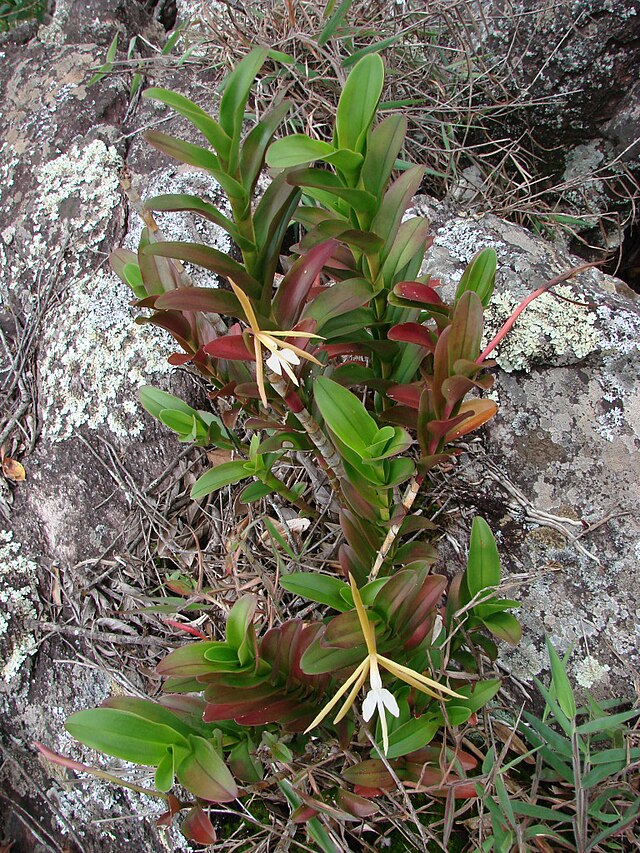
Epidendrum readily develops keiki at the stem apex. In natural environments, keiki often bend downward under their own weight, touch the ground, and establish roots—a common form of vegetative propagation.
Epidendrum keiki are relatively hardy with high post-separation survival rates. They can be separated once roots reach 3 cm or longer.
Vanda
Vanda rarely develop keiki from stem nodes. When they do, growth is slow, and it may take over a year before they reach independent size. Wait patiently for roots to become thick and fully developed.
Expanding Your Orchid Collection Using Keiki
Keiki represent a "luxury opportunity" to propagate orchids for free. Here are several applications:
Expanding Your Collection
Propagate clones of your favorite varieties to serve as backup should the parent plant perish. In the orchid world, these are called "insurance plants," and orchid enthusiasts actively use keiki to preserve rare varieties.
As Gifts
Flowers blooming from keiki you've raised carry a different sentimental value than purchased plants. A well-established plant makes an ideal gift for friends and family. The added story—"this plant is propagated from an orchid I'm growing"—makes it all the more special.
Cultivation Experiments
Use keiki plants to compare different growing methods. By growing genetically identical plants under varied conditions—"sphagnum vs. bark," "hydroponics vs. traditional cultivation"—you can discover the cultivation approach best suited to your environment.
Conclusion: Making Keiki Encounters a Joy of Orchid Cultivation
Keiki development may feel bewildering at first. Particularly with Dendrobium, experiencing "no blooms, only keiki" serves as a signal to review your management practices.
However, keiki represent the strong vitality of your orchid, and they offer a valuable opportunity to obtain new plants. Rather than rushing to separate them, take time to watch roots and leaves develop gradually, then separate them once fully mature.
The moment a plant raised from keiki blooms for the first time is one of the most moving experiences in orchid cultivation. That flower carries the reward of raising an orchid entirely from the ground up, giving it an exceptional beauty you will surely appreciate.