Succulent Arrangement Guide | Stylish Combinations and DIY Ideas
Explains how to create succulent arrangements. Introduces compatible species combinations, how to choose containers, soil mixing ratios, planting procedures, and stylish arrangement methods such as wreath and frame-style designs.
Key Takeaways
Explains how to create succulent arrangements. Introduces compatible species combinations, how to choose containers, soil mixing ratios, planting procedures, and stylish arrangement methods such as wreath and frame-style designs.
Related Species
Succulent arrangements combine multiple species in a single container. They offer three-dimensional depth and color contrast that cannot be achieved with individual plants, and the finished pieces are highly popular as interior decor. Even gardening beginners can tackle this relatively easily, and the joy of creating your own original work is truly special. In this article, we'll provide detailed insights on how to succeed with arrangements, from selecting species and choosing containers and soil, to creating stylish DIY arrangements.
Combining Compatible Species
The key to successful arrangements is combining species with similar growing requirements. If you plant species with different watering frequencies or light preferences together, one may suffer from overwatering or desiccation. Selecting species with similar care requirements is the foundation for maintaining attractive arrangements over the long term.
The Classic Trio: Echeveria + Sedum + Graptopetalum
This combination of three is the classic style for succulent arrangements.
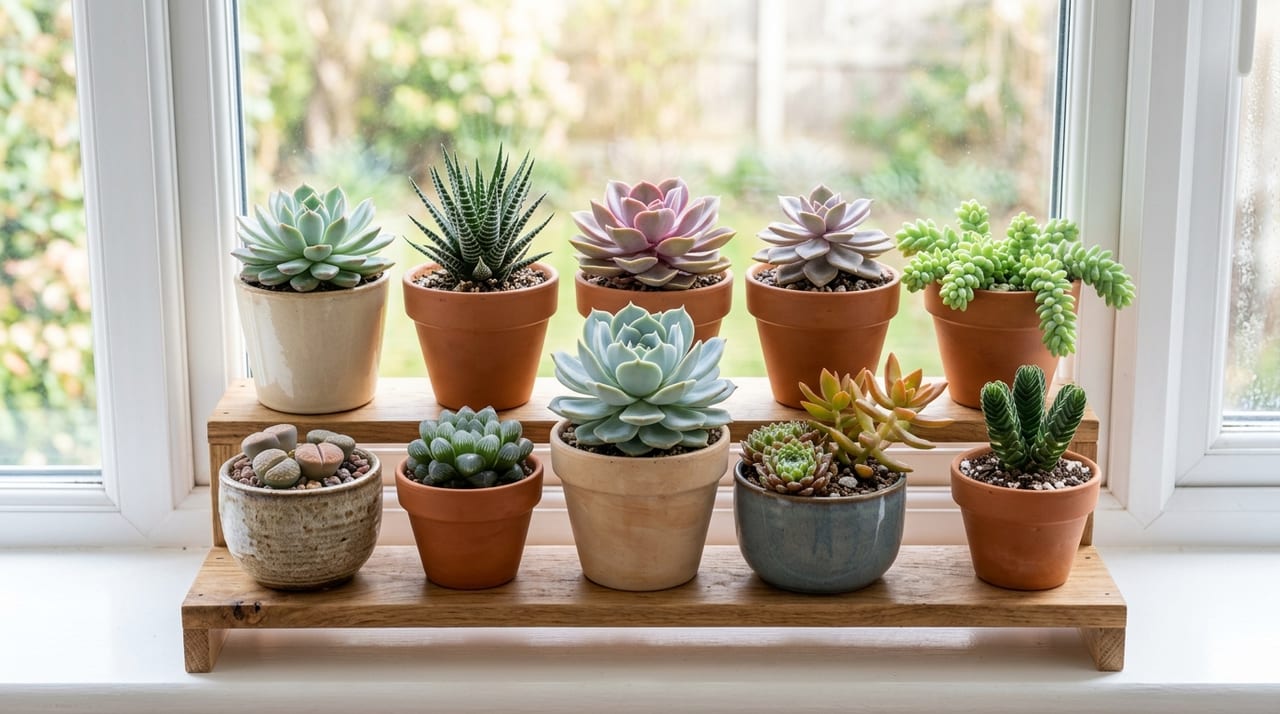
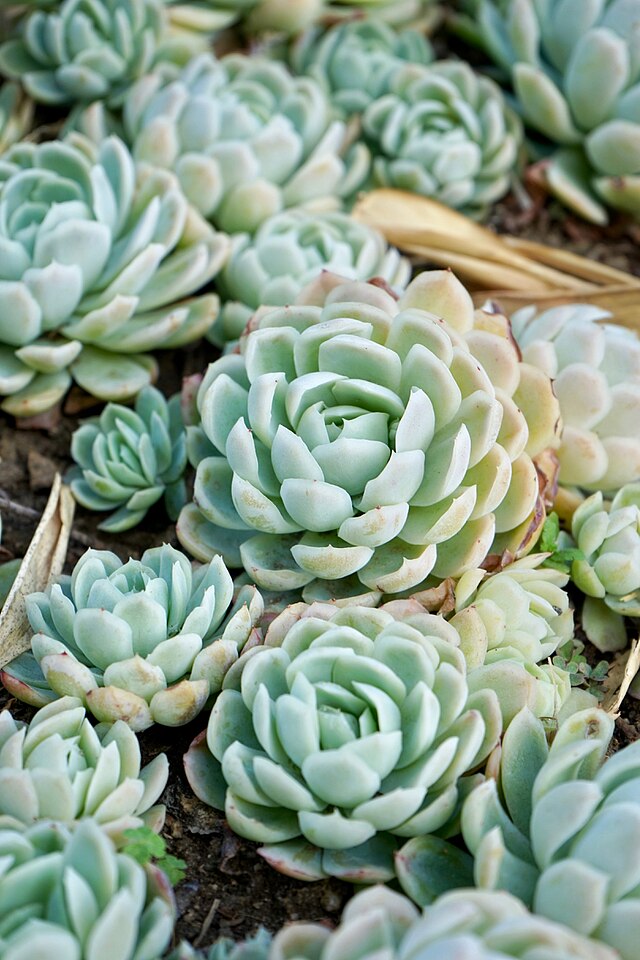
Echeveria is prized for its beautiful rosette form, and serves as the "star" of the arrangement, positioned in the center. Popular varieties include Laurinze (soft pink tones), Elegans (bluish-white), and Pearl von Nürnberg (purplish-pink). The autumn-to-winter color change, or "autumn foliage," is also a notable feature.
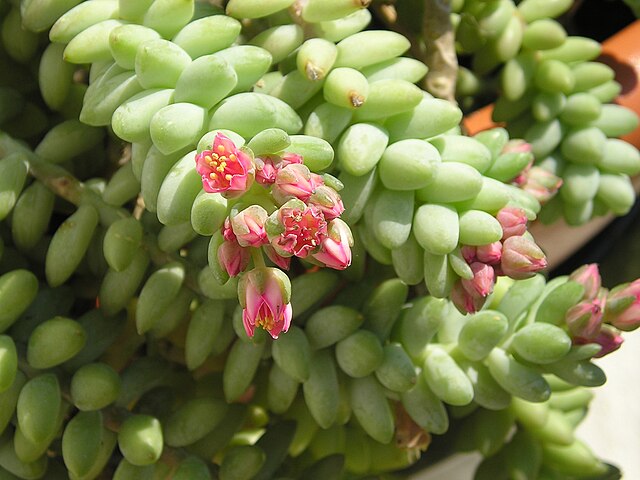
Sedum acts as a ground cover with small leaves. Planting them to fill gaps between Echeveria creates a natural, layered appearance. Varieties such as Biahopps (round, plump leaves), Rainbow Jade (vivid red in autumn), and Pearls of Strings (cascading habit, suitable for hanging) are easy to manage and recommended for beginners.
Graptopetalum has a rosette form similar to Echeveria, but its grayish unique coloring adds an accent to the arrangement. Graptopetalum paraguayense (Ghost Plant) is easy to obtain, hardy, and helps add volume to the overall arrangement.
Tips for Coordinating by Color
If you're unsure about selecting species, choosing a color theme helps create cohesion. For example, organizing around themes like "cool green and blue-green," "romantic pink and purple," or "autumn reds and oranges" results in a polished composition even for beginners.
Choosing Containers and Managing Drainage
Containers should be chosen not just for appearance, but also for drainage and air circulation. Since succulents are susceptible to overwatering, creating an environment with good water drainage is key to longevity.
Terracotta pots have excellent air circulation and resist root rot, making them the most suitable material for succulents. They also provide a natural, warm aesthetic.
Tin cans and steel containers offer an antique charm and high decorative appeal. If they lack drainage holes, you can drill them, or create a drainage layer by laying a thick bed of gravel or pumice at the bottom.
Driftwood and wooden boxes create a botanical aesthetic with natural materials. However, since wood rots easily, lining the interior with plastic sheeting before adding soil improves durability. Applying wood preservative is also recommended.
Regardless of which container you use, laying 1-2 cm of pot shards (pumice or coarse gravel) at the bottom prevents excess water from accumulating.
Soil Composition and Planting Steps
Recommended Soil Mix
You can use commercial succulent potting soil as-is, but to further improve drainage, blending with the following ratio is recommended:
- Red lava soil (small grain): 40% — foundational material for air circulation and drainage
- Akadama (small grain): 30% — slightly acidic, promotes root development
- Perlite: 20% — lightweight material that improves drainage
- Activated charcoal: 10% — provides sterilization and moisture regulation
Planting Steps
- Line the bottom of the container with pot shards and add the blended soil halfway up
- Remove seedlings from pots, gently clear old soil, and inspect the roots
- Position taller varieties (the focal plant) in the center or back to establish balance
- Plant secondary species in gaps and fill remaining spaces with Sedum or similar
- After planting, gently smooth the soil surface with a bamboo stick or chopstick to ensure roots make contact with soil
- For 1-2 weeks after planting, keep in bright, indirect light, avoiding direct sun
Wreath and Frame-Style DIY Arrangements
Once you're comfortable with basic arrangements, try creating wall-mounted designs.
Wreath Style
This method involves inserting succulents into a wreath frame lined with sphagnum moss. Since it can be displayed on entryway doors or walls, it's increasingly popular as a three-dimensional green display.
The key is to thoroughly dampen the sphagnum moss before securing succulents with pins or thin wire. After completion, reduce watering for 2-3 weeks, lay it horizontally to allow roots to establish, then hang it on the wall. A layout with Echeveria spaced evenly and gaps filled with Sedum is easiest to create and recommended.
Frame Style (Picture Frame Style)
This method involves stretching metal mesh on a picture frame, filling it with sphagnum moss, and planting succulents within. The finished piece resembles a painting and makes a striking accent in any room.
The basic procedure is to lay it horizontally to allow roots to develop (2-4 weeks), then stand it upright. Feature Echeveria as the main focal plant, fill gaps with Sedum, and finish with balanced proportions.
Watering and Daily Maintenance
Seasonal Watering Guide
Succulent watering frequency must be adjusted seasonally.
- Spring and Autumn (growing season): Once soil is completely dry, wait 2-3 days then water thoroughly until it drains from the bottom
- Summer (high heat, semi-dormancy): 2-3 times per month, watering sparingly in the cool evening hours
- Winter (dormancy): 1-2 times per month, giving only small amounts on warm mornings
For the first 2 weeks after arranging, water sparingly to allow roots to establish.
Daily Care Tips
- Remove dead or damaged leaves promptly when found (also prevents pests and disease)
- Prune leggy plants and reuse them as cuttings
- Repot and refresh the soil once yearly in spring to maintain long-term beauty
- Watch for summer humidity and move plants to well-ventilated areas during rainy and hot seasons
Botachoku's Peace of Mind and Safety
The quality of seedlings determines the success of your arrangement. Choosing healthy plants is the first step to creating a beautiful, long-lasting display.
Botachoku allows you to purchase directly from succulent specialists, so you can obtain rare varieties unavailable at garden centers, along with healthy, well-maintained plants at reasonable prices.
You can also message growers directly with questions before purchasing—a major advantage. Experienced growers gladly answer specific questions like "What varieties are easy for beginners to grow?" and "Is this variety suitable for arrangements?"
Direct grower sales also offer full traceability—plant management conditions and production background are transparent. You can purchase with complete confidence. Whether you're attempting your first arrangement or looking to expand an existing collection, discover your ideal plants on Botachoku.