Carnivorous Plant Encyclopedia
Encyclopedia of popular carnivorous plants with care guides, trapping mechanisms, and cultivation tips.
Featured Carnivorous Plant
Showing 9 of 140 species
 © Gabriele Zoppoli / CC BY-SA 4.0
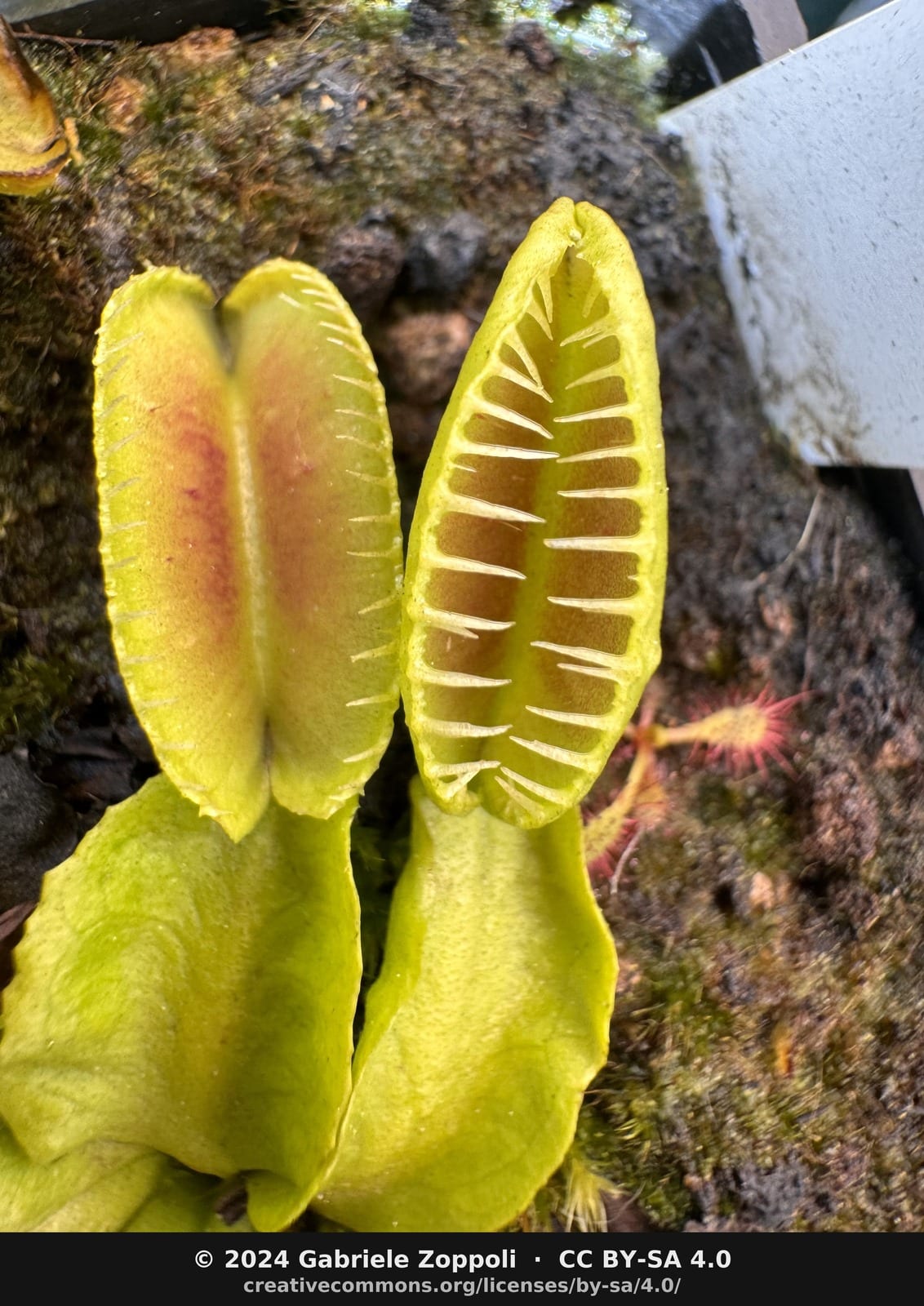
Venus Flytrap Alien
Dionaea muscipula 'Alien'
A mutant Venus flytrap whose traps are strongly arched and fused at the tip, so they never close fully. Its short teeth carry small wings. A French-registered cultivar named after the head of the creature in the film 'Alien'.
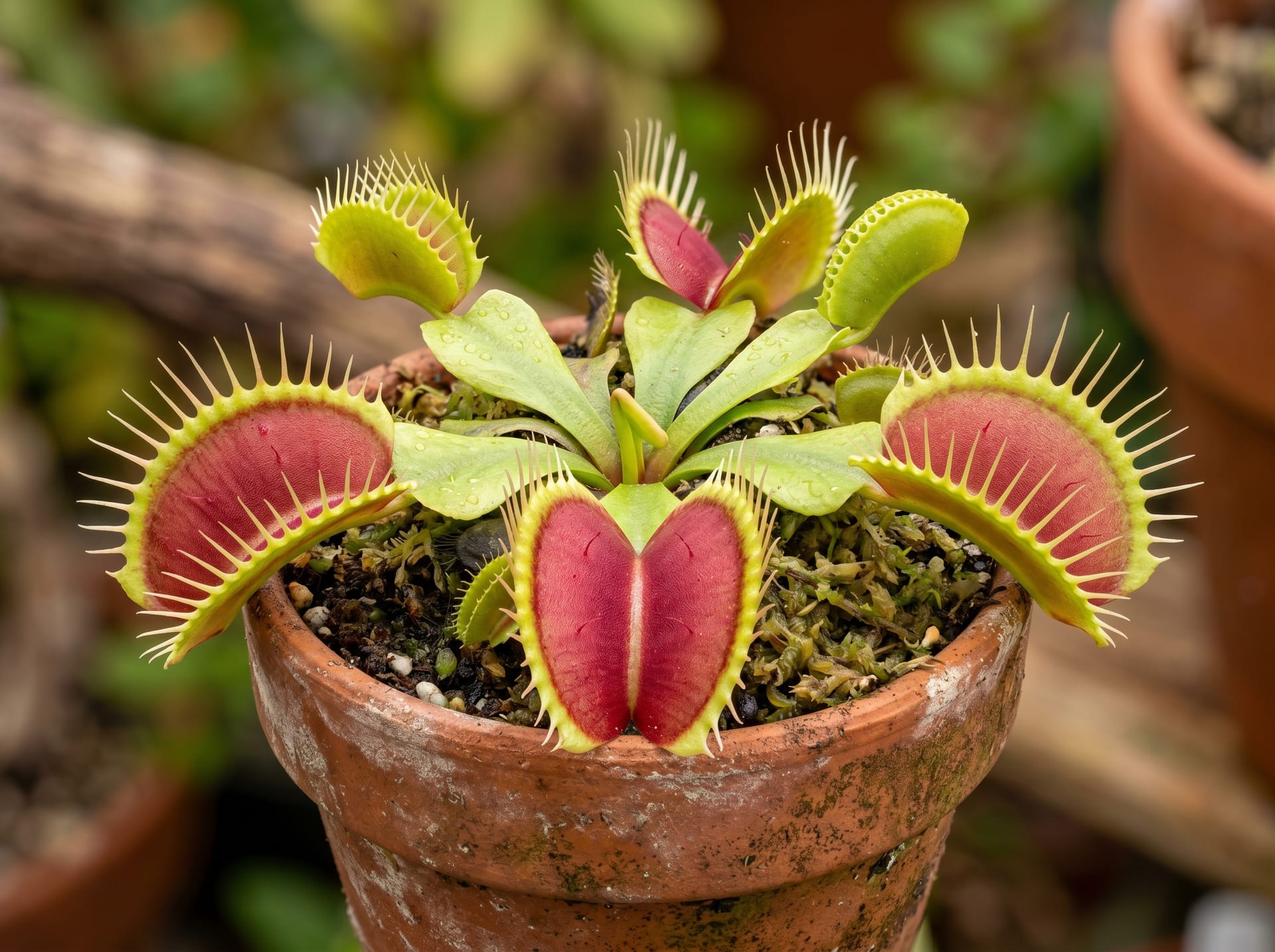
Venus Flytrap B52
Dionaea muscipula 'B52'
A Venus Flytrap cultivar with one of the largest traps, named after the B-52 bomber for its size.
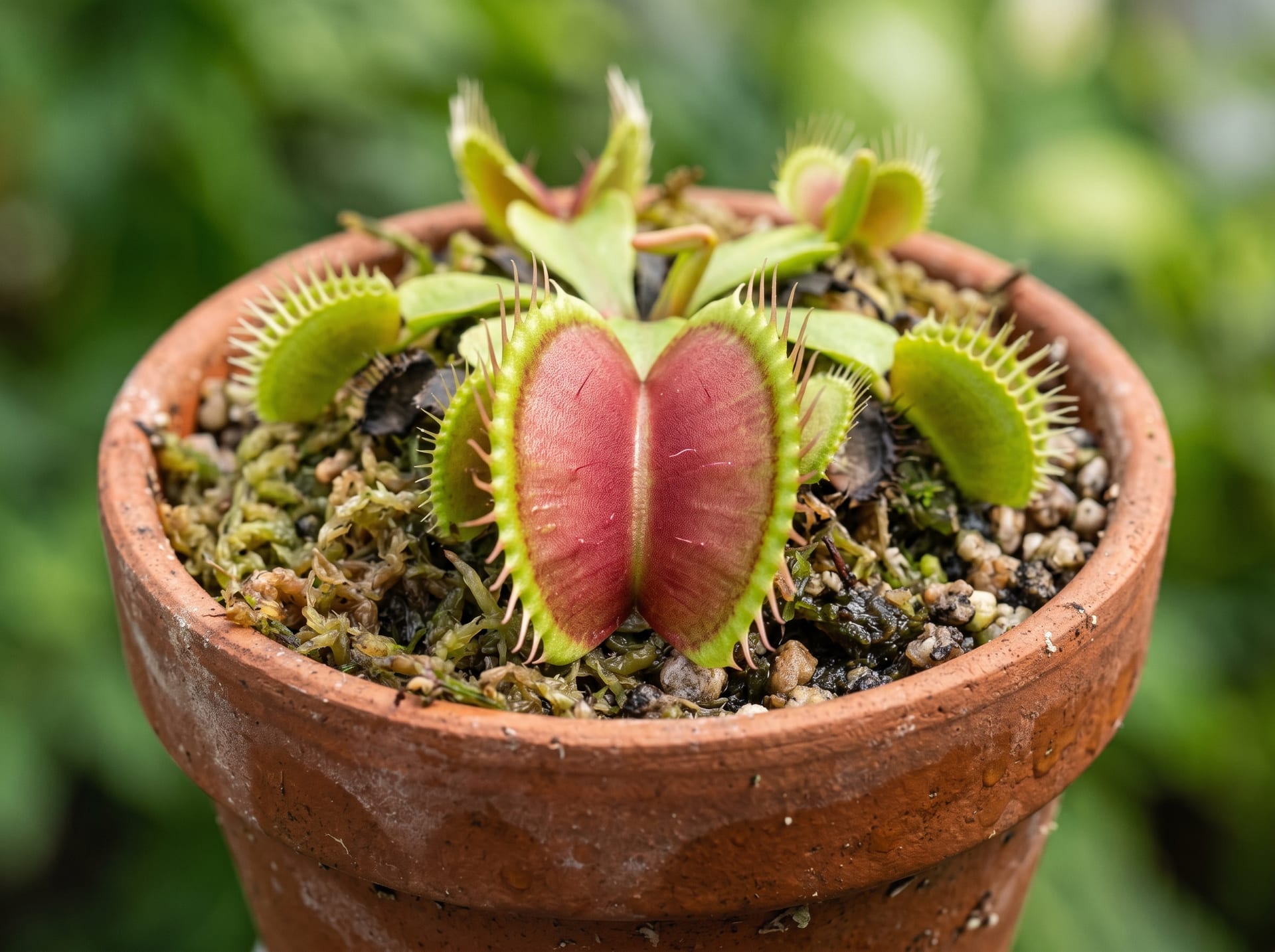
Venus Flytrap Big Mouth
Dionaea muscipula 'Big Mouth'
A cultivar forming very large traps, with traps that reach about 4.5cm in length.
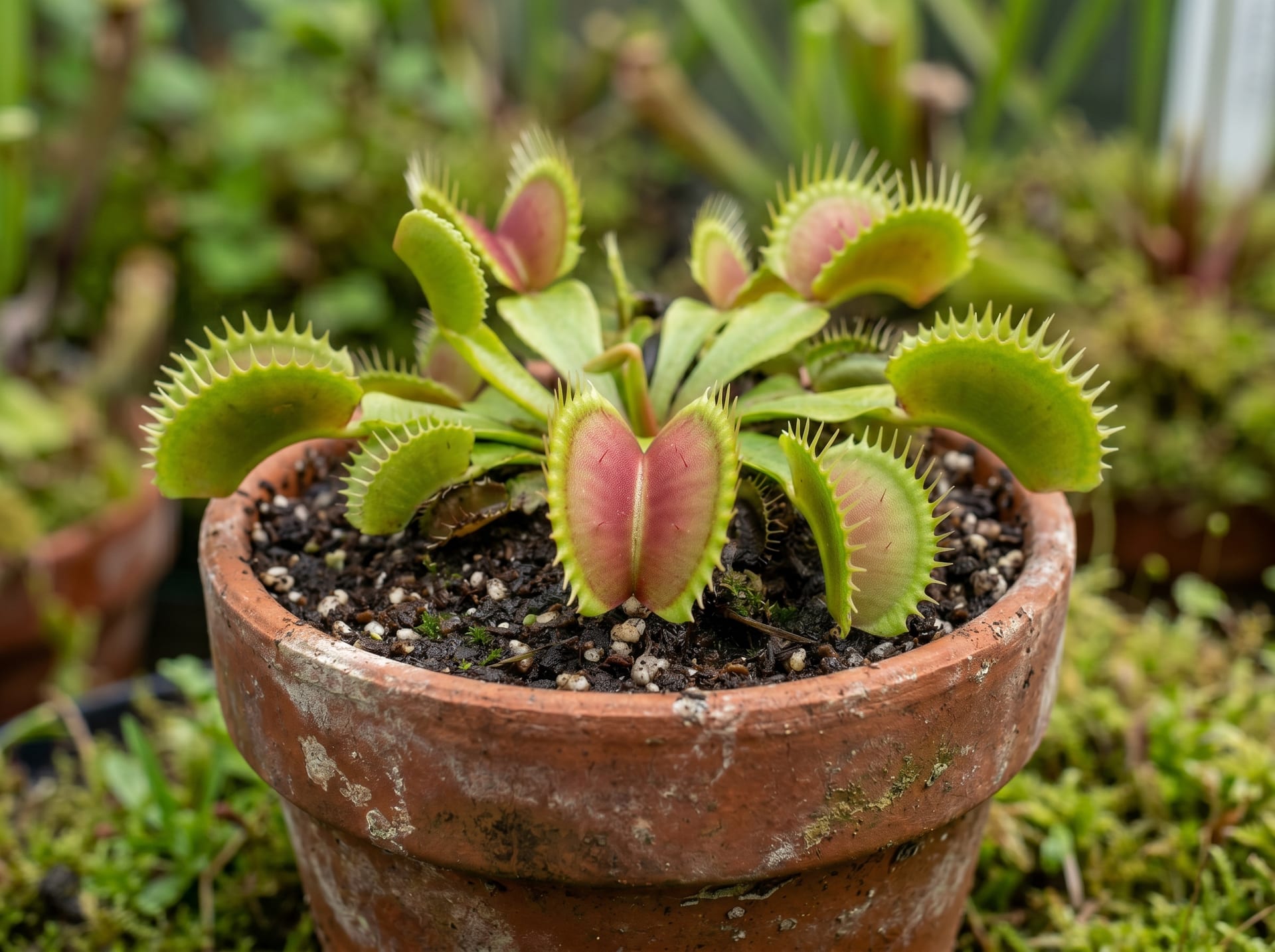
Venus Flytrap Dentate
Dionaea muscipula 'Dentate Traps'
A cultivar with triangular pointed trap teeth, giving a more powerful impression than typical thin teeth.
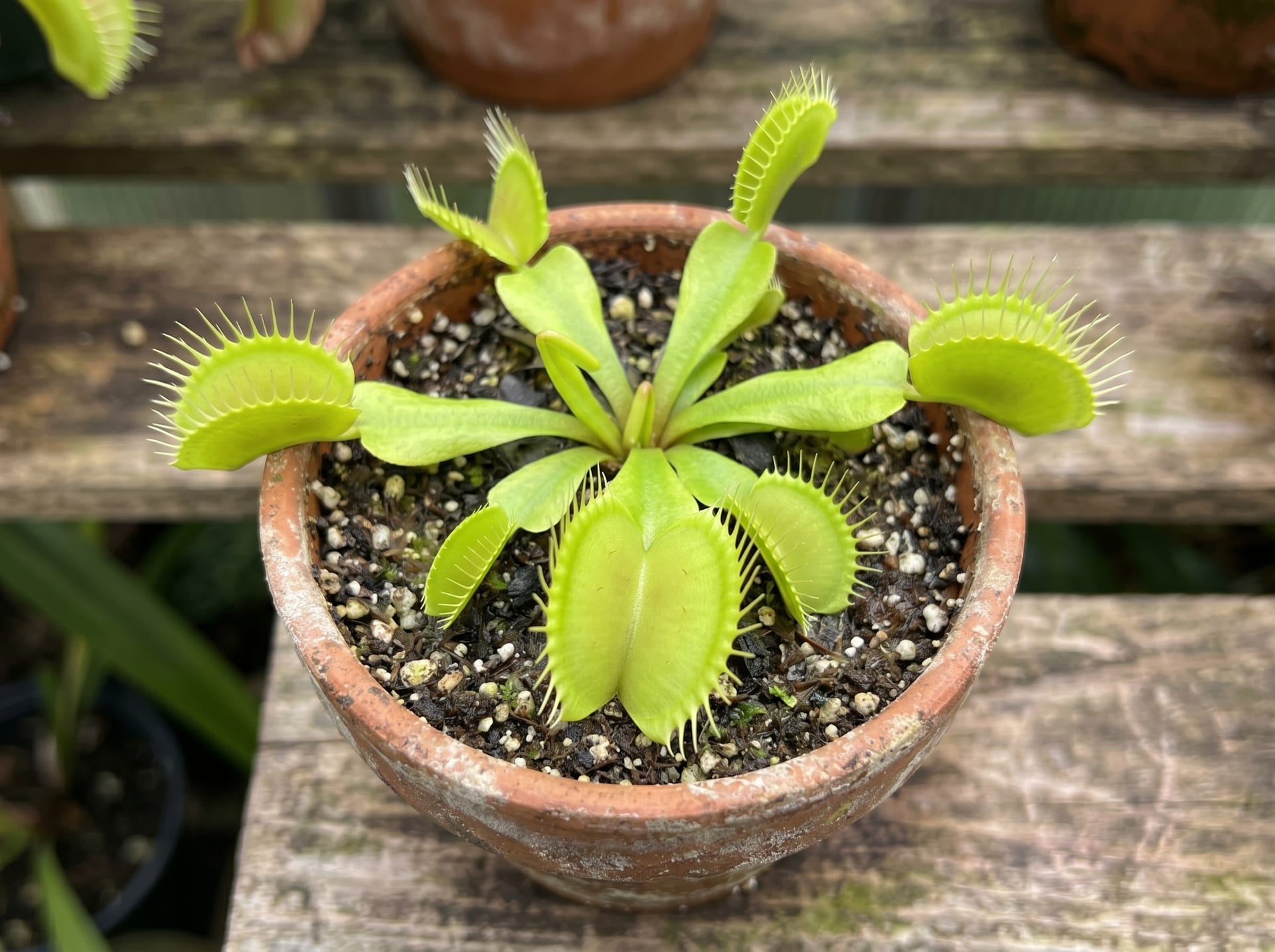
Venus Flytrap Green Dragon
Dionaea muscipula 'Green Dragon'
A rare cultivar with green trap interiors, giving a refreshing look unlike typical red traps.
Venus Flytrap Jaws
Dionaea muscipula 'Jaws'
A Venus flytrap whose marginal teeth are reduced to short triangles, so half-closed traps look like a shark's jaws. The traps are also large and well coloured. Bred and selected in the USA and registered with the ICPS in 2002.
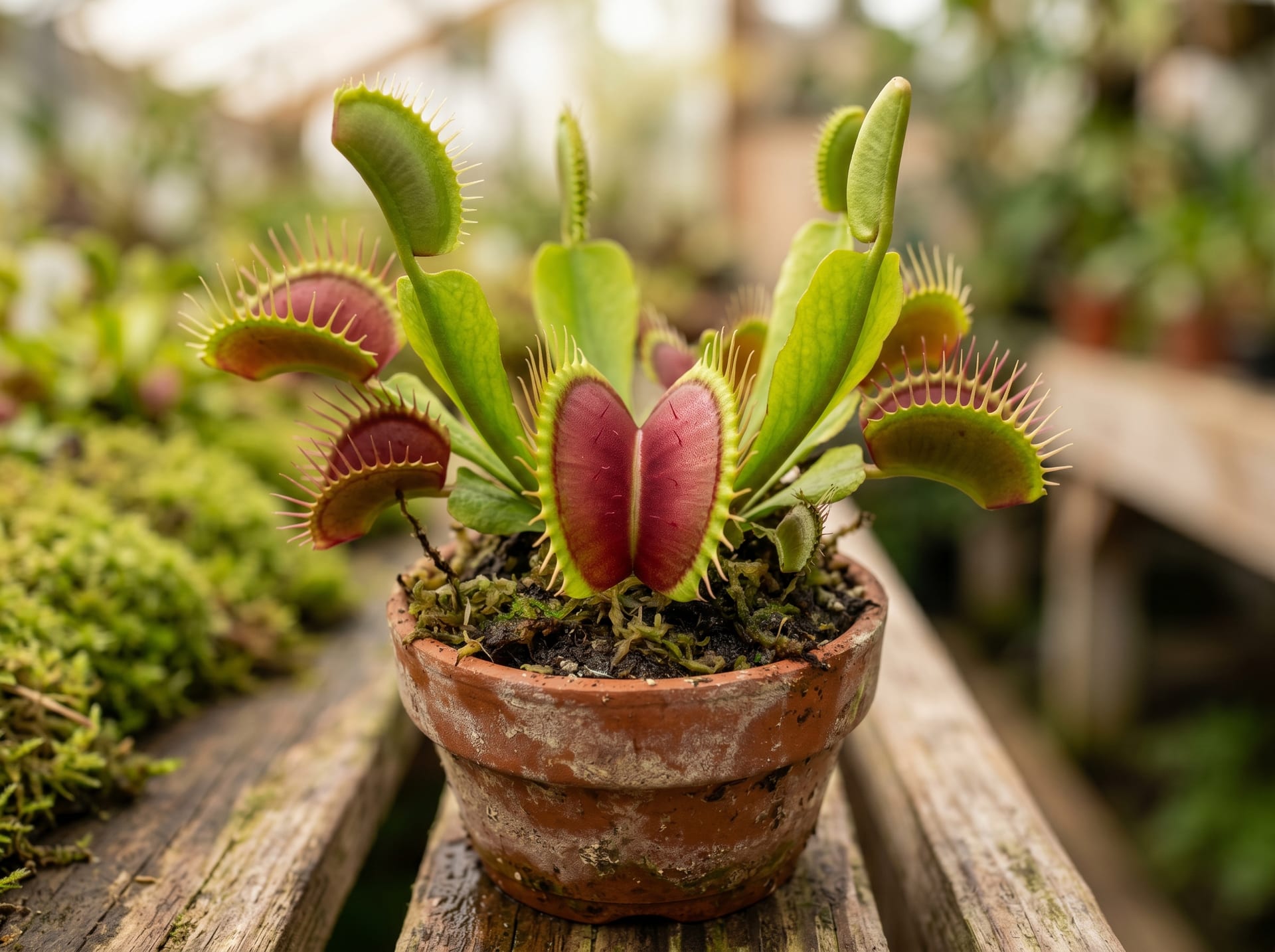
Venus Flytrap King Henry
Dionaea muscipula 'King Henry'
A Venus Flytrap cultivar with tall upright traps giving a kingly, powerful appearance.
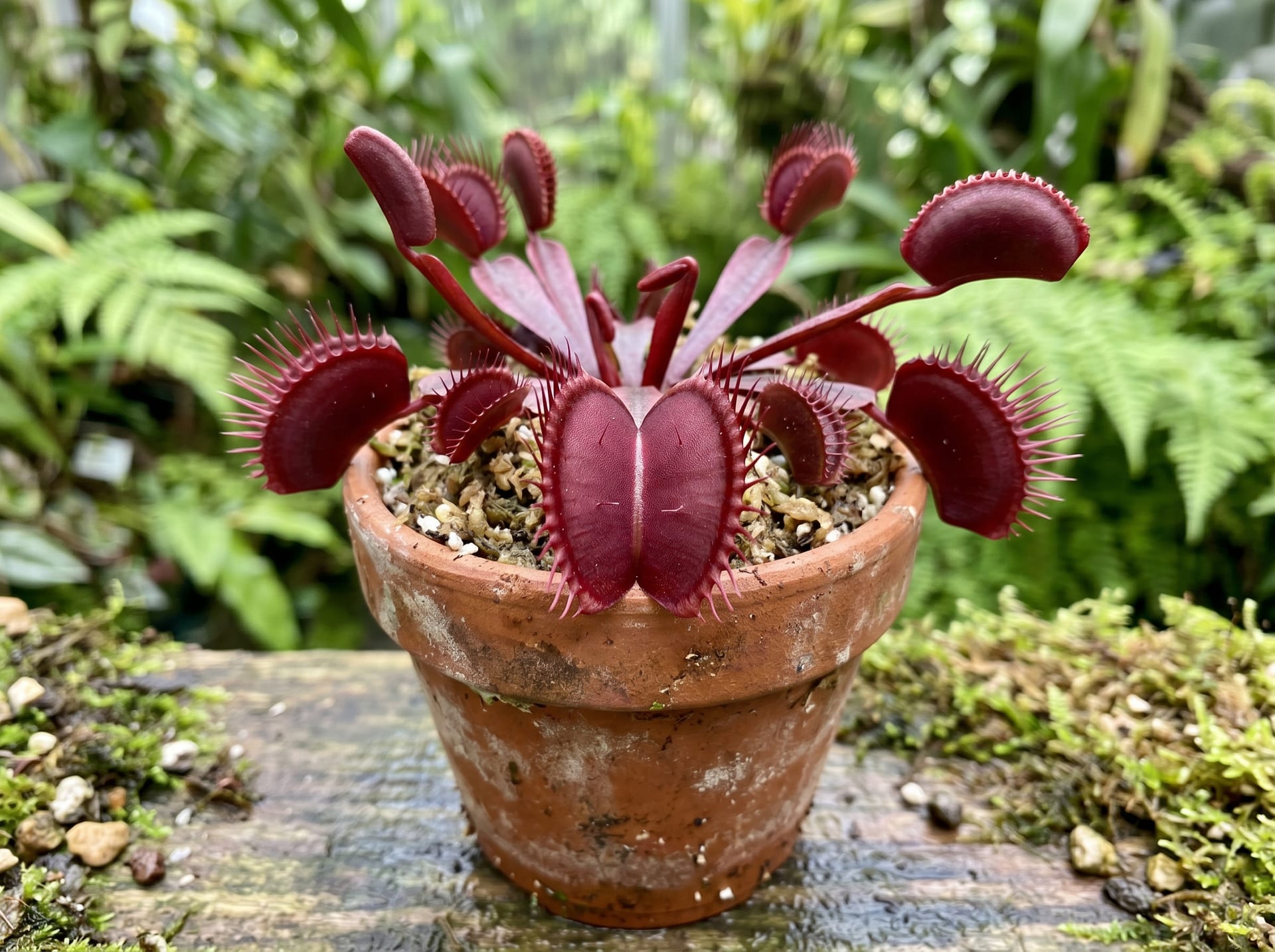
Venus Flytrap Red Dragon
Dionaea muscipula 'Akai Ryu'
Most "it died right away" cases come from skipped winter dormancy, tap water, or fertiliser. Red Dragon is the popular cultivar that turns deep red all over.
Venus Flytrap Shark Teeth
Dionaea muscipula 'Shark Teeth'
A trade name for a Venus flytrap sold as a form with short, saw-like teeth on the trap margins. The name is not in the ICPS register of cultivars, and its originator and reference plant are unclear. Care is as for the species.
Related Content
Carnivorous Plant FAQ
- How much do carnivorous plants cost?
- Venus Flytraps cost 500-2,000 yen, Nepenthes 1,000-10,000 yen, and rare highland Nepenthes can exceed tens of thousands of yen depending on species and size.
- Can beginners grow carnivorous plants?
- Venus Flytraps, Sundews, and Sarracenia are relatively easy and beginner-friendly. Keep them in a tray of water for humidity and place in a sunny spot.
- How long do carnivorous plants live?
- Venus Flytraps can live 10+ years with proper care, and Sarracenia are similarly long-lived. Nepenthes can grow for decades in the right conditions, getting progressively larger.
- What should I check when buying carnivorous plants?
- Check that leaves and traps are healthy with no root rot. For Nepenthes, choose specimens with pitchers. Avoid sudden environment changes after purchase and acclimate gradually.
- Do I need to feed insects to carnivorous plants?
- They grow fine through photosynthesis alone without feeding. Insects are supplemental nutrition and don't need to be force-fed. Outdoor plants catch bugs naturally, which is fun to observe.