Carnivorous Plant Encyclopedia
Encyclopedia of popular carnivorous plants with care guides, trapping mechanisms, and cultivation tips.
Featured Carnivorous Plant
Showing 137 of 140 species(1–24)
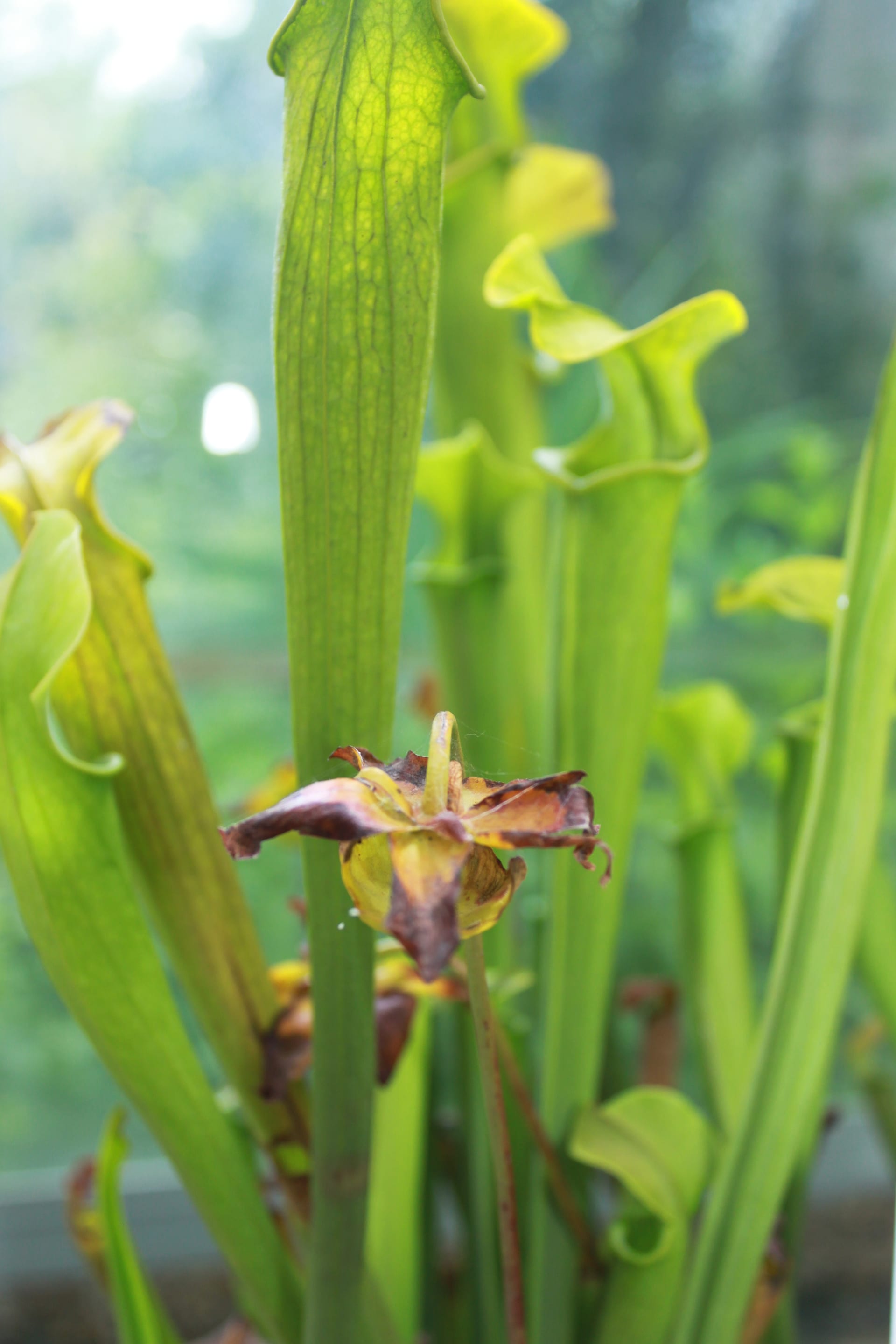 © Brian Gratwicke / CC BY 2.0
Alabama canebrake pitcher plant
Sarracenia rubra ssp. alabamensis
A pitcher plant surviving at only about a dozen sites in central Alabama. Its finely hairy yellow-green pitchers are veined red, and its reddish-purple flowers smell of raspberries. It is a CITES Appendix I subspecies.
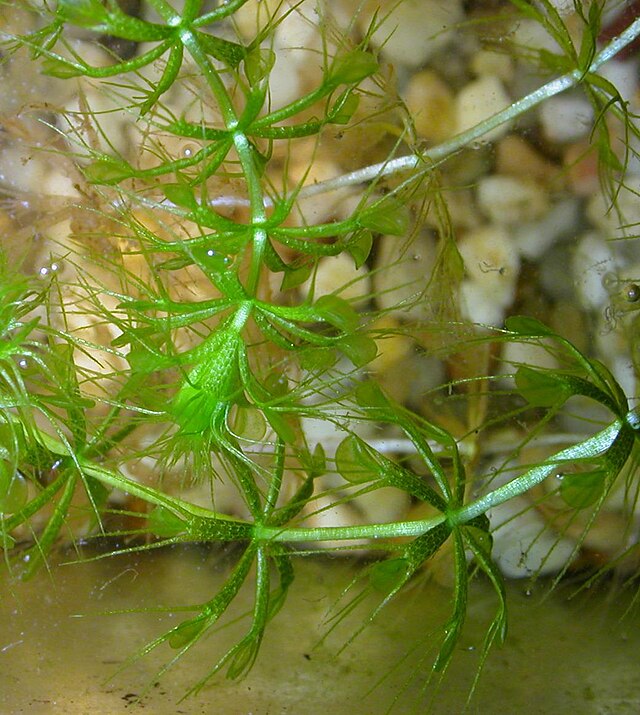
Aldrovanda Vesiculosa
Aldrovanda vesiculosa
Called Waterwheel Plant, a floating aquatic carnivore trapping prey without roots while drifting.
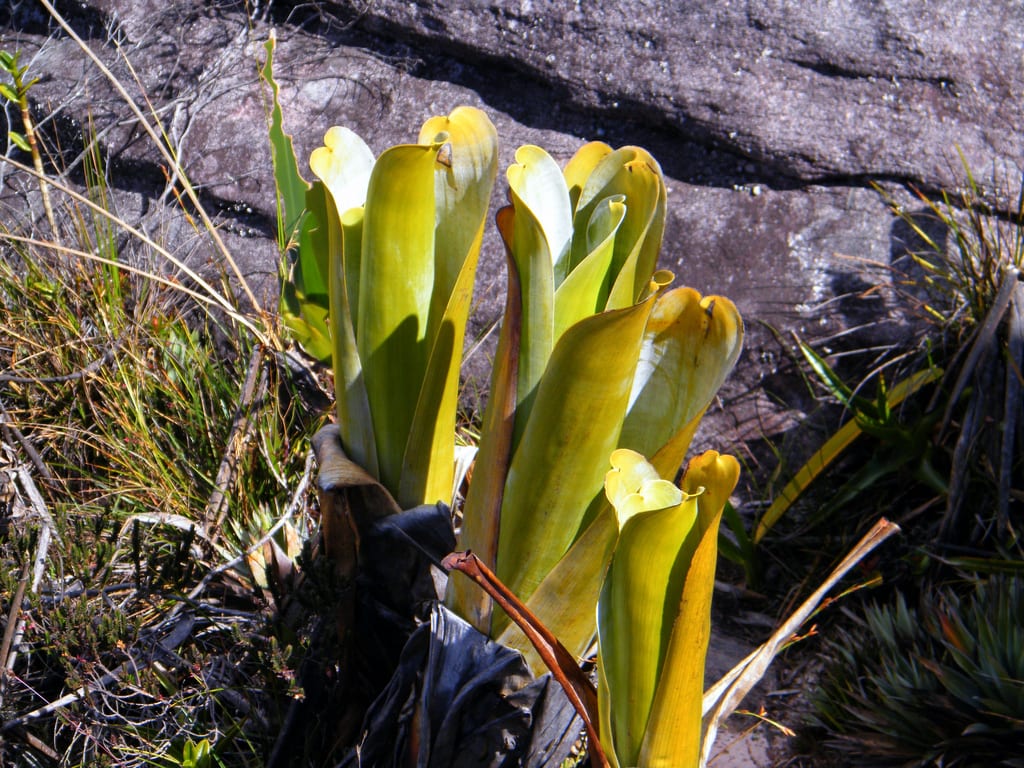 © Adalberto Jose Perez Lopez / CC BY 2.0
Brocchinia reducta
Brocchinia reducta
A carnivorous bromeliad from the tepuis of the Guiana Highlands. Its yellow-green leaves overlap into a water-filled tube, and a waxy coating makes insects slip in and drown. Digestive enzyme activity was confirmed in 2005.
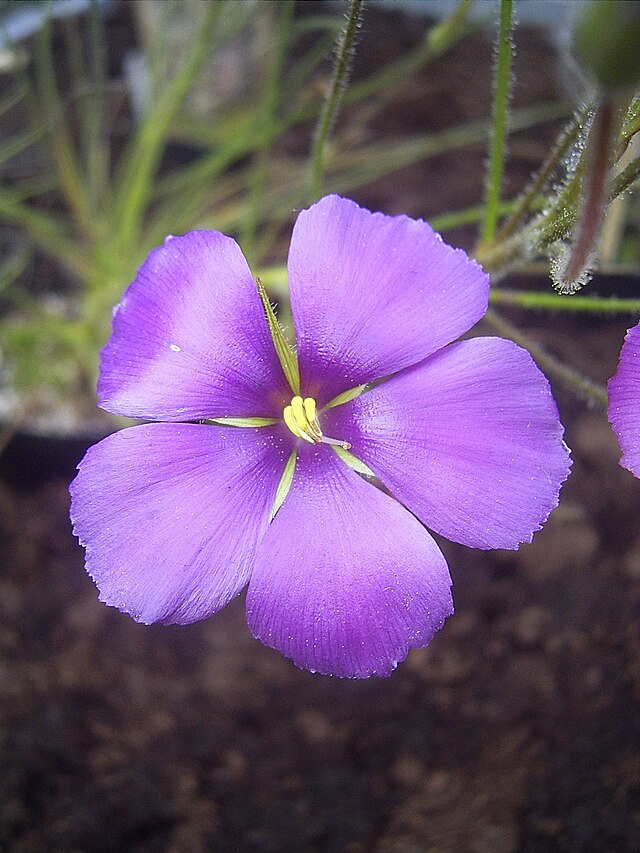 © Denis Barthel / CC BY-SA 3.0
Byblis Gigantea
Byblis gigantea
A large perennial Byblis from Western Australia with spectacular mucilage-covered long leaves.
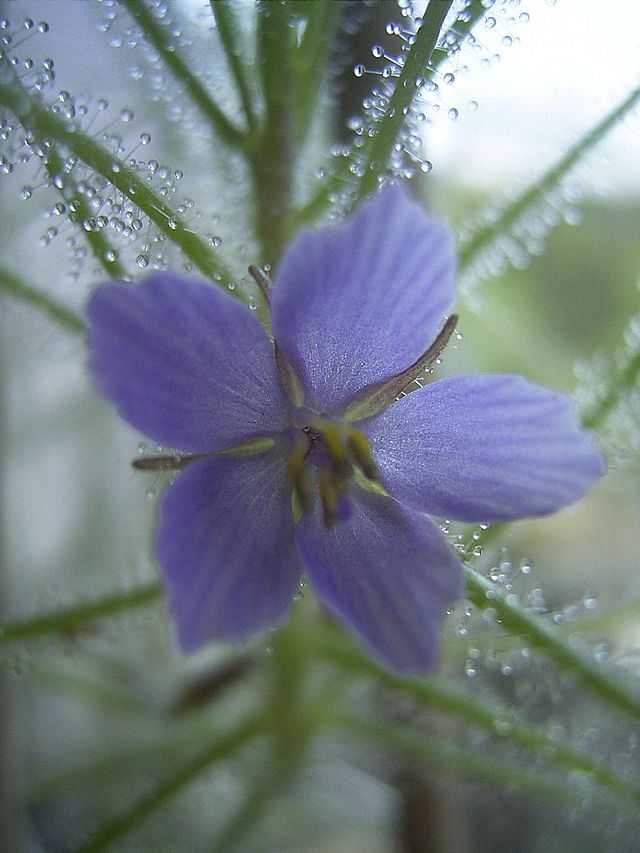 © No machine-readable author provided. Denis Barthel assumed (based on copyright claims). / CC BY-SA 3.0
Byblis Liniflora
Byblis liniflora
An Australian carnivorous plant with rainbow-glistening mucilage, called Rainbow Plant.
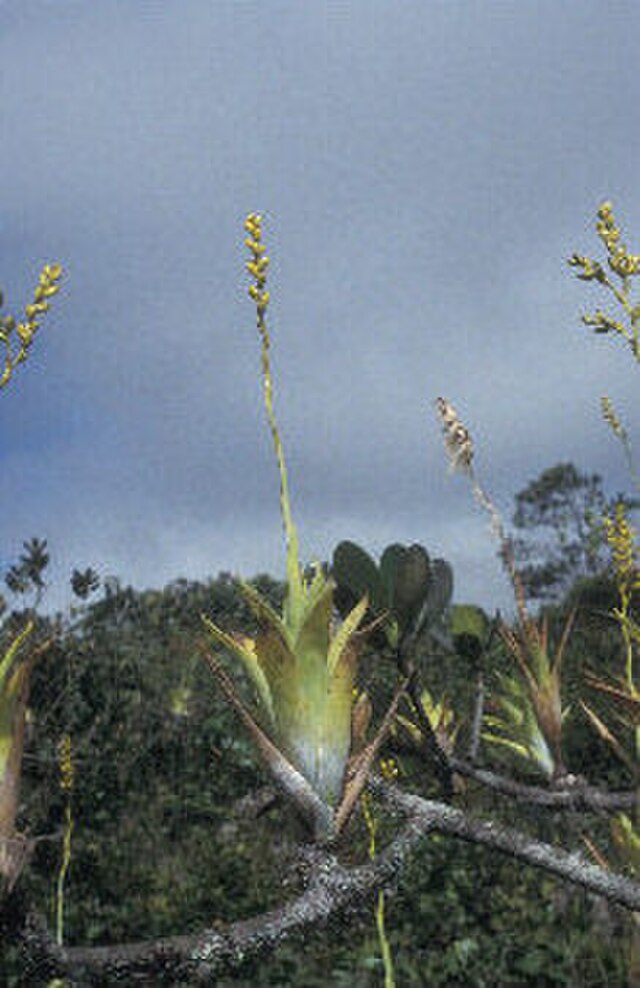 © BotBln / CC BY-SA 3.0
Catopsis Berteroniana
Catopsis berteroniana
A bromeliad carnivorous plant that traps insects with waxy leaf surfaces, drowning them in leaf-cup water for nutrients.
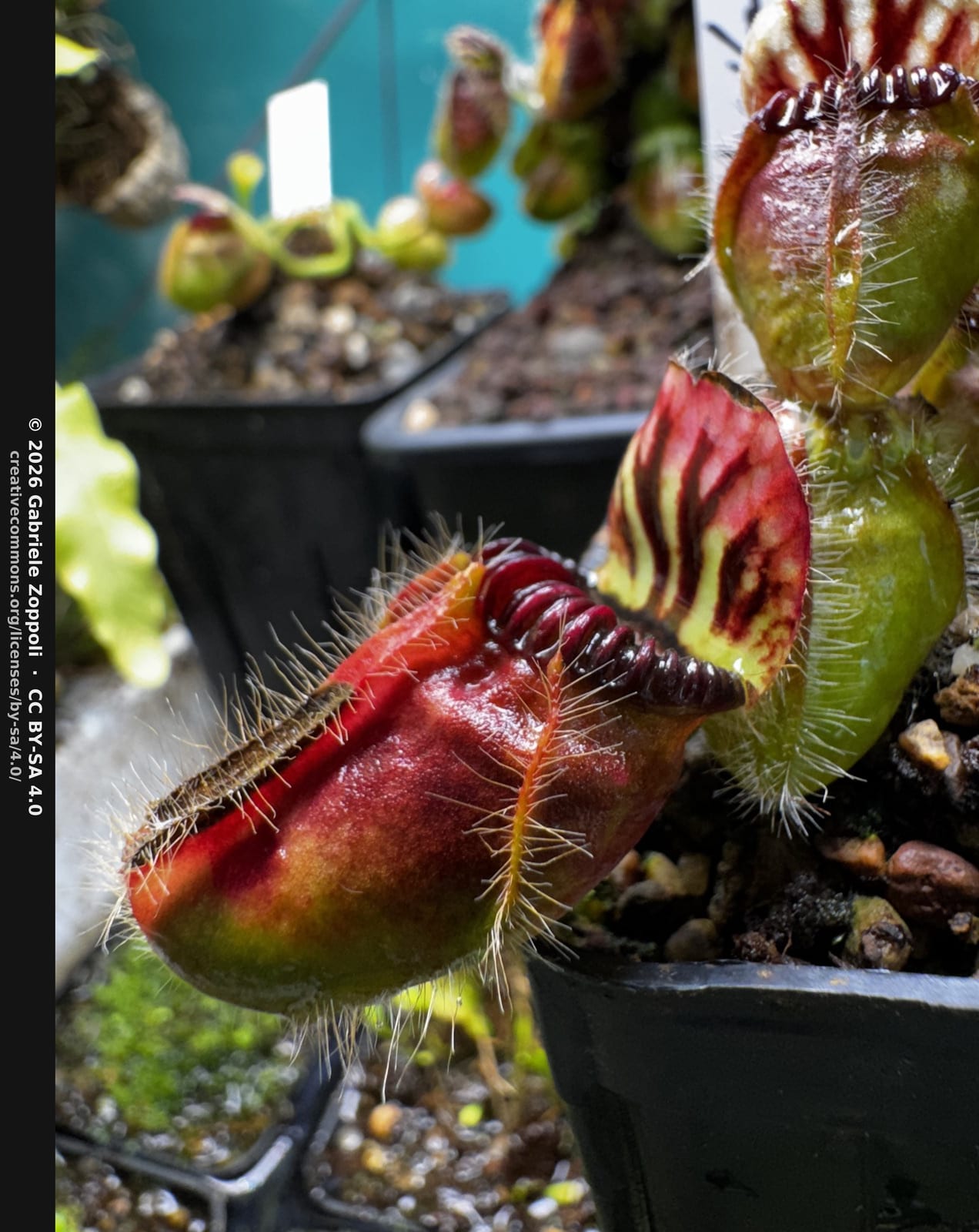 © Gabriele Zoppoli / CC BY-SA 4.0
Cephalotus Eden Black
Cephalotus follicularis 'Eden Black'
A selected clone of the Albany pitcher plant. In strong light the rim, then the whole pitcher and even the lid darken to a near-black purple. Selected by a British grower in the late 1980s and registered with the ICPS in 2007.
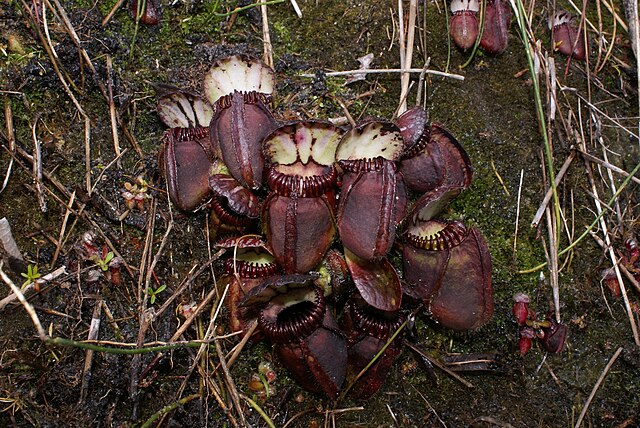 © Holger Hennern / CC BY-SA 3.0
Cephalotus Follicularis
Cephalotus follicularis
A unique one-species-genus from Australia with cute small urn-shaped pitchers, coveted by collectors.
 © KyleGorczynski / CC0
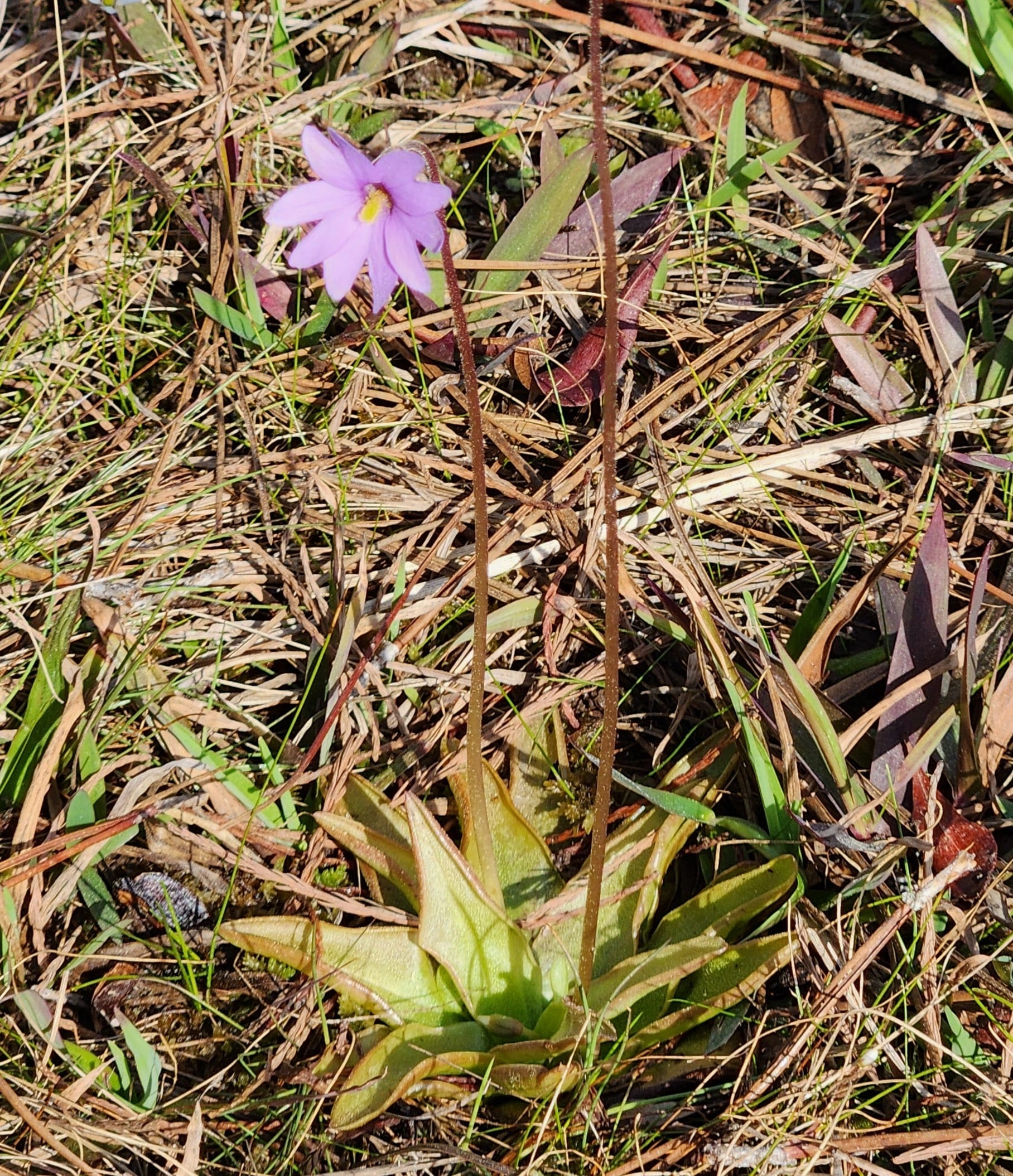
Chapman's butterwort
Pinguicula planifolia
A butterwort of wetlands along the US Gulf Coast. Its thin, flat leaves turn deep red to purple in full sun, and its purple flowers have petals notched almost halfway. A true wetland plant that can grow even when submerged.
 © NoahElhardt / CC BY-SA 3.0
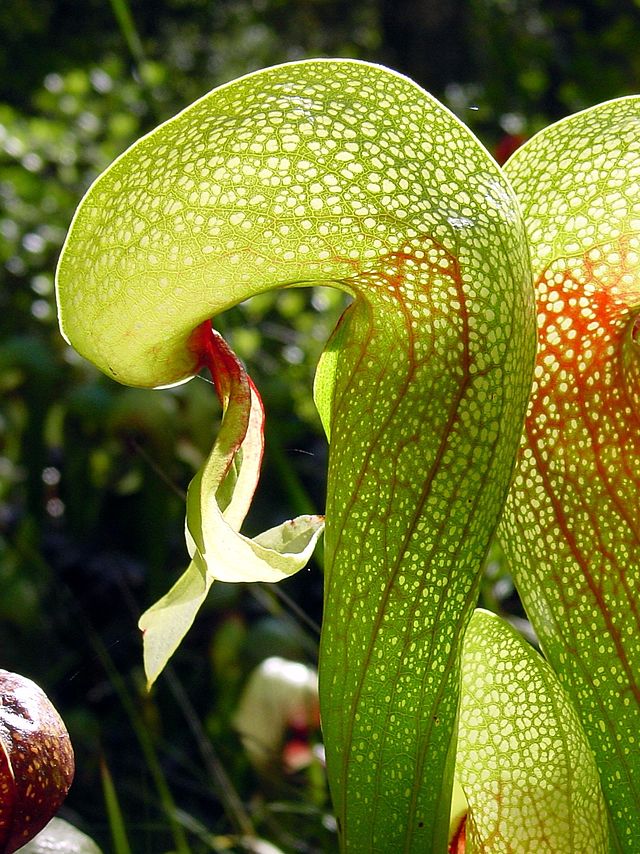
Darlingtonia Californica
Darlingtonia californica
Called Cobra Lily, a North American carnivorous plant with cobra-head-like pitchers preferring cool conditions.
 © Thomas Huntke / CC BY-SA 3.0 de
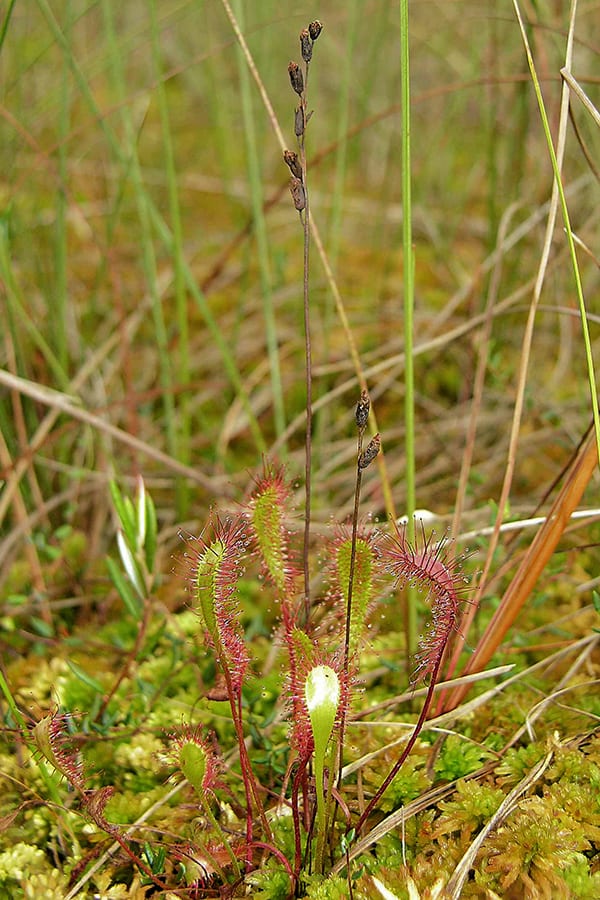
Drosera × obovata
Drosera × obovata
A natural hybrid of the round-leaved sundew and the great sundew, with spoon-shaped leaves intermediate between its parents. It is sterile and must be propagated by division or leaf cuttings. It occurs in Japan in bogs where both parents grow together.
 © Aaron May ( Sundewman at en.wikipedia ) / CC BY-SA 3.0
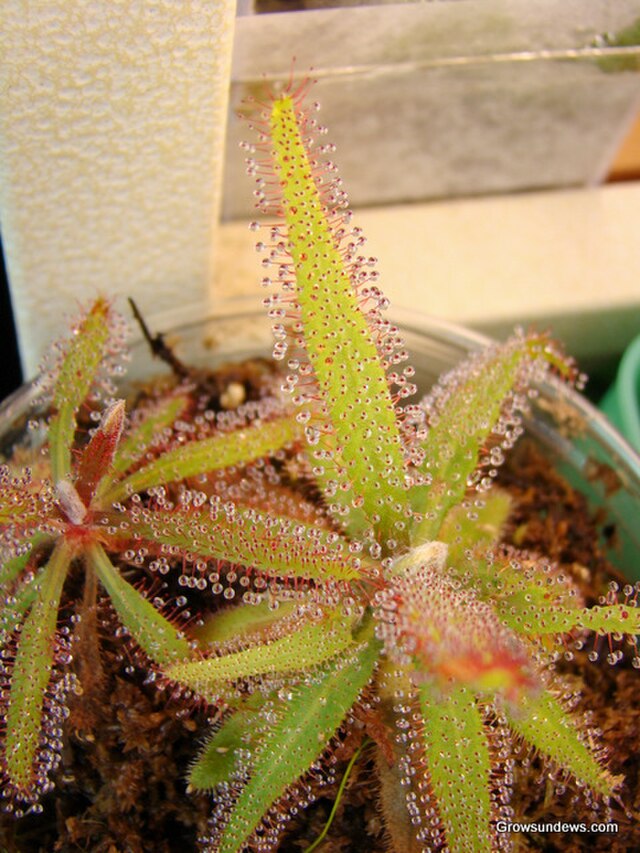
Drosera Adelae
Drosera adelae
An Australian sundew preferring partial shade with long lance-shaped leaves.
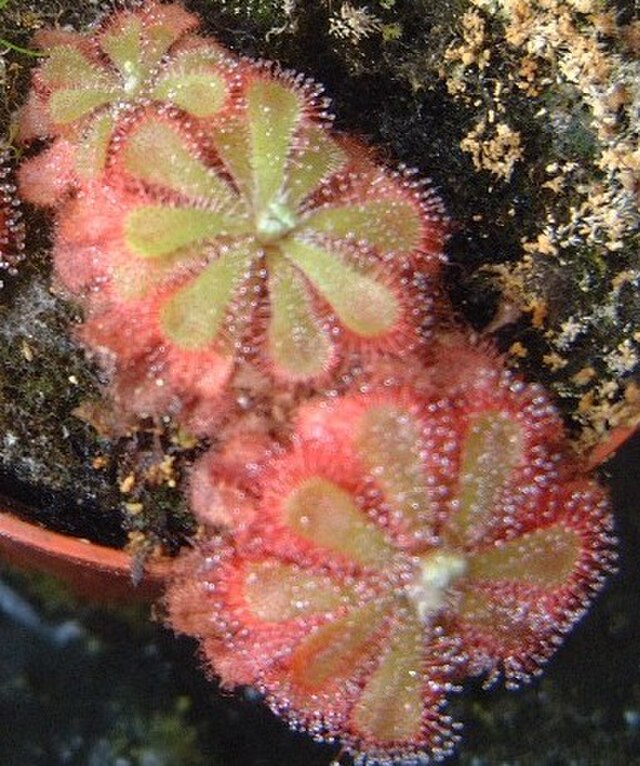 © Polypompholyx at English Wikipedia / CC BY-SA 3.0
Drosera Aliciae
Drosera aliciae
A South African rosette sundew with beautiful symmetrical form, a top beginner species.
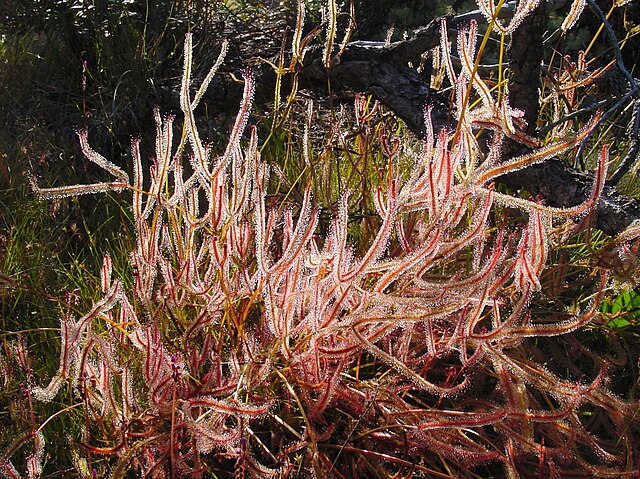 © No machine-readable author provided. NoahElhardt assumed (based on copyright claims). / CC BY-SA 2.5
Drosera Binata
Drosera binata
A sundew with uniquely forked leaves, large and impressive, very hardy.
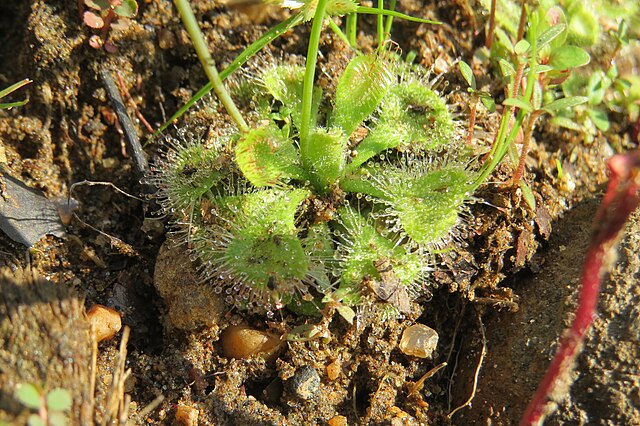 © Vinayaraj / CC BY-SA 4.0
Drosera Burmannii
Drosera burmannii
A sundew that captures insects very quickly, curling leaves in seconds. Sometimes annual.
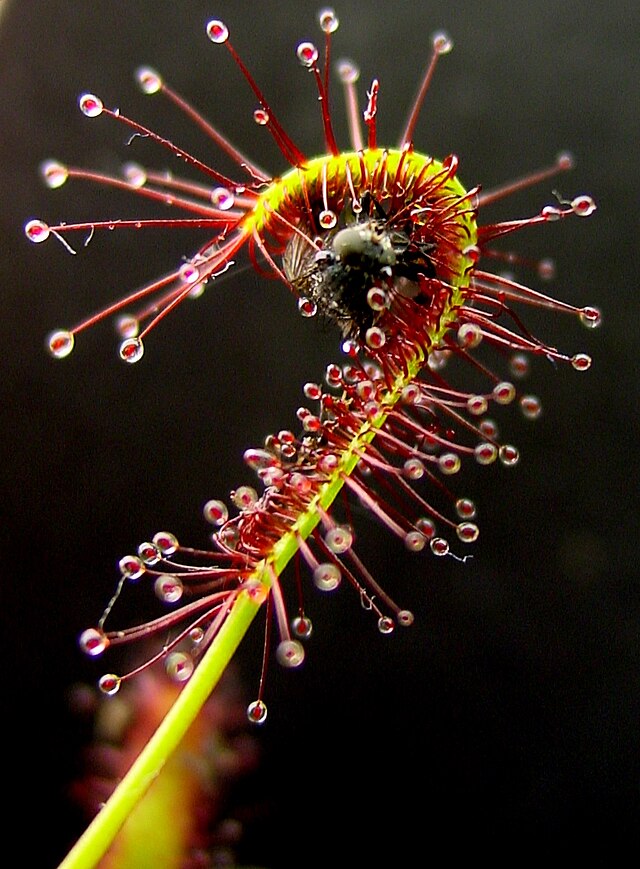 © NoahElhardt / CC BY-SA 3.0
Drosera Capensis
Drosera capensis
A hardy sundew from South Africa with beautiful glistening sticky leaves, perfect for beginners.
 © Cooleyray / CC BY-SA 4.0
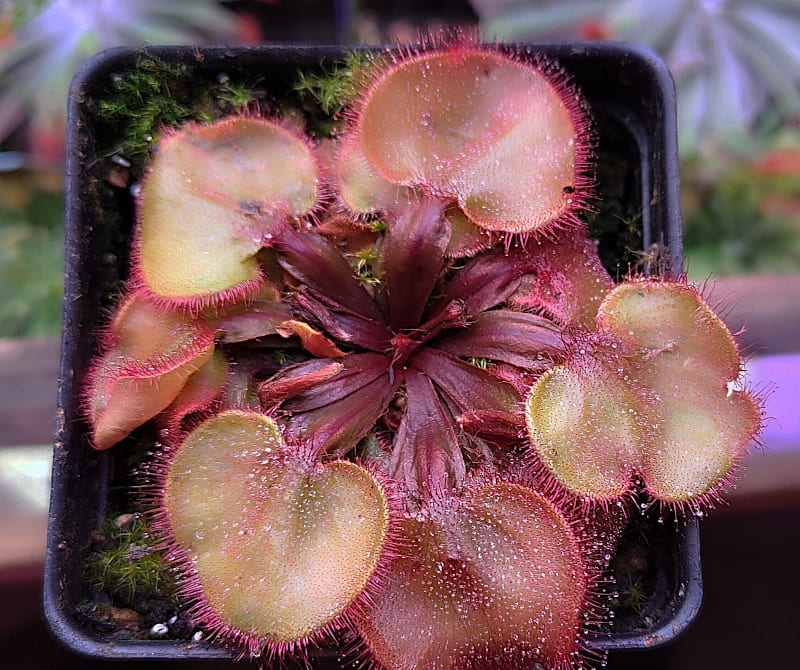
Drosera falconeri
Drosera falconeri
A sundew that lays large kidney-shaped leaves flat on the ground, looking rather like a Venus flytrap. Native to tropical northern Australia, it rests as a bud at soil level in the dry season. Unusually for a carnivorous plant it grows on alkaline, calcareous soil.
 © NoahElhardt / CC BY-SA 3.0
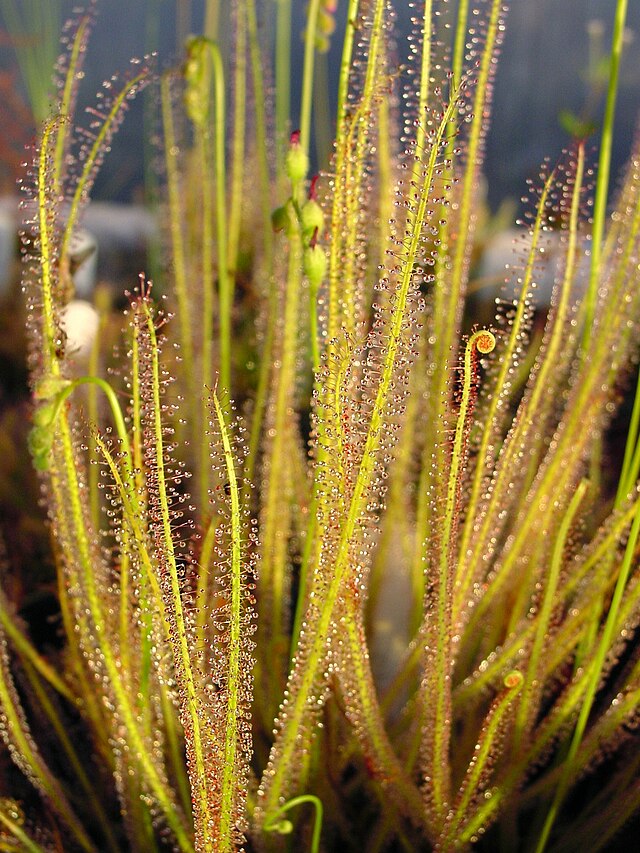
Drosera Filiformis
Drosera filiformis
A North American sundew with thread-like long leaves, stunningly beautiful when glistening with dew.
 © User:JarrahTree / CC BY 2.5 au
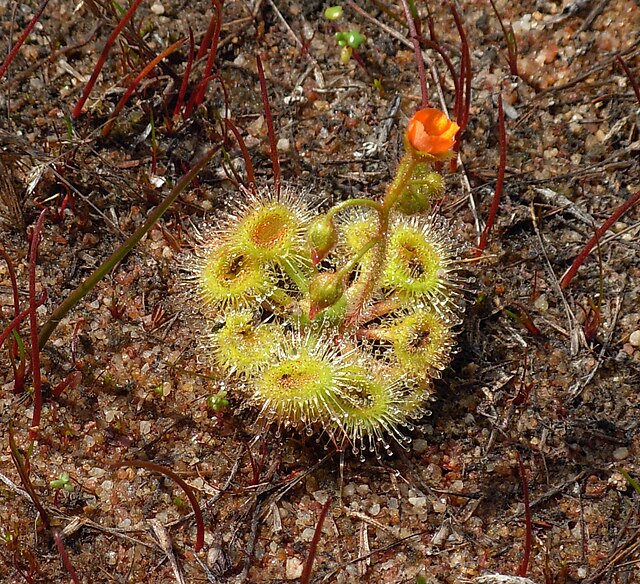
Drosera Glanduligera
Drosera glanduligera
An annual Australian sundew with both sticky tentacles and snap-tentacles that catapult prey in milliseconds.
 © J.M.Garg / CC BY-SA 4.0
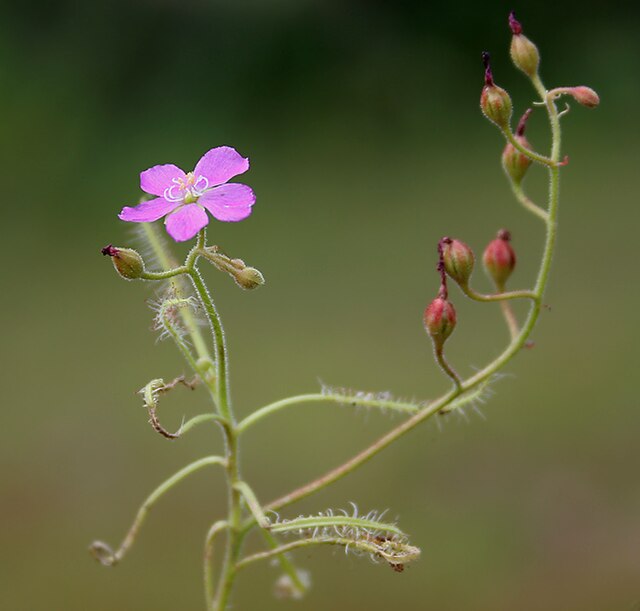
Drosera Indica
Drosera indica
A tall sundew native to Japan as well, but wild populations have drastically declined.
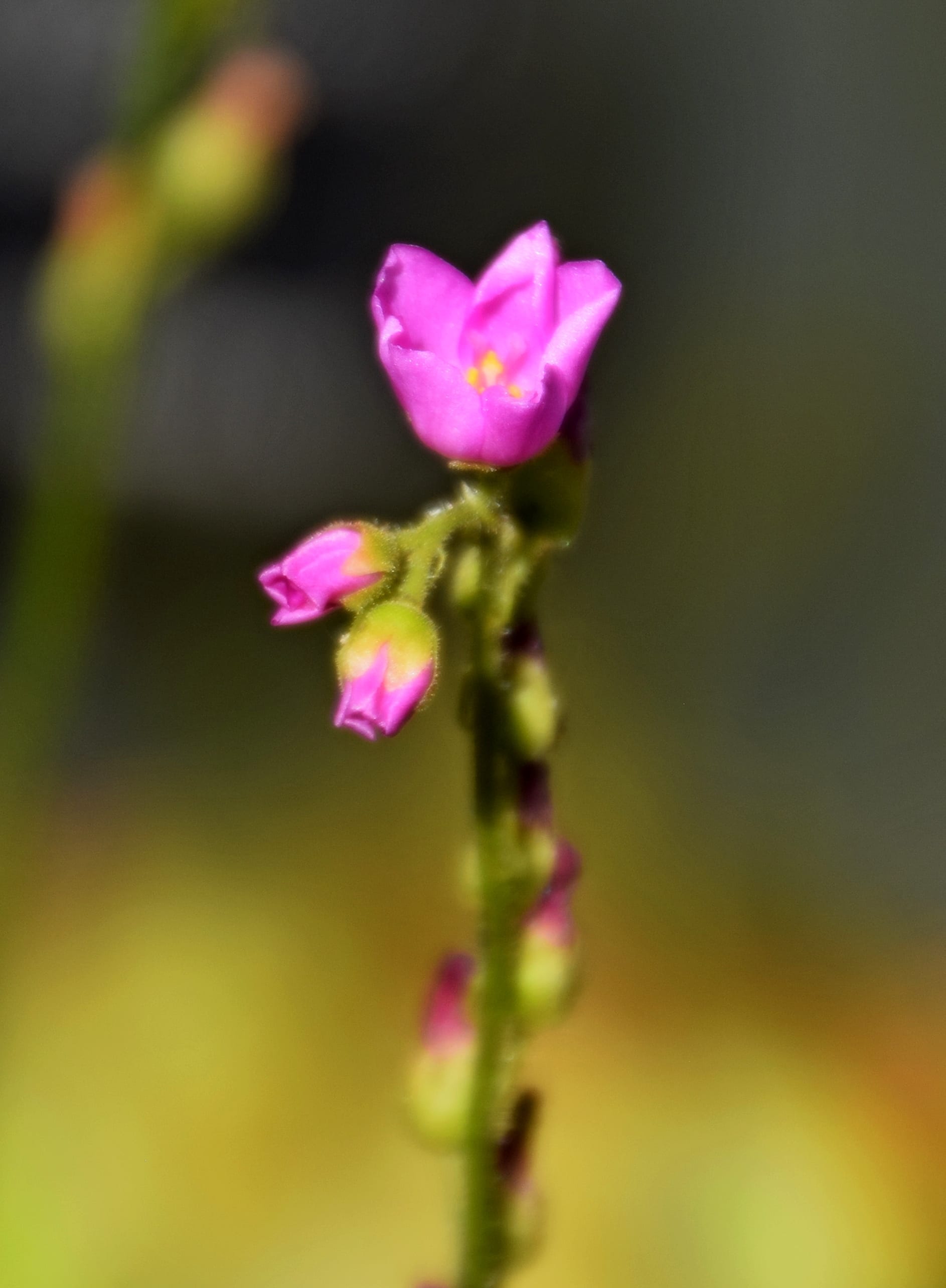 © Krzysztof Golik / CC BY-SA 4.0
Drosera madagascariensis
Drosera madagascariensis
A stem-forming sundew that raises a distinct stem with alternate, spoon-shaped sticky leaves. The lower stem is clothed in dead old leaves and the plant reaches about 25 cm. A robust African species with pink flowers.
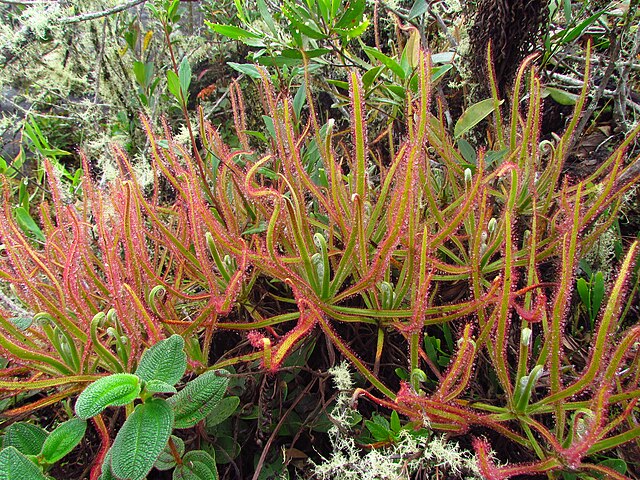 © Paulo Gonella / CC BY-SA 3.0
Drosera Magnifica
Drosera magnifica
Discovered in 2015, one of the world's largest sundews, endemic to one mountain in Brazil.
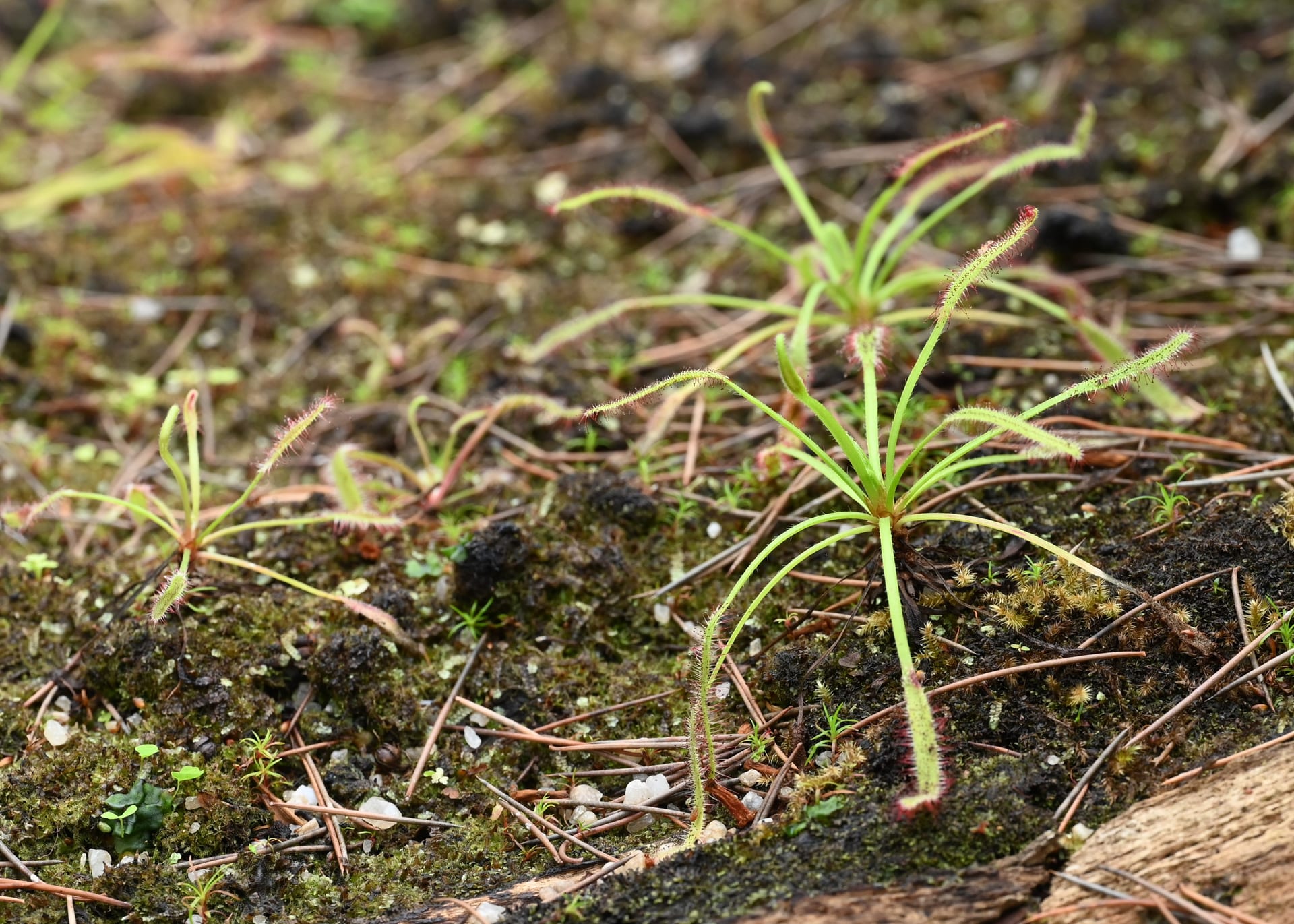 © Krzysztof Ziarnek, Kenraiz / CC BY-SA 4.0
Drosera natalensis
Drosera natalensis
A small rosette-forming sundew with wedge- to spoon-shaped leaves about 2 cm long lying at ground level. Wiry flower stalks reach about 25 cm. Native to swamps of South Africa and Madagascar.
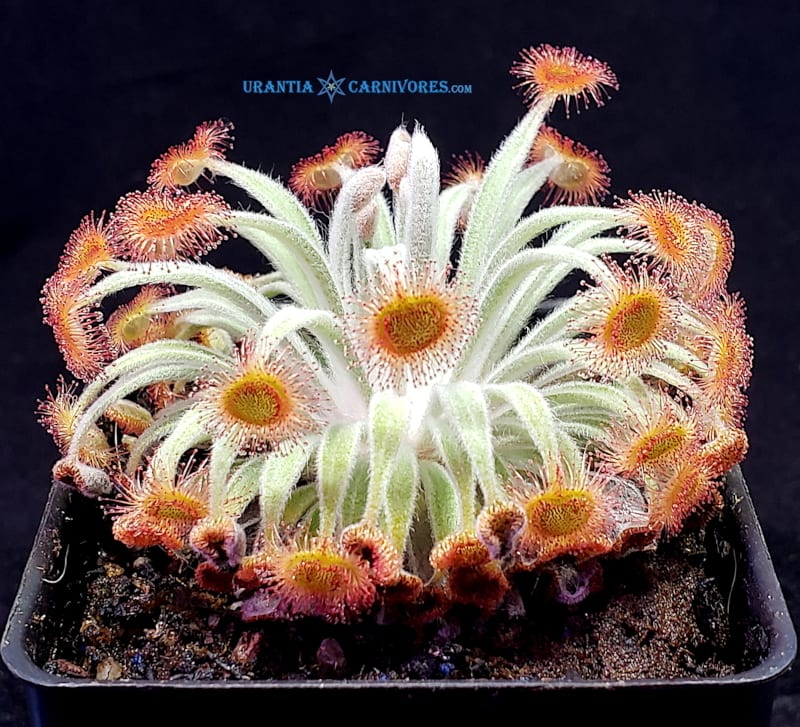 © Cooleyray / CC BY-SA 4.0
Drosera ordensis
Drosera ordensis
A 'woolly' sundew of the petiolaris group with broad petioles densely covered in long silvery hairs. Rosettes are usually about 8 cm across. It bears pink to white flowers and grows around the Ord River in northern Australia.
Related Content
Carnivorous Plant FAQ
- How much do carnivorous plants cost?
- Venus Flytraps cost 500-2,000 yen, Nepenthes 1,000-10,000 yen, and rare highland Nepenthes can exceed tens of thousands of yen depending on species and size.
- Can beginners grow carnivorous plants?
- Venus Flytraps, Sundews, and Sarracenia are relatively easy and beginner-friendly. Keep them in a tray of water for humidity and place in a sunny spot.
- How long do carnivorous plants live?
- Venus Flytraps can live 10+ years with proper care, and Sarracenia are similarly long-lived. Nepenthes can grow for decades in the right conditions, getting progressively larger.
- What should I check when buying carnivorous plants?
- Check that leaves and traps are healthy with no root rot. For Nepenthes, choose specimens with pitchers. Avoid sudden environment changes after purchase and acclimate gradually.
- Do I need to feed insects to carnivorous plants?
- They grow fine through photosynthesis alone without feeding. Insects are supplemental nutrition and don't need to be force-fed. Outdoor plants catch bugs naturally, which is fun to observe.