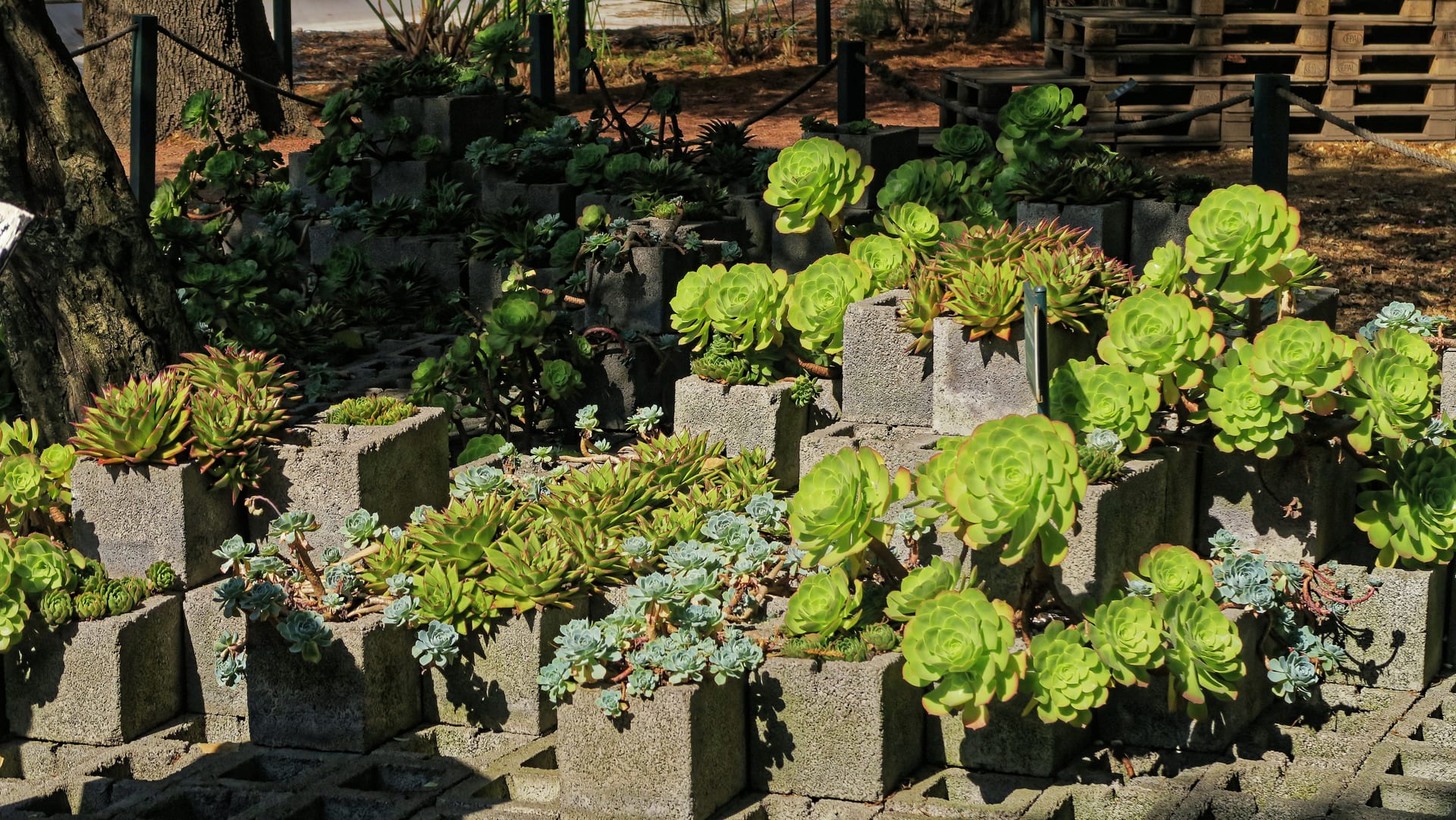
Source: Wikimedia Commons
Echeveria agavoides 'Romeo'
BeginnerEcheveria agavoides 'Romeo'
A red selection of Echeveria agavoides with thick, pointed triangular leaves in grey-purple to red-purple, edged deeper red. Its overall leaf colour separates it from the green species.
About
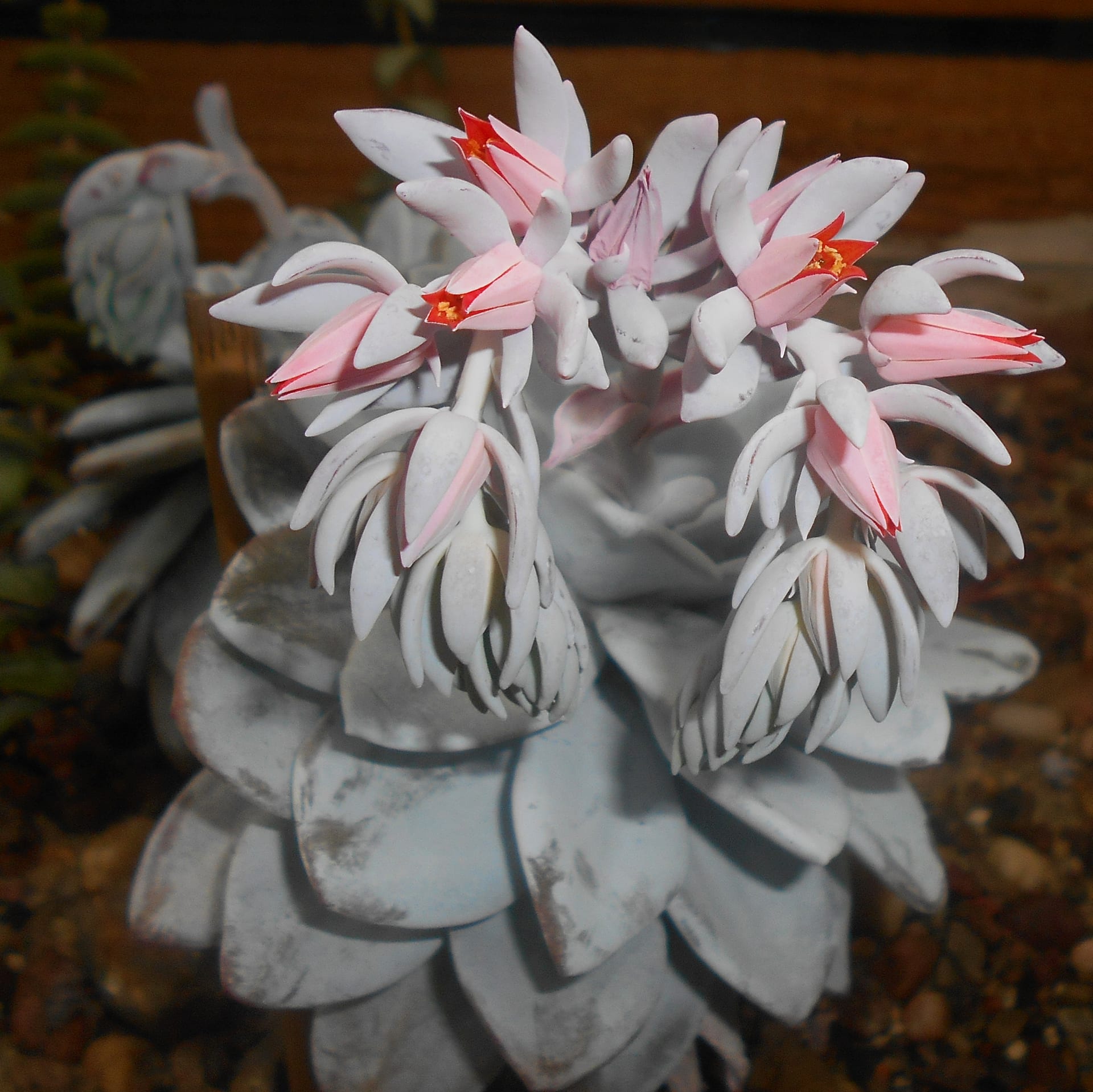
'Romeo' is a cultivar of Echeveria agavoides, a species of rocky canyons and dry hillsides in central Mexico with thick, pointed, agave-like triangular leaves that are green, sometimes with red edges or tips. 'Romeo' was selected for leaves coloured red throughout: grey-purple to red-purple with a deeper red margin and a sharp tip. A US grower gives its parentage as E. agavoides × E. agavoides 'Prolifera'. It offsets into clumps of rosettes about 15 cm tall and 20–30 cm wide. In spring and early summer it sends up stems about 30 cm long with red, yellow-tipped flowers, slightly smaller than those of other agavoides cultivars. It is told apart from the green-leaved species by its overall red-purple colour. In poor light the red fades towards green, so it needs plenty of sun to keep its colour. In Japan it is sold separately from the species under the name 'Romeo', and it is a popular plant at succulent specialists and garden centres; the name 'Romeo Rubin' is also seen in trade.
Size of the Echeveria agavoides 'Romeo'
The Echeveria agavoides 'Romeo' grows to Rosettes about 15 cm tall, clumps 20–30 cm wide.
Basic Info
Origin
Cultivar (E. agavoides is native to central Mexico)
Lifespan
Perennial; clumps by offsets
Size
Rosettes about 15 cm tall, clumps 20–30 cm wide
Temperature
5〜35℃
Humidity
30〜50%
Watering & Fertilizer
Light feeder
Growing Tips
Light & Placement
Grow in good sun for the best red-purple colour. It tolerates shade, but in low light it turns greenish, like the species.
Watering
Treat it as a spring–autumn grower. Water at the base when the pot is completely dry, and cut back in humid summer heat and winter dormancy.
Temperature & Overwintering
A US grower rates it hardy to about -7 to -9°C. Keep potted plants in sun and free of frost and freezing in winter.
Soil & Repotting
Use a free-draining mix and repot in spring or autumn, refreshing the soil.
Propagation
It offsets freely, so division is the easiest method; leaf cuttings also work.
Pests & Cautions
If lack of light fades the red, it becomes hard to tell from the species or other cultivars. It is not a registered variety.
Echeveria agavoides 'Romeo' FAQ
QWhat is the growing difficulty level for Echeveria agavoides 'Romeo'?
Beginner. A variety suitable for beginners. No special equipment or experience is required—you can grow it without problems by setting up a basic cultivation environment.
QHow large does Echeveria agavoides 'Romeo' get?
The mature size of Echeveria agavoides 'Romeo' is Rosettes about 15 cm tall, clumps 20–30 cm wide. This may vary slightly depending on cultivation environment and individual differences.
QHow should I water and fertilize Echeveria agavoides 'Romeo'?
Echeveria agavoides 'Romeo': watering & fertilizer — Light feeder. Aim for appropriate frequency and amount.
QWhat is the typical price for Echeveria agavoides 'Romeo'?
The price of Echeveria agavoides 'Romeo' varies significantly by variety, characteristics, size, and lineage. Please check GrowerDirect's price guide for the latest market information.
Last updated: September 23, 2026
References & Sources
Edited & verified by: GrowerDirect Editorial Team
The classifications, regulations, and growing data on this page are created and verified based on the primary information database below.
Primary sources
- Species+ (CITES) query for Echeveria agavoides: not listed
- Ministry of the Environment: list of Invasive Alien Species
- MAFF plant variety registration database (no matching registration)
- San Marcos Growers: Echeveria agavoides 'Romeo'
- Wikipedia: Echeveria agavoides
- NHK Publishing "Minna no Shumi no Engei" succulent database: エケベリア・コロラータ(エケベリアの育て方)
- GBIF
Taxonomy & Authority
Accepted name: Echeveria agavoides 'Romeo' Lem.
Synonyms: Cotyledon agavoides, Cotyledon corderoyi, Cotyledon obscura, Echeveria agavoides corderoyi, Echeveria agavoides multifida, Echeveria agavoides prolifera, Echeveria corderoyi, Echeveria obscura
Authority databases: GBIF · GBIF
Nomenclature follows global taxonomic authority databases.
Regulations & Conservation Status
Not listed in the CITES Appendices and not regulated under Japan's Invasive Alien Species Act. It is not a registered variety under Japan's Plant Variety Protection and Seed Act.
Sources: Species+ (CITES) query for Echeveria agavoides: not listed / Ministry of the Environment: list of Invasive Alien Species / MAFF plant variety registration database (no matching registration)
Regulations may change. Always verify the latest information with the relevant authorities.
Related Species
Find listings for this species
Related Articles
Complete Guide to Echeveria Types | Characteristics of Popular Varieties and How to Choose Plants for Arrangements
A comprehensive explanation of Echeveria variety classification, differences in characteristics, and how to combine plants for arrangements among popular succulents. We introduce tips for choosing varieties that both beginners and advanced growers can enjoy.
Popular Echeveria Varieties and Care Guide | Complete Guide for Beginners
Explains the characteristics of popular Echeveria varieties, basic care methods, and tips for watering, lighting, and repotting for beginners.
Propagation and Leaf-Cutting Techniques for Echeveria
A practical guide to leaf-cutting specialized for the Echeveria genus. Covers everything from selecting healthy leaves to callus formation and root management, species-specific failure factors for powder-coated varieties, and when to use pup division or stem cuttings instead.
Echeveria subsessilis Offset Propagation — Separation from Parent Plants, Root Promotion, and Parent Plant Recovery Management
Detailed guide on safely separating Echeveria subsessilis offsets from parent plants, promoting root development, and managing parent plant recovery after offset removal.
🩺 Common diseases
Can't find the plant you're looking for?
Post your wishes for free and growers with matching plants will contact you with introductions.