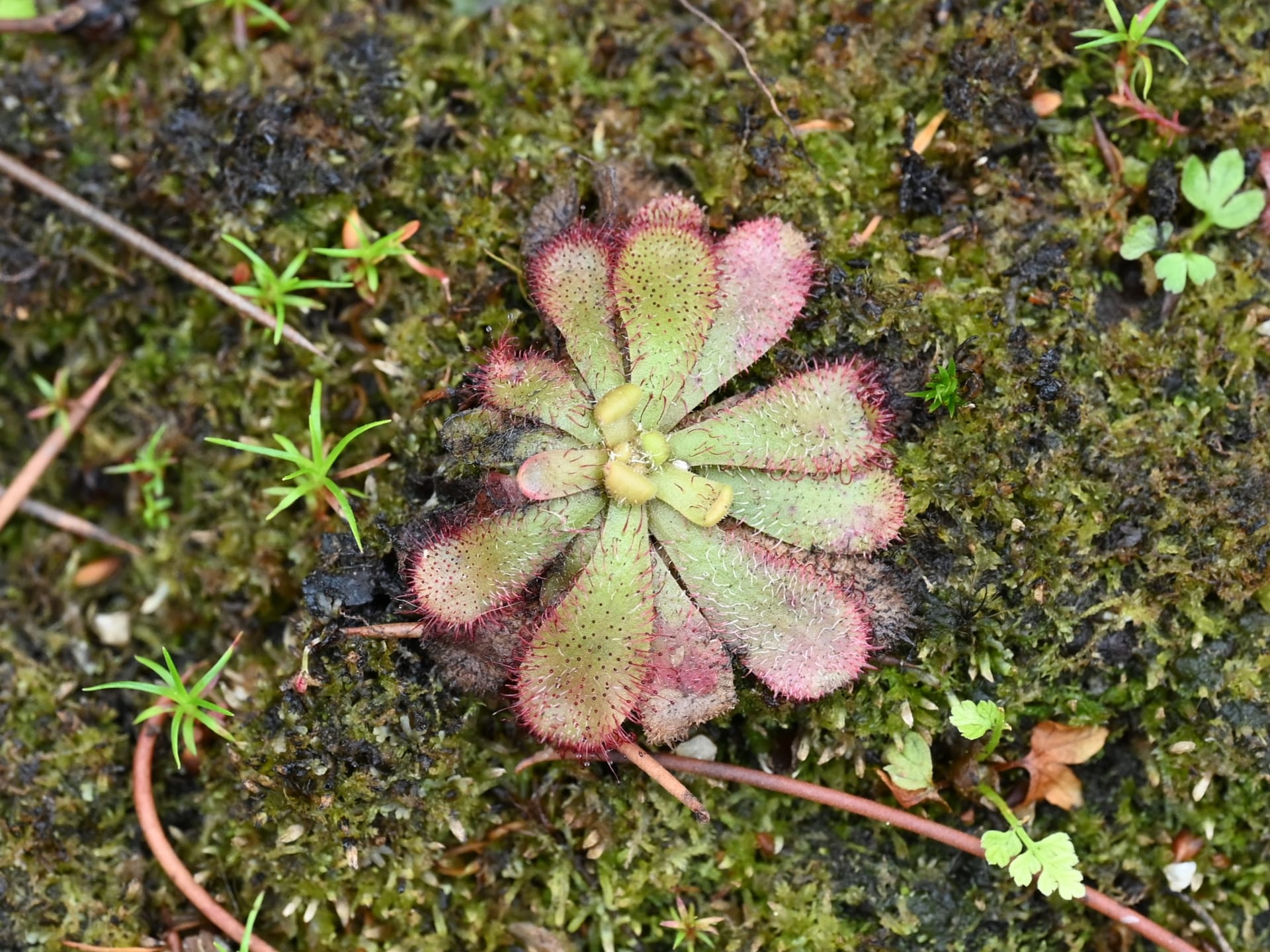
 © Krzysztof Ziarnek, Kenraiz / CC BY-SA 4.0
粉红毛毡苔
Drosera hamiltonii, commonly known as the rosy sundew, is a perennial sundew native to southwestern Australia. Its spoon-shaped leaves form a rosette roughly 4-6cm across, each covered in glistening, mucilage-tipped tentacles that give the plant its classic carnivorous-plant sparkle. When in bloom, it sends up a tall flower stalk reaching 30-40cm, lined with large, deep pink flowers. Botanically, the flowers are notable for their fused styles, a trait distinctive enough to place this species alone in its own section among the sundews. As a perennial, it rewards growers with years of steady growth, though it is generally considered a plant for growers with some prior sundew experience rather than an absolute beginner's first pick.
View 粉红毛毡苔 encyclopedia →成交手续费0%!2026年9月30日前注册,前 2 株免佣金!
生产者 招募中!
在GrowerDirect上销售,直接面向全国客户销售吗?
GrowerDirect的 6 项透明性承诺
生产者在食虫植物出品时明示以下信息。确保品种、产地、所需光照、栽培难度的透明度。
- 品种明确
- 真实照片
- 颜色
- 产地明确
- 所需光照
- 难度明确
查看全部145个品种
食虫植物分类正在招募认证生产者
生产者正在陆续注册,即将上架。设置上架通知,不错过新商品。
「接收上架通知」需免费注册会员即可设置。当有符合您保存条件的新商品上架时,我们会通过邮件和站内通知提醒您。
粉红毛毡苔的基本数据
- 养护难度
- 适合中级者
- 寿命
- 多年生草本植物
- 体型
- 莲座直径4-6厘米(花茎30-40厘米)
- 浇水
- 不施肥(通过捕捉小昆虫获取养分)
- 光照与放置位置
- 在阳光充足的地方栽培。光线不足会导致叶片徒长且难以呈现红色。
- 浇水
- 由于自生地是潮湿泥炭地,应用半腰水法保持基质始终湿润。使用纯水或雨水。
- 土壤与换盆
- 使用以泥炭为主的基质或苔藓植料。由于根系粗壮且生长深,宜用较深的花盆。
- 温度与越冬
- 此为冬雨型地区植物,忌讳盛夏高温和闷热。夏季应在通风良好、光照充足的地方栽培,避免温度过高。
- 肥料
- 基质中不添加肥料。养分通过捕捉小昆虫供应。
关于粉红毛毡苔
Drosera hamiltonii (rosy sundew): a perennial sundew from southwestern Australia with 4-6cm rosettes and deep pink, fused-style flowers on 30-40cm stalks. Considered an intermediate-level plant.
开始养护粉红毛毡苔前需要了解的7件事
1Needs Bright Light
Drosera hamiltonii thrives with plenty of direct sun, whether grown outdoors or on a sunny windowsill. Good light brings out deep red coloring in the leaves and keeps growth compact. Too little light tends to make the rosette stretch and grow leggy.
2Water via Tray Method
Like most sundews, it's typically grown using the tray method, standing the pot in a shallow layer of water so the soil never fully dries out. In hot summer weather, refresh the water regularly and ensure good airflow to avoid rot.
3Peat-Based Mix in a Deeper Pot
Pot it in a peat-based mix or sphagnum moss. Its thick black roots grow long, so a somewhat deeper pot works well. Avoid fertilized potting soil, which can damage the roots.
4Repot During Active Growth
It's time to repot once the rosette has outgrown its pot. Doing this during the active growing season minimizes stress, and it's best to move the root ball gently into fresh mix without disturbing it too much.
5Summer Is the Hard Season
Coming from the winter-rainfall climate of southwestern Australia, it struggles most with midsummer heat and stuffiness. In summer, keep it somewhere bright and airy without letting it get too hot, and keep the mix moist with a water tray all year round.
6Check Leaf Color and Dew
A healthy plant has firm, unwilted leaves with glistening mucilage clearly visible on the tentacles. Fresh new growth unfurling at the center of the rosette is another good sign of vigor.
7No Need to Feed Insects
The sticky mucilage on its leaves naturally attracts and traps small insects, so there's no need to feed it by hand. Indoor growers can simply focus on light and watering to keep the plant healthy.
粉红毛毡苔的常见问题
- Q.Is this sundew suitable for beginners?
- A.It's generally considered an intermediate-level plant rather than a true beginner species. If you're already comfortable with tray watering and mineral-poor soil mixes for sundews, it's very manageable, though first-time growers may want to start with a hardier species.
- Q.How big does it get?
- A.The leaf rosette typically reaches about 4-6cm across. During flowering, it sends up a much taller stalk of 30-40cm, so the plant looks compact most of the year but gains height when in bloom.
- Q.What makes its flowers distinctive?
- A.Its flowers have fused styles, an unusual structural trait among sundews that sets it apart from related species. This feature is distinctive enough that Drosera hamiltonii is classified alone in its own section, with large deep pink blooms carried on a 30-40cm stalk.
- Q.Can it be grown indoors?
- A.Yes, as long as it gets plenty of light from a sunny window. Indoor conditions often provide less light than outdoor growing, though, which can affect leaf color and overall growth compared to a brighter outdoor spot.
- Q.How is it different from other sundews?
- A.Beyond its spoon-shaped leaves and 4-6cm rosette, its most notable difference is the fused-style flower structure. This trait is unique enough that it's classified in its own section among sundew species.
粉红毛毡苔种植的实用工具
在图鉴中详细了解粉红毛毡苔
查看粉红毛毡苔的图鉴条目 →
收录栽培难度、尺寸、原产地、日照等基础数据。