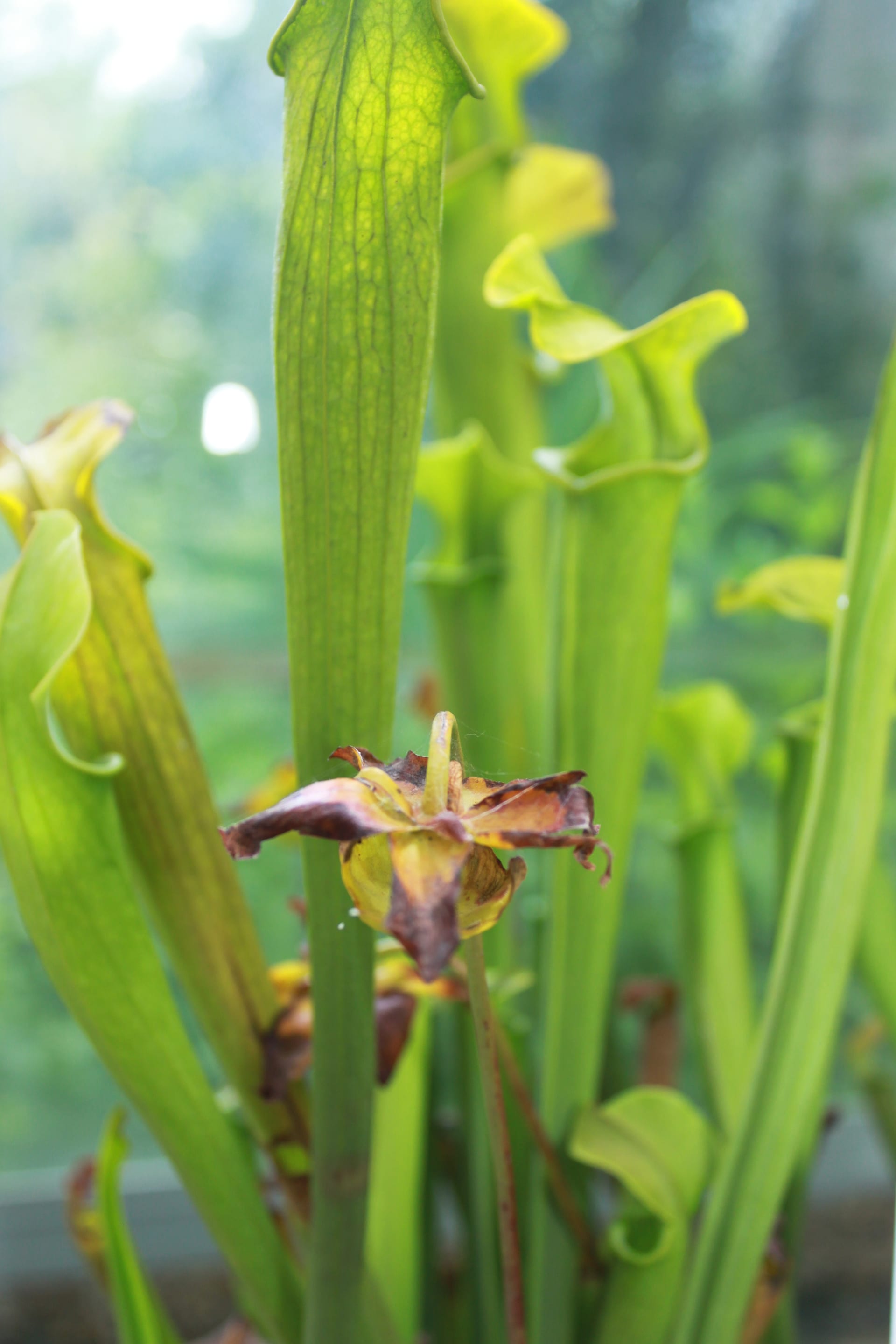
 © Brian Gratwicke / CC BY 2.0
阿拉巴马红瓶子草(Sarracenia rubra ssp. alabamensis)
Sarracenia rubra subsp. alabamensis, the Alabama canebrake pitcher plant, is a subspecies native only to a small number of wetland sites in central Alabama. Its yellow-green pitchers are covered in fine hairs and traced with red veins, and in spring it produces reddish-purple flowers with a raspberry-like scent. It is listed in CITES Appendix I, and in Japan any sale or transfer in principle requires a registration certificate under the Act on Conservation of Endangered Species. Plants propagated in Japan are also subject to registration, so always confirm that a registration certificate comes with the plant when buying. Suited to intermediate growers, it makes a rewarding next step once you are comfortable with basic Sarracenia care, and as a perennial it can be kept for years through division.
View 阿拉巴马红瓶子草(Sarracenia rubra ssp. alabamensis) encyclopedia →成交手续费0%!2026年9月30日前注册,前 2 株免佣金!
生产者 招募中!
在GrowerDirect上销售,直接面向全国客户销售吗?
GrowerDirect的 6 项透明性承诺
生产者在食虫植物出品时明示以下信息。确保品种、产地、所需光照、栽培难度的透明度。
- 品种明确
- 真实照片
- 颜色
- 产地明确
- 所需光照
- 难度明确
查看全部145个品种
食虫植物分类正在招募认证生产者
生产者正在陆续注册,即将上架。设置上架通知,不错过新商品。
「接收上架通知」需免费注册会员即可设置。当有符合您保存条件的新商品上架时,我们会通过邮件和站内通知提醒您。
阿拉巴马红瓶子草(Sarracenia rubra ssp. alabamensis)的基本数据
- 养护难度
- 适合中级者
- 寿命
- 多年草(可通过分株长期维持)
- 体型
- 瓶囊高度约20~65厘米
- 浇水
- 不施肥(捕捉昆虫)
- 日照·放置位置
- 在室外阳光充足的地方种植。日照不足会导致着色不良,瓶囊也会变得脆弱。
- 浇水
- 将花盆浸入深度4~6厘米的水中,始终保持湿润,切勿干燥。使用雨水等溶解盐类较少的水。
- 土壤·换盆
- 泥炭和砂按1:1混合的土壤为基础。生长良好的株可每3~4年进行分株换盆。
- 温度·越冬
- 冬季休眠。充分休眠的情况下即使花盆冻结数周也能耐受,但休眠前后的早霜和晚霜很危险。越冬场所不宜过暖。
- 肥料
- 成株的土壤中不加肥料。肥料会导致根茎腐烂。只要充分晒太阳,置于能够捕虫的环境中就能充分生长。
- 病虫害·注意事项
- 属华盛顿条约附录I的亚种,国内买卖·转让需要登记票。没有登记票的株不要购买。
关于阿拉巴马红瓶子草(Sarracenia rubra ssp. alabamensis)
A Sarracenia subspecies native to a small number of wetland sites in central Alabama. Yellow-green pitchers with red veins and raspberry-scented reddish-purple flowers; an intermediate-level perennial that can be divided and grown for years.
开始养护阿拉巴马红瓶子草(Sarracenia rubra ssp. alabamensis)前需要了解的7件事
1Sunlight & Placement
Sarracenia thrive in full sun with good airflow. Strong, direct light outdoors helps the yellow-green pitchers develop their vivid red veining; too little light can cause weak, poorly colored growth.
2Bottom Watering
As a wetland native, it does best with a shallow water tray kept under the pot at all times. If your tap water is mineral-heavy, rainwater or purified water helps keep the plant healthier long-term.
3Nutrient-Free Soil Mix
Use a carnivorous-plant soil mix or a blend of peat moss with sand or perlite that contains no added nutrients. Fertilizer or compost can damage the roots, since this plant gets its nutrients from insects caught in its pitchers rather than from the soil.
4Repotting & Division
As a perennial, it fills out its pot over the years, so repot roughly every couple of years in early spring as it comes out of dormancy. Divide the rhizome gently, without breaking up the root ball too much, to refresh each section.
5Winter Dormancy
The foliage dies back in autumn as the plant enters dormancy, which is a normal part of its yearly cycle. Let it experience outdoor cold, but protect the pot from hard freezing so new growth emerges evenly the following spring.
6Raspberry-Scented Spring Flowers
In early spring, before the new pitchers unfurl, it sends up a flower stalk topped with a reddish-purple bloom with a sweet scent reminiscent of raspberries. Flowers and new pitchers appearing at separate times is typical of Sarracenia.
7Choosing a Healthy Plant
Look for a plant with a firm rhizome at the base and pitchers that still show their yellow-green color, red veining, and fine surface hairs clearly. Pitchers can reach roughly 20 to 65 cm tall, so it is worth planning your growing space with that mature size in mind.
阿拉巴马红瓶子草(Sarracenia rubra ssp. alabamensis)的常见问题
- Q.Can beginners grow this plant?
- A.This variety is generally considered suited to intermediate growers. It's easiest to take on after you have some experience with Sarracenia basics like bottom watering and handling dormancy.
- Q.Does it die back in winter?
- A.The foliage dying back in autumn is a normal sign of entering dormancy, not the plant dying. New growth emerges from the rhizome again in spring.
- Q.How large does it grow?
- A.The pitchers reach roughly 20 to 65 cm in height. Through repeated division, the overall clump also fills out more each year.
- Q.Does it need to catch insects to survive?
- A.It typically catches insects that come to it naturally, indoors or out, so feeding it by hand usually isn't necessary. If growth seems weak, check light and watering first rather than adding insects.
- Q.Do the flowers and pitchers appear at the same time?
- A.The flowers bloom first in spring, with the new pitchers unfurling somewhat afterward. You get to enjoy the raspberry-scented blooms and the red-veined pitchers at slightly different times.
阿拉巴马红瓶子草(Sarracenia rubra ssp. alabamensis)种植的实用工具
在图鉴中详细了解阿拉巴马红瓶子草(Sarracenia rubra ssp. alabamensis)
查看阿拉巴马红瓶子草(Sarracenia rubra ssp. alabamensis)的图鉴条目 →
收录栽培难度、尺寸、原产地、日照等基础数据。