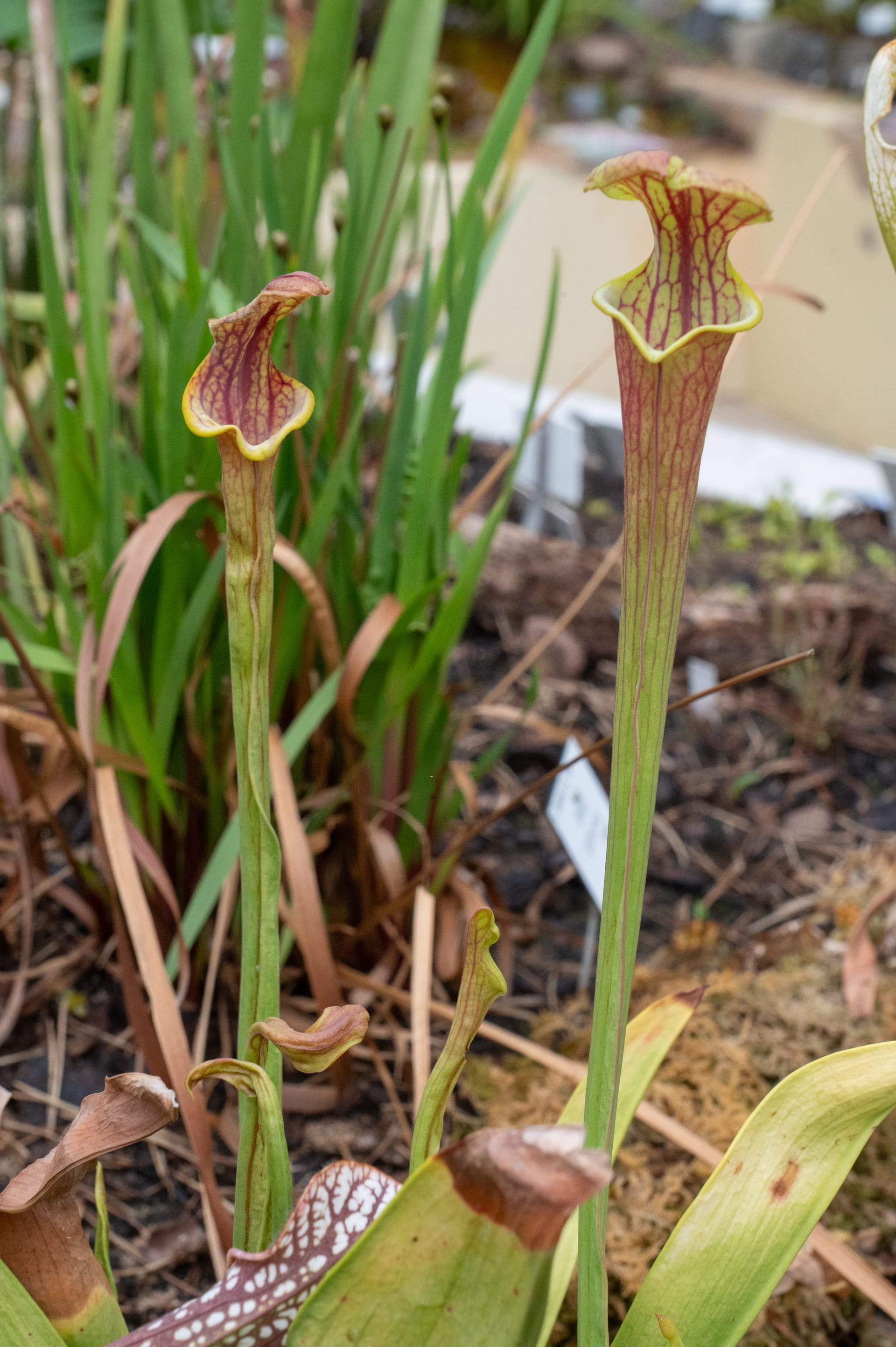
 © Mickaël Schauli / CC BY-SA 4.0
深紫黄瓶子草
Sarracenia flava var. atropurpurea is a striking variety of the yellow pitcher plant, distinguished by a deep reddish-purple color that runs from the base of the pitcher all the way up to the lid. The lid itself often opens already flushed with red, typically appearing even darker than the tube below it. Bringing out this rich coloration requires plenty of strong light, which makes watching the color deepen over the growing season one of the real pleasures of keeping this plant. While it is generally considered a variety better suited to growers with some prior experience, it is a long-lived perennial that can be maintained for years through division, rewarding patience with a truly dramatic pitcher plant.
View 深紫黄瓶子草 encyclopedia →成交手续费0%!2026年9月30日前注册,前 2 株免佣金!
生产者 招募中!
在GrowerDirect上销售,直接面向全国客户销售吗?
GrowerDirect的 6 项透明性承诺
生产者在食虫植物出品时明示以下信息。确保品种、产地、所需光照、栽培难度的透明度。
- 品种明确
- 真实照片
- 颜色
- 产地明确
- 所需光照
- 难度明确
查看全部145个品种
食虫植物分类正在招募认证生产者
生产者正在陆续注册,即将上架。设置上架通知,不错过新商品。
「接收上架通知」需免费注册会员即可设置。当有符合您保存条件的新商品上架时,我们会通过邮件和站内通知提醒您。
深紫黄瓶子草的基本数据
- 养护难度
- 适合中级者
- 寿命
- 多年生草本(可通过分株长期维持)
- 体型
- 袋子高度通常约50厘米(作为品种有时可超过1米)
- 浇水
- 不施肥(捕捉昆虫)
- 日照和放置位置
- 深紫色的发色需要非常强烈的光照。放置在户外阳光充足处。有些株只需移动位置或改变盆的方向就会导致颜色褪淡,因此一旦确定位置就不要移动。
- 浇水
- 将花盆浸泡在4-6厘米深的水中,持续浸泡,决不能干燥。使用雨水等溶解盐分少的水。
- 基质和换盆
- 基本用土是泥炭和沙子按1:1混合。长势良好的株每3-4年通过分株进行一次换盆。
- 温度和越冬
- 冬季休眠。如果充分休眠,即使花盆冻结数周也能耐受,但休眠前后的早霜和晚霜很危险。越冬场所不要过暖。
- 肥料
- 成株的基质中不加肥料。肥料会导致根茎腐烂。只要置于光照充足、能捕捉昆虫的环境中就能充分生长。
- 病虫害和注意事项
- 黄瓶子草的变种主要以颜色差异为特征,即使在自生地也有许多中间型株或变种间杂交株。不要仅凭变种名称判断,要通过照片或实物确认袋子和盖子的颜色。
关于深紫黄瓶子草
A Sarracenia flava variety whose pitchers and lids deepen into a rich reddish-purple under strong light. An intermediate-level, long-lived perennial pitcher plant that can be maintained through division.
开始养护深紫黄瓶子草前需要了解的7件事
1Full Sun Is Essential
Choose a spot with as much direct sun as possible. Full sun throughout the day is essential for developing this variety's signature deep reddish-purple color; without enough light, the pitchers and lid will stay pale and the coloring won't reach its full potential. If grown indoors, place it by the brightest window available or supplement with a grow light.
2Watering: Keep It Wet
As a plant native to wetlands, Sarracenia is best kept in a saucer of standing water at all times rather than watered occasionally from above. Use rainwater or purified water rather than tap water, since mineral buildup can damage the roots over time. Check the water level often in summer, as it evaporates quickly and the pot shouldn't be allowed to dry out.
3Use Nutrient-Poor Soil
Sarracenia prefers low-nutrient growing media, so live sphagnum moss or a mix of ingredients like kanuma soil and perlite works well. Avoid regular potting soil or anything containing fertilizer, as it can damage the roots. Keep the medium consistently moist after planting.
4Repot During Dormancy
The best time to repot is during winter to early spring, while the plant is dormant. Repotting or refreshing the soil at this point causes the least stress to the roots. Disturbing the roots during the active growing season can weaken the plant, so it's best avoided.
5Let It Go Dormant in Winter
Sarracenia naturally dies back above ground each winter, and going through this dormant period is what keeps it healthy and vigorous the following year. It's best kept outdoors, with some protection from hard frost, so it experiences the cold needed to enter dormancy properly. Keeping it in a warm room through winter prevents dormancy and can weaken the plant over time.
6Propagate by Division
As a perennial, this variety naturally produces offshoot plantlets as it matures, which can be divided off to multiply the plant or keep it going long-term. The best time for division is the same dormant window, winter to early spring. Divided offshoots start out smaller than the parent plant, but grow into their full size and coloring over time.
7What to Look for When Choosing a Plant
When buying, confirm from photos or the plant itself that both the tube and lid are well colored. Deep color needs very strong light, and some plants won't color up for the year after simply being moved or having their pot turned. Once you've chosen a spot with strong light, leave it there.
深紫黄瓶子草的常见问题
- Q.Is this variety suitable for beginners?
- A.It's generally considered better suited to growers with some experience, though anyone comfortable with the basics of Sarracenia care, such as standing water and strong light, can grow it successfully. It's a good idea to get comfortable growing a more common Sarracenia first before trying this variety.
- Q.Why does it turn such a deep reddish-purple color?
- A.As a variety of the yellow pitcher plant, it has a strong tendency to develop deep pigment from the tube up through the lid. Bringing out this coloring depends heavily on strong sunlight, and the color stays pale if light levels are too low.
- Q.How large does it grow?
- A.The pitchers typically reach around 50 cm in height, though the species as a whole can occasionally exceed 1 meter. Actual size varies depending on growing conditions and the age of the plant.
- Q.Can it be grown indoors?
- A.Since it needs strong light, growing it indoors means placing it at the brightest window available or supplementing with a grow light. An outdoor spot with direct sun generally makes it easier to bring out the plant's full coloring.
- Q.How should it be cared for in winter?
- A.The plant dies back above ground and enters dormancy in winter, so it should generally be kept outdoors where it experiences some cold. If hard freezes are a concern, provide some protection, but avoid keeping it in a warm room the whole winter, as that prevents proper dormancy.
深紫黄瓶子草种植的实用工具
在图鉴中详细了解深紫黄瓶子草
查看深紫黄瓶子草的图鉴条目 →
收录栽培难度、尺寸、原产地、日照等基础数据。