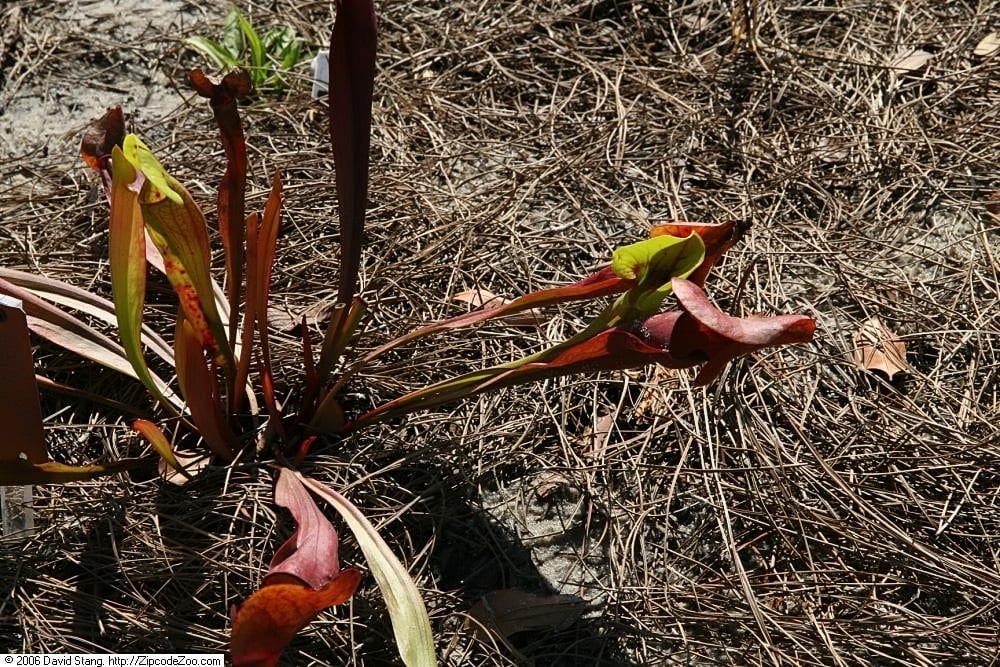
 © Photo by David J. Stang / CC BY-SA 4.0
凯特斯贝瓶子草
Sarracenia × catesbaei is a classic, long-cultivated natural hybrid between the tall, slender S. flava and the short, squat S. purpurea. It settles neatly between its parents in form, producing pitchers that are thicker than S. flava's but taller and more upright than S. purpurea's. As one of the oldest and best-known Sarracenia hybrids, it has a striking yet approachable presence, and its easy-going nature makes it a great pick for anyone new to carnivorous plants.
View 凯特斯贝瓶子草 encyclopedia →成交手续费0%!2026年9月30日前注册,前 2 株免佣金!
生产者 招募中!
在GrowerDirect上销售,直接面向全国客户销售吗?
GrowerDirect的 6 项透明性承诺
生产者在食虫植物出品时明示以下信息。确保品种、产地、所需光照、栽培难度的透明度。
- 品种明确
- 真实照片
- 颜色
- 产地明确
- 所需光照
- 难度明确
查看全部145个品种
食虫植物分类正在招募认证生产者
生产者正在陆续注册,即将上架。设置上架通知,不错过新商品。
「接收上架通知」需免费注册会员即可设置。当有符合您保存条件的新商品上架时,我们会通过邮件和站内通知提醒您。
凯特斯贝瓶子草的基本数据
- 养护难度
- 适合新手
- 寿命
- 多年生草本(可通过分株长期维持)
- 体型
- 尺寸资料较少(介于两亲本之间)
- 浇水
- 不施肥(通过捕食昆虫获得养分)
- 日照和摆放位置
- 在室外光照充足的地方培养。光照不足会导致色彩暗淡,瓶子也会显得软弱。
- 浇水
- 将花盆常年浸入4~6厘米深的水中,不可干燥。应使用雨水等低溶解盐含量的水。
- 培养土和分株移植
- 培养土基础为泥炭和砂等量混合(1:1)。生长良好的植株应每3~4年进行分株繁殖和移植。
- 温度和越冬
- 冬季需要休眠。充分休眠的植株即使花盆冻结数周也能耐受,但休眠前后的早霜和晚霜较为危险。越冬场所应避免过暖。
- 肥料
- 成株培养土中不应含肥料,否则会导致根茎腐烂。在充足日照和昆虫充足的环境中,植株能充分生长。
- 修剪和整形
- 老旧瓶子中的养分会转移到新芽,所以只应剪除褐色枯死的部分。
关于凯特斯贝瓶子草
Sarracenia × catesbaei is a natural hybrid of S. flava and S. purpurea, blending both parents' forms into an easy-to-grow carnivorous plant well suited to beginners.
开始养护凯特斯贝瓶子草前需要了解的7件事
1Give It Full Sun Outdoors
Sarracenia thrives in direct sun and good airflow, so grow it outdoors rather than on a shaded windowsill. Without enough light, the pitchers stay pale and the plant won't grow as vigorously. In the height of summer, light afternoon shade can help if the sun is especially intense.
2Keep It Standing in Water
Sarracenia is typically grown with the tray method, keeping the pot sitting in a shallow reservoir of water so the soil stays consistently moist. Tap water minerals can build up and stress the plant over time, so rainwater or purified water is preferable. Check the water level often in summer so the pot never dries out.
3Use Unfertilized Peat Mix
Sarracenia needs a nutrient-free medium based on sphagnum moss or peat, not ordinary potting soil, since fertilizer and added nutrients can damage the roots. Mixing in perlite helps balance drainage with moisture retention. This kind of poor, acidic soil mimics the boggy habitat the plant is adapted to.
4Repot in Early Spring
The best time to repot is in early spring, just before new growth begins after winter dormancy. When the roots become crowded, move the plant into a slightly larger pot using the same peat-based mix. Avoid repotting during the height of summer or winter, as it puts extra stress on the plant.
5Let It Go Dormant in Winter
Sarracenia is a perennial that dies back above ground each winter, and this cold dormant period is essential for healthy growth the following year. It's reasonably cold-hardy outdoors; in colder regions, mulching around the roots offers extra protection. Keeping it warm indoors through winter and skipping dormancy tends to weaken the plant over time.
6Check Roots and New Growth
Look for a plant with upright, well-formed pitchers and visible new growth or active roots at the base. Since S. × catesbaei is a perennial that can be maintained for years through division, starting with one healthy plant is the first step toward long-term growing. A few brown, spent pitchers are normal, so judge overall health by the presence of fresh growth instead.
7Divide the Clump Over Time
As a perennial, S. × catesbaei can be kept going for many years by dividing the rhizome as it spreads and the clump becomes crowded. Division is best done at repotting time, separating the rhizome into sections that each keep a few growth points. Keep the water tray topped up afterward while the divided pieces settle in.
凯特斯贝瓶子草的常见问题
- Q.Is this a good choice for carnivorous plant beginners?
- A.Sarracenia × catesbaei is known for being relatively easy to grow, making it a good starting point for first-time carnivorous plant keepers. As long as you provide plenty of sun and keep it in the tray-water method, it should grow without major trouble.
- Q.Should I bring it indoors for winter?
- A.No — Sarracenia is a perennial that needs a cold dormant period outdoors each winter. Keeping it warm indoors year-round can prevent proper dormancy and weaken the plant over time. In areas with hard freezes, mulching the roots is a better way to protect it than moving it inside.
- Q.Will it die if I don't feed it insects?
- A.No — like other plants, it photosynthesizes and doesn't depend on insects to survive. Left outdoors, it will catch its own prey naturally, so there's generally no need to feed it by hand.
- Q.How big does it grow?
- A.It takes an intermediate form between its two parents, though detailed size data specific to S. × catesbaei is limited. Growth also varies with growing conditions, so it's best to use the parent species as a rough guide and let the plant develop at its own pace.
- Q.When and how should I divide the plant?
- A.Division is best done at repotting time, in early spring as the plant comes out of dormancy. Separate the rhizome into pieces that each retain a few growth points, and plant each section in the same peat-based mix. Since it's a perennial, you can keep dividing it this way to enjoy the plant for many years.
凯特斯贝瓶子草种植的实用工具
在图鉴中详细了解凯特斯贝瓶子草
查看凯特斯贝瓶子草的图鉴条目 →
收录栽培难度、尺寸、原产地、日照等基础数据。