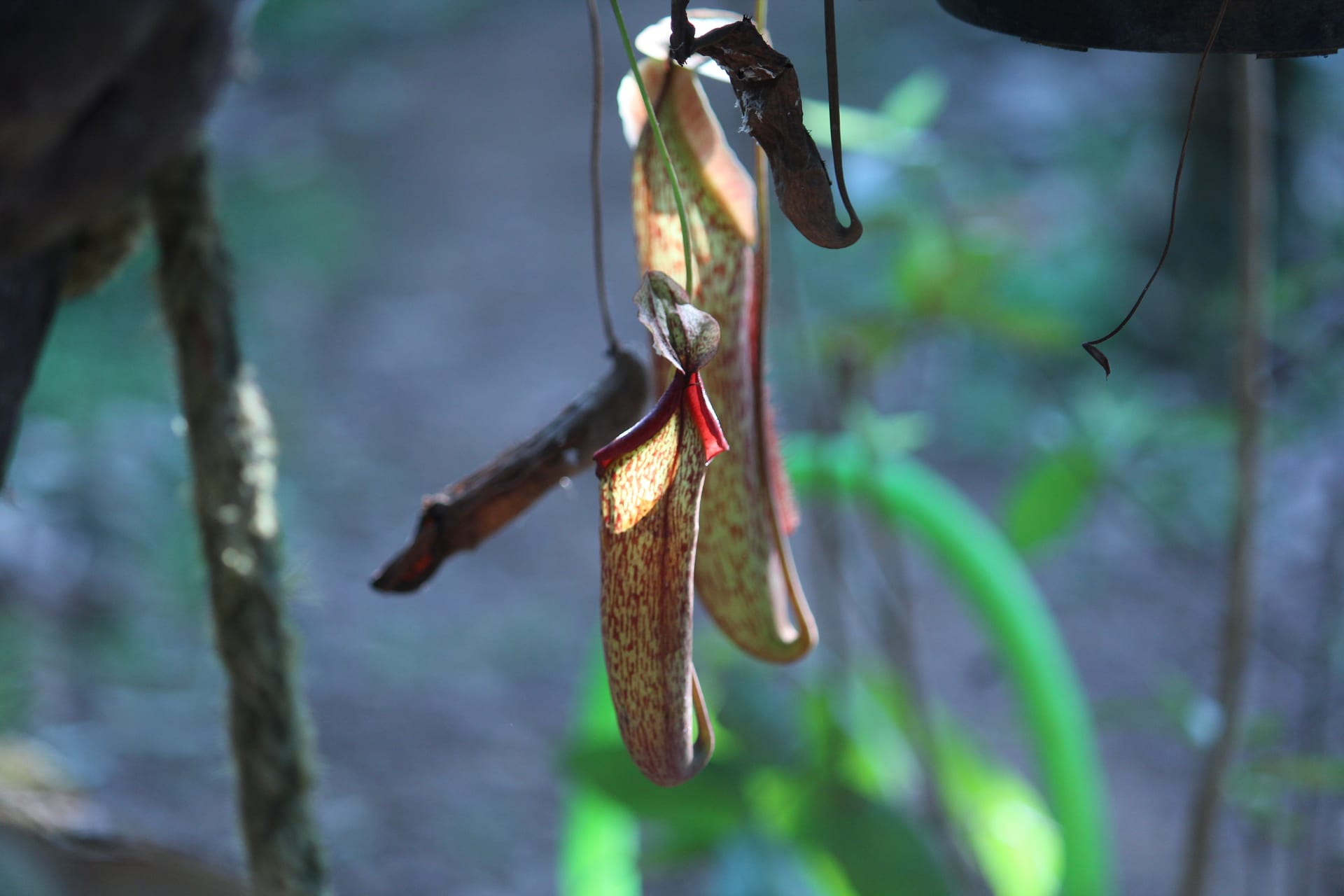
 © vijayakumarblathur / CC BY-SA 4.0
猪笼草'米兰达'
Nepenthes Miranda is a hybrid pitcher plant known for its large pitchers, pale green with reddish-brown speckling and a nearly vertical mouth rimmed in deep reddish-brown, called the peristome. Pitchers typically reach about 25 to 30 cm in height, and the vine grows continuously, producing new pitchers as it climbs. As a perennial vine, it's generally considered beginner-friendly, making it a popular starting point for anyone curious about carnivorous plants. Its striking pitchers and vigorous growth habit give it a presence unlike typical foliage plants, appealing to hobbyists who want a bit more character on their shelf.
View 猪笼草'米兰达' encyclopedia →成交手续费0%!2026年9月30日前注册,前 2 株免佣金!
生产者 招募中!
在GrowerDirect上销售,直接面向全国客户销售吗?
GrowerDirect的 6 项透明性承诺
生产者在食虫植物出品时明示以下信息。确保品种、产地、所需光照、栽培难度的透明度。
- 品种明确
- 真实照片
- 颜色
- 产地明确
- 所需光照
- 难度明确
查看全部145个品种
猪笼草'米兰达'的基本数据
- 养护难度
- 适合新手
- 寿命
- 多年生蔓性植物
- 体型
- 陷阱高25~30厘米
- 浇水
- 肥料应极度稀释和节制(可自行捕捉昆虫)
- 光照和放置位置
- 在明亮的地方养护。光线不足时陷阱难以形成。使用悬挂花盆时大陷阱会显得突出。
- 浇水
- 使用雨水或低溶解盐分的水,在基质完全干燥之前浇水。不在盘子中长期储存水,使用排水良好的基质以避免根部受潮。
- 温度和越冬
- 拥有高地和低地祖先,适应宽温度范围。冬季在温暖的室内避免寒冷。
- 基质和换土
- 种植在排水和透气性良好的基质中。常用单独的水苔,或混合水苔和珍珠岩的兰花用基质。
- 肥料
- 如使用化学肥料应极度稀释。有时在陷阱中放入昆虫的程度就足以维持生长。
- 增殖方法
- 扦插:将扦条扦插在湿润的水苔中,用袋或盒子保持湿度,约1~2个月内生根,大约半年后开始形成陷阱。
关于猪笼草'米兰达'
Nepenthes Miranda is a hybrid pitcher plant with large, reddish-speckled pitchers reaching 25-30 cm. Beginner-friendly and vigorous, this perennial vine makes an eye-catching pick for new carnivorous plant growers.
开始养护猪笼草'米兰达'前需要了解的7件事
1Light & Placement
Nepenthes Miranda prefers bright, indirect light, such as near a window filtered by a sheer curtain, rather than direct sun. Prolonged exposure to strong direct sunlight can scorch the leaves, so filtered light is safer. Good airflow combined with adequate humidity tends to encourage better pitcher formation.
2Watering & Humidity
Water before the growing medium fully dries out, and avoid letting it dry out too much between waterings. Low humidity can prevent pitchers from developing properly, so misting or other humidity boosts help. Avoid leaving standing water in the saucer, as this can lead to root rot.
3Choosing a Growing Medium
This plant prefers a well-draining, low-nutrient mix, such as sphagnum moss combined with bark chips and perlite. Standard potting soil for houseplants tends to hold too much moisture and nutrients, so it's best avoided.
4When to Repot
Repot into a slightly larger container once roots fill the current pot. Nepenthes roots are delicate, so handle the root ball gently and avoid disturbing it more than necessary. Repotting during active growth, rather than a slower season, tends to go more smoothly.
5Temperature & Winter Care
As a vine that favors warm conditions, this plant can weaken if exposed to cold temperatures in winter. Moving it to a warm indoor spot and keeping temperatures from dropping too low are key to a successful winter.
6Feeding Is Rarely Needed
Because the pitchers naturally trap small insects for nutrients, additional fertilizing usually isn't necessary. If you do fertilize, use a diluted liquid feed sparingly, since concentrated fertilizer can damage the roots.
7What to Look For When Choosing a Plant
Check whether new pitchers are forming at the tip of the vine and whether the leaves and vine show any signs of damage. It's also worth confirming that the base is stable and the roots are well established.
猪笼草'米兰达'的常见问题
- Q.Is this a good plant for beginners?
- A.Yes — Nepenthes Miranda is generally considered a beginner-friendly variety. With the basics of bright light and humidity management in place, it's manageable even for first-time carnivorous plant growers.
- Q.How big do the pitchers get?
- A.Pitchers typically reach about 25 to 30 cm in height. They're pale green with reddish-brown speckling, and the rim, or peristome, develops a deep reddish-brown color.
- Q.Is it better to grow it indoors or outdoors?
- A.It can be grown either indoors or outdoors as long as it's protected from direct sun and sudden temperature swings. Since it's sensitive to cold, though, it's safer to keep it in a warm indoor spot during cooler seasons.
- Q.Do I need to feed it insects?
- A.Not really — the pitchers naturally catch small insects on their own, so actively feeding it usually isn't necessary. Forcing insects into the pitchers can even damage them, so it's best avoided.
- Q.An old pitcher has turned brown and dried out — is that a problem?
- A.Individual pitchers have a natural lifespan, and it's normal for older ones to brown and die back once they've done their job. As long as new pitchers are forming at the vine's tip, the plant itself is healthy.
猪笼草'米兰达'种植的实用工具
在图鉴中详细了解猪笼草'米兰达'
查看猪笼草'米兰达'的图鉴条目 →
收录栽培难度、尺寸、原产地、日照等基础数据。