Types of Red Aquatic Plants and Conditions for Red Coloration | How to Maximize Color Expression
This guide explains the types of red aquatic plants and the conditions needed to bring out their red coloration. Ludwigia repens is recommended for beginners; keep nitrate at 5–10 ppm, add chelated iron 2–3 times a week, and aim for at least 30–50 lumens per liter of light. It also covers why soft water is advantageous.
Key Takeaways
This guide explains the types of red aquatic plants and the conditions needed to bring out their red coloration. Ludwigia repens is recommended for beginners; keep nitrate at 5–10 ppm, add chelated iron 2–3 times a week, and aim for at least 30–50 lumens per liter of light. It also covers why soft water is advantageous.
Related Species
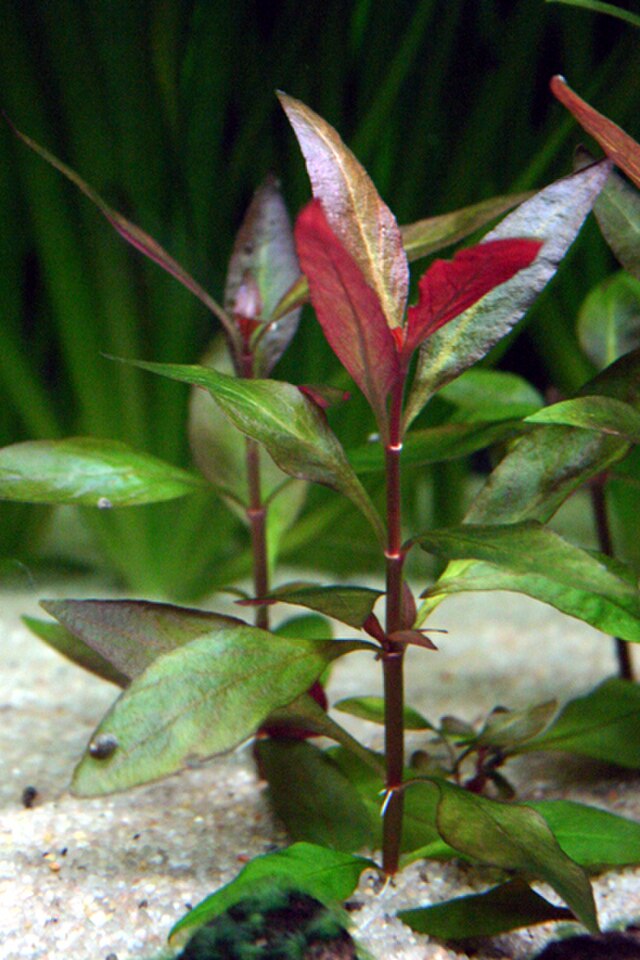
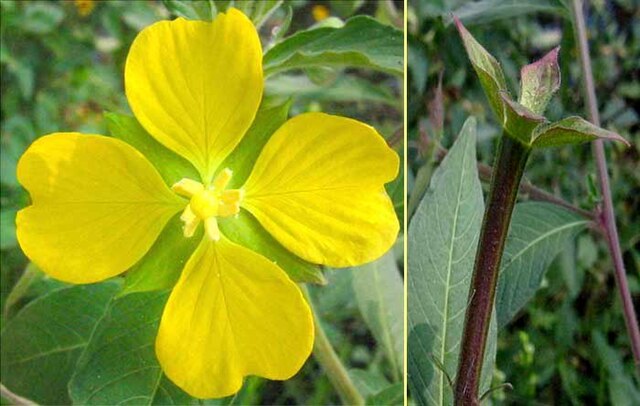
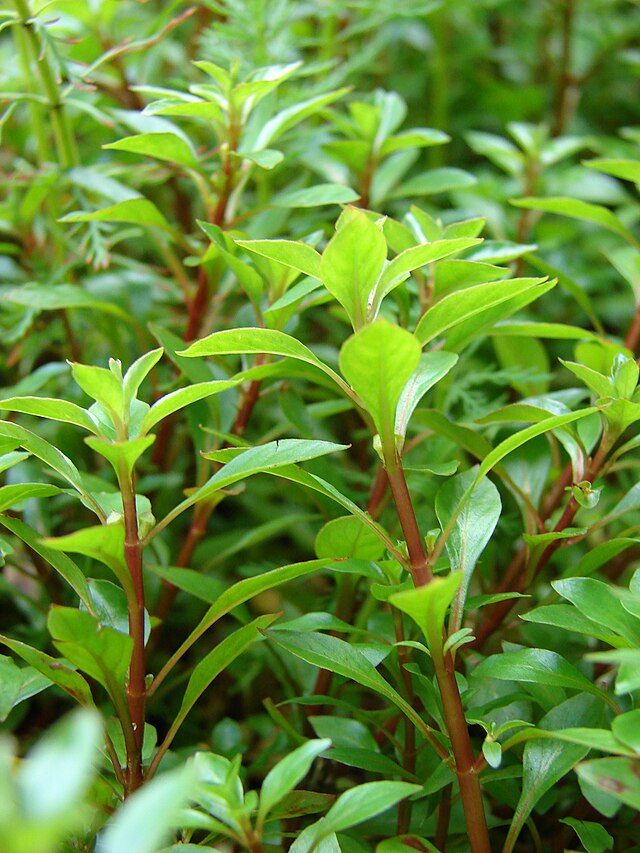
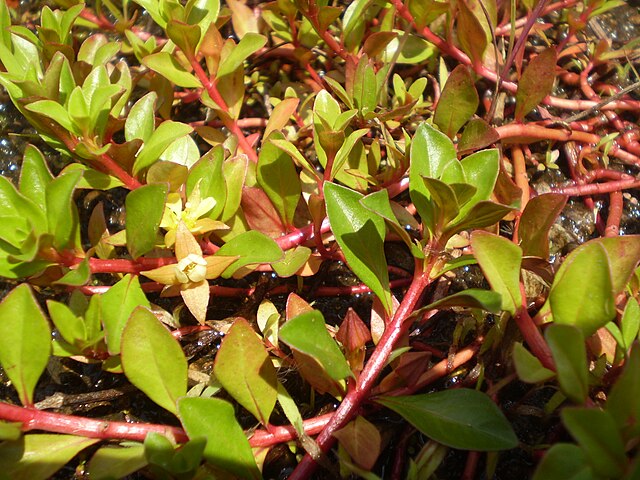
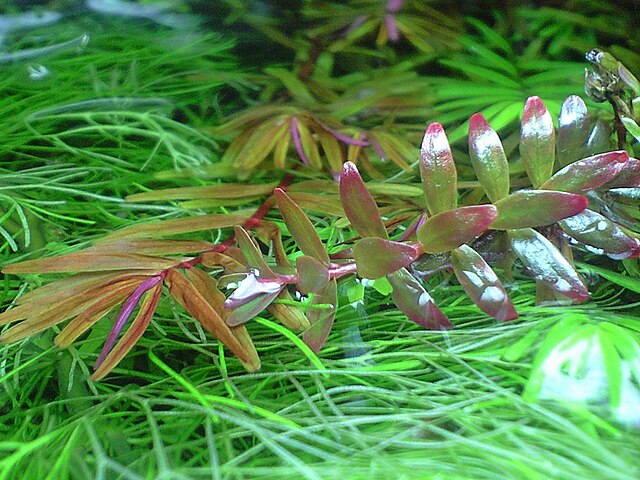
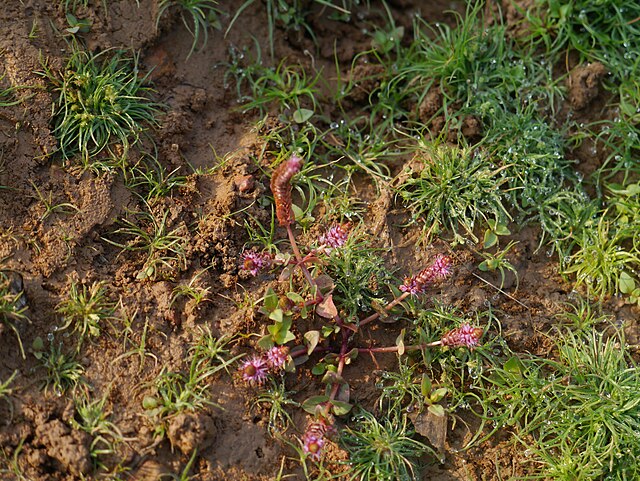
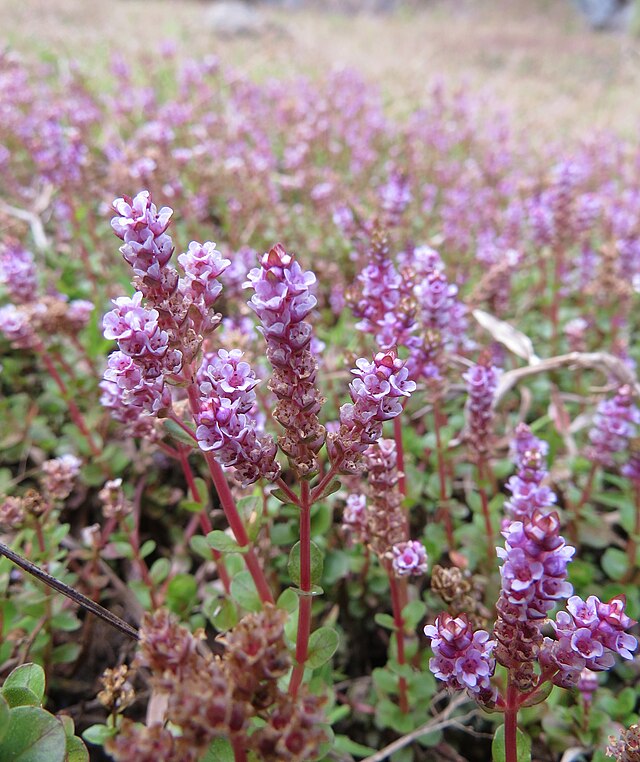
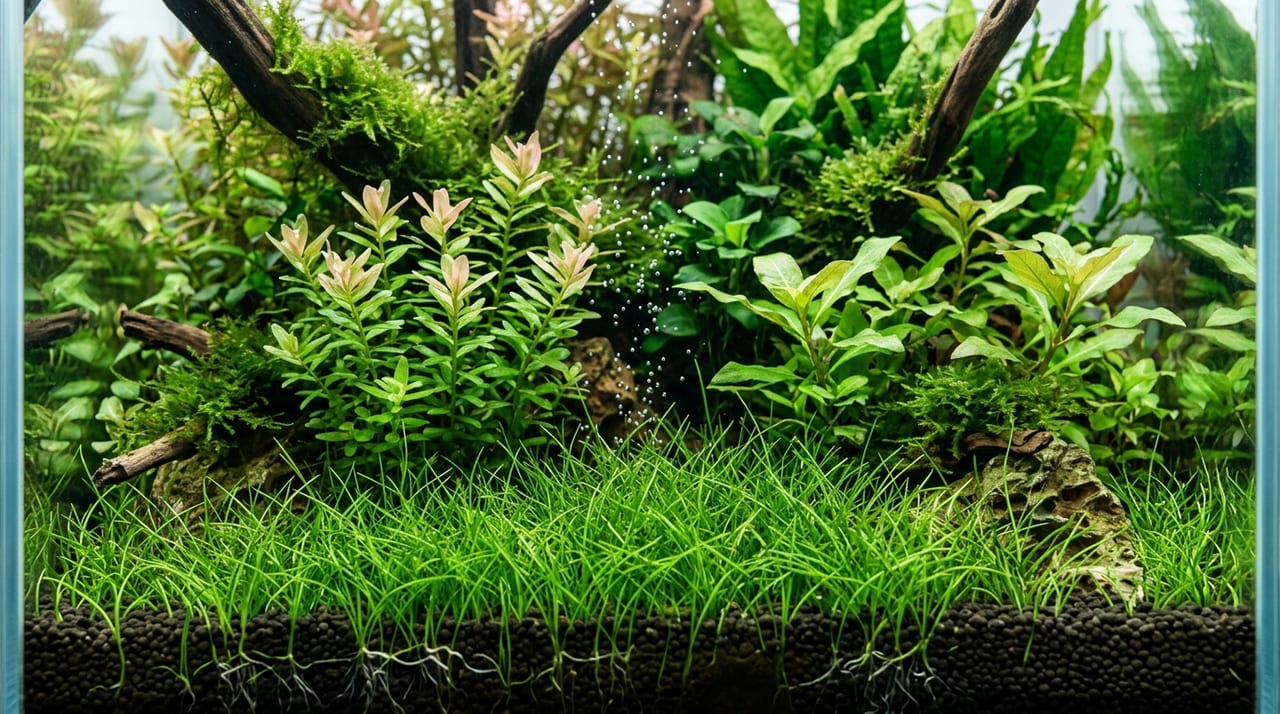
Red aquatic plants add vibrancy and depth to planted aquariums, and inserting red into a green-only layout can dramatically transform the aquascape's impression. However, many growers report the common problem: "it was red when I bought it, but turned green after growing it at home." Achieving red coloration requires meeting several specific conditions. Here we explain the types of red aquatic plants and the conditions for color expression.
Mechanism of Red Color in Aquatic Plants
First, let's understand what causes the red color.
Anthocyanin Accumulation Aquatic plants turn red because a red pigment called anthocyanin accumulates in the leaves. Anthocyanin plays a role in protecting cells from intense light, and is produced in greater quantities under high-light conditions.
Balance with Chlorophyll Leaves contain both green chlorophyll and red anthocyanin coexisting. When nitrogen is abundant, chlorophyll production becomes active and the red color loses out. Conversely, restricting nitrogen causes chlorophyll to decrease and the red color becomes more prominent.
Role of Iron Iron functions as a coenzyme in anthocyanin biosynthesis. When iron is insufficient, anthocyanin production is suppressed and the plants cannot turn red. Iron supplementation is essential for red aquatic plants.
Easy-to-Grow Red Aquatic Plant Varieties
Here are varieties organized by difficulty level.
For Beginners
- Ludwigia repens is the easiest red aquatic plant to grow. The undersides of leaves turn red even under moderate light.
- Rotala rotundifolia can also become pink to red depending on conditions.
- Alternanthera reineckii is a hardy variety that maintains red coloration even under low light.
For Intermediate Growers
- Rotala sp. Hra displays a deep red color when conditions are right, and is a beautiful variety.
- Rotala wallichii has thin leaves that turn wine red.
- Ludwigia palustris Super Red becomes bright red throughout.
For Advanced Growers
- Rotala macroandra produces the most vivid red but requires the highest level of care.
- Tonina sp. demands acidic soft water and is a difficult species, but the red-colored form is spectacular.
Light and CO2 for Red Coloration
Light and CO2 form the foundation of red coloration.
Recommended Light Intensity Red aquatic plants require a light intensity of 30–50 lumens per liter or more. For a 60 cm tank, a target of 2,000–3,000 lumens or more is a good guideline. For LED lighting, a full-spectrum type that includes red LEDs is effective.
CO2 Dosage Since red aquatic plants perform active photosynthesis, sufficient CO2 is necessary. Aim for a concentration shown by a drop checker as lime green (approximately 30 ppm). The selection of dosing equipment is explained in Beginner's Guide to CO2 Dosing for Aquatic Plants.
Balance Between Light and CO2 A state where light is strong but CO2 is insufficient, or vice versa, becomes a cause of algae. It is important to increase both in a balanced manner.
Nutrient Management Techniques for Red Coloration
Fine-tuning nutrient balance is the key to maximizing red coloration. For the basics of choosing between liquid and solid fertilizers, refer to Fertilizer Dosing Guide for Planted Aquariums.
| Strategy | Details |
|---|---|
| Limit Nitrogen | Restricting nitrate nitrogen (NO3) is the most effective technique. Keeping NO3 concentration at 5–10 ppm suppresses chlorophyll production and makes red stand out. However, if nitrogen is too low, growth stops, so maintain the minimum threshold. |
| Actively Add Iron | Add chelated iron fertilizer containing ferrous iron 2–3 times per week. In tanks with many red aquatic plants, adding more iron than usual is effective. |
| Potassium as Normal | Potassium is not directly involved in red coloration, but insufficient amounts damage leaf health. Maintain normal dosage. |
| Keep Phosphorus Modest | Excess phosphorus promotes algae growth and ruins the appearance of red aquatic plants. Keep PO4 at 0.5–1.0 ppm. |
Water Quality and Layout Tips
Water quality and placement also affect coloration.
Soft Water is Advantageous Red coloration tends to be better in soft water environments with low GH. In areas with high hardness, soften the water using soil or by mixing in RO water to lower hardness.
Placement in the Layout The basic principle is to place red aquatic plants closest to the lighting—in other words, in the middle to background zone near the water surface. Color expression is maximized where light reaches sufficiently.
Combining with Other Aquatic Plants Red and green are complementary colors. Placing red aquatic plants as accents against a background of bright green aquatic plants makes each color stand out. The combination also works well with the gray of stones and the brown of driftwood. A ratio of 20–30% red to the overall tank is well-balanced; trying to make the entire tank red causes red to lose its prominence.
Cultivating red aquatic plants is one of the pleasures of the aquatic plant hobby. At GrowerDirect, you can purchase from growers who ship red-colored plants, so you can enjoy a beautiful layout right after delivery. You can also consult with growers directly about growing conditions, so take advantage of this.
Introduction Plan and Long-Term Maintenance of Red Aquatic Plants
To keep red aquatic plants red long-term, both the order of introduction and daily care require planning.
Order of Introduction
- Do not introduce red plants until the tank is established and stable (algae settle and aquatic plants produce new shoots). Introducing them early during setup often results in them being overpowered by algae.
- Once in the stable phase, start with easy varieties like Ludwigia repens or Rotala rotundifolia.
- After light, CO2, and iron conditions are in place and you can maintain red coloration, advance to more difficult species like Rotala sp. Hra or macroandra.
Tips for Long-Term Maintenance
- Maintain bush density through regular trimming, repeating propagation to always keep young stems.
- Never run out of iron-containing liquid fertilizer. Effects appear with a 1–2 week delay, so starting too late won't catch up.
- Avoid nitrate accumulation through water changes. Increased nitrogen causes plants to revert to green.
Common Failures and Solutions for Red Aquatic Plants
| Symptom | Common Cause | Solution |
|---|---|---|
| Red when purchased but turned green after growing | Difference between the shop's high-light, high-CO2 environment and home conditions | Strengthen light and CO2, and begin iron supplementation. Red coloration will begin returning in 2–3 weeks. |
| Plants died or stopped growing after restricting nitrogen | Over-restriction | Maintain nitrogen without eliminating it entirely; keep NO3 at approximately 5–10 ppm. |
| Algae increased after increasing iron fertilizer | Excessive iron dosing | Follow recommended dosage and add gradually. Effects appear 1–2 weeks later, so do not rush to increase if effects are not immediate. |
| Upper leaves are red but lower leaves turn green or die | Dense growth blocking light from reaching lower leaves | Reduce density through trimming and propagate. |
| New shoots are whitish and do not turn red | Early symptom of iron deficiency | Add iron-containing liquid fertilizer. For identification, refer to Causes of White and Yellow Aquatic Plants. |
Red aquatic plant coloration is maximized only when your entire tank environment is well-balanced. Take your time establishing the conditions, and enjoy the vivid red when all factors align.