Nepenthes Highland and Lowland Species: Complete Temperature Management Guide
An explanation of the differences between Nepenthes (pitcher plants) highland and lowland species. This guide introduces the temperature ranges for each, the importance of day-night temperature differences, summer and winter management methods, and tips for beginners in selecting species.
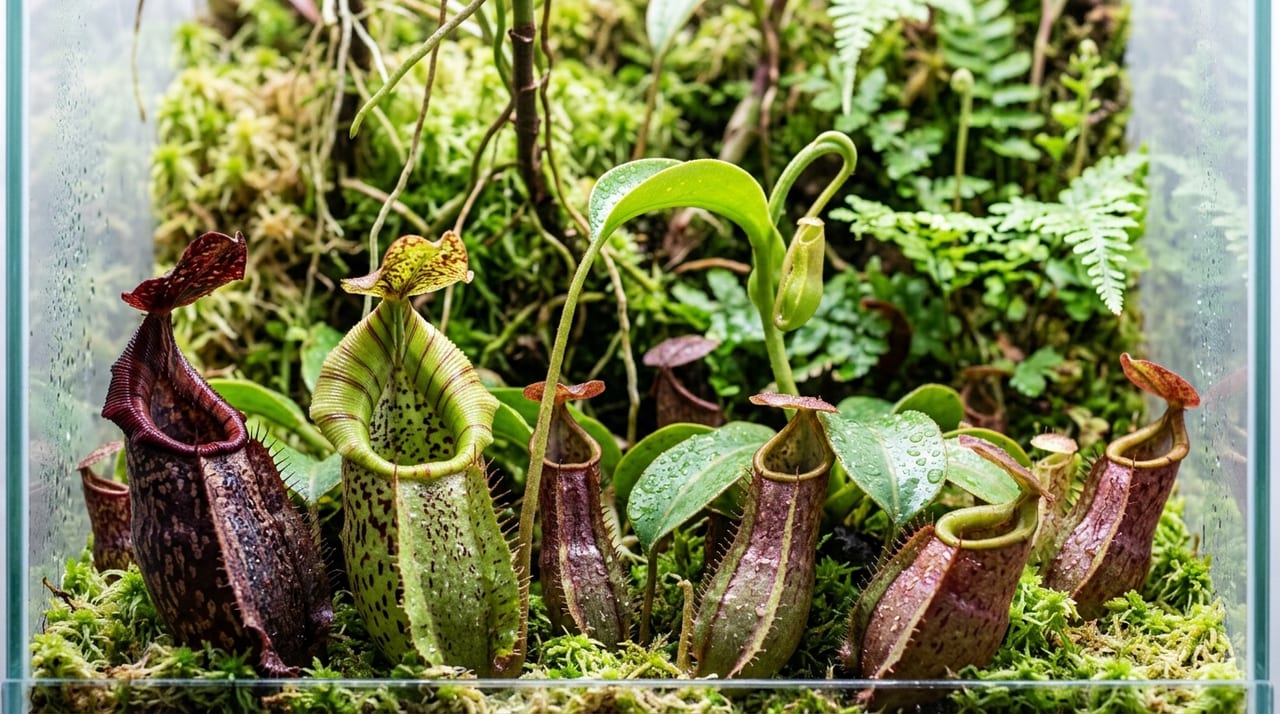
Key Takeaways
An explanation of the differences between Nepenthes (pitcher plants) highland and lowland species. This guide introduces the temperature ranges for each, the importance of day-night temperature differences, summer and winter management methods, and tips for beginners in selecting species.
Related Species
What is Nepenthes? | Basic Differences Between Highland and Lowland Species
Nepenthes is a carnivorous plant distributed primarily throughout tropical Asia, and its popularity stems from its unique ecology of trapping insects using pitcher-shaped traps (pitchers). With over 170 species, the difficulty of cultivation varies significantly depending on the species. A comprehensive overview of basic cultivation methods is also detailed in Nepenthes (Pitcher Plant) Complete Cultivation Guide.
The most important classification axis is "native elevation." Generally, species native to cool mountainous areas at altitudes above 1,000 meters are called Highland species, while species native to tropical lowlands at altitudes below 1,000 meters are called Lowland species. This difference in elevation creates significant differences in temperature, humidity, and light levels, requiring different cultivation environments for each species.
A common mistake beginners make is purchasing a Highland species and assuming "since it's a tropical plant, I should keep it warm." In reality, the opposite is true—Highland species are extremely sensitive to high summer temperatures. Confirming the species classification before purchase is the first step to successful cultivation.
Temperature Management for Highland Species | Summer Survival as the Greatest Challenge
Representative Highland species include N. rajah, N. lowii, N. villosa, and N. macrophylla. These are native to mountainous areas such as the Kinabalu range on Borneo Island and Mindanao Island in the Philippines, and are adapted to cool environments year-round.
Target temperatures for management are as follows.
- Daytime: 20–26°C
- Nighttime: 10–15°C
- Maximum temperature upper limit: Above 30°C is a warning sign
What is particularly important is the "day-night temperature difference (temperature fluctuation)." In their native habitats, the temperature difference between day and night is around 10–15°C, and this fluctuation is essential for pitcher development and healthy growth. In Japan's plains, summer nights often do not drop below 25°C, which becomes the greatest barrier when cultivating Highland species at low elevations.
Effective measures for summer survival are as follows.
- Air conditioning management: Most reliable. Set up a dedicated cultivation space and maintain 24-hour cooling.
- Repurposing refrigerators or coolers: Methods using small coolers (such as wine coolers) as terrariums are becoming increasingly popular.
- Mountain relocation (summer highland transfer): Move plants to high-altitude vacation homes or mountainous regions for the summer season only.
On the other hand, winter management is relatively easy. Since Japan's winter indoor temperature range (approximately 10–18°C) becomes a comfortable environment for Highland species, it is actually important not to overuse heating.
Temperature Management for Lowland Species | Maintaining High Temperature and Humidity
Representative Lowland species include N. mirabilis, N. ampullaria, N. rafflesiana, and N. bicalcarata. These are widely distributed throughout tropical lowlands in Southeast Asia and are adapted to warm and humid environments year-round.
Target temperatures are as follows.
- Daytime: 25–32°C
- Nighttime: 20–25°C (growth slows below 20°C)
- Minimum temperature lower limit: Below 18°C requires caution
The greatest challenge for Lowland species is winter low-temperature management. In Japan, indoor temperatures can drop below 15°C during winter, and management near windows or entryways can cause root rot or growth stagnation. The key to winter management is maintaining the minimum nighttime temperature at 20°C or above.
Practical methods for maintaining temperature include using panel heaters, heating mats, and greenhouse heaters. Additionally, confining plants within a terrarium or greenhouse to prevent heat loss is also effective. The ideal humidity range is 70–85%, and it is important to manage temperature and humidity together as a set. If you are unsure about daily watering methods, refer to Carnivorous Plant Complete Water Management Guide.
Handling Intermediate Species
Species native to intermediate elevations between Highland and Lowland (approximately 500–1,200 meters) are sometimes called Intermediate species. Representative examples include N. ventricosa, N. alata, and N. truncata.
These species are adapted to a relatively wide range of temperatures and are easy to manage in typical Japanese indoor environments (winter above 15°C, summer below 30°C), making them the most recommended group as entry-level species for beginners.
However, large-growing species such as truncata may develop slightly reduced heat tolerance as they mature, requiring management closer to Highland conditions. For peace of mind, research not only the size at purchase but also the characteristics at maturity.
Practical Tips for Temperature Measurement and Environmental Setup
In actual cultivation, intuitive temperature management should be avoided. It is important to install a digital thermohygrometer capable of recording maximum and minimum temperatures and understand the actual temperature fluctuations in your cultivation space. If you want to control temperature and humidity more seriously, it is worth considering the adoption of a Carnivorous Plant Mini Greenhouse.
Additionally, temperature differences based on placement location are often overlooked. Even within the same room, windowsills can drop 5–10°C during winter. In summer, direct sunlight can cause soil temperatures to exceed 40°C. Rather than making broad distinctions between "indoors" and "outdoors," develop the habit of measuring and recording the actual temperature at the spot where your Nepenthes is placed.
Light intensity is also closely related to temperature. Highland species prefer strong light, but combining it with high temperatures can be fatal; therefore, in summer it is recommended to restrict direct sunlight with shade cloth (30–50% shade). Lowland species tolerate high temperatures, but caution is still needed regarding rapid drying from direct sunlight.
Summary | Knowing Species Characteristics is Key to Success
The success or failure of Nepenthes cultivation hinges almost entirely on confirming the species classification (Highland, Intermediate, or Lowland) before purchase and being able to prepare an appropriate temperature management environment.
| Classification | Daytime Target Temp. | Nighttime Target Temp. | Difficulty in Japan |
|---|---|---|---|
| Highland | 20–26°C | 10–15°C | High (summer survival is challenging) |
| Intermediate | 22–28°C | 15–20°C | Medium (beginner-friendly) |
| Lowland | 25–32°C | 20–25°C | Medium (winter heating is important) |
The world of Nepenthes, which is particularly deep among carnivorous plants, expands greatly when you master temperature management. A realistic progression is to start with Intermediate species to gain experience, and then challenge rare Highland species and large Lowland species once your equipment is ready.
Related Articles
- Nepenthes (Pitcher Plant) Complete Cultivation Guide | Highland and Lowland Species Management — Comprehensive guide summarizing basic cultivation methods
- Carnivorous Plant Complete Water Management Guide | Distinguishing Between Watering-on-trays, Rainwater, and Distilled Water, and Seasonal Watering Methods — Details on water quality and watering methods
- Carnivorous Plant Mini Greenhouse Introduction | Types, Management Environments, and How to Choose Recommended Equipment — Equipment selection for stabilizing temperature and humidity