Complete Guide to Pot Selection & Display for Caudex Plants | Showcase Pots and Styling
Explains how to use artisan pots, cement pots, and black plastic pots, the choice of decorative sand, and how to select display shelves.
Key Takeaways
Explains how to use artisan pots, cement pots, and black plastic pots, the choice of decorative sand, and how to select display shelves.
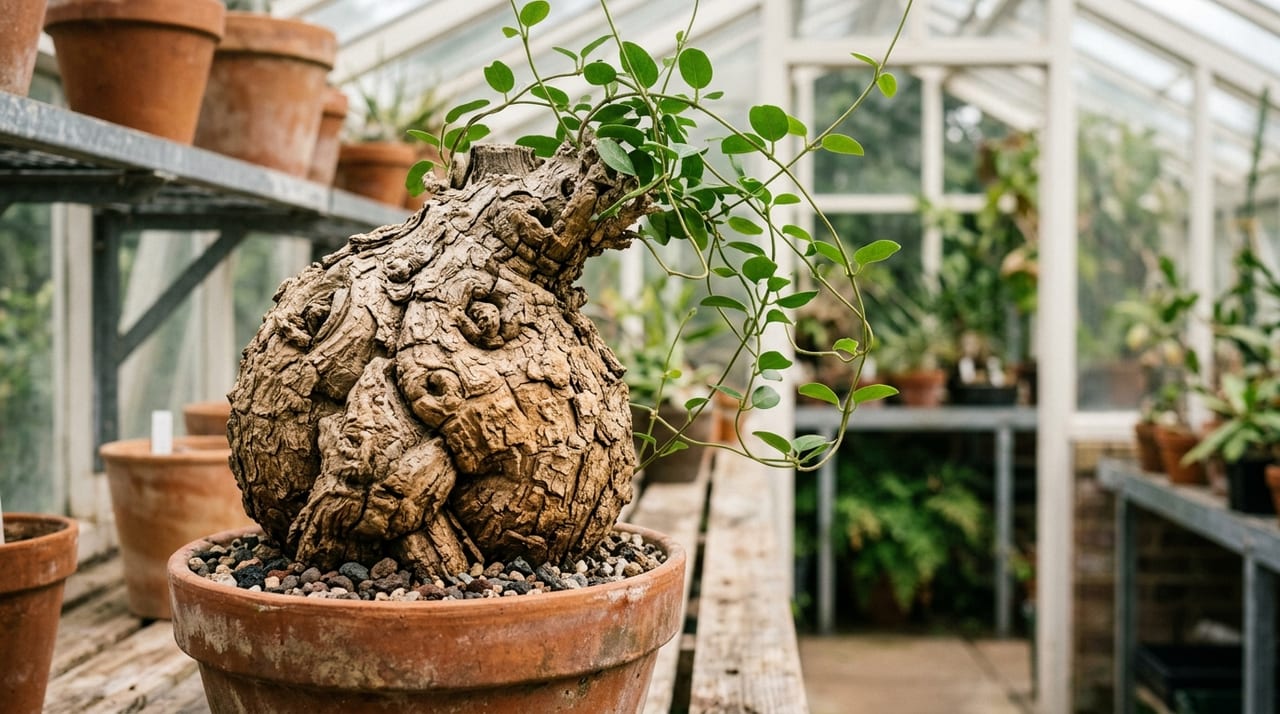
The charm of caudex plants lies above all in their unique form. Plump swollen caudices, rugged bark, and powerfully extending branches—it is the "pot" and "display" that bring this sculptural beauty to its fullest. No matter how fine a specimen is, if the pot and styling don't match, its appeal is cut in half. In this article, we explain pot selection and styling techniques in detail to show caudex plants at their most beautiful.
Types and Characteristics of Pots
There are roughly the following types of pots used for caudex plants. Understand the characteristics of each and choose based on the specimen's individual qualities and where you'll display it.
- Artisan pots (handmade ceramic pots): Ceramic pots hand-crafted one by one. Original glazes and forms harmonize with the wild beauty of caudex plants. Pots from popular artisans are collector's items in themselves. Most have excellent air permeability and drainage
- Cement pots: The austere texture pairs exceptionally well with caudex plants. The gray of mortar and concrete sets off the plant's green beautifully. The weight provides good stability. Many enthusiasts make their own using DIY
- Black plastic pots: Practical pots for cultivation. Lightweight and easy to handle, they're invaluable when managing multiple specimens. Black provides a warming effect to roots and promotes root development during the growing season
- Terracotta pots: Porous with the best air permeability and drainage. Minimizes the risk of root rot. The simple aesthetic complements the wild character of caudex plants
- Iron and tin pots: Create an industrial atmosphere. Rust from aging becomes part of the appeal. May require drilling drainage holes
- Ceramic pots (mass-produced): Affordable with abundant design variations. Matte black and dark gray are popular with caudex plants
Key Points in Pot Selection
Pot selection for caudex plants is an important factor that impacts not just appearance but also plant health.
- Size: The basic rule is a pot about one size (1–2 cm) larger than the caudex diameter. If too large, soil dries slowly and causes root rot. Ideally the caudex just reaches the rim, which also looks best proportioned
- Depth: Most caudex plants have thick taproots, so adequate depth is needed. Shallow pots risk roots protruding, while pots that are too deep allow water to pool at the bottom
- Drainage holes: Always choose pots with drainage holes. If using a pot without holes, drill them. Caudex plants are highly sensitive to excess moisture, so drainage is critical
- Color choice: Matte black, dark gray, and white are standards. Black tones make the plant's green stand out, while white tones beautifully highlight the shadows of the caudex. You can also express individuality through glaze colors
- Material and air permeability: Terracotta and artisan ceramics have high air permeability, while plastic pots retain moisture. For a dry environment close to their natural habitat, terracotta is advantageous; for promoting growth, moisture-retaining plastic pots are better
Soil selection itself is equally important as pot choice. For high-drainage mixes, see the Caudex Plants Soil & Soil Selection Guide, and if unsure about when to repot existing specimens, check the Complete Caudex Plant Repotting Guide.
Choosing Decorative Sand and Mulch
Decorative sand on top of the pot significantly affects the finished appearance.
- Fuji sand (black): Black sand derived from lava. A staple for caudex plants that emphasizes a wild impression. Porous with good drainage
- White decorative sand (such as Kansuisand): Bright and clean-looking finish. Beautiful contrast when paired with dark pots
- Hard small-grain Akadama: Natural soil color that blends seamlessly. Cost-effective
- Lava stone chips: Crushed reddish-brown lava stone. Recreates the arid atmosphere of their natural habitat
- Tips for choosing: Be mindful of contrast between pot and sand color. White sand shows against black pots, black sand against white pots. Grain size of roughly 3–5 mm is easy to work with and looks good
Choosing Display Shelves and Stands
How you choose shelves and stands is equally important to displaying caudex plants beautifully.
- Iron stands: Black iron plant stands pair exceptionally well with caudex plants. Simple designs let the plants shine. Tall stands that bring plants to eye level increase their impact
- Wooden shelves: Solid wood shelves like walnut and oak have warmth. Ideal for displaying multiple specimens as a collection. Ensure shelf depth of at least pot diameter plus 5 cm
- Metal racks: Cultivation shelves prioritizing practicality. Multiple tiers allow managing many specimens. Easy to attach LED lights. Though somewhat utilitarian in appearance, steel rack cultivation is mainstream among enthusiasts
- Wall-mounted shelves: Display small caudex plants on walls. Efficiently uses space and places plants at eye level for visitors
- Rotating turntable: Enjoy the caudex form from all 360 degrees. Convenient for social media photography. Compact ones around 15 cm diameter are easiest to use
Display Techniques That Showcase Your Plants
We introduce display techniques practiced by professional collectors and shops.
- Create height variation: Instead of arranging at the same level, using stands and risers creates dynamic composition. The basic principle is large specimens low, small specimens high
- Group in odd numbers: Grouping three or five specimens looks more balanced than even numbers. This is true for display design generally, not just gardening
- Pay attention to background: White walls create crisp plant silhouettes. Black backing boards create dramatic effect. Exposed concrete walls suit an industrial aesthetic
- Be mindful of negative space: Adequate space between pots lets each specimen's individuality shine. Overcrowding also compromises plant air circulation
- Use lighting: Spotlights and downlights illuminate plants, creating shadows that emphasize the caudex's texture and three-dimensionality. Warm, incandescent tones look most natural
For beautiful photography and documentation, the Complete Caudex Plant Photography Technique Guide is also helpful.
Seasonal Changes in Display
Since caudex plants change dramatically with the seasons, adjust your display accordingly.
- Growing season (spring–summer): When plants are leafy, arrange to showcase green volume. Display them in bright spots near windows to show their dynamic form
- Dormancy (fall–winter): When they're leafless and the caudex form is exposed, it's the perfect time to appreciate sculptural beauty. Use simple pots and backgrounds to highlight the caudex shape
- After repotting: Once repotted, place in a bright, well-ventilated spot with filtered light until the specimen stabilizes. It's also a good time to reconsider your display
The aged bark texture and presence of older specimens are also major display highlights. The appeal of mature plants is detailed in The Aesthetics of "Age" in Caudex Plants.
Discover One-of-a-Kind Caudex Plants at GrowerDirect
Pot selection and display multiply the enjoyment of caudex plants. Find the perfect pot for your favorite specimen and create your own space. At GrowerDirect, you can purchase caudex plants directly from growers who cultivate them with care. Since you can ask growers directly about a specimen's individual character and condition, you'll also receive advice on the ideal pot and display for that plant.