5 Beginner-Friendly Orchids | Comparing Varieties by Ease of Care and Appeal
Five orchid varieties carefully selected for beginners growing orchids for the first time, with detailed comparisons. Learn about ease of cultivation, blooming periods, price ranges, and care tips for Phalaenopsis, Dendrobium, Cymbidium, Oncidium, and Cattleya.
Key Takeaways
Five orchid varieties carefully selected for beginners growing orchids for the first time, with detailed comparisons. Learn about ease of cultivation, blooming periods, price ranges, and care tips for Phalaenopsis, Dendrobium, Cymbidium, Oncidium, and Cattleya.
Related Species
The World of Orchids is Vast: Which Species Should Beginners Start With?
Orchids are one of the largest groups of flowering plants, with over 25,000 species worldwide. They have evolved to thrive in virtually every environment on Earth, from tropical rainforests to high mountain regions, and their diversity surpasses that of other plant groups. Many people who think "I want to grow orchids" find themselves overwhelmed by the sheer number of varieties and unsure where to begin.
For beginners, four key factors are essential: "ease of cultivation," "ease of reflowering," "availability," and "cost." To enjoy the pleasure of orchid growing without repeated failures, it is crucial to select a variety suited to your living environment. This article thoroughly compares five particularly easy-to-grow and readily available varieties to help you choose the right plant for your needs.
Variety Comparison: Characteristics and Care for Five Selections
1. Phalaenopsis Orchid
Difficulty Level: ★★☆ (Beginner to Intermediate)
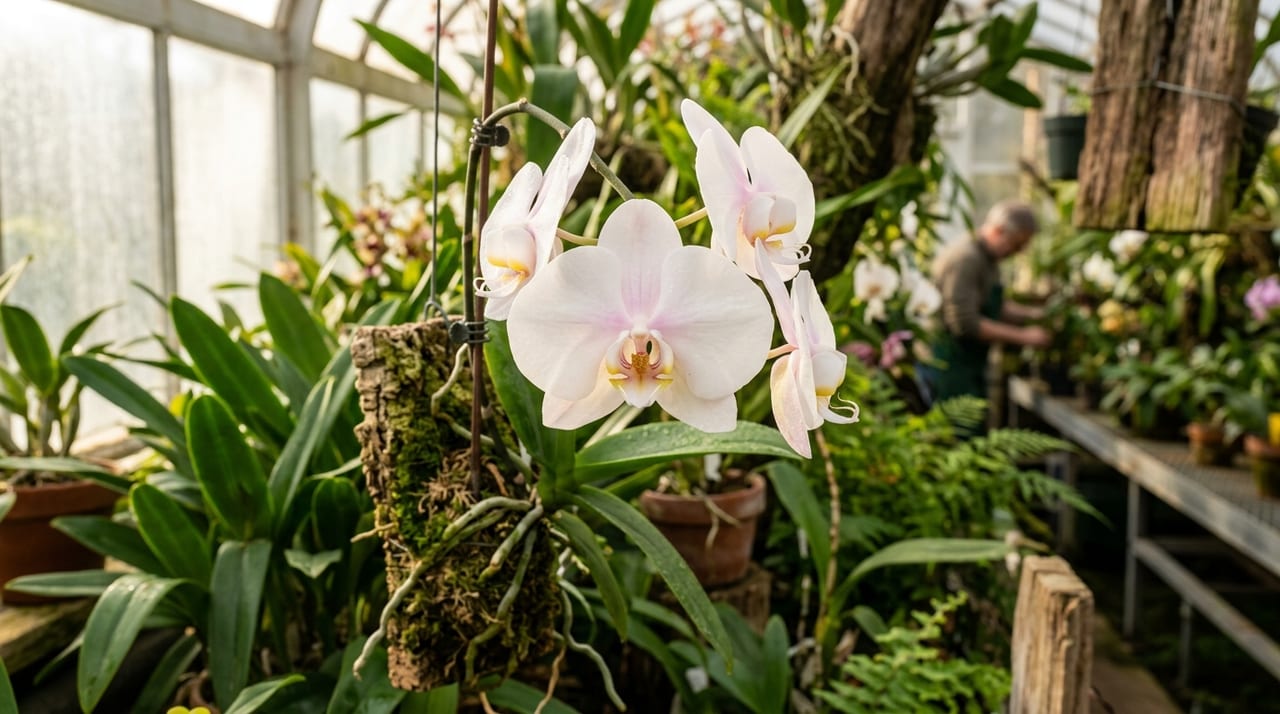
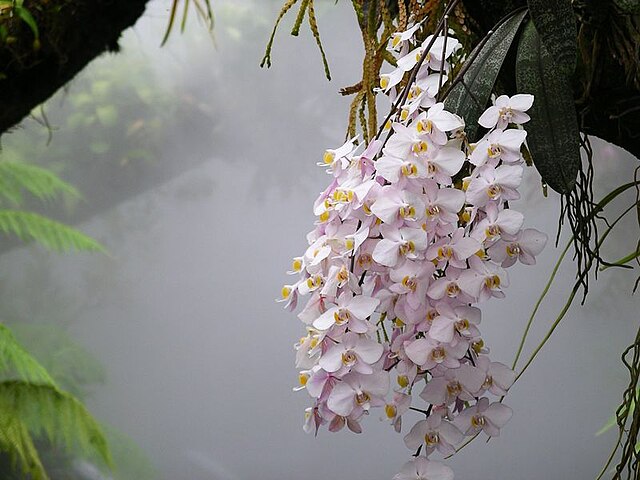
Phalaenopsis orchids are famous as popular gift plants, but they are actually quite easy for beginners to grow. They come in a wide range of flower colors—white, pink, purple, and yellow—and once they start blooming, they flower continuously for 2 to 4 months.
Basic care comes down to two key points: "keep in a bright indoor location near a window" and "avoid overwatering." The roots are often visible through a clear pot; greenish roots indicate adequate water, while grayish-white roots signal dryness. A good watering guide is once to twice weekly, and developing the habit of "judging by root color" will help minimize failures. If you're unsure about placement, refer to our orchid light and lighting guide.
To achieve reflowering, create a temperature difference of 10°C or more between day and night in autumn. Moving plants closer to a window at night around October to November will prompt flower buds to emerge between December and February.
Cost: Post-flowering plants around 300–800 yen; blooming plants approximately 1,000–3,000 yen.
2. Cymbidium
Difficulty Level: ★★☆ (Beginner to Intermediate)
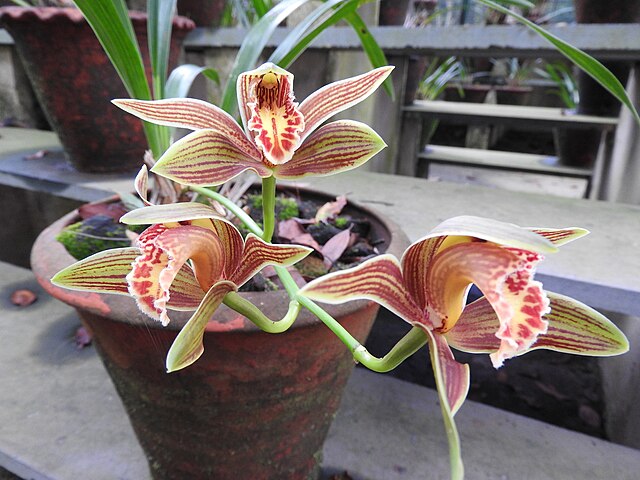
Among orchids, Cymbidium stands out for its ability to be grown outdoors. In spring and summer, maintain it in a shaded outdoor location, gradually acclimating it to direct sunlight after the rainy season. As temperatures drop in autumn, flower buds form, and during winter through spring, the plant produces magnificent flower spikes.
A single flower stem can display 10 to 20 or more blooms, creating a spectacular display. It is widely used for New Year's decorations and as a gift. Many Cymbidium varieties are cold-hardy, tolerating temperatures down to around 5°C, making them suitable for cultivation across a wide range of regions from Kyushu to the Tohoku area. These plants are heavy feeders; applying liquid fertilizer 2 to 3 times monthly during the spring-to-autumn growing season will strengthen the plant and increase blooms the following year. For more detailed year-round care, see our complete Cymbidium growing guide.
Cost: Approximately 2,000–5,000 yen (miniature Cymbidiums start around 1,000 yen).
3. Dendrobium (Nobile Type)
Difficulty Level: ★★☆ (Beginner to Intermediate)
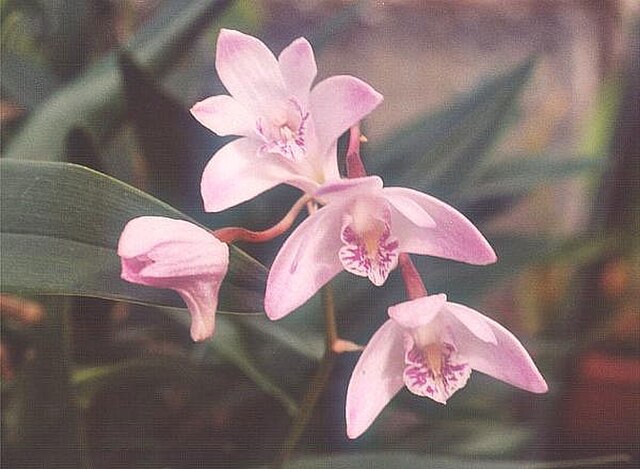
These plants produce white, pink, or purple flowers that bloom all at once in spring from thick, cane-like pseudobulbs. This variety thrives with Japan's four seasons—simply follow the natural cycle of "grow vigorously outdoors in summer, maintain indoors with low temperatures and sparse watering in winter"—and you'll reliably enjoy blooms every year.
One caution: if winter watering is reduced too much, the plant may produce "keiki" (plantlets) instead of flower buds. From October onward, gradually reduce watering while still providing some moisture. Even if a plant with well-developed pseudobulbs doesn't flower in a given year, it will often bloom in subsequent years, offering the satisfaction of long-term cultivation.
Cost: Approximately 800–2,500 yen.
4. Oncidium
Difficulty Level: ★★☆ (Beginner to Intermediate)
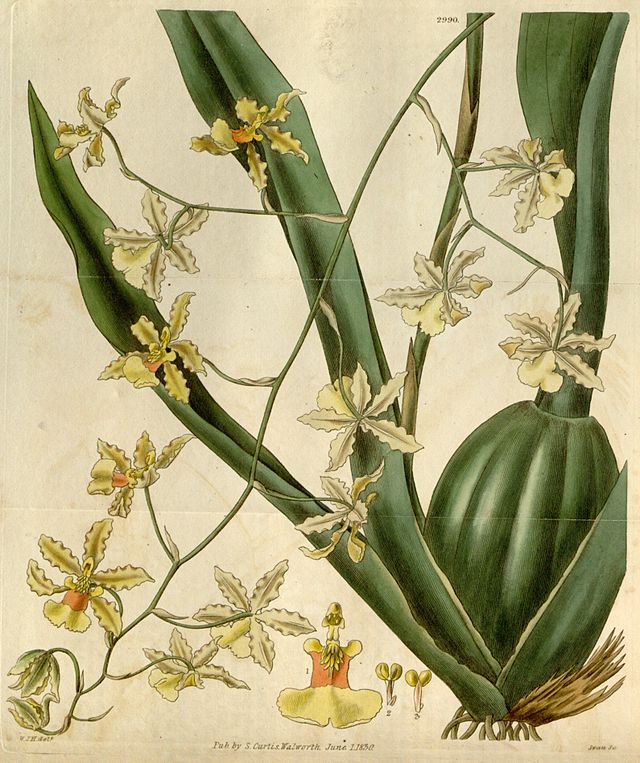
Also known as the "dancing lady orchid," this variety is distinguished by numerous small flowers in yellow or brown tones that cascade gracefully. A single flower stem can bear dozens to hundreds of small blooms, swaying in the breeze like a flock of butterflies—a popular choice for indoor décor.
This plant is relatively drought-tolerant, and the key to longevity is "not overwatering." Plant in bark or moss to ensure good drainage and prevent root rot. Many varieties prefer bright light; a brightly lit windowsill with sheer curtains is an ideal location. In recent years, Oncidiums have become readily available at garden centers and general retailers.
Cost: Approximately 500–3,000 yen, depending on variety.
5. Miniature Cattleya
Difficulty Level: ★★★ (Intermediate)
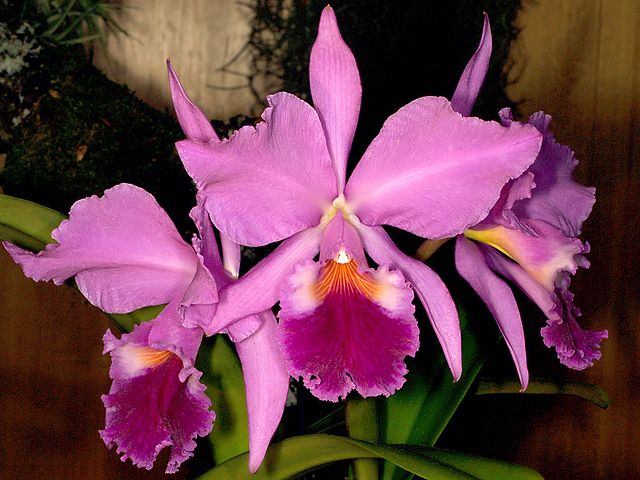
A compact hybrid based on traditional Cattleya, prized for its rich fragrance and vivid flower colors. With hues of purple, red, orange, and white—colors rarely seen in other orchids—it brings the beauty of the "queen of orchids" in a compact form.
This variety requires relatively high light levels; you may need a south-facing window or supplementary lighting indoors. Another key is meticulous management during spring and summer growth (providing adequate water and fertilizer) and more restrained care from autumn onward. Though the difficulty level is somewhat higher for beginners, the satisfaction at the moment of blooming surpasses that of other varieties. If fragrance is a priority, compare other scented varieties in our 10 recommended fragrant orchids.
Cost: 2,000–10,000 yen or more, depending on variety and plant maturity.
Recommended Varieties for Beginners and Selection Guide
With an understanding of each variety's characteristics, you can make informed choices based on your situation.
- For indoor cultivation: Phalaenopsis, Oncidium
- If you have outdoor space: Cymbidium, Dendrobium
- For reliable blooming: Cymbidium, Dendrobium
- For fragrance: Dendrobium, Miniature Cattleya
- On a budget: Post-flowering Phalaenopsis, Oncidium
For your first orchid, Phalaenopsis or Cymbidium is ideal. Phalaenopsis is primarily grown indoors, flowers for an extended period, and is perfect for learning care during the blooming phase. Cymbidium blends naturally with Japan's climate; the ease of outdoor management and the satisfaction of reliable annual blooms make it equally compelling.
Tips for Enjoying Orchids Long-Term
The most important concern for those growing orchids for the first time is overwatering. Most orchids dislike constantly wet potting media; their roots need air. Follow the basic principle of "water only when dry," and adjust watering frequency flexibly with the seasons and temperature. This flexibility is key to long-term success.
Post-bloom care is also critical for enjoying orchids in subsequent years. Once flowers fade, remove the flower stem, provide plenty of fertilizer and light to restore the plant, and remember that "the period after flowering is the preparation phase for the next bloom." View your orchid not as a one-time flowering plant but as a long-term companion.
Understanding each variety's character and recreating its natural growing environment is the essence of orchid cultivation. Starting from the joy of that first bloom, take the leap into the deep world of orchids.
Essential Basics Before Growing Orchids
Orchids, members of the Orchidaceae family, are primarily "epiphytic plants." In nature, they anchor their roots to rocks or tree bark, absorbing water and nutrients from the air. If you manage them like ordinary garden plants—planting in soil and watering generously—root rot often results.
Three key points are particularly important for healthy orchid cultivation:
- Water sparingly: The principle is "water thoroughly only when dry." Excessive moisture causes root rot.
- Avoid direct sunlight: Bright shade or soft, filtered light through a curtain is best.
- Ensure air circulation: Stagnant, humid air promotes disease and root rot. Even indoors, ventilate regularly.
Simply keeping these three points in mind will make orchid care much easier.