Caudex Plant Encyclopedia
Encyclopedia of popular caudex plants with care guides, traits, and root management tips.
Featured Caudex Plant
Showing 80 of 141 species(73–80)
 © Frank Vincentz / CC BY-SA 3.0
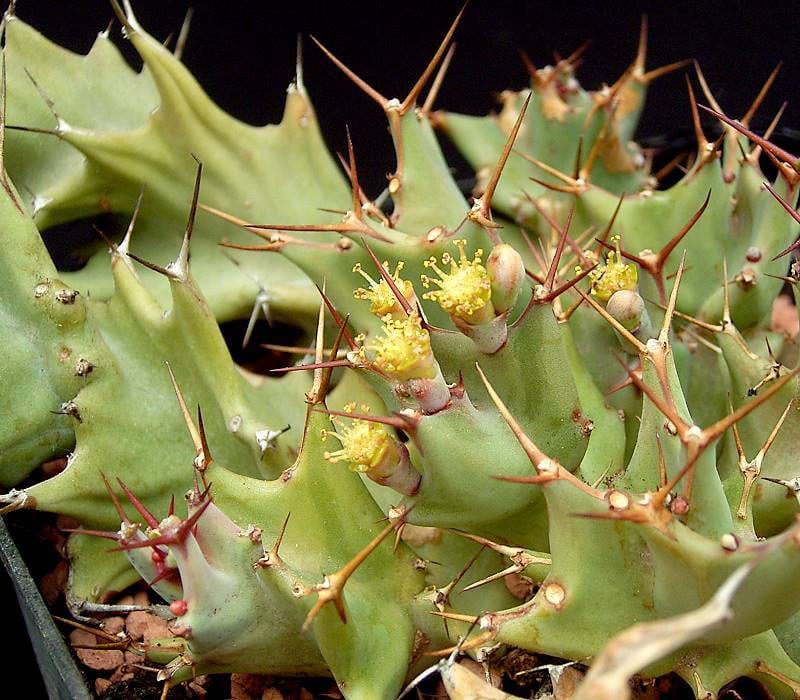
Twisted Spurge
Euphorbia tortirama
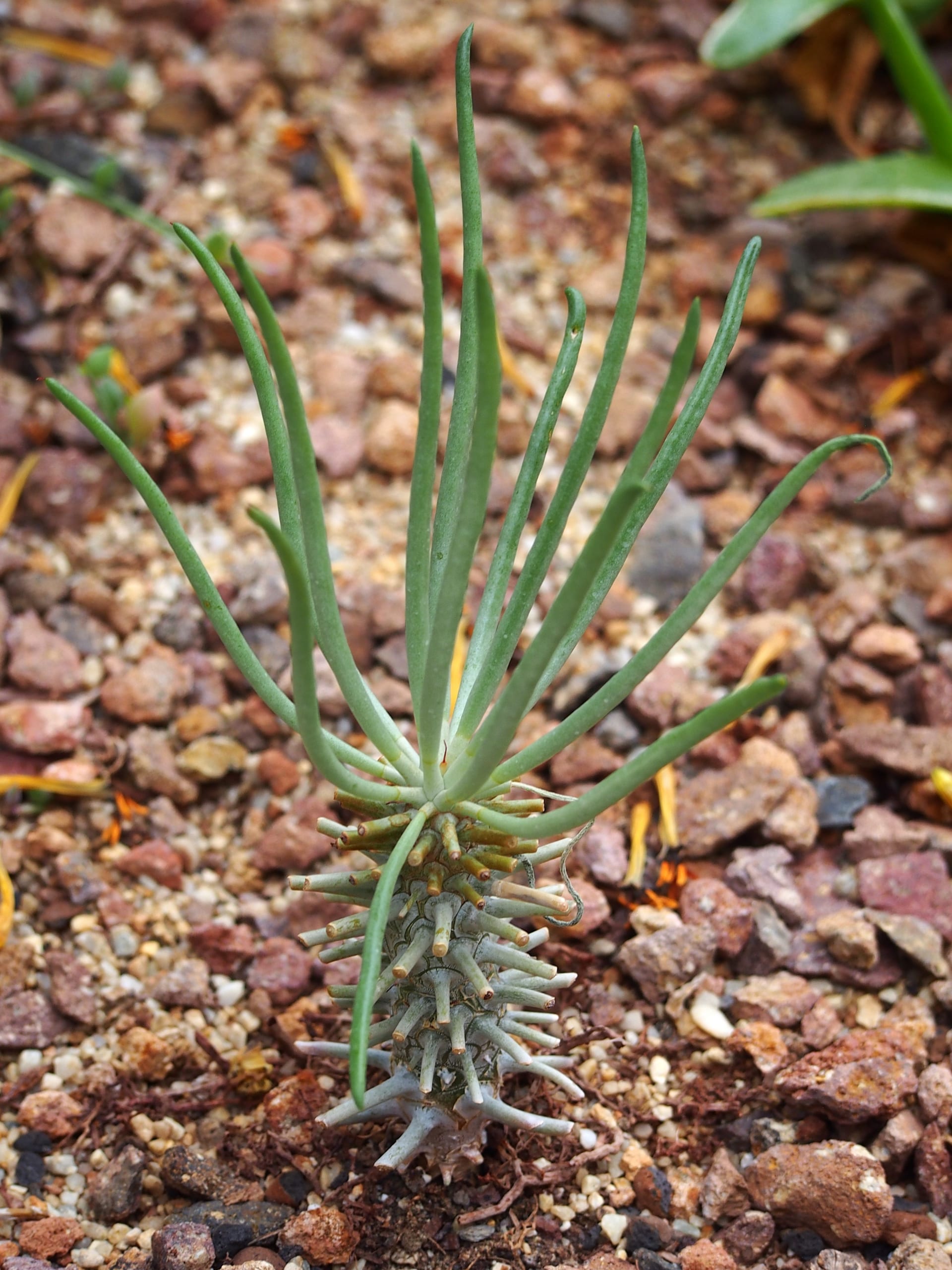
A South African spurge whose thick carrot-shaped tuber sends up a clump of three-angled branches that twist into tight spirals. The angles bear sharp spines up to 2.5 cm long.
 © Michael Wolf (Webseite) / CC BY-SA 3.0
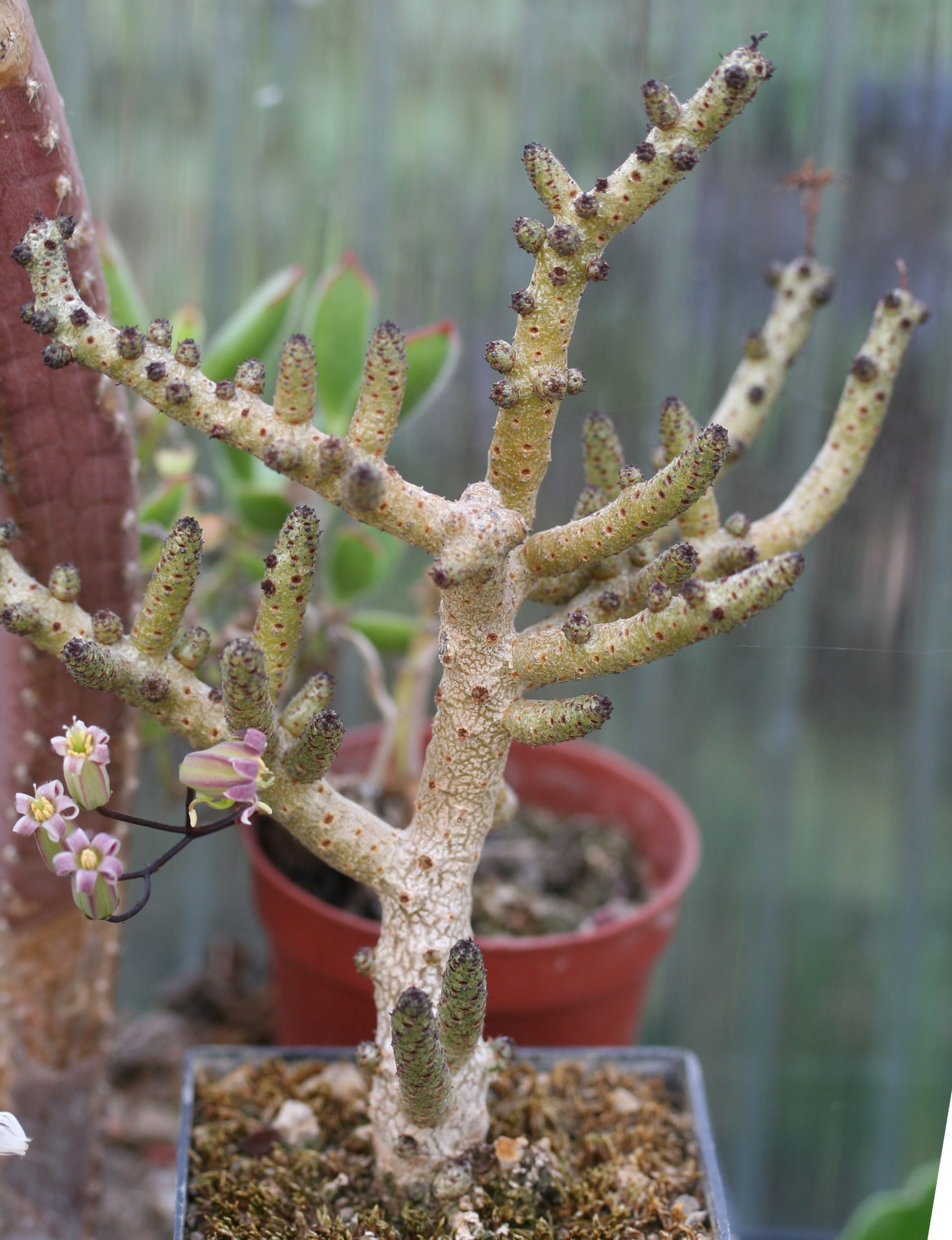
Tylecodon buchholzianus
Tylecodon buchholzianus
A small, winter-growing Tylecodon that raises many pale, slender, bonsai-like branches from a slightly swollen base. Its branches photosynthesize through their bark and can grow with only microscopic leaves, a rare trait.
 © Marco Schmidt [1] / CC BY-SA 3.0
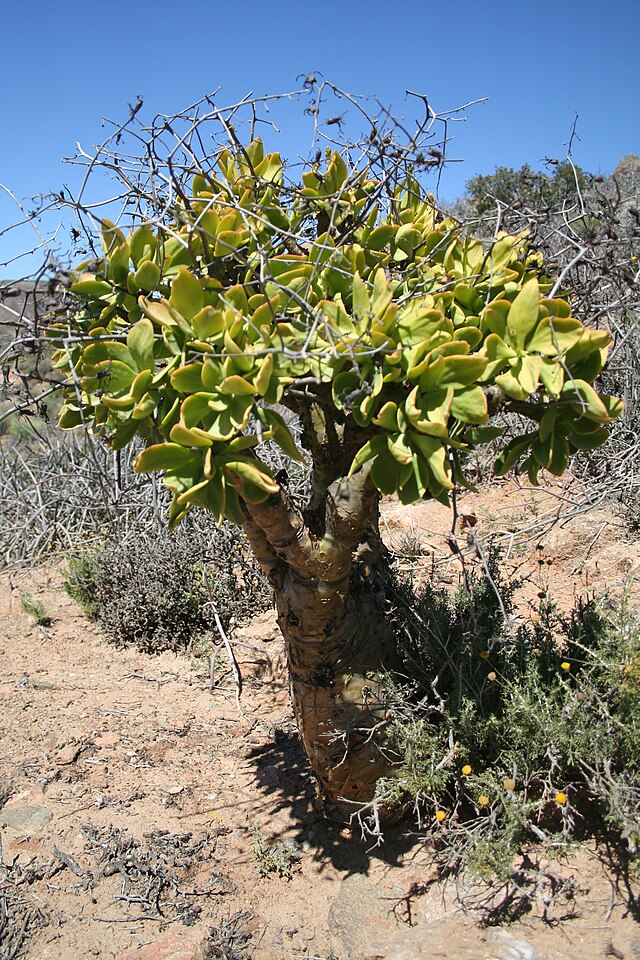
Tylecodon Paniculatus
Tylecodon paniculatus
Called Butter Tree, with thick yellowish trunk and red flowers from South Africa.
 © Dwergenpaartje / CC BY-SA 4.0
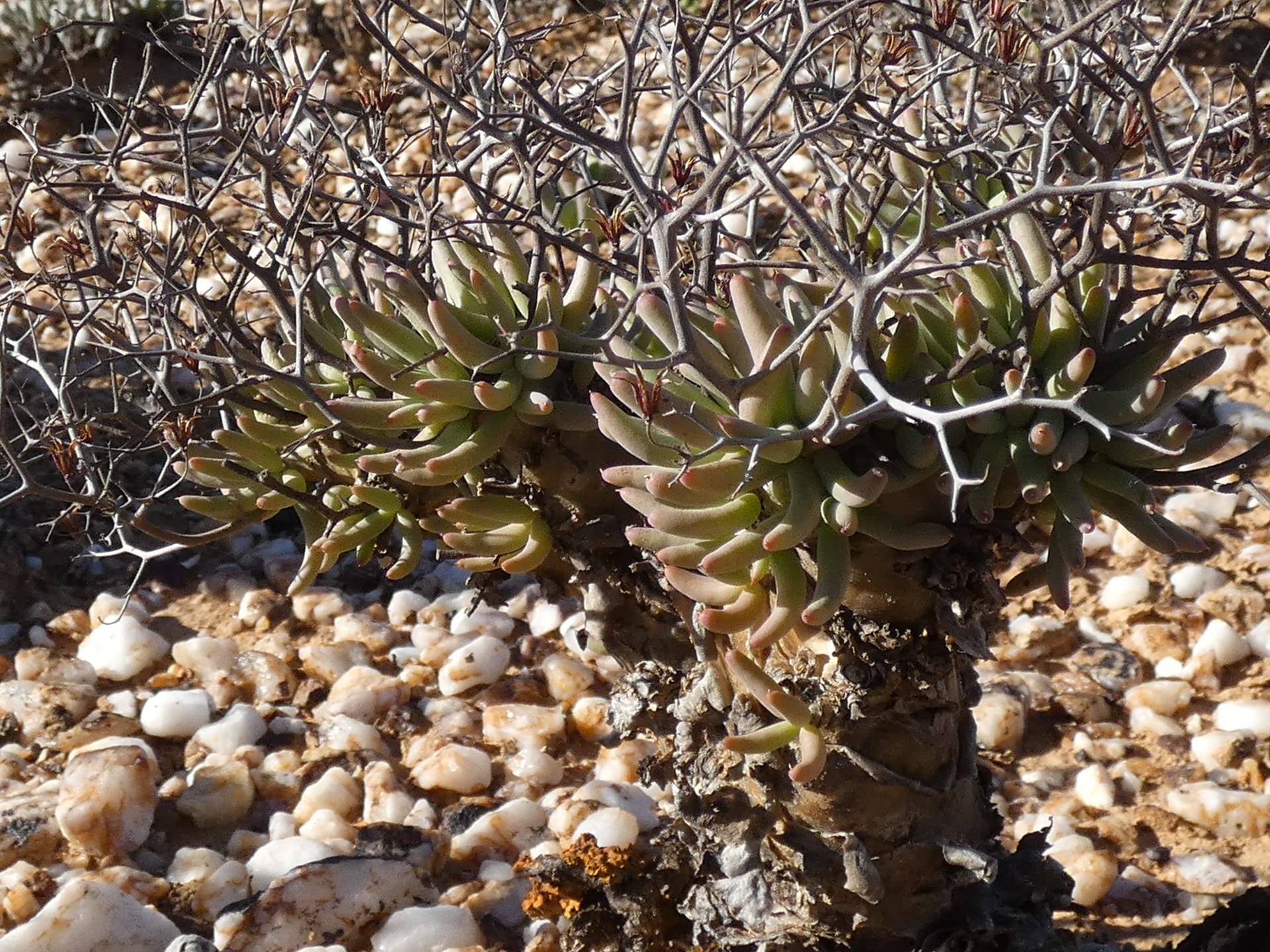
Tylecodon reticulatus
Tylecodon reticulatus
A winter-growing Tylecodon whose spent flower stalks persist and harden into a finely branched, silvery thorny net that envelops the plant. It has a squat trunk and fleshy leaves at the branch tips.
 © Agnieszka Kwiecień, Nova / CC BY-SA 4.0
Tylecodon wallichii
Tylecodon wallichii
A winter-growing Tylecodon whose thick stem and branches are densely covered with warty, yellow-green persistent leaf bases. Narrow leaves cluster at the branch tips, and dangling yellow-green, urn-shaped flowers appear in the leafless summer.
 © SAplants / CC BY-SA 4.0
Uncarina Grandidieri
Uncarina grandidieri
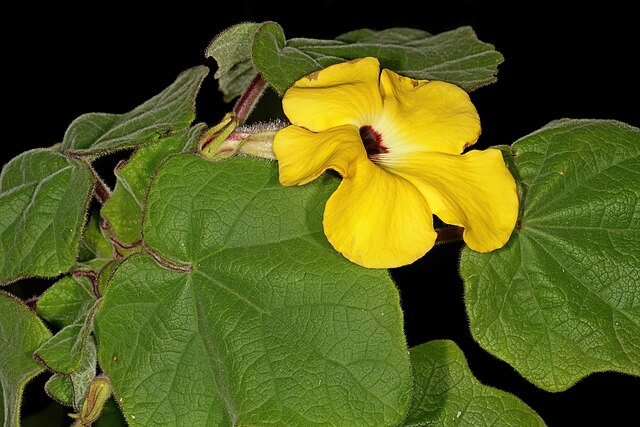
A sesame-family caudex from Madagascar with yellow flowers, broad leaves and unique seeds.
 © Another one of my pictures: This photograph was taken by Medium69 (William Crochot) and released under the license stated below. You are free to use it for any purpose as long as you credit the author (William Crochot), the Source (Wikimedia Commons) and the license (CC-BY-SA 4.0) in close relation to the image. Please do not upload an updated image here without consultation with the Author. The author would like to make corrections only at his own source RAW. This ensures that the changes are preserved. Please if you think that any changes should be required, please inform the author. Otherwise you can upload a new image with a new name. Please use one of the templates derivative or extract . / CC BY-SA 4.0
Uncarina Roeoesliana
Uncarina roeoesliana
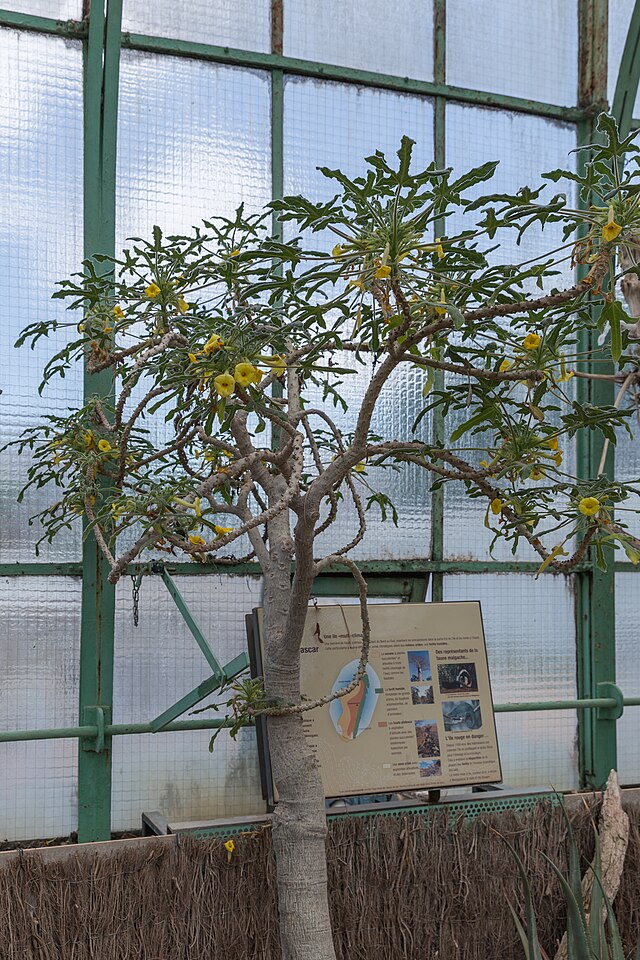
A caudex plant from Madagascar with large yellow flowers and characteristic sticky fruits.
 © LoJallen / CC BY-SA 4.0
Za baobab
Adansonia za
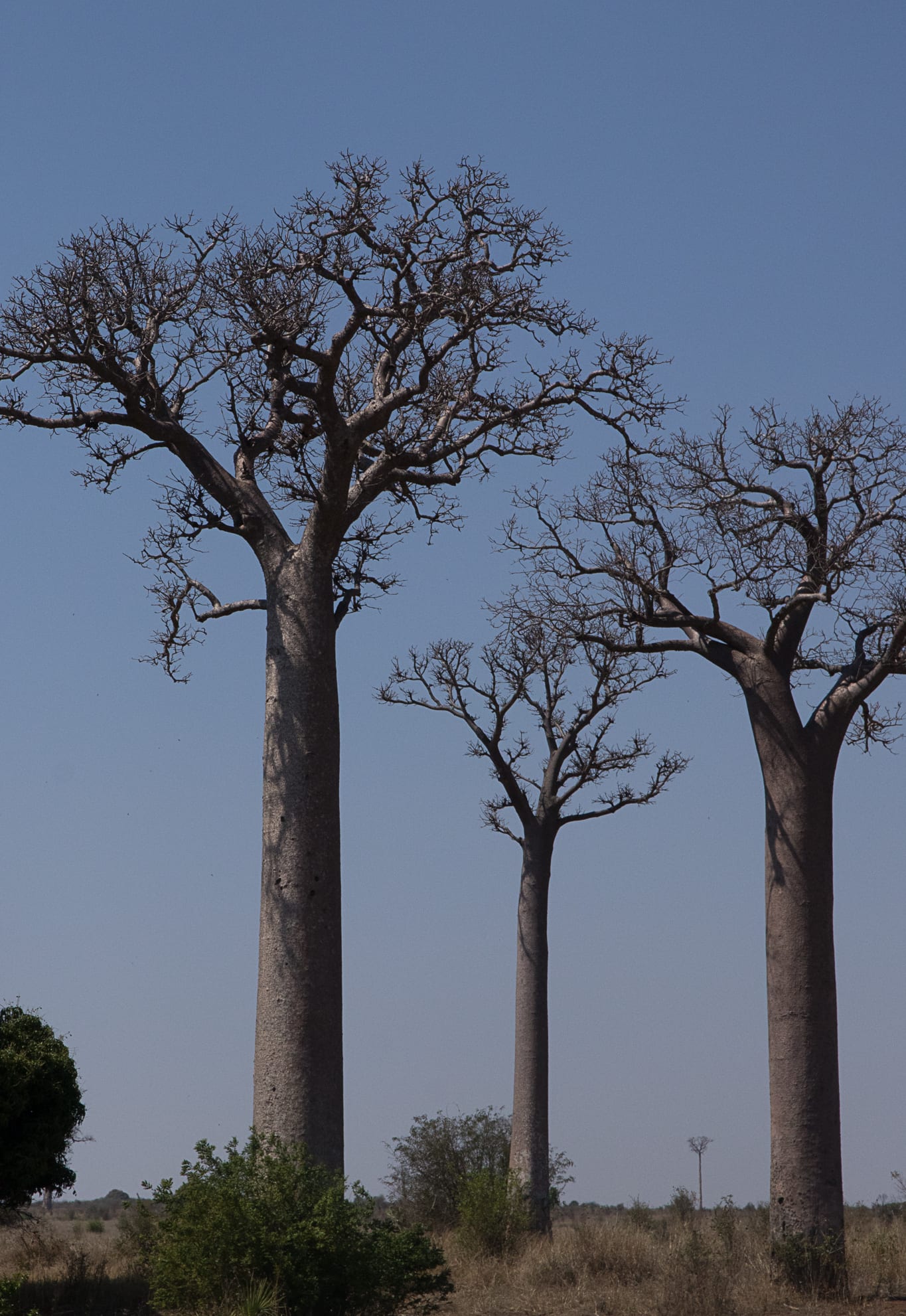
A Madagascan baobab with a brownish-rose trunk that is widest at the base and tapers upward. The most widespread of Madagascar's endemic baobabs, it opens yellow and red flowers at the start of the wet season.
Related Content
Caudex Plant FAQ
- How much do caudex plants cost?
- Pachypodium gracilius seedlings cost 2,000-10,000 yen, wild-collected specimens 30,000-200,000+ yen, and Operculicarya pachypus can reach hundreds of thousands of yen.
- Can beginners grow caudex plants?
- Adenium (Desert Rose) and Pachypodium seedlings are relatively easy and beginner-friendly. Just be careful with watering during winter dormancy, and you can enjoy them for years.
- How long do caudex plants live?
- Some specimens live for hundreds of years in the wild. In cultivation, they can thrive for decades with proper care. Watching the caudex thicken year by year is the greatest appeal.
- What should I check when buying caudex plants?
- Whether it's rooted is the most important point. Wild-collected imports are often unrooted and require root establishment. Beginners should start with rooted domestically grown seedlings.
- How do caudex plants overwinter?
- Many caudex plants go dormant in winter. Reduce watering from October, and withhold water completely from December to February. Keep indoors in a sunny spot at minimum 10°C.