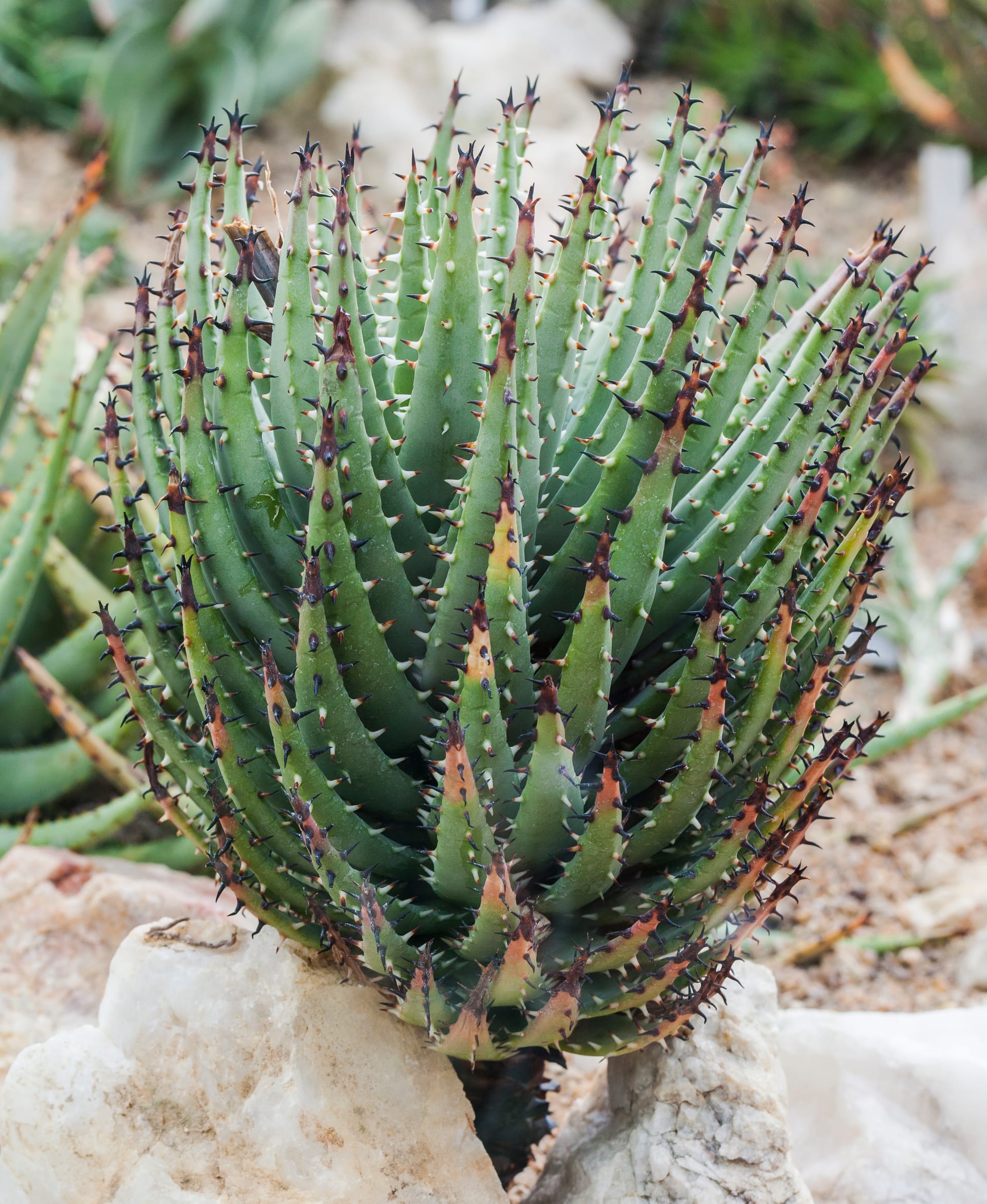
 © Diego Delso / CC BY-SA 3.0
刺海芦荟
Aloe erinacea is a small aloe species native only to the arid mountains of Namibia. Its blue-green leaves curve gently inward to form a tight rosette, densely lined along the edges with long, creamy-white spines. The species name erinacea means hedgehog, a fitting nod to its spine-covered silhouette. This slow-growing perennial can, under the right conditions, form offsets and grow into a small cluster over time. Because its growth is unhurried and its care calls for some finesse, Aloe erinacea is generally considered better suited to growers who already have some aloe experience.
View 刺海芦荟 encyclopedia →成交手续费0%!2026年9月30日前注册,前 2 株免佣金!
生产者 招募中!
在GrowerDirect上销售,直接面向全国客户销售吗?
GrowerDirect的 6 项透明性承诺
生产者在多肉植物与仙人掌上架时将明示以下信息。确保品种、产地、所需光照、栽培难度的透明性。
- 品种明示
- 实物照片
- 色泽
- 产地明示
- 所需光照
- 难度明示
查看全部131个品种
多肉植物与仙人掌分类正在招募认证生产者
生产者正在陆续注册,即将上架。设置上架通知,不错过新商品。
「接收上架通知」需免费注册会员即可设置。当有符合您保存条件的新商品上架时,我们会通过邮件和站内通知提醒您。
已注册的生产者(抢先看)
刺海芦荟的基本数据
- 养护难度
- 适合中级者
- 寿命
- 多年生。生长缓慢
- 体型
- 小型莲座状(有时会群生)
- 浇水
- 基本不需要(换土时只需少量基肥)
- 光照和放置位置
- 全年放在通风良好的地方。生长期在日照充足的室外栽培,夏季遮光20~40%。
- 浇水
- 春秋生长期,土壤干燥后充分浇水。休眠的夏季,每月浇水1~2次,避开闷热的日子浇水。
- 温度和越冬
- 冬季缓慢生长,接近冬型特性。最低气温低于10℃时,避免霜冻和北风,夜间在室内或温室中管理。国内图鉴将2℃作为不冻死的最低温度参考。
- 基质和换土
- 用排水性好的基质种植。换土的最佳时期为3~5月和9月中旬。
- 肥料
- 生长缓慢,换土时在基肥中加入少量缓效肥料即可充分满足需求。避免过肥。
- 繁殖方法
- 主要通过实生(种子)繁殖。如果出现子株,可如叶插一样分离后繁殖。
- 病虫害和注意事项
- 夏季易因潮湿而受损。高温期优先保证通风,小心处理锐利的刺。
关于刺海芦荟
A growing guide to Aloe erinacea, a small Namibian aloe with inward-curving blue-green leaves and dense white spines. Learn key care tips for this slow-growing, intermediate-level succulent, plus answers to common questions.
开始养护刺海芦荟前需要了解的7件事
1Light and Placement
Aloe erinacea thrives in bright light and benefits from good air circulation, which helps keep its rosette tight and compact. If grown indoors, place it near the sunniest window available, and if kept outdoors, watch how sunlight intensity shifts with the seasons.
2Watering
Water thoroughly only after the soil has fully dried out. Because this species grows slowly, overwatering is a common cause of root rot, so it's best to lean toward underwatering rather than overdoing it.
3Soil
A well-draining succulent or cactus mix works best. Adding pumice or perlite to a commercial succulent soil helps prevent root rot while supporting healthy root growth.
4Repotting
Because growth is slow, repotting once every year or two is usually enough. It's best done when roots start to fill the pot, or just before the active growing season begins, to minimize stress on the plant.
5Seasonal Care
While Aloe erinacea tolerates strong light well, it can be sensitive to intense midsummer sun combined with poor airflow. In winter, keep it on the dry side and protect it from cold and excess moisture to help it get through the season safely.
6Handling the Spines
The creamy-white spines lining the leaf edges are part of the plant's charm, but they can be sharp enough to prick your skin. Wearing gloves during repotting or general handling is a simple way to avoid direct contact with them.
7Choosing a Healthy Plant
A healthy specimen has leaves that curve firmly inward with spines lined up densely along the edges. Avoid plants with discolored or wrinkled leaves or noticeably missing spines, and look instead for one with a well-formed, tidy rosette.
刺海芦荟的常见问题
- Q.Is Aloe erinacea suitable for beginners?
- A.It's generally considered an intermediate-level plant because its slow growth and watering needs require a bit of finesse. Growers who already have some experience with succulents or other aloes will likely find it more manageable.
- Q.How large does it grow?
- A.Aloe erinacea forms a small rosette and stays a manageable size even as it matures. Depending on conditions, it may also produce offsets and grow into a small cluster.
- Q.Why does it grow so slowly?
- A.As a species native to the harsh, arid mountains of Namibia, Aloe erinacea is naturally a slow-growing perennial. It's best enjoyed with a patient, long-term approach rather than expecting quick changes.
- Q.Can it be grown as a cluster?
- A.Under favorable conditions, Aloe erinacea can produce offsets and grow into a small cluster over time. Rather than forcing this to happen, focusing on keeping the plant healthy tends to encourage natural clustering.
- Q.Is it safe to touch the spines?
- A.The spines along the leaf edges are sharp and can prick your skin if touched directly. It's a good idea to wear gloves during repotting or handling to avoid unnecessary contact with them.
刺海芦荟种植的实用工具
在图鉴中详细了解刺海芦荟
查看刺海芦荟的图鉴条目 →
收录栽培难度、尺寸、原产地、日照等基础数据。