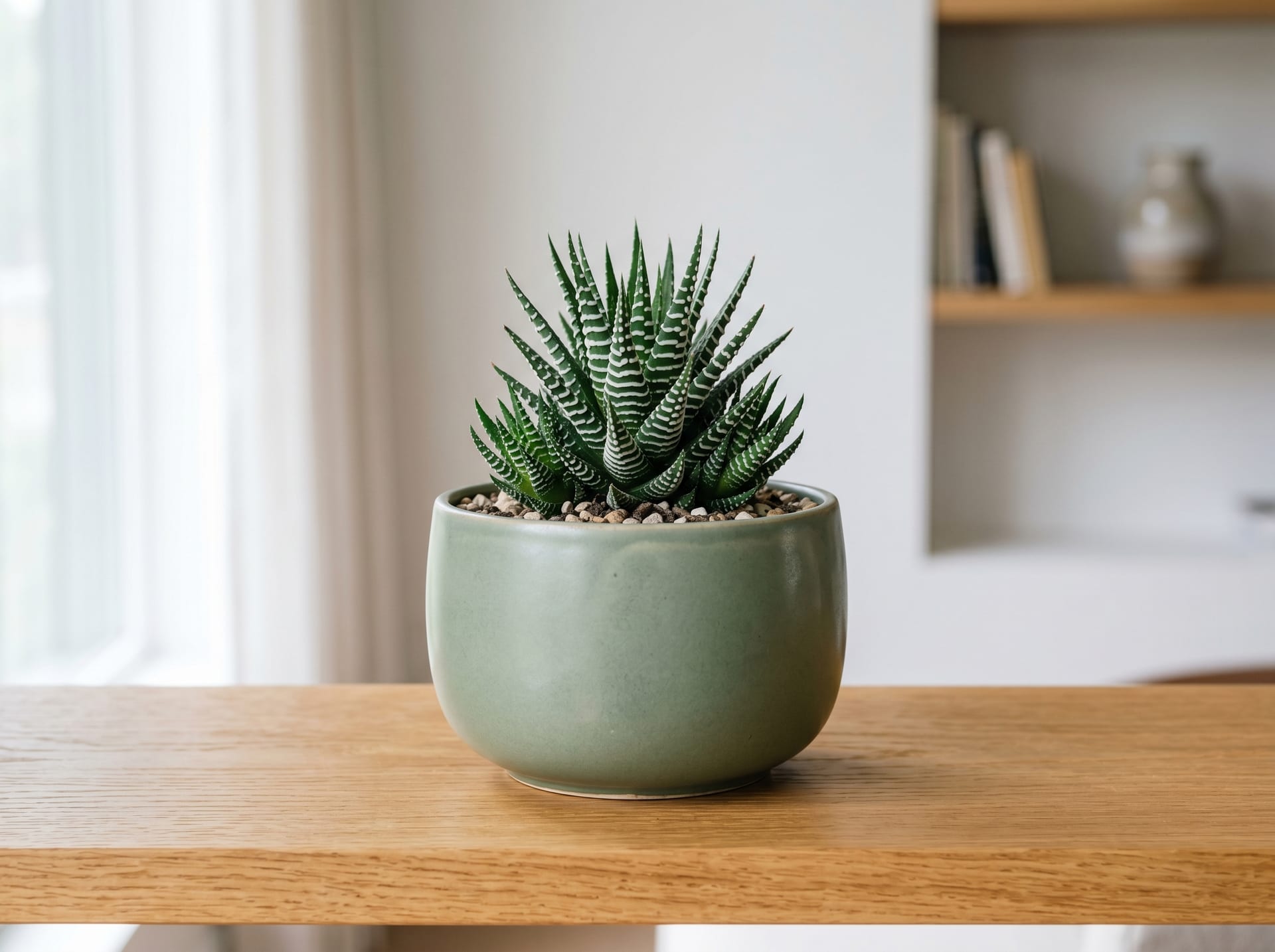
十二卷
Unique succulent with translucent leaf tips called 'windows' that transmit light. Shade-tolerant, thriving in bright indirect light indoors. Obtusa and Retusa are popular. Compact and space-efficient.
View 十二卷 encyclopedia →前3笔销售免佣金!在2026年8月31日前注册生产者账户 → 前3笔成交的手续费免费!
栽培者 招募中!
在BoTachoku上销售,直接面向全国客户销售吗?
ボタちょく的 6 项透明性承诺
栽培者在多肉植物与仙人掌上架时将明示以下信息。确保品种、产地、所需光照、栽培难度的透明性。
- 品种明示
- 实物照片
- 色泽
- 产地明示
- 所需光照
- 难度明示
Browse all 17 varieties
多肉植物与仙人掌分类正在招募认证栽培者
栽培者正在陆续注册,即将上架。设置上架通知,不错过新商品。
「接收上架通知」需免费注册会员即可设置。当有符合您保存条件的新商品上架时,我们会通过邮件和站内通知提醒您。
已注册的栽培者(抢先看)
十二卷的基本数据
- 养护难度
- 适合新手
- 体型
- 3-15cm
- 适宜温度
- 5〜35℃(適温15〜25℃)
- 浇水
- Water: every 2 weeks in spring/fall / monthly in summer and winter
- Soil
- Well-draining mix. Kanuma and Akadama base
- Placement
- Bright indirect light is ideal. Direct sun causes leaf burn
- Propagation
- Offset division is reliable. Leaf propagation difficult for most varieties
- Notes
- Thick roots prefer deep pots. Use deeper containers over shallow ones
关于十二卷
Haworthia is a succulent native to South Africa, belonging to the family Asphodelaceae, and was named in the 19th century after British botanist Adrian Haworth. In the wild, it grows in sheltered spots such as beneath rocks or at the base of grasses, naturally avoiding direct sunlight—a habit that translates directly into its ease of indoor care. Its most distinctive feature is the translucent "window" at the tip of each leaf, a unique adaptation that allows the plant to photosynthesize even when partially buried in the ground. Leaf shape and window patterning vary dramatically between varieties: from the round, bead-like Obtusa to the slender-leaved Retusa and the boldly striped Fasciata, with hundreds of varieties in existence. Slow-growing and compact enough to fit in the palm of a hand, Haworthia is ideal for collecting multiple varieties side by side even in small spaces.
十二卷精选生产者
查看所有十二卷生产者(1个)→开始养护十二卷前需要了解的5件事
1Indirect Light Is Key
Direct sunlight can scorch the leaves and cause the translucent windows to lose their clarity. Bright indirect light — such as a north- or east-facing windowsill or behind a sheer curtain — is ideal. If leaves start to look washed out, simply move the plant a little further from the light source.
2Water Sparingly
Water only after the soil has fully dried out, then wait a few extra days before watering again. In winter, when growth slows, reduce watering to once or twice a month. Never let the plant sit in standing water — empty the saucer immediately after each watering to prevent root rot.
3Use Well-Draining Soil
A commercially available succulent or cactus mix works well straight out of the bag. Avoid general-purpose potting soil, which retains too much moisture and can cause root rot. Terracotta pots or plastic pots with drainage holes help keep the roots healthy by promoting airflow and quick drainage.
4Comfortable Temperature Range
Haworthia tolerates a fairly wide temperature range, but it's best to keep it above 5°C (41°F) to avoid cold damage. In summer, ensure good air circulation to prevent humidity buildup. In winter, a warm indoor spot is sufficient — no special heating equipment is needed.
5Propagate via Offsets
Haworthia readily produces offsets (pups) at the base of the mother plant, making propagation straightforward. Once a pup reaches about 2–3 cm, gently detach it, let it dry for a day or two, then plant it in fresh soil. Leaf cuttings are also possible but have a lower success rate — offset division is the recommended method for beginners.
十二卷的常见问题
- Q.Can Haworthia grow in a room with little sunlight?
- A.Haworthia thrives in bright indirect light, so it can grow near a north-facing window or in a well-lit indoor spot. However, very dark conditions can cause etiolation—stretching and losing its compact shape—so choose a location with as much natural light as possible.
- Q.Is it okay if I forget to water it?
- A.As a succulent, Haworthia stores water in its leaves and can typically survive several weeks without watering. In fact, overwatering poses a far greater risk than underwatering, making it a great choice for those who travel frequently.
- Q.Is it safe in households with pets or small children?
- A.Haworthia is generally considered to have low toxicity and is regarded as relatively safe in households with dogs, cats, or young children. That said, ingesting large amounts cannot be guaranteed safe, so placing it out of reach is still recommended.
- Q.Does it need to be repotted right after purchase?
- A.Repotting immediately after purchase is not mandatory, but if the roots are severely crowded or the soil is old and poorly draining, repotting sooner is beneficial. After repotting, hold off on watering for one to two weeks to allow the roots to settle.
十二卷种植的实用工具
Learn more about 十二卷 in the encyclopedia
View 十二卷 encyclopedia entry →
Care difficulty, size, origin and light needs — all basics covered.