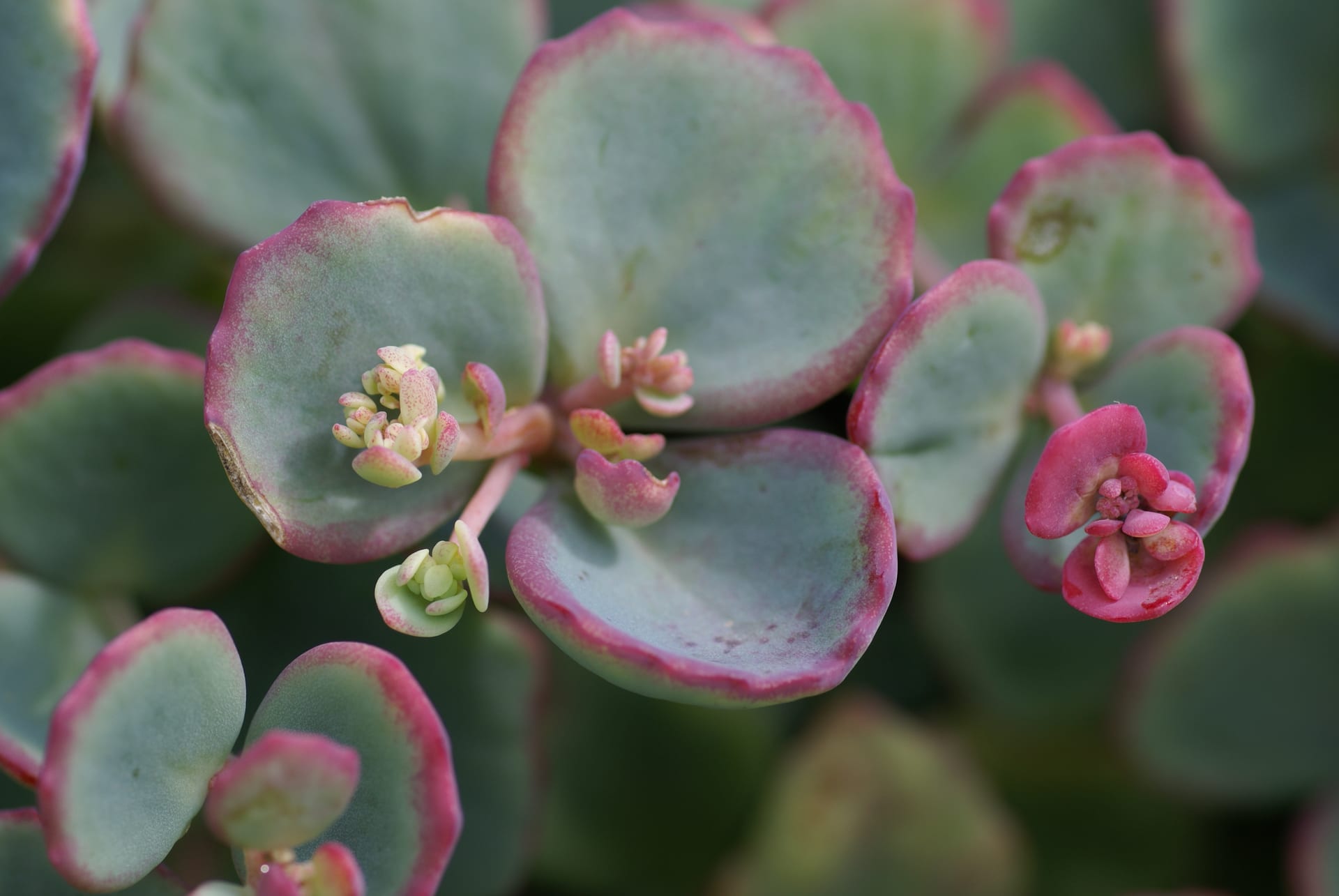
 © Rolf Engstrand / CC BY-SA 3.0
万年草
Misebaya, known in English as October daphne, is a succulent native to Japan. It carries round, blue-gray leaves edged in crimson, arranged in whorls of three, and in autumn it produces clusters of small pink-red flowers. Long valued as a traditional horticultural plant in Japan, it is also called 玉緒 (Tamao). The stems reach 20 to 30 cm in length, while the leaves are just 1 to 1.5 cm long. It is rated beginner-friendly: give it a bright spot and well-drained soil, and in a pot water often enough that it never dries out completely, and it is easy to keep. As a perennial, its aboveground growth dies back in winter and it survives on buds at the base, sprouting again in spring.
View 万年草 encyclopedia →成交手续费0%!2026年9月30日前注册,前 2 株免佣金!
生产者 招募中!
在GrowerDirect上销售,直接面向全国客户销售吗?
GrowerDirect的 6 项透明性承诺
生产者在多肉植物与仙人掌上架时将明示以下信息。确保品种、产地、所需光照、栽培难度的透明性。
- 品种明示
- 实物照片
- 色泽
- 产地明示
- 所需光照
- 难度明示
查看全部131个品种
多肉植物与仙人掌分类正在招募认证生产者
生产者正在陆续注册,即将上架。设置上架通知,不错过新商品。
「接收上架通知」需免费注册会员即可设置。当有符合您保存条件的新商品上架时,我们会通过邮件和站内通知提醒您。
已注册的生产者(抢先看)
万年草的基本数据
- 养护难度
- 适合新手
- 寿命
- 多年草(冬季地上部分枯死,依靠株基部的冬芽越冬)
- 体型
- 茎长20~30cm。叶长1~1.5cm
- 浇水
- 种植时施加少量缓效肥料。盆植在春季和秋季每月施液肥2次左右
- 光照与放置位置
- 全年喜爱光照充足、通风良好的位置。炎热的夏季和寒冷的冬季都可在户外无虞地生长。茎部下垂,用高度较高的盆或悬挂盆栽培养会更显风趣。
- 浇水
- 盆植需经常浇水以避免干旱,但由于本种耐干性强,雨季需减少浇水。
- 温度与冬季越冬
- 耐寒性和耐热性均强。冬季地上部分枯死,依靠株基部的冬芽休眠,应清理枯死的茎,等待春季发芽。
- 基质与移植
- 使用山野草培养土或以鹿沼土小颗粒为主体,混合赤玉土与轻石,比例约6∶3∶1的基质。根系生长迅速,每2年于3月下旬至4月下旬进行一次移植。
- 繁殖方法
- 可通过移植时分株、5月上旬至6月上旬扦插带3节茎段或播种繁殖。从种子培育的苗株约2年后即可开花。
- 病害虫与注意事项
- 从新芽期开始易遭蚜虫侵害,蛞蝓和青虫会啃食叶片。扬虫和鼠妇的食物残渣易成为病菌温床,应及时清除。高湿环境下株基部易患软腐病,应经常摘除枯死的下层叶片。
关于万年草
Misebaya (October daphne) is a beginner-friendly Japanese succulent with crimson-edged leaves and autumn pink blooms. Care tips, how to choose a plant, and FAQs.
开始养护万年草前需要了解的7件事
1Light and placement
It prefers a sunny, well-ventilated spot. With too little light the stems stretch out and the crimson leaf edges may color less well. In midsummer, move it to bright partial shade to avoid harsh direct sun and stuffy, humid air.
2Don't let potted plants dry out
In a pot, water often enough that it never dries out completely. It is also quite drought-tolerant, so cut back during rainy spells. In winter the top growth dies back and it goes dormant, so water sparingly, but avoid letting the soil dry out completely so the buds at the base do not shrivel.
3Soil and pots
Choose a fast-draining mix. A mix for wild or alpine plants, or one based on small-grain kanuma with akadama and pumice added, works well. Pick a pot with drainage holes; because the stems hang down, a tall pot or a hanging planter shows off the trailing habit nicely.
4When to repot
Repot when the roots fill the pot or the clump becomes crowded. Spring, when new shoots start to move, is a good time; shake off the old soil gently and work quickly so the buds are not damaged. Wait a few days after repotting before watering to reduce root damage.
5Winter dieback is normal
Misebaya is a perennial: in winter the aboveground growth dies back and the plant survives on buds at its base. Brown stems and leaves do not necessarily mean the plant is dead. Wait until buds start growing in spring before cutting back dead growth, and keep the pot where the soil will not stay waterlogged.
6Autumn flowers and color
In autumn, clusters of small pink-red flowers open and the leaf edges turn crimson, giving the plant its best display. To encourage flowering, give it plenty of sun from spring through summer so the plant builds strength. Keep fertilizer light, applied sparingly during the growing season.
7How to choose a plant
Look for plants with compact growth and plump blue-gray leaves. Avoid ones with thin, stretched stems, yellowing or translucent leaves, or a wobbly base. In winter a plant may have its top growth already dead, so check the listing details or ask the grower by message if anything is unclear.
万年草的常见问题
- Q.Can a beginner grow Misebaya?
- A.Yes, it is rated beginner-friendly. Give it a bright, airy spot and well-drained soil, and in a pot water often enough that it doesn't dry out completely. It helps to know beforehand that its top growth dies back in winter.
- Q.Its stems and leaves died back in winter. Is it dead?
- A.Not necessarily. Misebaya is a perennial that overwinters from buds at the base even when the aboveground parts die back. If the buds remain, it should sprout in spring, so water sparingly and wait.
- Q.Why won't it flower or color up?
- A.Insufficient light is a common cause. Without enough sun the plant does not build strength, and flowering and the crimson leaf edges tend to weaken. Grow it in a bright place from spring through summer and avoid too much water or fertilizer.
- Q.How can I propagate it?
- A.Stem cuttings are the usual method and are easiest during the growing season. Let the cut end dry, insert it into well-drained soil, and keep the soil from getting too wet until roots form.
- Q.Can it be grown indoors?
- A.A bright window can work, but with too little light the stems stretch. It generally does best outdoors in a sunny, airy spot, and a not-too-warm place in winter helps it keep its seasonal growth rhythm.
万年草种植的实用工具
在图鉴中详细了解万年草
查看万年草的图鉴条目 →
收录栽培难度、尺寸、原产地、日照等基础数据。