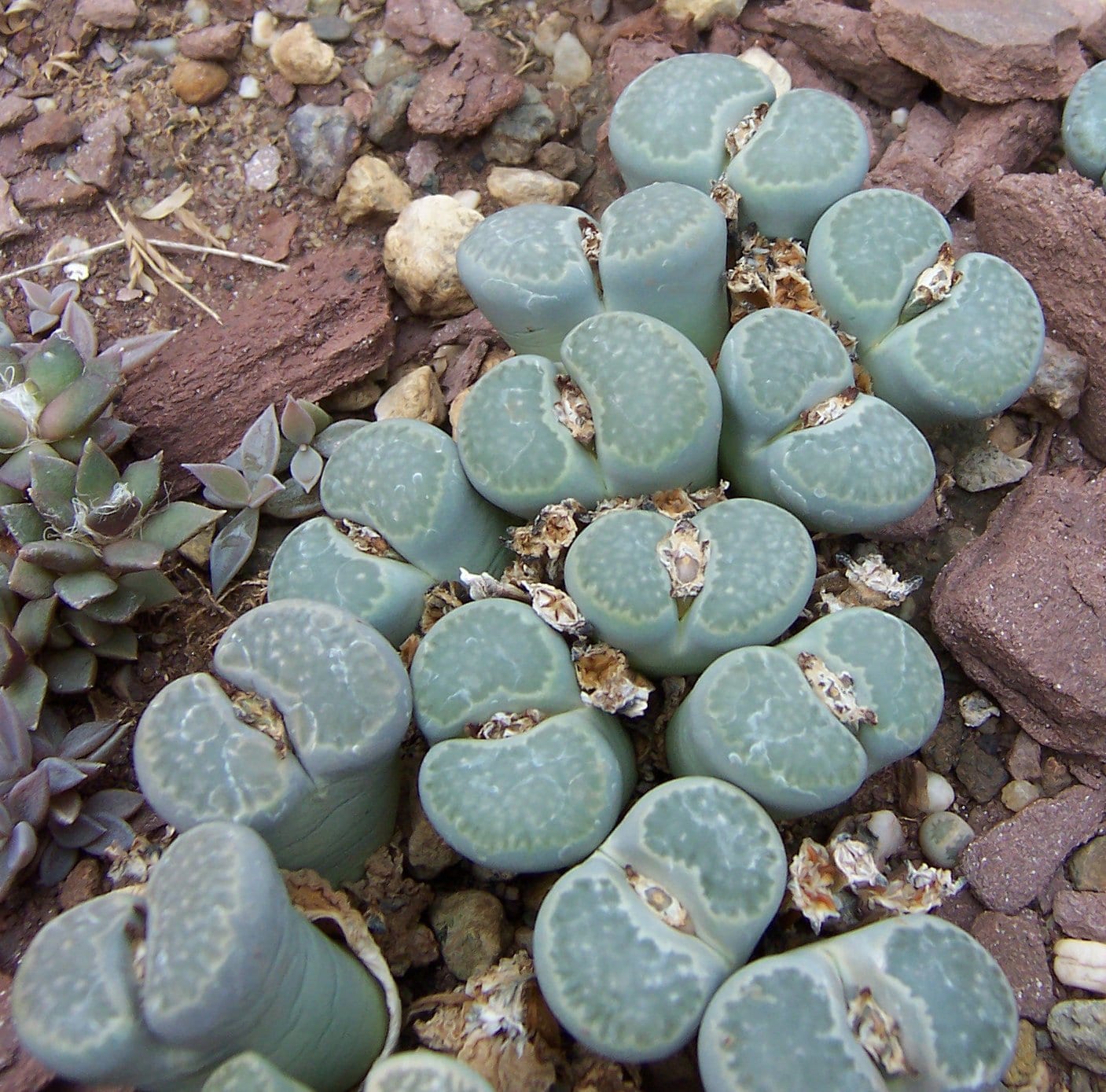
 © Dysmorodrepanis / CC BY-SA 3.0
李夫人
Lithops salicola, called Rifujin (李夫人) in Japan, is a taller-than-usual living stone with grey sides and a large olive-to-dark-green window. Each head stands 17–35 mm tall and 11–26 mm wide. It opens white flowers in autumn and divides readily, growing slowly into a clump that can reach 25 cm across over several decades. Once you get a feel for watering, it is a good choice for beginners, and a purple selection known as Murasaki Rifujin also exists.
View 李夫人 encyclopedia →成交手续费0%!2026年9月30日前注册,前 2 株免佣金!
生产者 招募中!
在GrowerDirect上销售,直接面向全国客户销售吗?
GrowerDirect的 6 项透明性承诺
生产者在多肉植物与仙人掌上架时将明示以下信息。确保品种、产地、所需光照、栽培难度的透明性。
- 品种明示
- 实物照片
- 色泽
- 产地明示
- 所需光照
- 难度明示
查看全部131个品种
多肉植物与仙人掌分类正在招募认证生产者
生产者正在陆续注册,即将上架。设置上架通知,不错过新商品。
「接收上架通知」需免费注册会员即可设置。当有符合您保存条件的新商品上架时,我们会通过邮件和站内通知提醒您。
已注册的生产者(抢先看)
李夫人的基本数据
- 养护难度
- 适合新手
- 寿命
- 多年生。群生株通过数十年的生长而扩大
- 体型
- 单个头部高度17-35毫米,宽度11-26毫米。群生植株直径可达25厘米
- 适宜温度
- 8〜25℃
- 浇水
- 在秋季至春季的生长期施用少量缓释肥或液体肥料
- 光照和放置位置
- 全年在光照充足、防雨的场所栽培。盛夏避免高温潮湿,保证通风,遮光,保持凉爽使其休眠。
- 浇水
- 冬型植物。秋季(9-11月)待土壤干燥后充分浇水,冬季选择温暖的日子浇水。夏季休眠期每月喷雾2-3次即可。在肉锥花属中,该种相对耐过湿。
- 温度和越冬
- 干燥时该种相对耐冬季寒冷。冬季最低温度不低于3℃可保持植株状态良好(不枯死的目标为0-3℃)。轻霜很少导致枯死,但严寒期应移至室内或采取防寒措施。
- 用土和换盆
- 因具有萝卜状的直根,宜用较深的盆和排水良好的土壤种植。无需频繁换盆,当生长变缓或盆土窄促时,在10-11月进行换盆。
- 繁殖方法
- 用播种(10-11月)或分株繁殖。从母株盆中自然落下的种子生长出苗木也不罕见。要确保保留紫李夫人的颜色,应采用分株方式。
- 病虫害和注意事项
- 花蕾和花朵可能被蚧壳虫和蚜虫寄生,根部可能被根粉虱寄生,花瓣可能被蛞蝓啃食,叶片可能被夜蛾幼虫啃食。凋谢的花应及时用手指去除,以防腐烂。
关于李夫人
Lithops salicola (Rifujin) is a tall, clumping Lithops with olive-to-dark-green windows and white autumn flowers. Beginner tips on watering, molting and plant selection.
开始养护李夫人前需要了解的7件事
1A Bright, Airy Spot
Rifujin loves sun. Outdoors, choose a bright spot sheltered from rain; indoors, a sunny window sill works well. With too little light the head stretches and loses its naturally tall, upright form, so keep air moving around it as well.
2Water Sparingly
During the growing season, water thoroughly only after the soil has dried out completely, then wait until it dries again. Frequent watering invites root rot and split heads. When in doubt, hold off.
3The Yearly Cycle
Rifujin grows and flowers in autumn, then gradually needs less water. Winter to spring is the molting period, when a new head emerges from inside the old leaves, and summer is a slow stretch during the heat. Keep it airy and give little water in summer.
4Dry Out While Molting
While molting, the new head draws nutrients from the old leaves, and watering puts extra strain on the plant. Hold off until the old leaves have shrunk into thin, papery skins. Return to normal watering once they are fully dry.
5Fast-Draining Soil and a Fairly Deep Pot
It grows a long taproot, so plant it in a pot with some depth. Use a cactus and succulent mix and add pumice or similar grit to improve drainage.
6Repotting and Clumping
Rifujin divides readily, so once a clump fills its pot, move it to a slightly larger one. Early autumn, when growth resumes, or after molting has finished is a good time; avoid repotting mid-molt or in high summer. After repotting, wait a few days before watering.
7Choosing a Healthy Plant
Look for a smooth, firm window face with no wrinkles, dark patches or soft spots. Although this is a taller Lithops, an extremely thin, stretched plant may have grown in too little light. For a clump, check that each head is free of damage.
李夫人的常见问题
- Q.Can a beginner grow Rifujin?
- A.Yes, it is rated as beginner-friendly. Lithops are easily harmed by overwatering, though, so water only after the soil has dried and hold back during molting.
- Q.When does it flower?
- A.It produces white flowers in autumn. To enjoy blooms, give it plenty of sun so the plant stays strong and well filled out.
- Q.How often should I water it?
- A.Rather than following a fixed schedule, water when the soil has dried out completely. In the autumn growing season, water thoroughly once it is dry, and go easy during molting and in summer.
- Q.How big does it get?
- A.A single head is about 17–35 mm tall and 11–26 mm wide. As it divides and clumps over several decades, the whole plant can reach 25 cm across.
- Q.What is Murasaki Rifujin?
- A.Murasaki Rifujin is known as a purple selection of Rifujin. Before buying, check the photos and description on the listing page to confirm the coloring.
李夫人种植的实用工具
在图鉴中详细了解李夫人
查看李夫人的图鉴条目 →
收录栽培难度、尺寸、原产地、日照等基础数据。