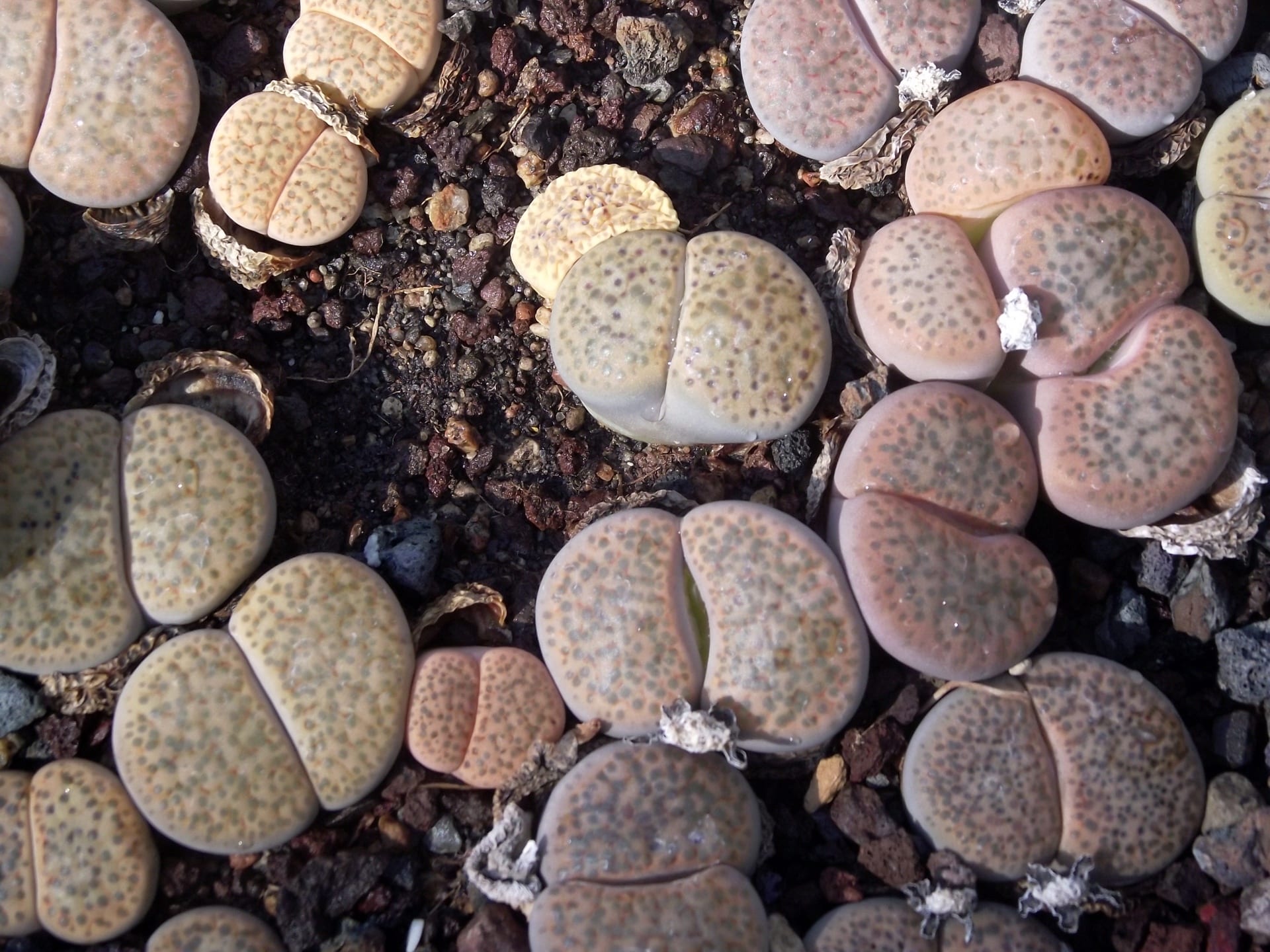
© Rillke / CC BY-SA 3.0褐纹玉
Lithops fulviceps, known in Japan as Bimongyoku (微紋玉), is a living-stone succulent with an orange-brown top surface scattered with tiny grey, brown or purplish dots that rise up like little blisters. It is smaller than most Lithops, so it fits easily on a desk or windowsill, and it produces yellow flowers up to about 35 mm across. As a perennial, it renews itself by shedding its old leaf pair, and once you learn when to hold back water and when to give it, it keeps growing from year to year. It is rated intermediate in difficulty, so it suits growers who already have some experience with succulents.
View 褐纹玉 encyclopedia →成交手续费0%!2026年9月30日前注册,前 2 株免佣金!
生产者 招募中!
在GrowerDirect上销售,直接面向全国客户销售吗?
GrowerDirect的 6 项透明性承诺
生产者在多肉植物与仙人掌上架时将明示以下信息。确保品种、产地、所需光照、栽培难度的透明性。
- 品种明示
- 实物照片
- 色泽
- 产地明示
- 所需光照
- 难度明示
查看全部131个品种
多肉植物与仙人掌分类正在招募认证生产者
生产者正在陆续注册,即将上架。设置上架通知,不错过新商品。
「接收上架通知」需免费注册会员即可设置。当有符合您保存条件的新商品上架时,我们会通过邮件和站内通知提醒您。
已注册的生产者(抢先看)
褐纹玉的基本数据
- 养护难度
- 适合中级者
- 寿命
- 多年生(生命周期数据较少)
- 体型
- 比许多石头花更小型。花径最大约35mm
- 适宜温度
- 8〜25℃
- 浇水
- 秋季至春季生长期使用缓释肥或液体肥料少量
- 光照和放置位置
- 尽可能提供充足光照。在有雨棚、光照充足的地方培育,从梅雨明后至夏季在通风良好的半阴处让其休眠。
- 浇水
- 冬生型。从秋季最低气温跌至20℃以下时重新浇水,生长期用土干燥后浇至盆底流出。从开花后至旧叶完全干枯期间减少浇水,6~9月休眠期也保持干燥。
- 温度和越冬
- 冬季最低温度不低于3℃可保持株形美观(不枯死的目安为0~3℃)。轻霜很少导致枯死,但严寒期需移至室内或防寒。
- 培养土和换盆
- 必须使用无机质、排水良好的培养土。由于具有牛蒡状的直根,应在排水良好的较深盆中植入。不需频繁换盆,当生长缓慢或盆土拥挤时在10~11月换盆。
- 繁殖方法
- 通过播种(10~11月)或丛生株的分株进行繁殖。
- 病虫害和注意事项
- 大多数问题由过度浇水和通风不足引起,特别是在阴天、凉爽或湿度高时。花蕾和花可能会生介壳虫或蚜虫,根部可能生根结线虫,花瓣可能被蛞蝓啃食,叶片可能被夜蛾幼虫啃食。凋谢的花应用手指取下,以防止腐烂。
关于褐纹玉
Lithops fulviceps is a small living stone with a speckled orange-brown top and yellow flowers up to about 35 mm across. Tips on light, watering, soil and seasonal care.
开始养护褐纹玉前需要了解的7件事
1Light and airflow
Aim for a spot with plenty of light and good airflow. With too little light the plant tends to stretch out of its compact shape, so choose a bright outdoor spot or a sunny windowsill indoors. It dislikes intense summer sun and stuffy air, so move it to bright shade with a breeze during the hottest weeks.
2Go easy on water
The rule is to water only after the soil has dried out completely. Because the plant stores water in its leaves, constantly damp soil can lead to root rot or a split body. When you do water, soak the pot until it drains from the bottom, then wait until it is fully dry again.
3Free-draining soil
A well-draining mix works best, such as succulent soil with extra pumice or sand. Go easy on organic matter, which stays damp for longer. Choose a pot with drainage holes and a bit of depth to give the downward-growing roots room.
4Skip water when molting
Molting, when new leaves emerge from between the old pair, mostly takes place from winter into spring. The old leaves shrink as they pass moisture to the new ones, and watering at this time can disrupt the process or split the new leaves. Hold off watering until the old pair has dried down to a thin skin.
5Summer and winter care
Summer is a dormant period when growth slows, so keep watering to a minimum and rest the plant somewhere cool and airy. It becomes active again as the weather cools in autumn, which is also when Lithops usually flower. In winter, growth is slow, so protect it from frost and keep it on the dry side.
6Choosing a plant
Look for a plump, firm plant without heavy wrinkling, dark spots or soft, mushy patches at the base. The color and spread of the dots on the top surface vary from plant to plant, so check the listing photos to find a pattern you like. A plant in the middle of molting can change quickly, so first-time buyers may find one that has finished molting easier to handle.
7When to repot
Yearly repotting is not necessary; do it when the pot becomes cramped or the soil has broken down. Avoid molting and dormancy, and choose a cool period when growth is starting, working with the soil dry. Hold off watering right after repotting and resume after a short wait to reduce the risk of root damage.
褐纹玉的常见问题
- Q.Can a beginner grow Lithops fulviceps?
- A.It is rated intermediate in difficulty. Getting the watering right and managing the molting period are the key points, so it is easier for growers already used to keeping succulents on the dry side. If you are new to it, follow the basics and watch the plant closely.
- Q.How big does Lithops fulviceps get?
- A.It is smaller than most Lithops and stays compact. The exact size of a plant depends on the individual and how it has been grown. Check the description and photos on the listing page.
- Q.What kind of flowers does it produce?
- A.It produces yellow flowers up to about 35 mm across. They usually appear around autumn, and plenty of sunlight is essential for flowering.
- Q.How long does Lithops fulviceps live?
- A.It is a perennial that grows by molting repeatedly. However, little information is available on its lifespan, so we cannot give a reliable number of years. With suitable light and watering, it can be a long-term companion.
- Q.How often should I water it?
- A.There is no fixed interval; decide based on whether the soil is fully dry, the season, and whether the plant is molting. In the cool growing season water once it has dried out, and hold back during summer dormancy and molting. When in doubt, it is safer to give too little than too much.
褐纹玉种植的实用工具
在图鉴中详细了解褐纹玉
查看褐纹玉的图鉴条目 →
收录栽培难度、尺寸、原产地、日照等基础数据。