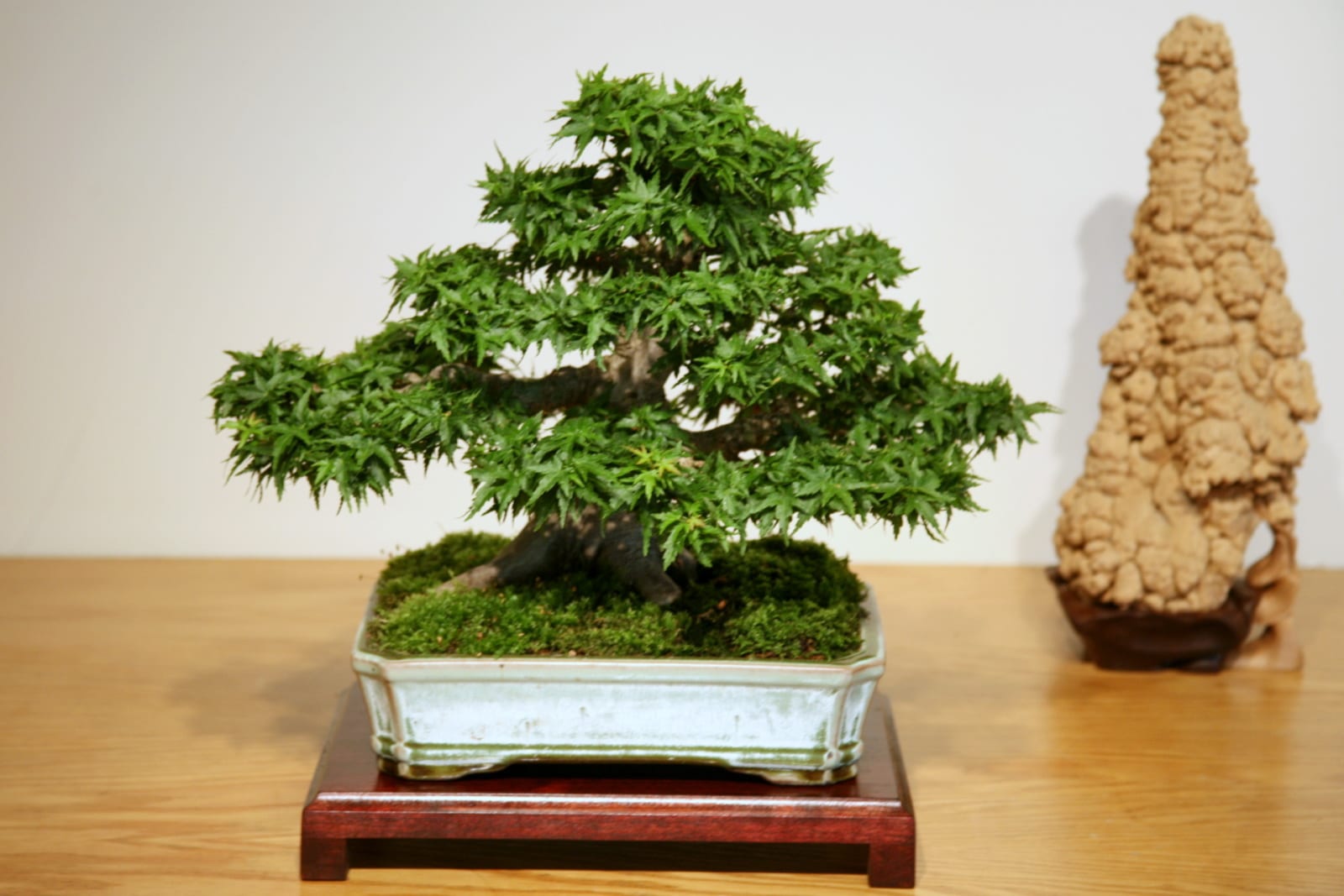
 © Cliff from Arlington, Virginia, USA / CC BY 2.0
琴姫
Kotohime is an extremely dwarf Japanese maple known for its tiny leaves and short internodes. As a leading yatsubusa (many-branching) maple variety, it branches profusely and readily develops a dense, finely twigged silhouette even in a small pot, making it a long-time favorite for mame and shohin bonsai. It's generally considered a variety for intermediate growers, though it becomes manageable once you have the basics of placement and watering down. Because it also propagates readily from cuttings, growers can gradually build up their collection by rooting new plants from an existing tree. Packed into a palm-sized pot, Kotohime offers the delicate branching and seasonal color of a maple in miniature form.
View 琴姫 encyclopedia →成交手續費 0%!2026年9月30日前註冊,前 2 株免佣金!
生產者 招募中!
在 GrowerDirect 上架,直接銷售給全國的客戶吧!
GrowerDirect承諾的 6 項透明性重點
盆景的出品中,生產者將明示以下資訊。確保樹種、產地、所需光照、栽培難度的透明度。
- 樹種明示
- 實物照片
- 色澤
- 產地明示
- 所需光照
- 難度明示
查看全部144個品種
盆景分類正在招募認證生產者
生產者正在陸續註冊,即將上架。設定上架通知,不錯過新商品。
「接收上架通知」需免費註冊會員即可設定。當有符合您儲存條件的新商品上架時,我們會以郵件和站內通知提醒您。
已註冊的生產者(搶先看)
琴姫的基本資料
- 栽培難度
- 適合中級者
- 壽命
- 作為品種的壽命資料甚少
- 體型
- 極矮性,易於以豆盆栽~小品盆栽維持
- 澆水
- 肥料(春季和秋季,控制量)
- 光照‧擺放位置
- 日照充足、通風良好之處。忌西照,梅雨期後~9月上旬需遮蔭50~70%防止葉灼傷
- 澆水
- 小盆器乾燥極快。春季每日2次,夏季2~3次為目安,澆向根部。夏季乾旱會導致葉灼傷或枝枯
- 溫度‧越冬
- 耐寒性強(日本楓為USDA Zone 5)。落葉後經霜凍2~3次,隨後在避免乾風和晚霜的環境下保護
- 用土‧換盆
- 採排水性良好的土壤,換盆於新芽萌出前的3月左右。每2~3年更換一次,迷你品種1~2年更換一次,整理根部使細根增加
- 肥料
- 新葉固化的4月中旬施有機質肥料,5月追肥。秋肥於8月中旬~9月施完,促進紅葉
- 修剪‧整形
- 因節間密集,只需通過摘芽除去中心芽就能長出新枝。避免全葉刈除以防樹勢衰弱,如需要則改做疏葉。修剪在落葉前後進行
- 病蟲害‧注意事項
- 新芽易遭蚜蟲,梅雨期後易發生白粉病。葉片薄弱易發生藥害,使用藥劑時需遵守標籤濃度
關於琴姫
Kotohime is a leading yatsubusa Japanese maple with tiny leaves and dense branching, ideal for mame and shohin bonsai in small pots. It also propagates easily from cuttings.
開始照料琴姫前需要了解的7件事
1Placement
Kotohime prefers a spot with good sun and airflow, but strong direct summer sun can scorch its leaves. Because its leaves are extremely small, moving it to bright partial shade in the afternoon is safer, especially while it's still in a small pot.
2Watering
Because Kotohime is grown in a small pot as an extremely dwarf variety, the soil surface dries out quickly. Check the soil regularly during the growing season and water thoroughly once it dries.
3Soil
Since roots fill a small pot quickly, a well-draining, well-aerated bonsai soil mix is important. An akadama-based blend is a common choice.
4Repotting
Because mame and shohin-sized pots fill with roots relatively fast, Kotohime tends to need repotting at shorter intervals than larger bonsai. The best time is just before new growth starts, when the roots can be trimmed and refreshed.
5Pruning and Pinching
To make the most of its yatsubusa branching habit, pinch back new shoots regularly to encourage more branches to form. This ongoing care is what builds up the fine, twiggy silhouette Kotohime is known for.
6Seasonal Care
Its tiny leaves are sensitive to heat and drying out, so watch for leaf scorch and dehydration in summer. In winter, the roots in a small pot are more exposed to cold, so some frost protection is worth considering during the coldest stretches.
7Choosing a Good Specimen
Kotohime's character shows in its small leaves and tightly spaced internodes that create fine branching. When choosing a tree, look for even, well-distributed branching and leaves, and check that there's no dead wood.
琴姫的常見問題
- Q.Is Kotohime suitable for beginners?
- A.It's generally considered a variety for intermediate growers, since its tiny leaves and small pot mean basic care like watering needs a bit more attention. Once you're comfortable with bonsai fundamentals, it becomes easier to manage over time.
- Q.How large does Kotohime typically grow?
- A.It's an extremely dwarf variety that's easy to maintain at mame or shohin bonsai size. It can stay in a small pot while keeping a compact form for a long time.
- Q.Can Kotohime be propagated from cuttings?
- A.Yes, Kotohime is known as a variety that roots readily from cuttings. This makes it possible to grow new plants from an existing tree and gradually build up your collection.
- Q.What makes Kotohime different from other Japanese maples?
- A.Kotohime is a leading yatsubusa maple variety, meaning it has unusually small leaves and short internodes. This lets it develop a dense, finely branched silhouette even in a small pot.
- Q.How often does Kotohime need repotting?
- A.Because it's grown in a small pot, its roots fill the space relatively quickly, so it tends to need repotting more often than larger bonsai. It's best done just before new growth starts, checking root condition each time.
琴姫栽培的實用工具
在圖鑑中詳細了解琴姫
查看琴姫的圖鑑條目 →
收錄栽培難度、尺寸、原產地、日照等基礎資料。