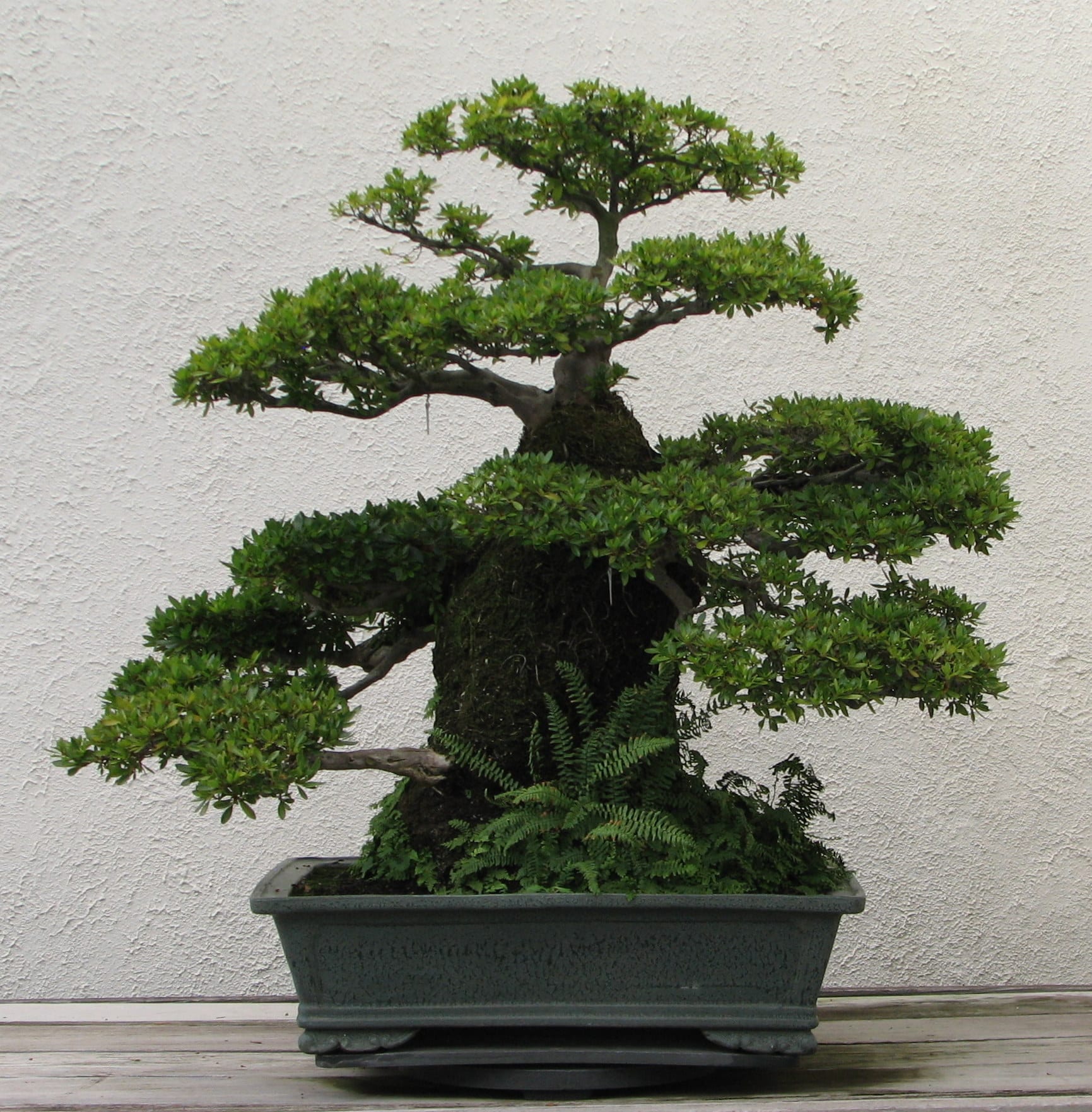
 © Ragesoss / CC BY-SA 3.0
大盃
Osakazuki is one of the most iconic Satsuki azalea varieties, so widely grown that many people picture this very cultivar when they think of 'Satsuki.' Its medium-sized, deep pinkish-purple flowers bloom abundantly, covering the plant in vivid color. The variety is sturdy and tolerates pruning well, making it easy to shape and a great choice for beginners. It is also known for its attractive reddish bark, and many old specimens are in cultivation, making it a rewarding variety to grow over the long term.
View 大盃 encyclopedia →成交手續費 0%!2026年9月30日前註冊,前 2 株免佣金!
生產者 招募中!
在 GrowerDirect 上架,直接銷售給全國的客戶吧!
GrowerDirect承諾的 6 項透明性重點
盆景的出品中,生產者將明示以下資訊。確保樹種、產地、所需光照、栽培難度的透明度。
- 樹種明示
- 實物照片
- 色澤
- 產地明示
- 所需光照
- 難度明示
查看全部144個品種
盆景分類正在招募認證生產者
生產者正在陸續註冊,即將上架。設定上架通知,不錯過新商品。
「接收上架通知」需免費註冊會員即可設定。當有符合您儲存條件的新商品上架時,我們會以郵件和站內通知提醒您。
已註冊的生產者(搶先看)
大盃的基本資料
- 栽培難度
- 適合新手
- 壽命
- 壽命長,多有古樹栽培
- 體型
- 庭木約0.5~1m(盆栽從小品到大品)
- 澆水
- 肥料(4月、花後的6月、9~10月)
- 光照・擺放位置
- 喜光,但夏日強光容易造成葉燒和根傷。幼樹宜充分日照,樹形維持階段則放在半陰處。要確保通風。
- 澆水
- 喜潮濕,但根系細弱怕過濕。春季每天1~2次,夏季2~3次,冬季2~3天1次為目安。避免在高溫的白天澆水。
- 溫度・越冬
- 有耐寒性,但怕冬季寒風。要在屋簷下等處保護,防止盆土結凍。
- 基質・翻盆
- 以鹿沼土為主的酸性粗質基質。翻盆在花後立即進行(6月)或秋季(9月下旬~10月上旬)。秋季翻盆的株體冬季保護要謹慎。
- 肥料
- 新芽硬化期4月左右、花後的6月、9~10月每月1次固形肥料。肥料不足會導致枝條枯死。
- 修剪・塑形
- 耐修剪,在任何位置切割都會發芽。觀花株在花後6月中旬(關東以西至7月初)進行修剪,粗幹培育的重剪在開花前4~5月進行。
- 病蟲害・注意事項
- 病蟲害較多的樹種。易發生軍配蟲、紅蜘蛛、蚜蟲、薊馬,生長期需定期防除。
關於大盃
Osakazuki is a classic Satsuki azalea with abundant deep pink-purple blooms. Sturdy, prune-tolerant, and beginner-friendly, it's known for reddish bark and long-lived old specimens.
開始照料大盃前需要了解的7件事
1Light & Airflow
Osakazuki thrives in bright, sunny spots outdoors and flowers best with plenty of light. In midsummer, filtering the light with partial shade or a shade cloth helps prevent leaf scorch, and good air circulation helps keep pests and disease at bay.
2Watering Basics
Water thoroughly, letting it run from the drainage holes, once the soil surface has dried out. Satsuki azaleas have fine roots that are sensitive to drying out, so pay extra attention during the flowering season and in midsummer; in winter, the soil dries more slowly, so water less often.
3Choosing Soil
Unlike many other trees, Satsuki azaleas do best in a soil mix formulated specifically for them. Look for a slightly acidic blend that balances drainage and moisture retention, which keeps the roots healthy. A commercial Satsuki-specific potting mix is a reliable, low-risk choice.
4When to Repot
The best time to repot is after flowering, around the start of the rainy season. Repotting into fresh soil, without disturbing the root ball too drastically, helps prevent root-bound growth and keeps the plant healthy; doing this roughly every few years is a good rule of thumb.
5Pruning & Shaping
Osakazuki tolerates pruning well, making it a great choice for shaping. Deadheading and light trimming right after flowering won't interfere with next year's flower buds, and the variety also handles harder pruning reasonably well if timed carefully.
6Seasonal Care
Osakazuki blooms from spring into early summer, then enters a period of new growth. Keep an eye on strong summer sun and dryness, as well as winter frost and cold winds. Adjusting its placement with the seasons helps keep the plant healthy over the long term.
7Choosing a Plant
Because Osakazuki is often grown as a long-lived old tree, individual specimens can develop distinctive trunks and branch shapes. Look for a plant with deep leaf color and healthy foliage all the way to the branch tips, which tends to indicate stable future growth, comparing trunk shape and bark tone is part of the fun of choosing one.
大盃的常見問題
- Q.Is Osakazuki suitable for someone growing Satsuki azaleas for the first time?
- A.Yes, Osakazuki is considered a sturdy, easy-to-grow variety that's well suited to beginners. It also tolerates pruning well, so you can shape it as you go without much worry.
- Q.How large does it grow?
- A.As bonsai, it can be grown at almost any size, from small pieces to large specimens, depending on how it is trained. Its trunk thickens readily and it branches finely, so it suits many styles, from informal upright to cascade.
- Q.What are the flowers like?
- A.It produces medium-sized, deep pinkish-purple flowers with abundant blooms. The way it covers itself in color is part of why it's so widely grown as a representative Satsuki variety.
- Q.What is special about its bark?
- A.Osakazuki is known for its attractive reddish bark, and many old specimens are in cultivation. Enjoying the character of the trunk as the tree is grown over the years is part of its appeal.
- Q.How often does it need repotting or pruning?
- A.Repotting is generally recommended every few years, after flowering around the start of the rainy season. Pruning is mainly light trimming after flowering, and since Osakazuki tolerates pruning well, it's easy to keep its shape in check.
大盃栽培的實用工具
在圖鑑中詳細了解大盃
查看大盃的圖鑑條目 →
收錄栽培難度、尺寸、原產地、日照等基礎資料。