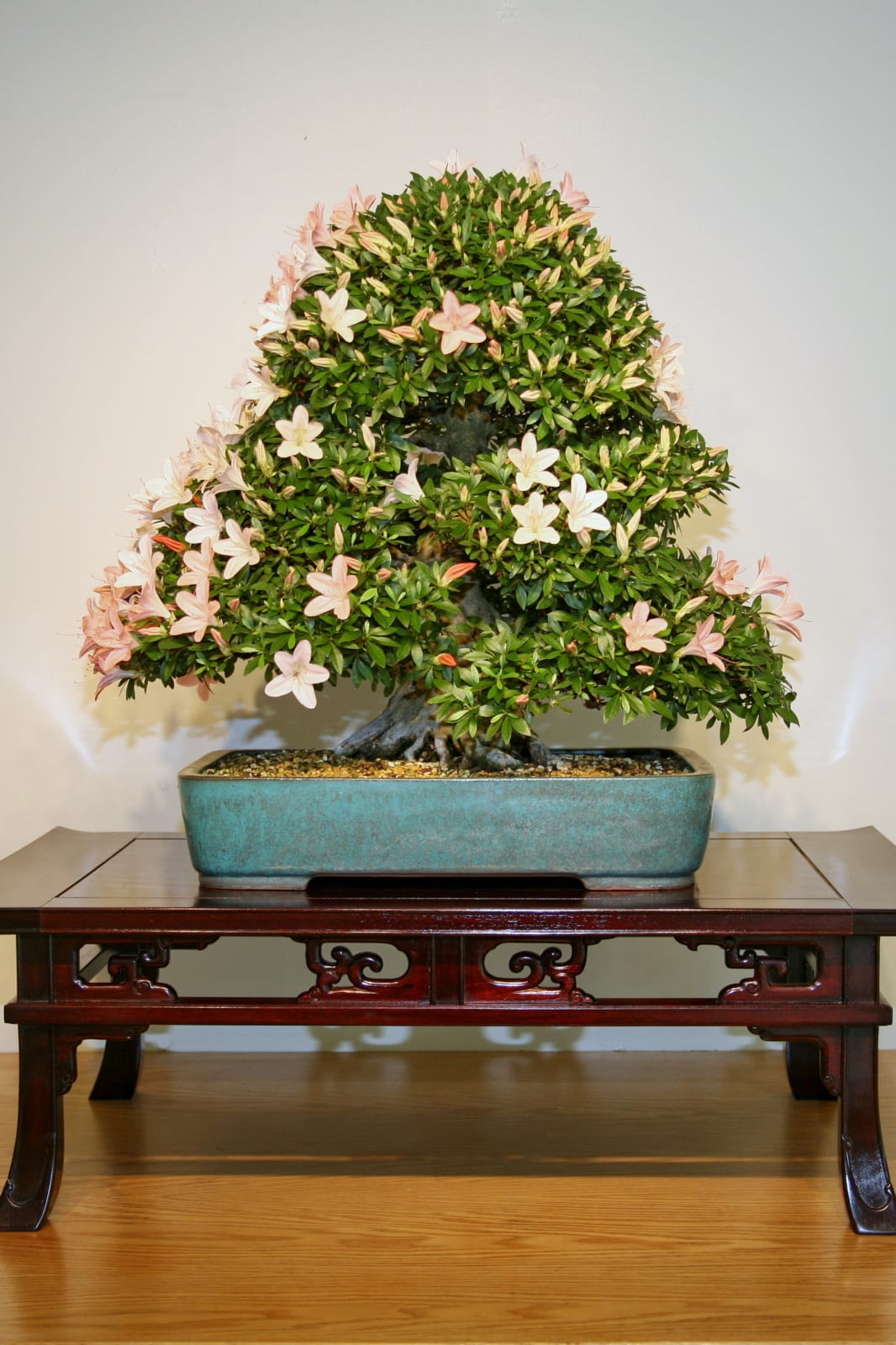
© Cliff from Arlington, Virginia, USA / CC BY 2.0日光
Nikko is a Satsuki azalea that arose as a branch sport of the old cultivar Kozan. Its small flowers are pale pink (toki-iro) with a variegated pattern, and the same plant can also produce solid red, pink, and white blooms, a distinctive trait sometimes called sporting. With small leaves and good branching and budding habits, it trains easily as bonsai, making it a popular choice for beginners. Satsuki azaleas are evergreen shrubs that typically reach 0.5 to 1 meter in height, and as bonsai they are shaped to fit the size of the pot, making Nikko easy to enjoy even in limited space.
View 日光 encyclopedia →成交手續費 0%!2026年9月30日前註冊,前 2 株免佣金!
生產者 招募中!
在 GrowerDirect 上架,直接銷售給全國的客戶吧!
GrowerDirect承諾的 6 項透明性重點
盆景的出品中,生產者將明示以下資訊。確保樹種、產地、所需光照、栽培難度的透明度。
- 樹種明示
- 實物照片
- 色澤
- 產地明示
- 所需光照
- 難度明示
查看全部144個品種
盆景分類正在招募認證生產者
生產者正在陸續註冊,即將上架。設定上架通知,不錯過新商品。
「接收上架通知」需免費註冊會員即可設定。當有符合您儲存條件的新商品上架時,我們會以郵件和站內通知提醒您。
已註冊的生產者(搶先看)
日光的基本資料
- 栽培難度
- 適合新手
- 壽命
- 品種壽命的相關資料較少
- 體型
- 皐月為高度0.5~1公尺的常綠灌木。用於盆景栽培時可根據盆器大小進行整形
- 澆水
- 肥料(4月、開花後的6月、9~10月)
- 日曬與放置位置
- 喜好日光,但夏季強烈日光易導致葉燒和根部受傷。幼樹應充分照光,樹形維持階段宜置於半陰環境。確保通風良好
- 給水
- 喜水但根系細弱且怕過濕。春季每天1~2次,夏季2~3次,冬季每2~3天1次為目標。避免在高溫白天給水
- 溫度與越冬
- 雖具耐寒性但怕冬季寒風。盆土應防止結凍,置於屋檐下等處保護
- 植材與換盆
- 使用以鹿沼土為主的酸性粗顆粒植材。換盆時間為開花後立即進行(6月)或秋季(9月下旬~10月上旬)
- 肥料
- 新芽長成的4月左右、開花後的6月、9~10月,每月施用1次顆粒肥料。肥料不足易導致枝條枯萎
- 修剪與整形
- 花芽在7~8月中旬形成,故摘芽與修剪應在開花後6月內完成(關東以西地區可延至7月初)。鐵絲整形於4月及9~10月進行
- 病蟲害與注意事項
- 該樹種病蟲害較多,需防範軍配蟲、紅蜘蛛、蚜蟲及薊馬。某些株系可能僅開放與晃山相似的花朵,建議於開花期觀察花形後再選擇
關於日光
Nikko is a Satsuki azalea that arose as a branch sport of the old cultivar Kozan. It bears small pale pink flowers with a variegated pattern, and can also produce solid red, pink, and white blooms on the same plant, a popular, beginner-friendly bonsai variety valued for its small leaves and easy shaping.
開始照料日光前需要了解的7件事
1Sunny, airy placement
Growing Nikko in a bright, well-ventilated spot helps bring out the variegated toki-iro pattern and the vivid red, pink, and white blooms more clearly. Strong midsummer sun can scorch the leaves, so moving potted plants to partial shade during the hottest months is a good precaution.
2Small leaves mean careful watering
With its small leaves and fine roots, Nikko is sensitive to drying out. Water thoroughly once the soil surface feels dry, and be especially careful during flowering and summer months.
3Soil built around kanuma
Bonsai growers commonly use kanuma soil, valued for balancing drainage with moisture retention, as the main component for Satsuki azaleas. Since Nikko is trained with a compact root mass, choosing the right soil helps keep it vigorous.
4Repot after flowering, thanks to strong budding
The best time to repot is just after the flowers fade. Because Nikko buds reliably, it recovers well even when the root ball is worked on at this stage, making it easier to maintain as bonsai.
5Prune after flowering to shape it
With its small leaves and good branching habit, Nikko is easy to shape through pruning and pinching after flowering. Regular care helps maintain a compact, bonsai-like form.
6One plant, several flower colors
Along with its variegated toki-iro blooms, Nikko can produce solid red, pink, or white flowers on the same plant. Watching how the pattern varies by year or branch is part of the appeal.
7Check leaves and branching when choosing
When choosing a plant, look for undamaged leaves and dense branching, which makes shaping easier later on. Its small leaves and reliable budding make it manageable even for beginners.
日光的常見問題
- Q.Is Nikko suitable for beginners?
- A.Yes, Nikko is considered a beginner-friendly variety. Its small leaves, reliable budding, and manageable growth habit make it a good choice for those new to growing Satsuki azaleas as bonsai.
- Q.What do the flowers look like?
- A.The typical bloom is a small flower with a variegated pattern on a pale pink (toki-iro) base, but the same plant can also produce solid red, pink, or white flowers. The exact pattern can vary from year to year.
- Q.How large does it grow?
- A.Satsuki azaleas are evergreen shrubs that reach about 0.5 to 1 meter in height, but as bonsai they are kept small and shaped to fit the pot. Pruning makes it easy to control the plant's overall form.
- Q.How is Nikko related to Kozan?
- A.Nikko arose as a branch sport of the old cultivar Kozan. It carries traits inherited from Kozan while showing its own mix of variegated toki-iro blooms and solid red, pink, and white flowers.
- Q.When is the best time to repot?
- A.The ideal time to repot is right after flowering ends. Repotting without disturbing the root ball too much helps minimize stress on the plant.
日光栽培的實用工具
在圖鑑中詳細了解日光
查看日光的圖鑑條目 →
收錄栽培難度、尺寸、原產地、日照等基礎資料。