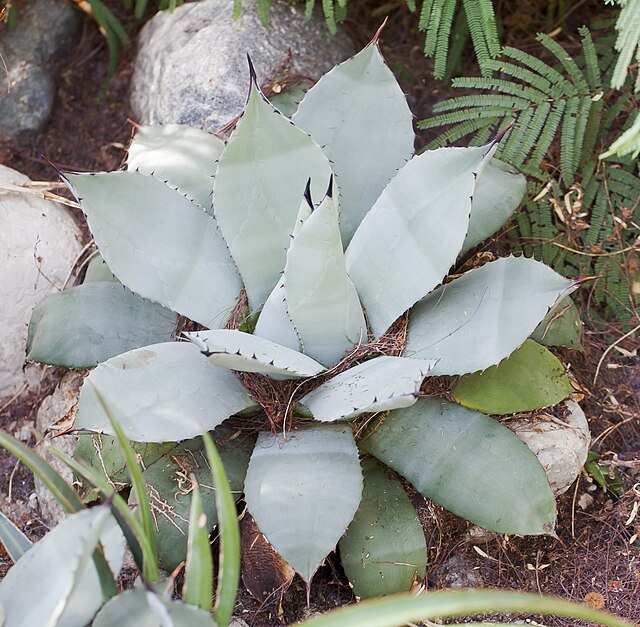
 © Diego Delso / CC BY-SA 3.0
Grower Direct Marketplace
Agave | Shop Direct from Growers
Verified Grower cultivate exceptional Agave. Shop directly and get complete transparency—every plant comes with variety, origin, light requirements, and care difficulty fully disclosed.
0% commission on your first sales!Register by September 30, 2026 and your first 2 plants are commission-free!
Grower Wanted!
List your plants on GrowerDirect and sell directly to customers nationwide!
6 Transparency Commitments from GrowerDirect
(Verified across 1 plants)Every Agave from our Grower includes full transparency: variety, origin, light requirements, and care difficulty.
- Variety Disclosed
- Real Plant Photos
- Color Details
- Origin Disclosed
- Light Requirements
- Care Difficulty
Browse all 141 varieties
Light Requirements
Difficulty Level
![Kodama-hime Sasanoyuki [Small] Rare High-Quality Specimen - Direct from Agave Grower | 五本幸二 Nursery](https://img.botachoku.com/listings/bd75d031-53ca-4369-b7e2-884bdb80f54f/c9a39afe-50e5-4e00-89d6-03b4060e4699_thumb.webp)
Can't find the plant you're looking for?
Post your wishes for free and growers with matching plants will contact you with introductions.
Explore the plant encyclopedia

About agave
The agave category on GrowerDirect lets you welcome a wide range of agave, including Titanota cultivars, directly from the growers who raised them. With few steps in distribution, you can check how compact the plant is and the condition of its teeth, roots, and offsets before choosing. Agave grow into a tight form under strong light and proper watering — learn each cultivar's nature before you start.
7 things to know before growing agave
1Grow a tight form under strong light
Given plenty of light, agave develop short, packed leaves and a tight form with pronounced teeth. Too little light makes leaves stretch and loses their appeal. Grow them in full sun outdoors or a bright spot, and indoors a grow light helps maintain form.
2Choose well-draining soil and pots
Agave dislike excess moisture, so a well-draining mix with plenty of pumice and volcanic soil suits them. Breathable terracotta pots, or pots sized to the roots, help prevent root rot. To grow a compact plant, plant in a pot that is not too large.
3Adjust watering for growing and dormant seasons
During the growing season, water agave thoroughly once the soil dries to build strong roots. As temperatures fall, growth slows, so water more sparingly. Even when aiming for a compact plant, extreme dryness harms roots, so water with seasonal rhythm.
4Learn propagation by offsets and coring
As agave grow, they produce offsets around the parent. Once an offset has developed somewhat, it can be separated and rooted as a new plant. Coring is another method to encourage offsets. Understanding these traits helps with managing cultivars you want to propagate.
5Judge cold protection by each cultivar's hardiness
Cold hardiness varies among agave — some tolerate cold, others must be brought indoors for winter. When growing outdoors in winter, protect from frost and rain, and decide care by comparing your region's winter cold with the cultivar's hardiness.
6Watch for spider mites and chemical damage
Scars on agave leaves remain for a long time. Spider mites give the leaf surface a rough texture, so act early when found. When using treatments, follow the concentration and conditions, since misuse can cause chemical damage — handle carefully while watching the plant.
7Confirm condition, rooting, and growing environment with the grower
On GrowerDirect you welcome plants directly from growers, so you can ask the seller how compact the plant is, about the teeth, whether it is rooted, and whether it is an offset. Knowing the environment — outdoor or indoor — makes adjusting light and watering at home easier.
Frequently asked questions about agave
- Q.Can agave be grown indoors?
- A.Yes, but agave prefer strong light, so place them at the brightest window or use a grow light. Too little light stretches the leaves and loses the compact form, so make sure to provide enough light.
- Q.How often should I water agave?
- A.Water thoroughly once the soil dries in the growing season, and sparingly in the cooler dormant season. Even for a compact plant, too little water harms roots, so water with seasonal rhythm.
- Q.Is it okay to buy a plant that has not rooted?
- A.Some plants need rooting care. Whether a plant is already rooted affects how easy it is to grow, so check the listing or ask the grower, and choose a plant that matches your experience.
- Q.An offset has appeared — what should I do?
- A.Once an offset has grown to a reasonable size, separate it and root it to enjoy as a new plant. To keep the parent's shape, remove offsets early; let the cut dry before planting to reduce failures.
- Q.Can agave die from winter cold?
- A.Cold hardiness varies by cultivar, and tender ones can die outdoors in winter. Compare your region's cold with the cultivar's hardiness, and bring plants indoors or protect from frost as needed.
Handy Growing Tools for agave
agave related articles
Preventing Leaf Burn in Agave and Light Management | Transition Strategy from Indoor to Outdoor Cultivation
Light management strategy to prevent agave leaf burn completely while successfully transitioning from indoor to outdoor environments. This article explains practical methods including gradual light intensity adjustment, seasonal placement changes, and UV protection measures.
Tips for Cultivating White Variegated Agave Varieties
Tips for Cultivating White Variegated Agave Varieties
Complete Care Guide for Agave oteroi | Tips for Training Beautiful Large Rosettes
We explain the characteristics and cultivation of Agave oteroi, a large agave native to Oaxaca, Mexico. From placement location and soil to watering and overwintering—a practical guide for those beginning to cultivate this species.
The Deep Connection Between Agave and Tequila | The Secret of a Distilled Spirit Born from Century Plant
Tequila is made from only Agave tequilana among the Agave genus. This essay explains the ecology of century plants, the Jalisco region as a production area, and the differences from ornamental agaves.
What Are Agave Meristem (Tissue Culture) Seedlings? | Differences from Seed-Grown and Wild-Collected Plants, and How to Choose
Explains the mechanisms and characteristics of meristem propagation in agave. Introduces the differences between seed-grown and wild-collected plants, how to distinguish them, and the importance of verifying provenance when purchasing.
Complete Guide to Growing Agave from Seed | 3-5 Year Roadmap from Seed to Commercial Size
Growing agave from seed to commercial size is one of the deepest projects for understanding how plants live. Explains environmental management and mindset for each of the five stages: germination, early stage, mid-stage, growth, and commercial stage.