How to Display a Caudex Plant Collection | Shelving and Stand Display Techniques
A guide to beautifully displaying your caudex plant collection. Learn how to choose steel racks, wooden shelves, and iron stands, utilize LED lighting, and create visually appealing layouts while ensuring proper airflow.
Key Takeaways
A guide to beautifully displaying your caudex plant collection. Learn how to choose steel racks, wooden shelves, and iron stands, utilize LED lighting, and create visually appealing layouts while ensuring proper airflow.
Related Species
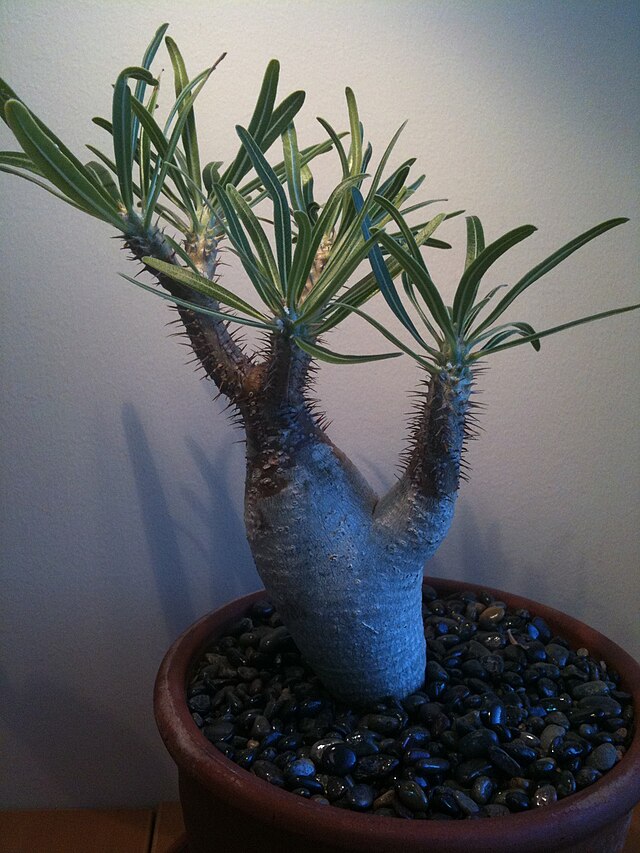
What to Know Before Displaying Your Caudex Plants
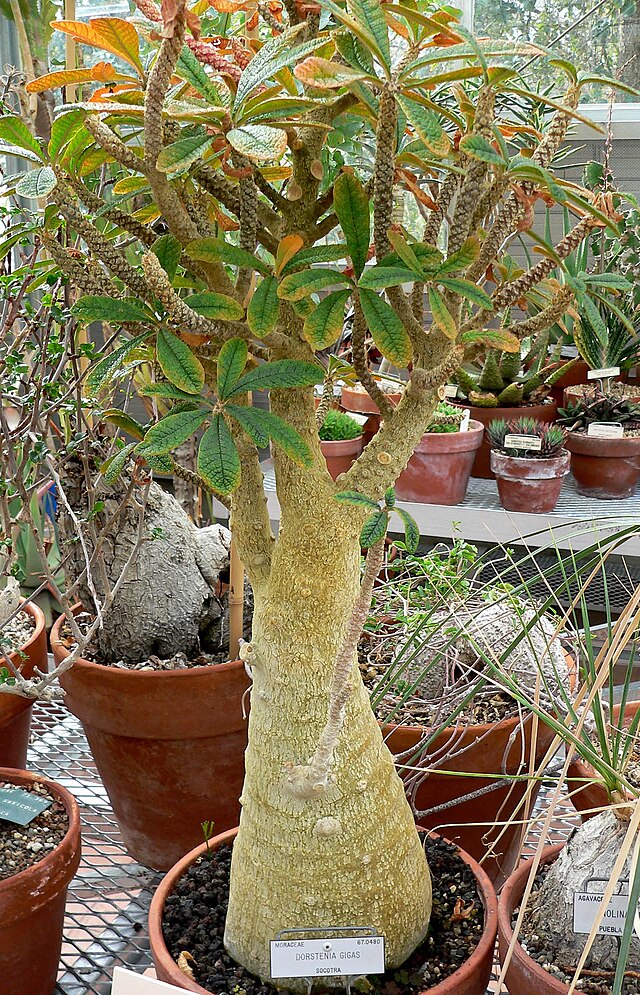
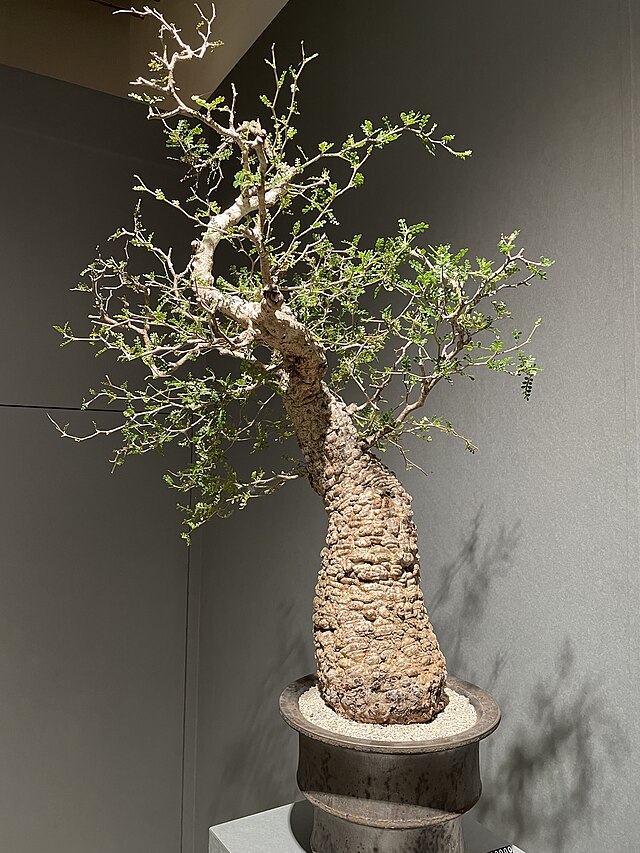
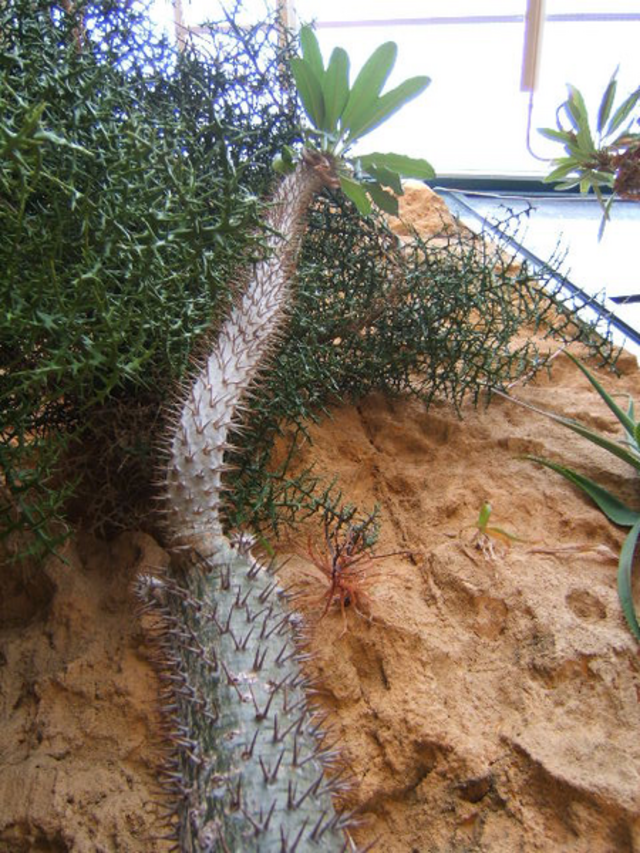
Caudex plants (caudiciform plants) are artworks in themselves, with their unique plant forms. The white trunk of a Pachypodium gracilius, the rounded base of an Adenium, the flattened caudex of a Dorstenia gigas—each has a one-of-a-kind form. This is precisely why "how you display them" can double or halve the value of your collection.
Before deciding on a display method, prioritize the growing conditions of light and air circulation. No matter how beautiful the display, a weakened plant defeats the purpose. Start by securing a location with sufficient light—a south-facing windowsill, a sunny corner of your balcony—and build your layout from there.
The Basics of High-Low Layout Using Shelves
As your caudex collection grows, flat placement becomes monotonous. This is where paying attention to "height variation" in shelf arrangement becomes effective.
Installing multiple iron floating shelves on a wall and arranging plants by size is the classic approach.
| Tier | Plants to Place |
|---|---|
| Top tier | Large specimens |
| Middle tier | Medium-sized specimens |
| Bottom tier | Small seedlings |
Your eye naturally flows from top to bottom, creating rhythm across the entire display.
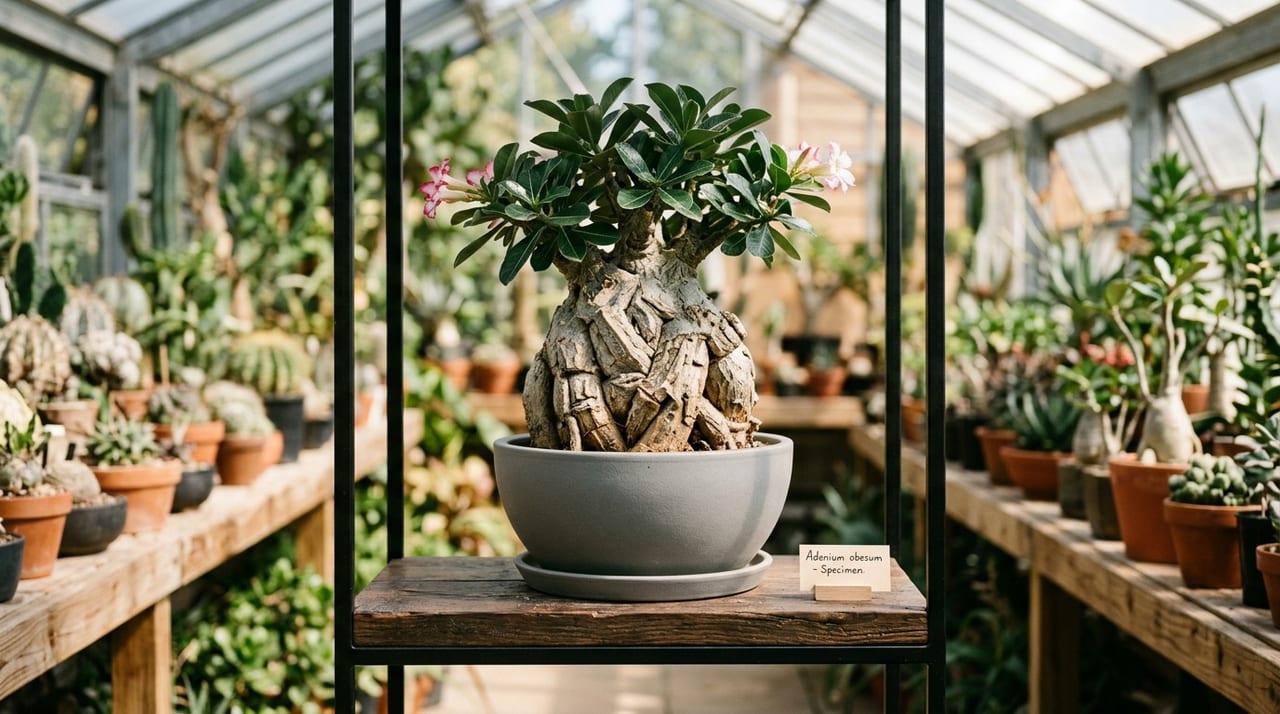
The choice of shelf material matters. Wood (pine or walnut) adds warmth and highlights the plant form, but requires care against water damage after watering. Apply protective coating or wax finish, or always use saucers. Steel and iron shelves create an industrial atmosphere that pairs well with the wild character of caudex plants. Always confirm weight capacity—large specimens like Pachypodium gracilius can exceed 5 kg with pot.
Shelves should be at least 20 cm deep. Shallow shelves risk the plant tipping forward and make it harder to monitor soil dryness.
The Art of "Solo Display" with Plant Stands and Side Tables
For particularly distinctive or valuable specimens in your collection, highlighting a single plant creates dramatic effect.
A plant stand raises one specimen off the ground. Adjust the height based on plant size, aiming for the apex to be at roughly 60–80 cm (slightly below eye level) for maximum impact. Simple, thin-legged stands direct the eye to the plant itself.
Japanese-inspired options like plant stands or wooden bases work as well. For specimens like Operculicarya pachypus with spreading root forms (octopus-style caudex), placing on a low base emphasizes the root structure.
"Gallery-style" arrangements—multiple stands at different heights—are also effective. Matching stands from the same maker in heights of 30, 60, and 90 cm grouped together creates exhibition-like cohesion.
Pot and Display Compatibility—Material, Color, and Size Selection
Even the best shelf or stand falls short if the pot doesn't complement the display. For detailed guidance on pot selection, see GrowerDirect's guide to choosing pots for caudex plants, which covers material, color, and sizing in depth.
The best pot material for caudex plants is terracotta. Here are the characteristics of each pot type:
| Pot Material | Characteristics |
|---|---|
| Terracotta | Excellent drainage and reduced root rot risk. White mineral deposits and moss staining that develop over time add a "well-used" quality that blends beautifully with the earthy wildness of caudex plants |
| Cement/Concrete pots | Suits modern interiors and shows the plant silhouette graphically. Heavy weight prevents tipping, but large sizes are difficult to move |
Think in terms of subtraction for color. Caudex plants with complex forms need simple, neutral-toned pots—gray, white, or terracotta. Colorful pots compete with the plant, creating visual confusion.
Size follows a caudex rule: "slightly undersized." This prevents root rot and stunting from overcrowding; ideally, choose a pot only one size larger than the root ball. Oversized pots make the plant look "drowned" in the display.
Layout Design That Anticipates Seasonal and Indoor/Outdoor Transitions
Most caudex plants are summer-active, thriving outdoors from early summer through fall. This means "winter indoor display, summer outdoor relocation" must be factored into your layout design. For details on managing the dormant season, see Caudex Plant Off-Season (Dormancy) Management Guide—consulting this alongside your display plan eliminates confusion during seasonal transitions.
Indoor display shelves must be mobile. Choose racks with casters or lightweight iron shelves so transitions are smooth. Fixed wall-mounted shelves with large specimens make summer relocation difficult.
Outdoors (balcony or terrace), slatted platforms and wooden pallets work well. Lifting plants 10–15 cm off the ground improves airflow and drainage. For added height variation, stacking bricks as a base is simple and practical.
Outdoors, pots heat in direct sun—prioritize white or terracotta pots; black plastic risks root burn.
Grouping Seedlings and Small Specimens, and the Joy of "Growth Record" Display
As collections grow, so do seedlings (plants grown from seed). Grouping and labeling are key to displaying them neatly.
Gather seedlings of the same species and batch on a tray, arranging in a "nursery corner" of your shelf. Individual variation becomes visible, deepening your enjoyment and making explanation to visitors easier.
White bamboo stick labels are simplest, but brass name plates instantly elevate the display quality. Recording species name, origin, and sowing date lets you later share the plant's history and adds value if you ever sell.
Small specimens benefit from elevated bases. Acrylic stands from 100-yen shops or small wooden easels work surprisingly well with caudex plants. As your collection grows, "organization and presentation" become equally important. The pleasure of display, the joy of cultivation, the habit of record-keeping—these deepen your caudex hobby.