Complete Watering Guide for Caudex Plants | Seasonal, Species, and Environment-Based Watering Schedule
Explains watering frequency for caudex plants by season, species, and growing environment. Introduces differences between summer-growing and winter-growing types, adjustment methods based on pot material and soil drainage, and how to visually judge watering timing.
Key Takeaways
Explains watering frequency for caudex plants by season, species, and growing environment. Introduces differences between summer-growing and winter-growing types, adjustment methods based on pot material and soil drainage, and how to visually judge watering timing.
Related Species
Why Watering Caudex Plants Is Difficult
The most common cause of failure in growing caudex plants (caudiciform succulents) is improper watering. Over-watering leading to root rot is by far the most frequent problem, though under-watering that weakens the plant also occurs. Caudex plants have mechanisms to store water in their stems and roots, yet without proper moisture supply they cannot grow. To master this delicate balance, you must consider the species' native habitat environment, seasonal changes, and growing conditions (location, soil, and pot material) comprehensively.
Most caudex plants can be classified as either "summer-growing" or "winter-growing." Summer-growing plants originate from arid regions such as Africa, Madagascar, and Central/South America, actively growing from spring through autumn and dormant in winter. Winter-growing plants originate from Mediterranean or South African highland climates, growing from autumn through spring and dormant in summer. This growth cycle is the foundation of your watering frequency. For comprehensive dormancy management, see Caudex Plant Dormancy Management Guide.
Seasonal Watering for Summer-Growing Caudex Plants
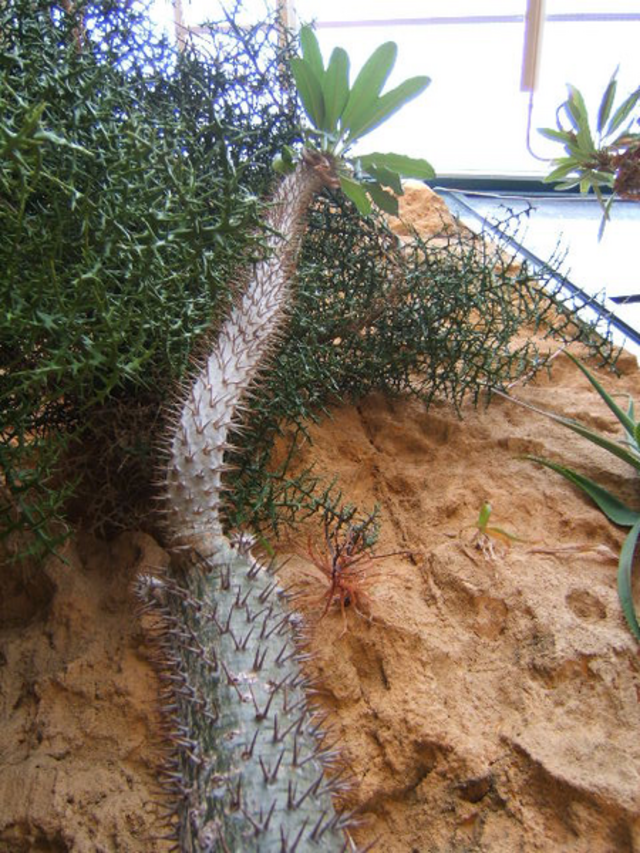
Representative summer-growing plants include Pachypodium, Adenium, and Operculicarya.
Spring (March–May): Watering Resumption Period Gradually resume watering after winter dormancy. For the first one or two waterings, use a small amount and observe; once new growth appears, transition to normal amounts. A good guideline is "water 2–3 days after the soil completely dries." Water thoroughly until it drains from the pot bottom.
Summer (June–August): Peak Growth Period When temperatures exceed 25°C, summer is the season for the most generous watering. Water immediately when the soil dries. If growing outdoors, you can take advantage of rainwater as well. However, during extreme heat periods (when temperatures consistently exceed 35°C), the plant may enter semi-dormancy, so adjust based on leaf condition.
Autumn (September–November): Transition to Dormancy Period Once temperatures drop below 20°C, gradually reduce watering. For deciduous species (most Pachypodium fall into this category), begin withholding water when leaves yellow and drop. The exact timing of complete drought varies by species and growing environment by 1–2 weeks. See Caudex Plant Autumn Management Guide for detailed autumn care.
Winter (December–February): Dormancy Period As a general rule, withhold water during dormancy. However, in environments where heating maintains 15°C or above, light watering once per month prevents the plant from completely drying out. Whether to completely withhold water or give minimal water depends on species and environment.
Seasonal Watering for Winter-Growing Caudex Plants
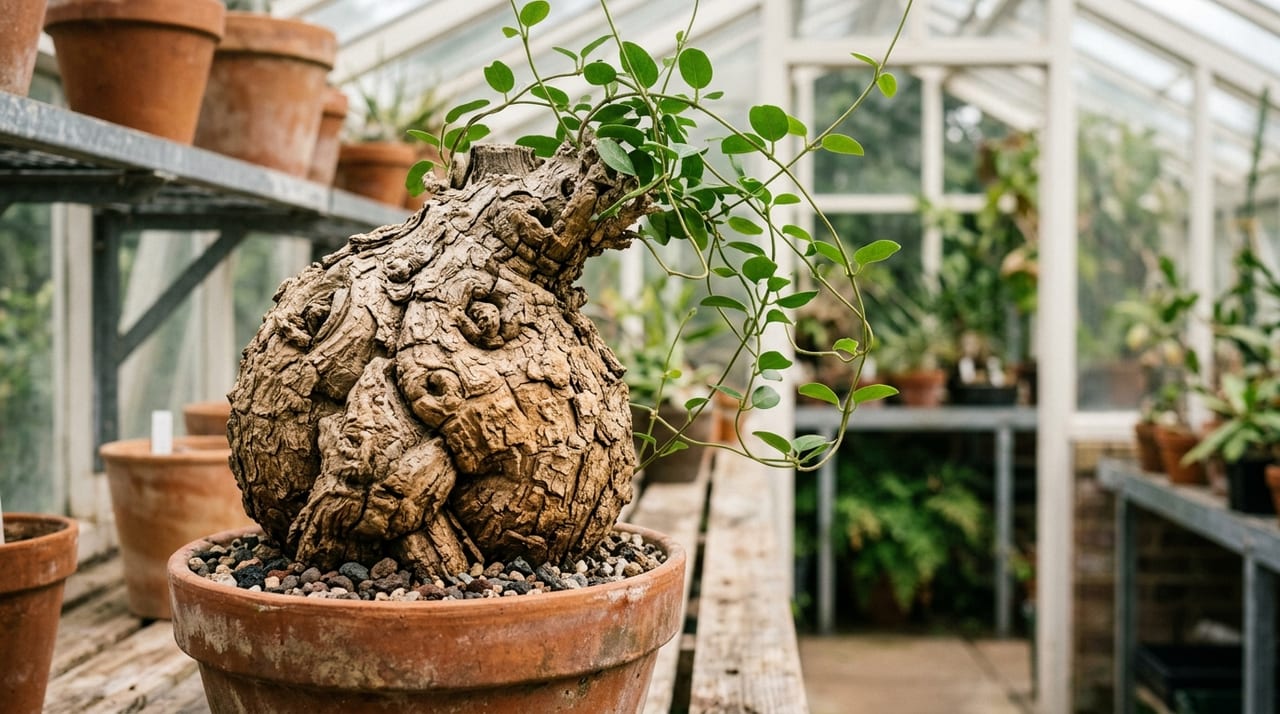
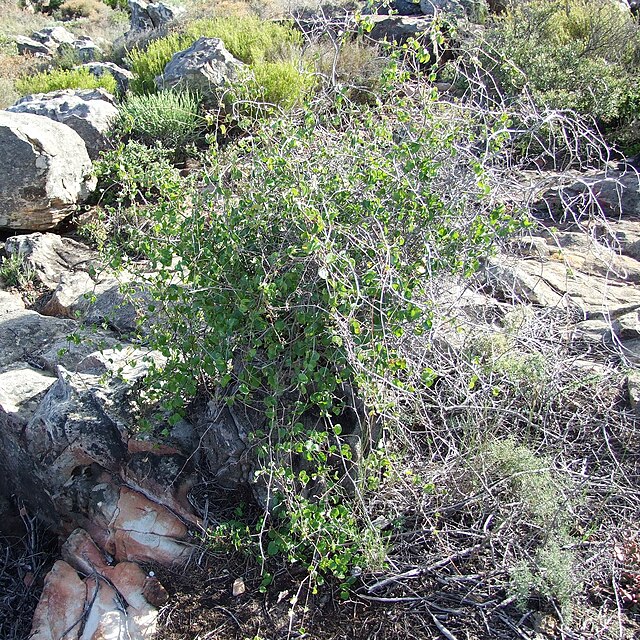
Representative winter-growing plants include elephant's foot (Dioscorea elephantipes), Lapidaria, and Chilecodon.
Autumn (September–November): Awakening Period When vines begin growing after summer dormancy, this is the signal to resume watering. Start with small amounts and gradually increase as the plant grows.
Winter (December–February): Peak Growth Period Opposite to summer-growers, winter is the growth season. In indoor environments maintaining 15–20°C, water approximately once weekly. Water 2–3 days after the soil surface dries.
Spring (March–May): Transition to Dormancy Period As temperatures rise, elephant's foot dies back and enters dormancy. As vines yellow and wither, gradually reduce watering; once completely dead, withhold water entirely.
Summer (June–August): Dormancy Period Completely withhold water. Store the corm (tuberous base) in a cool, dry location. High temperature and humidity can cause corm rot, so be careful.
Adjusting for Soil and Pot Material
Watering frequency varies greatly depending on soil and pot material. For detailed soil recipes, check Caudex Plant Soil Mix Guide alongside pot selection to reduce problems.
| Soil/Pot | Drying Speed | Adjustment |
|---|---|---|
| Akadama/Kanuma-based | Fast | Standard frequency is fine |
| More commercial potting soil | Slow | Reduce frequency and amount |
| Terracotta (unglazed) pot | Fast | Slightly more frequent is OK |
| Plastic pot | Slow | Less frequent; verify dryness thoroughly |
| Black plastic deep pot | Very slow | Reduce frequency significantly |
Terracotta pots lose moisture through the pot walls, so even with the same soil they dry noticeably faster than plastic pots. For beginners, terracotta pots are recommended as they carry lower root rot risk.
Signs to Determine Watering Timing
Beyond numbers and days, develop the skill to judge watering timing from plant condition.
- Wrinkles on the caudex: If the stem of a Pachypodium or Adenium develops wrinkles, this signals water deficiency. Water immediately.
- Wilting leaves: Soft-leaved species lose vitality when dry.
- Pot weight: Lifting the pot and finding it light indicates dryness. Make it a habit to check weight regularly.
- Finger test: Insert your finger 2–3 cm into the soil; if there's no moisture, it's time to water.
Watering Information to Check Before Purchasing on GrowerDirect
On GrowerDirect, growers often provide detailed management information when listing plants—growing conditions, watering frequency, dormancy periods, and more—which become valuable reference after purchase. With concrete details like "outdoor management, watered twice weekly in summer," you can more easily transition care to your own home environment. Those considering purchase should also read Caudex Plant Buying Guide to better envision watering requirements at the selection stage.
Caudex plant watering is a practice where "there is no single right answer." Finding your own rhythm by combining species, environment, and season is part of the joy of cultivation. Start by following the basic seasonal schedule, then develop the habit of making fine adjustments based on plant condition.