Crassula Growing Guide | How to Manage Popular Varieties like Campfire and Prince of Stars
Explains how to grow Crassula, a popular succulent genus. Introduces characteristics of varieties like "Campfire," "Prince of Stars," and "Gollum," detailed information on bringing out autumn and winter color, propagation methods, and winter management.
Key Takeaways
Explains how to grow Crassula, a popular succulent genus. Introduces characteristics of varieties like "Campfire," "Prince of Stars," and "Gollum," detailed information on bringing out autumn and winter color, propagation methods, and winter management.
Related Species
Diversity and Charm of the Crassula Genus
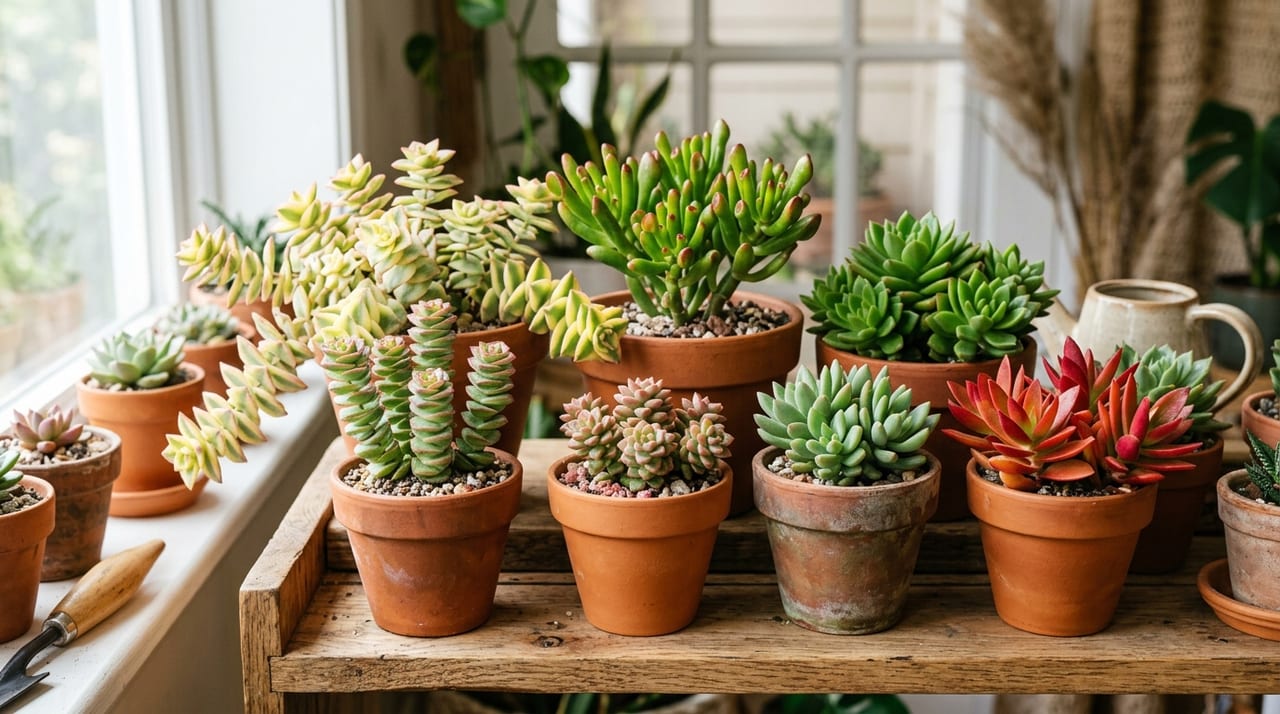
Crassula (Crassula spp.) is particularly species-rich among succulents, with extremely diverse forms and growth types. Over 200 species have been identified, primarily in South Africa, ranging from compact rosette forms to tower-like types with stacked leaves, and ground-hugging spreading types—so individual in character that they seem hard to believe belong to the same genus. Crassula (Jade Plant) is known as a classic introduction to succulents and belongs to this genus; our Succulent Encyclopedia | Characteristics and Growing Guide for Popular Species introduces other representative varieties as well.
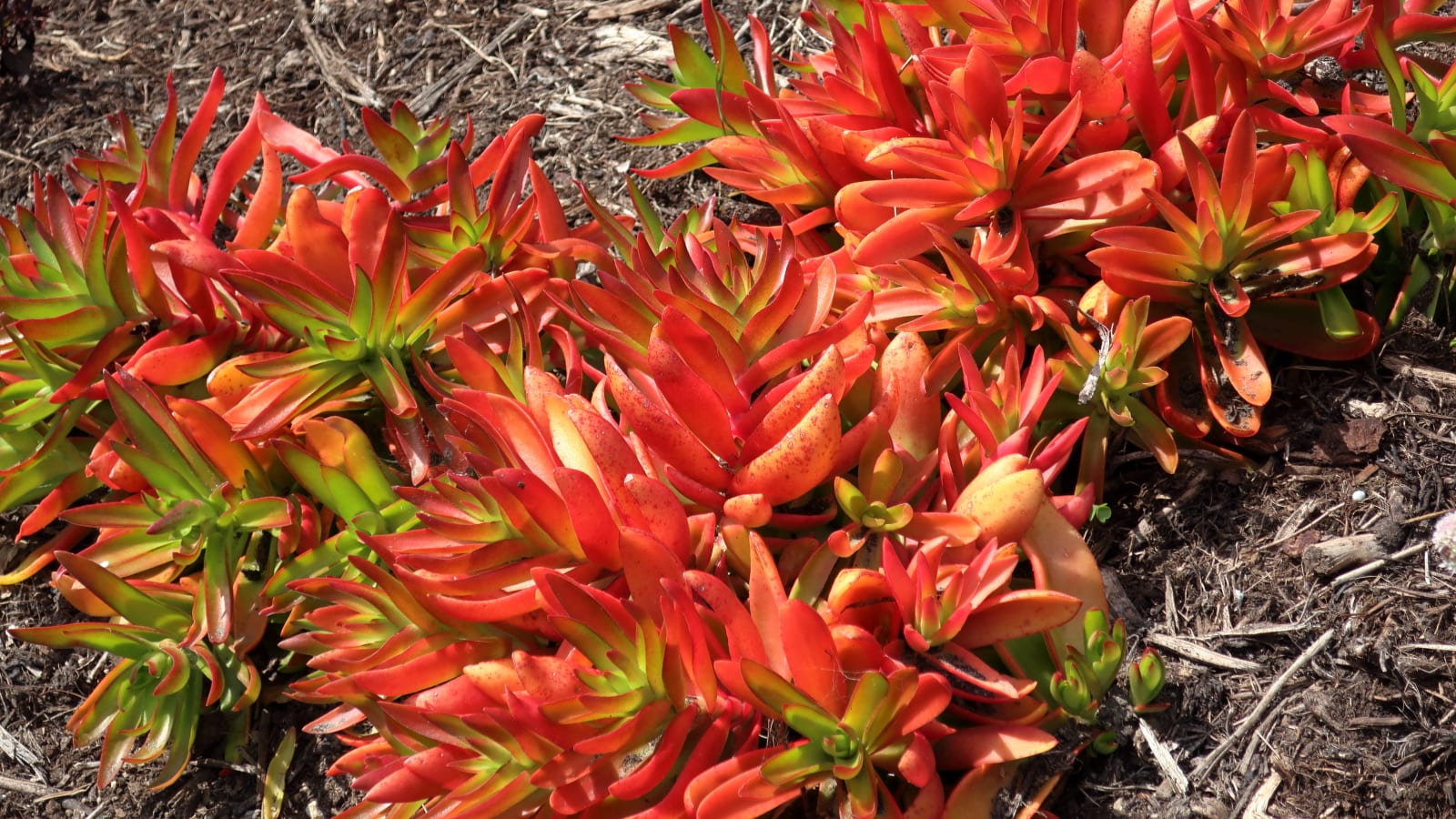
In the Japanese market, "Campfire," which displays vibrant orange and red autumn coloring from fall through winter, has unparalleled recognition and has long been cherished as a beginner-friendly succulent. Meanwhile, uniquely shaped varieties such as Prince of Stars and Dancing Maiden are becoming increasingly popular, and collector interest is growing. While the genus is enjoyable even for beginners if the basics of cultivation are mastered, understanding each variety's growth type is key to long-term care.
Popular Featured Varieties
Campfire (Crassula capitella 'Campfire')
One of the most remarkably popular Crassula varieties. Spring through summer displays vibrant green, but as temperatures drop in early autumn and daylight hours shorten, it gradually transforms dramatically from orange to deep red. When grown in clusters, the impact of the color change intensifies, making it an exceptionally striking accent in mixed plantings. A warm-season grower relatively tolerant of heat and easy for beginners to handle. Tips for bringing out maximum autumn color are detailed in The Mechanism of Succulent Color Change and Techniques for Beautiful Coloring.
Prince of Stars (Crassula perforata)
Triangular leaves arranged in opposite pairs create a distinctive "tower-like" silhouette that is its main appeal. The leaf margins often develop subtle pink or red edging, becoming even more vibrant in autumn and winter. Widely available at reasonable prices, this variety is especially recommended for succulent beginners.
Dancing Maiden (Crassula rupestris subsp. marnieriana)
Small, rounded leaves densely packed in a string-like succession create an endearing bead-like appearance. When pink-toned edging is pronounced, the plant is especially beautiful, with particularly impressive coloring in autumn and winter. Since the stems tend to trail as they elongate, growing it in hanging pots or tall containers showcases it beautifully.
Jade Ball (Crassula mesembryanthemopsis)
A winter-growing variety with thick leaves densely packed into a compact spherical form. It produces small white flowers in autumn and winter, entering complete dormancy in summer. Since it is a winter grower, summer care is important; keeping it drier and in a cool, semi-shaded spot is the key to longevity.
Southern Cross (Crassula perforata 'Variegata')
A variegated form of Prince of Stars. The cream to yellow variegation on the leaves is beautiful, and pink edging becomes more pronounced in strong light. Growth is somewhat slower, but popularity is increasing due to its distinctive appearance.
Seasonal Management by Growth Type
To keep Crassula healthy long-term, it is important to understand each variety's "growth type."
- Spring-Autumn growers (most general varieties): Peak growth in spring (March–May) and autumn (September–November). Enter semi-dormancy in summer and winter, requiring reduced watering. Campfire, Prince of Stars, and Dancing Maiden fall into this category.
- Summer growers (some varieties): Actively grow from spring through summer, dormant in winter. Provide water and light generously during warm seasons.
- Winter growers (such as Jade Ball): Growth period is autumn through spring, managed with minimal watering in summer. Japan's hot, humid summers require particular attention.
Basics of Watering and Light Management
Watering
Common to all Crassula is "prioritizing drainage and maintaining dryness." Water thoroughly only after soil is completely dry, and never let water sit in the saucer. Even during the growing season, aim for about once or twice weekly, reducing frequency further during rainy season, peak summer, and deep winter.
Particularly important to avoid is water on the leaf rosette center (growing point). Water pooling in the gaps between stacked leaves causes rot. Direct the watering can nozzle toward the base of the plant and avoid watering from above the leaves. During the high humidity of rainy season through summer, be especially cautious of moisture-induced rot.
Light
Crassula generally prefers strong light. If grown outdoors, place in direct sunlight; if indoors, position at a south-facing window in the brightest available spot. Insufficient light causes the stem to become etiolated (elongated and weak), preventing it from maintaining a compact, attractive form.
Campfire's vibrant autumn color is maximized by "strong light plus a significant day-night temperature difference (minimum temperature below 10°C)." From the autumn equinox (late September) onward, expose the plant actively to direct outdoor sunlight, allowing it to experience cool mornings and evenings, which deepens its coloring.
Soil, Repotting, and Propagation
Soil and Repotting
Soil with excellent drainage and aeration is ideal. Commercial succulent-specific mix can be used as-is, or a mixture of 6 parts small-grain akadama to 4 parts small-grain pumice stone is easy to work with. Layering pumice stone or large-grain akadama about 3 cm deep at the pot bottom further improves drainage. Soil selection basics are explained in Succulent Soil and Soil Selection Guide | Drainage-Focused Mix Recipes.
Repotting is best done in spring (March–April) when growth begins. When roots completely fill the pot, water and nutrient absorption decline and growth stalls. Repot into a container one size larger every two to three years. Terracotta pots offer excellent aeration and drainage, making them especially well-suited to Crassula, which dislikes excessive moisture.
Propagation
Stem cuttings are the simplest and most reliable propagation method for Crassula.
- Cut a healthy 5–10 cm stem with clean scissors.
- Dry the cutting in a well-ventilated, shaded spot for about a week.
- Insert into moist, clean soil and keep out of direct sunlight until roots develop.
Spring through early summer is the easiest time for root formation. Complete propagation procedures are compiled in Complete Succulent Propagation Guide | Leaf Cuttings, Stem Cuttings, and Division.
Leaf propagation success varies by variety. Campfire and Dancing Maiden propagate readily from leaves, while Prince of Stars types are more reliably propagated from stem cuttings.
Summary
Crassula is a succulent in which each variety's individuality is pronounced, and the more you grow it, the more deeply rewarding it becomes. Basic care distills into three points: "excellent drainage, plenty of light, and no water pooling at the growing point"—but adjusting watering for each variety's growth type by season is the secret to keeping it healthy long-term. Campfire's blazing autumn color is a highlight of the autumn and winter succulent scene, and I strongly recommend experiencing its impact, even for first-time growers. Starting with classics like Campfire and Prince of Stars, then gradually expanding your collection, is the ideal path to fully enjoying the rich diversity of Crassula.