How Succulents Change Color in Autumn: The Science and Techniques for Vibrant Hues
Explaining how succulents develop autumn colors and how to achieve vibrant hues. We've compiled techniques for adjusting temperature differentials, sunlight, and watering, introduced varieties prone to color changes, and shared tips for extending the colorful season.
Key Takeaways
Explaining how succulents develop autumn colors and how to achieve vibrant hues. We've compiled techniques for adjusting temperature differentials, sunlight, and watering, introduced varieties prone to color changes, and shared tips for extending the colorful season.
Related Species
Why Succulents Change Color: The Relationship Between Anthocyanin and Chlorophyll
Succulent leaf coloring occurs through the same mechanism as autumn foliage in trees. Within leaves, chlorophyll (for photosynthesis) and anthocyanins (pigments in the red, purple, and orange spectrum) always coexist. During the growing season when temperatures are high and sunlight is abundant, chlorophyll dominates, keeping leaves green.
However, as temperatures drop and UV radiation intensifies, the situation changes. Plants begin to suppress chlorophyll synthesis, and anthocyanins come to the forefront. Since anthocyanins function like sunscreen to protect cells from ultraviolet rays, succulents under harsher conditions synthesize more pigment. The vivid red of Echeveria or the golden glow of Sedum reflects the plant's defensive response to environmental stress.
Carotenoid pigments (yellows and oranges) also contribute to color change. While already present in leaves, they become visually prominent as chlorophyll breaks down. The sunset hues of Echeveria 'Momotaro' or 'Tippie' result from a blend of anthocyanins and carotenoids.
Varieties with Best Color Change and Their Characteristics
Not all succulents color as vividly. Variety selection is key to achieving good autumn colors.
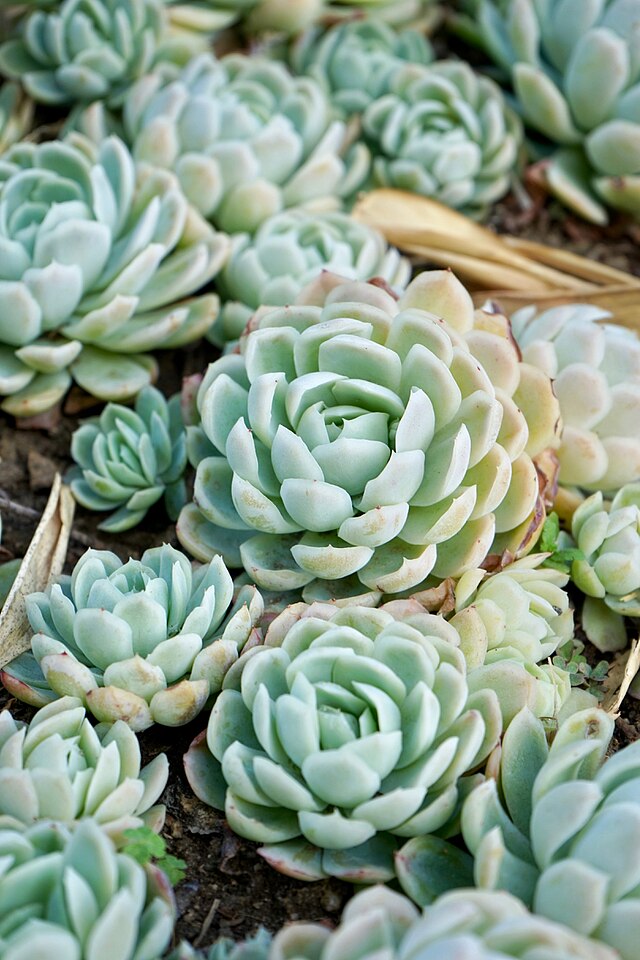
Echeveria displays the most varied colors. 'Laulinze' shifts from pale pink to coral, 'Momotaro' develops vivid red leaf tips, and 'Bluebird' takes on purplish-blue hues. Echeveria is sensitive to temperature fluctuations, and stable coloring occurs with daily temperature swings of 10°C or more. For more details on appearance and characteristics by variety, see our Complete Guide to Echeveria Species.
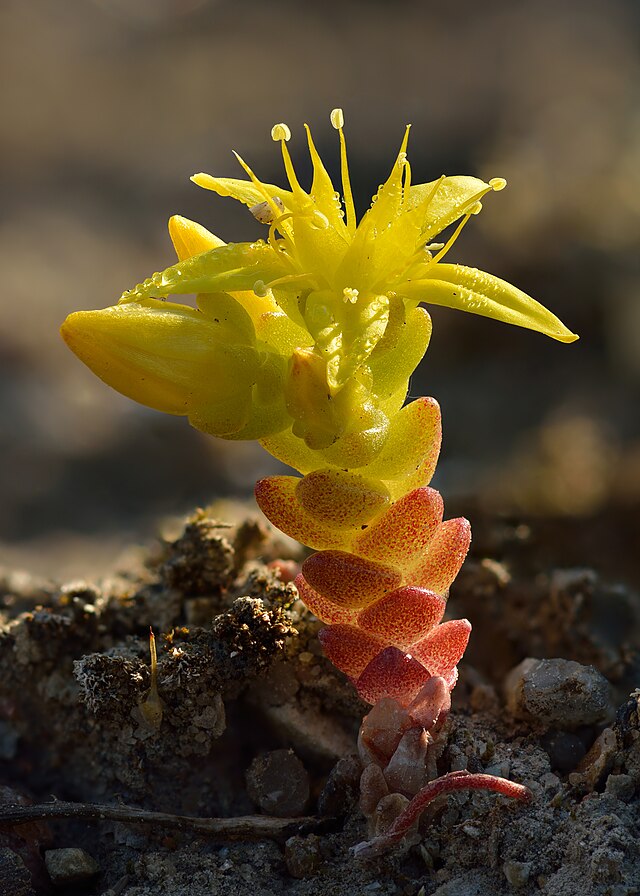
Sedum typically displays warm yellows, oranges, and reds. 'Aurora' turns a translucent pink, while 'Rainbow Jade' develops a deep crimson. Sedum is fairly hardy and straightforward for beginners to color—just ensure adequate sunlight.
Graptopetalum like 'Oborozuki' normally appears silver-green but shifts to orange when exposed to cold and intense light. Graptopetalum (Echeveria and Sedum hybrids) also includes many varieties with excellent coloring.
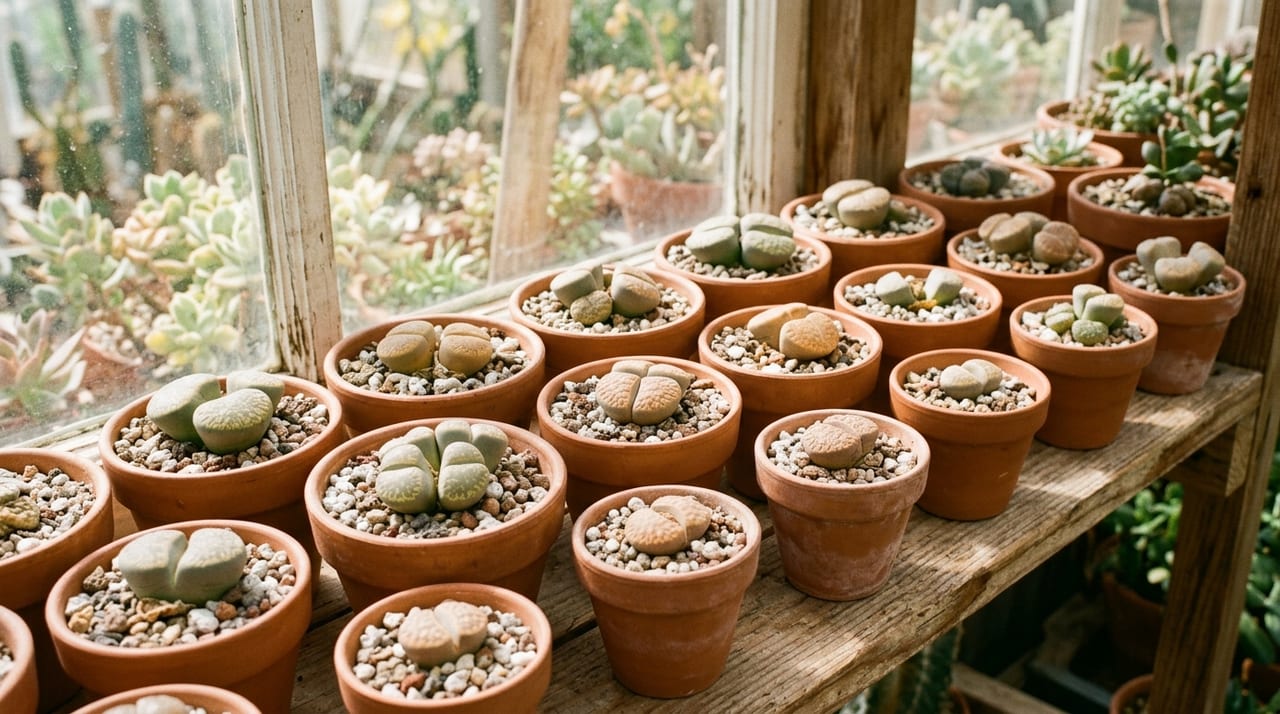
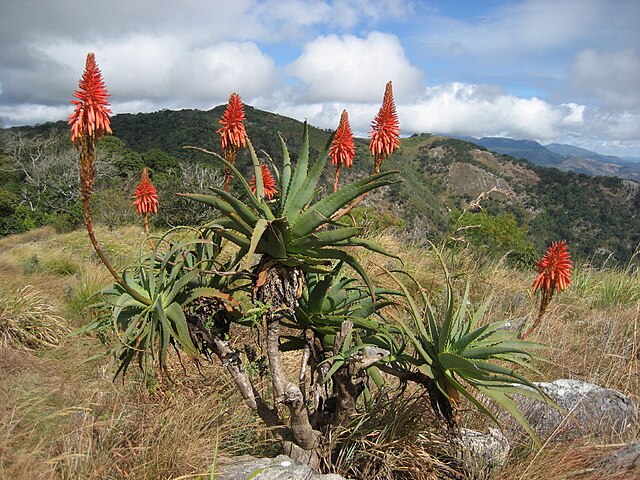
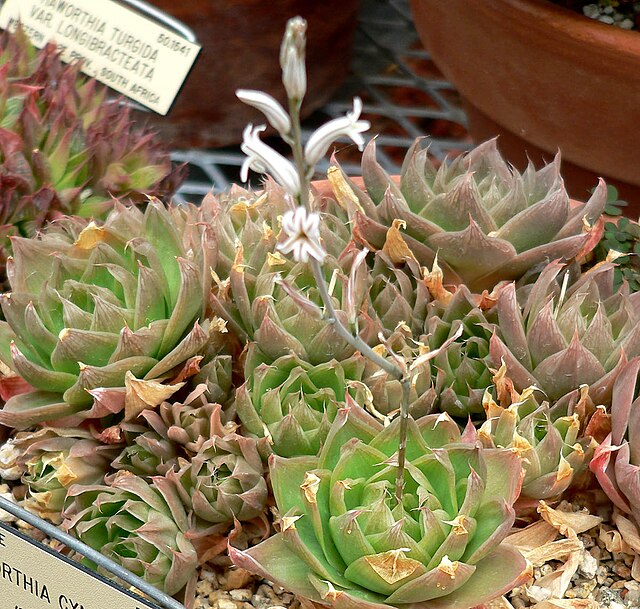
In contrast, Haworthia and Aloe relatives rarely change color. These genera have different stress-response mechanisms to intense light and low temperatures. For more details on Haworthia care, see our Complete Haworthia Care Guide.
Three Environmental Conditions to Maximize Color Change
To achieve vibrant colors in succulents, it's important to deliberately create these three conditions. This is also an ideal time to reassess your growing environment for the upcoming autumn and winter season.
1. Daily Temperature Differential (Temperature Swing)
The most effective trigger is temperature change. Ideal conditions are night temperatures dropping to 5–10°C and daytime temperatures rising to around 15–20°C. In Japan, October through November naturally align with these conditions. For indoor plants, moving them outside or to an entryway at night to create a temperature swing accelerates coloring. However, frost or temperatures below 0°C can cause frost damage, so caution is needed.
2. Sunlight (UV Radiation)
UV radiation is essential for anthocyanin synthesis. Since UV is blocked by window glass, position plants in direct sunlight outdoors as much as possible. Even the low-angle sunlight of autumn and winter provides adequate UV outdoors. Aim for 4–6 hours or more of daily sunlight. South-facing or west-facing balconies are ideal. For fundamentals of light conditions, see our Succulent Sunlight and Lighting Guide.
3. Water and Fertilizer Control
Reducing water also promotes color development. During autumn and winter when growth slows, shift to watering 2–3 days after the soil dries completely. Excess moisture causes leaves to etiolate (stretch) and diminishes coloring, while also increasing root rot risk. Stop fertilizing after September. Continuous fertilization keeps plants in growth mode, reducing their stress response.
Care and Considerations After Color Change
To enjoy colored succulents longer, proper care during the color-change period is essential.
Peak coloring typically occurs from November through February. During this period, growth nearly stops, so watering once or twice monthly is sufficient. However, withholding water entirely damages roots, so minimal moisture is necessary. Wrinkled leaves signal insufficient water—use this as your guide.
As spring arrives and temperatures rise, most varieties return to green. This is normal and indicates the plant has resumed growth mode. If you prefer to maintain color year-round, some varieties can retain partial coloring by keeping them in bright light through summer and watering sparingly.
Frost protection is essential in winter. Echeveria typically sustains leaf damage below 0°C. On nights when frost is forecasted, always bring plants indoors or under eaves. Some Sedum (such as Sedum acre and S. lydium) have high cold tolerance and can overwinter outdoors in regions west of the Kanto area, but Echeveria generally needs frost protection. For comprehensive winter survival strategies, see our Succulent Winter Care and Cold Protection Guide.
Techniques for Achieving Color Indoors
Even without a balcony or with poor north-facing light, you can still achieve color change with some ingenuity.
- Plant growth lights are effective. Using full-spectrum LED lights that include UV-A (330–400 nm) promotes anthocyanin synthesis even indoors. Aim for 8–12 hours of daily light exposure, keeping the light 20–30 cm from leaves. For serious LED indoor cultivation, see our Succulent LED Growing Guide.
- Windowsill placement also works. Standard glass blocks most UV-B but allows some UV-A through. Place plants on a south-facing windowsill for midday direct sun, and crack the window open at night to introduce cool air for temperature swings.
- Using terracotta pots also aids coloring. Terracotta's high breathability promotes faster soil drying, naturally reducing watering frequency and maintaining mild stress conditions.
Summary: The Beauty Born from Stress
Succulent color change is a natural response to harsh conditions. By intentionally applying three stresses—temperature swings, intense light, and dryness—we can coax remarkably vivid colors. The key is striking the delicate balance of stressing plants without killing them.
Since color-change timing and hues vary by variety, grouping several cultivars creates gradient-like colors. A mixed planting combining Echeveria 'Laulinze' in pink, 'Rainbow Jade' in red, and 'Oborozuki' in orange brings vibrancy to autumn and winter windowsills. For detailed tips on arrangement and color combinations, see our Succulent Arrangement Design Guide. Why not try cultivating succulent colors starting this autumn?