Enjoying Succulents in Hanging Baskets | Hanging-Friendly Varieties and Display Ideas
Introduction to succulents that can be grown in hanging baskets and hanging planters. Learn the care methods for trailing varieties such as String of Pearls, Ruby Necklace, and Senecio, watering tips, and stylish display ideas.
Key Takeaways
Introduction to succulents that can be grown in hanging baskets and hanging planters. Learn the care methods for trailing varieties such as String of Pearls, Ruby Necklace, and Senecio, watering tips, and stylish display ideas.
Related Species
Characteristics of Succulents Suitable for Hanging Baskets
The style of enjoying succulents in hanging baskets has become established as interior greenery. Unlike placing plants on shelves or the floor, growing them to dangle downward from above brings out the plant's natural three-dimensional form and flowing beauty—this is the appeal of hanging cultivation.
Succulents suited to hanging baskets share common characteristics.
- "Stems grow long and thin": Candidates include types that creep along the ground or have a trailing or prostrate growth habit.
- "Drought tolerant": While hanging baskets offer high air circulation, soil dries quickly. The nature of succulents to store water in leaves and stems suits the hanging basket environment well.
- "Roots can thrive in shallow soil": Since hanging baskets have limited depth, shallow-rooted varieties are ideal.
Selecting varieties that meet these conditions is the first step to successful hanging cultivation.
5 Recommended Varieties: From Popular Classics to Rare Species
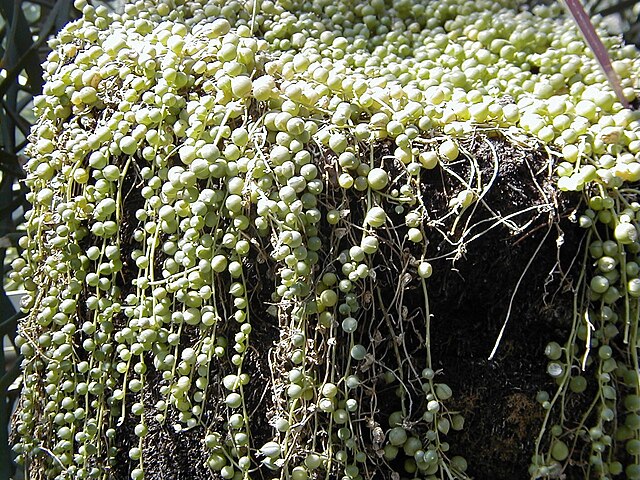
String of Pearls (Senecio rowleyanus) This is practically synonymous with hanging succulents. The spherical leaves strung together like beads cascade from the pot in an impressively flowing display. It grows quickly and is easy enough for beginners. As long as you avoid low winter temperatures (keep above 5°C) and strong summer sun, you can enjoy it year-round. The leaf tips have small transparent "windows" that efficiently absorb light. Tips for reshaping are detailed in "Caring for Senecio (String of Pearls) | Watering and Reshaping Trailing Succulents."
Ruby Necklace (Othonna capensis) Similar trailing form to String of Pearls, but leaves turn ruby-purple when exposed to sunlight. This color change adds three-dimensional visual interest to a hanging display. Small yellow flowers bloom from autumn through winter, making it highly ornamental. "Enjoying Succulent Color Changes | Conditions for Coloring and Care" is also a helpful reference for color-change conditions.
Dolphin Necklace (Senecio peregrinus) The leaves resemble jumping dolphins, making it popular for its unique appearance. It is considered a cross between String of Pearls and Crassula, and has limited market availability. It dislikes direct sunlight, so bright, partial shade is the basic management approach.
Sedum makinoi Small, rounded leaves densely packed and cascading downward create a delicate appearance. The yellow-green leaves are refreshing and pair well with Western interior designs. This variety prefers slightly more moisture than other succulents, so watch for pot drying.
Echeveria laui-type Trailing Varieties While Echeveria normally grows upright, older specimens with elongated stems or hybrid varieties with trailing characteristics create a beautiful flowing effect from the pot rim. The connected rosette-shaped leaves evoke a botanical art quality.
Beyond these five classics, choosing varieties with beautiful autumn coloring like the Rainbow Jade or soft-stemmed types covered in white fine hairs like the Moonstone will further expand your hanging basket options.
Choosing Hanging Baskets and Planting Tips
For hanging basket materials, prioritize air circulation with terracotta or unglazed pots, or choose lightweight plastic or coir fiber hanging baskets for portability. For outdoor use, also consider durability against wind and rain.
For planting soil, start with commercial succulent and cactus potting mix and add 20–30% perlite or pumice to enhance drainage further. Since the bottom of a hanging basket is hard to see, poor-draining soil increases root rot risk. Always place coarse pumice at the pot bottom to create a drainage layer.
When planting seedlings, position the plant close to the pot rim to enjoy its trailing form sooner. When combining multiple plants, choose varieties with similar growth rates and watering schedules to simplify care.
Daily Care: Watering, Light, and Seasonal Considerations
The basic rule for watering hanging succulents is: "water thoroughly until it drains from the bottom only after the soil has completely dried." Hanging baskets dry 2–3 times faster than standard pots due to their high air circulation. In hot outdoor summers, watering may be needed twice a week or more.
Light needs vary by variety, but most hanging succulents prefer "bright, indirect light." String of Pearls and Dolphin Necklace are prone to sunscald in direct sun. Ruby Necklace, by contrast, colors beautifully with sun exposure, so spring and autumn are ideal times to give it direct light.
Seasonal care requires most attention during summer (June–September) heat and humidity. Combine good air circulation with shade cloth (50–70% reduction) to prevent rot. Winter (December–February) calls for moving plants to a bright indoor location while maintaining temperatures above 5°C. The drying effect of heating is relatively beneficial for succulents, but reduce watering to once or twice monthly.
Display Ideas in Practice
Hanging displays can take many forms depending on room function and available space.
High windows or curtain rods let light filter through the translucent leaves. Varieties like String of Pearls with small transparent "windows" look especially beautiful when backlit.
Using stands or ladder racks with multiple pots at varying heights creates a popular layered style. Combining varieties with different trailing lengths produces a striking three-dimensional green display.
Hanging multiple pots randomly from outdoor garden fencing or pergolas enhances a natural garden feel. Outdoors, sun and rainfall management become critical, so flexibility to move plants seasonally is important.
Planting coir fiber baskets with sphagnum moss creates a strong botanical look and remains popular for café and shop displays. Sphagnum's moisture retention pairs well with the quick-drying hanging environment.
Troubleshooting Common Problems with Hanging Succulents
Common issues include the following:
| Symptom | Cause | Solution |
|---|---|---|
| Shriveled, wrinkled leaves | Mainly underwatering (if leaves remain wrinkled even after watering, suspect root rot) | Check root condition, remove blackened roots, dry, and repot |
| Stems turning black and rotting | Sign of excessive moisture and poor air circulation | Reposition the hanging basket to improve airflow. Extra caution needed during humid summers |
| Leaves elongating and etiolating (stretching) | Insufficient light | Cut etiolated stems for propagation (refresh and expand stock this way). Let cut ends dry before placing in fresh soil for easier rooting |
Hanging succulents require more frequent management than floor-standing varieties, but this closeness to the plant lets you enjoy daily changes. Embrace this style—combining the beauty of cascading growth with the durability inherent to succulents—and incorporate it into your everyday green life.