Lithops Care Guide | Complete Guide to Shedding, Watering, and Summer Dormancy of Living Jewels
Complete guide to caring for "living jewels" Lithops with their unique shedding cycle. We provide detailed information on watering management during shedding, summer dormancy, resuming watering in fall and winter, light conditions, and how to select popular varieties.
Key Takeaways
Complete guide to caring for "living jewels" Lithops with their unique shedding cycle. We provide detailed information on watering management during shedding, summer dormancy, resuming watering in fall and winter, light conditions, and how to select popular varieties.
Related Species
What Are Lithops? The Appeal and Basic Knowledge of "Living Stones"
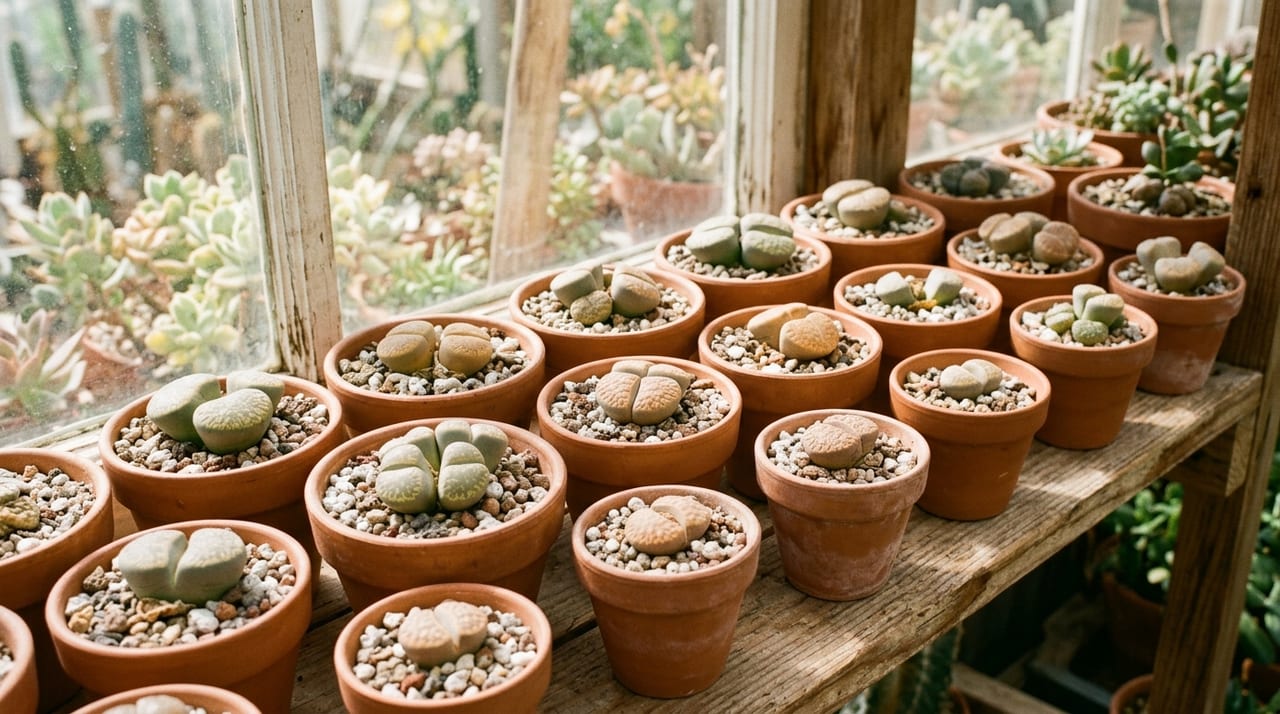
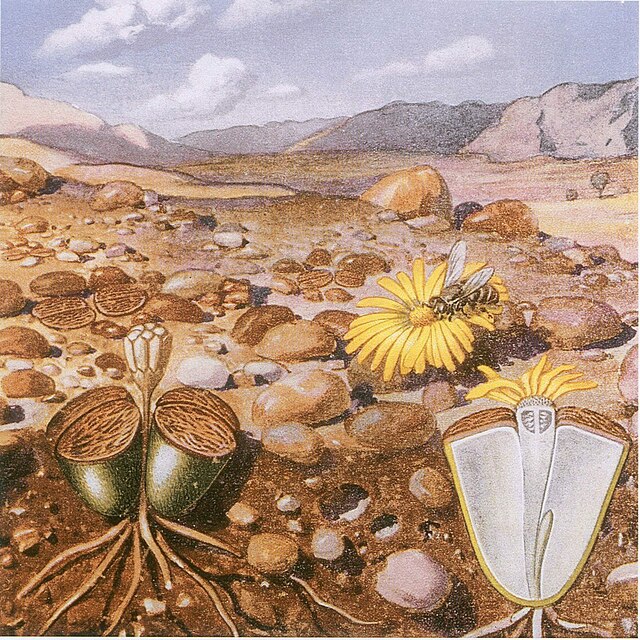
Lithops (Lithops spp.) are succulent plants from the Aizoaceae family, native to arid regions of South Africa and Namibia, and are beloved by collectors worldwide under the common name "Living Stones." Their distinctive form, with two thick leaves fused together, resembles stones or pebbles, and in nature they mimic surrounding rocks to protect themselves from herbivorous animals.
The genus name "Lithops" means "stone face" in Greek, and over 100 species are currently recognized. The patterns on the leaf surfaces (tops) vary greatly by variety, with diverse colors including gray-green, brown, pink, and white. They are highly collectible, and once you start growing one, there's an irresistible urge to collect more. Those who want to learn the basics of growing succulents in general may also find Succulent Care Beginner's Guide helpful.
The most distinctive feature of growing Lithops is their unique growth cycle called "shedding." Each year from winter to spring, the old leaves split to reveal new leaves—this process is both the highlight of Lithops cultivation and the most error-prone aspect.
Annual Management Cycle and Seasonal Tasks
Lithops have their own dormancy and growth cycle based on the climate of their native habitat. Understanding a management calendar adapted to Japan's four seasons is the first step to consistent cultivation success.
Spring (March–May): Once shedding is complete and the old leaves have fully dried out, resume watering with small amounts. The first watering should only lightly moisten the soil surface, gradually increasing the amount. This is when new leaves develop actively, making moderate watering and sunlight crucial.
Early Summer (June): As temperatures rise, begin reducing the frequency of watering. Reduce watering to about once or twice per month, preparing the plant for the dry period ahead.
Midsummer (July–September): Complete drought period. This is the most important rule in Lithops cultivation. Details are explained in the next section.
Fall (October–November): Resume watering around the autumn equinox. Water thoroughly about 2–3 times per month until water drains from the bottom of the pot. Many varieties bloom during this period, producing small flowers resembling chrysanthemums in yellow, white, and orange.
Winter (December–February): Growth slows and preparation for shedding begins. Continue watering sparingly, about once or twice per month. When the old leaves begin to split in the center, it signals shedding has started. Gradually reduce watering and eventually transition to withholding water completely.
Why Complete Summer Drought Means Life or Death
Nearly all Lithops failures stem from "overwatering in summer." In the native habitat of South Africa and Namibia, summer is the dry season, with virtually no rain for several months. Lithops evolved to thrive under these harsh dry conditions, and watering in summer fundamentally disrupts their physiological mechanisms.
Watering in summer triggers a cascade of problems. First, root rot advances rapidly in the hot, humid environment. Furthermore, if old leaves retain moisture, the process by which they transfer water and nutrients to new leaves during shedding becomes disrupted, resulting in "shedding failure" and causing the entire plant to rot and collapse.
A common misconception is that when Lithops leaves wrinkle in summer, growers assume the plant is thirsty and water it. However, this wrinkling is a normal dormancy response—the plant is restricting its own moisture to survive the summer heat. You must not water it under any circumstances. The leaves will naturally regain their firmness in fall.
How to Observe Shedding and Important Precautions
Shedding typically occurs from December through March of the following year. The two old leaves split in the center, and small new leaves emerge from within. The rules to follow during this time are clear.
Once shedding begins, stop all watering. This allows the moisture and nutrients remaining in the old leaves to naturally transfer to the new leaves without interference. This transfer process can take anywhere from several weeks to two months.
Never attempt to manually remove old leaves. Old leaves are connected to the roots, and forcibly removing them can damage them. No matter how unsightly they appear, allow them to dry completely until they are brittle and papery.
Note that a phenomenon called "double shedding" can occur, where shedding appears to take over a year. This typically occurs when watering timing is off, resulting in both old and older leaves remaining together. In this case, too, continue withholding water patiently, removing the outer leaves only once they have completely dried out.
Choosing Light, Soil, and Pots
Light: Lithops prefer bright light. Ideal placement is on a south-facing windowsill or outdoors, with at least 4–6 hours of direct sunlight per day. Insufficient light causes the plant to stretch vertically (etiolate), losing its characteristic flat, stone-like shape. Etiolated plants cannot be restored to their original form, so place them in bright light from the start.
However, intense western sun during the rainy season and midsummer can cause leaf scald. Particularly right after the rainy season ends, sudden exposure to intense light can scald the leaves, so temporary protection with 20–30% shade cloth is effective.
Soil: Drainage is critical. Adding pumice or Kiryu sand (about 20–30%) to commercial cactus and succulent soil improves drainage and gives peace of mind. Avoid potting mixes high in organic matter, as they increase the risk of root rot. For more details on soil composition, see Succulent Soil Selection Guide.
Pots: Terracotta pots are ideal. They offer excellent airflow and allow excess moisture to evaporate, effectively preventing root rot. Since the roots grow deep as taproots, choose a pot that is somewhat deep.
Summary: Once You Master the Annual Rhythm, It's Not Difficult
Though Lithops seem difficult due to their reputation as "special plants," the basic rules are simple. By following these three principles—"never water in summer," "don't water or touch old leaves during shedding," and "provide bright light"—even beginners can enjoy the beautiful shedding and flowering cycle. Those who want to deepen their watering techniques will find Succulent Watering Techniques | Proper Use of Bottom Watering, Partial Watering, and Misting helpful.
Watching the plant slowly divide and grow into a colony with each annual shedding is a unique pleasure of growing Lithops. Enjoy the different patterns of each variety, explore other types in Succulent Encyclopedia | Characteristics and Care of Popular Species, and build your favorite collection.