Agave Encyclopedia
Encyclopedia of popular agave varieties with traits, care guides, and pricing.
Featured Agave
Showing 56 of 139 species(25–48)
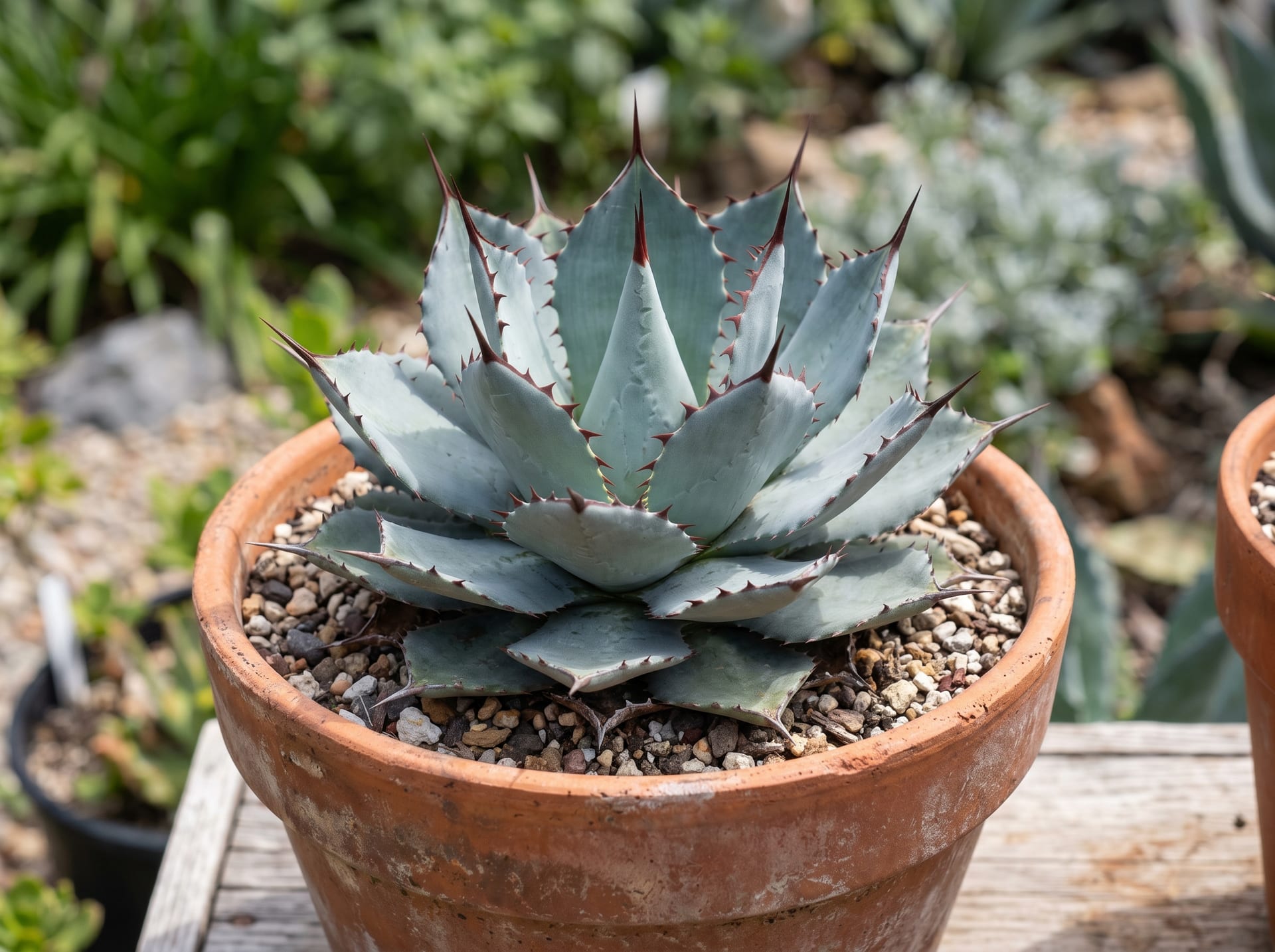
Agave Neomexicana
Agave neomexicana
An agave from New Mexico to west Texas with excellent cold hardiness. Also called 'New Mexico Agave', it grows at high elevations. Compact and neat rosette form is beautiful.
Agave ovatifolia 'Vanzie'
Agave ovatifolia 'Vanzie'
A clonal selection of the whale's tongue agave with folded undersides, wavy scalloped edges and small teeth on broad silver-blue leaves. Fast-growing and tolerant of cold, damp winters.
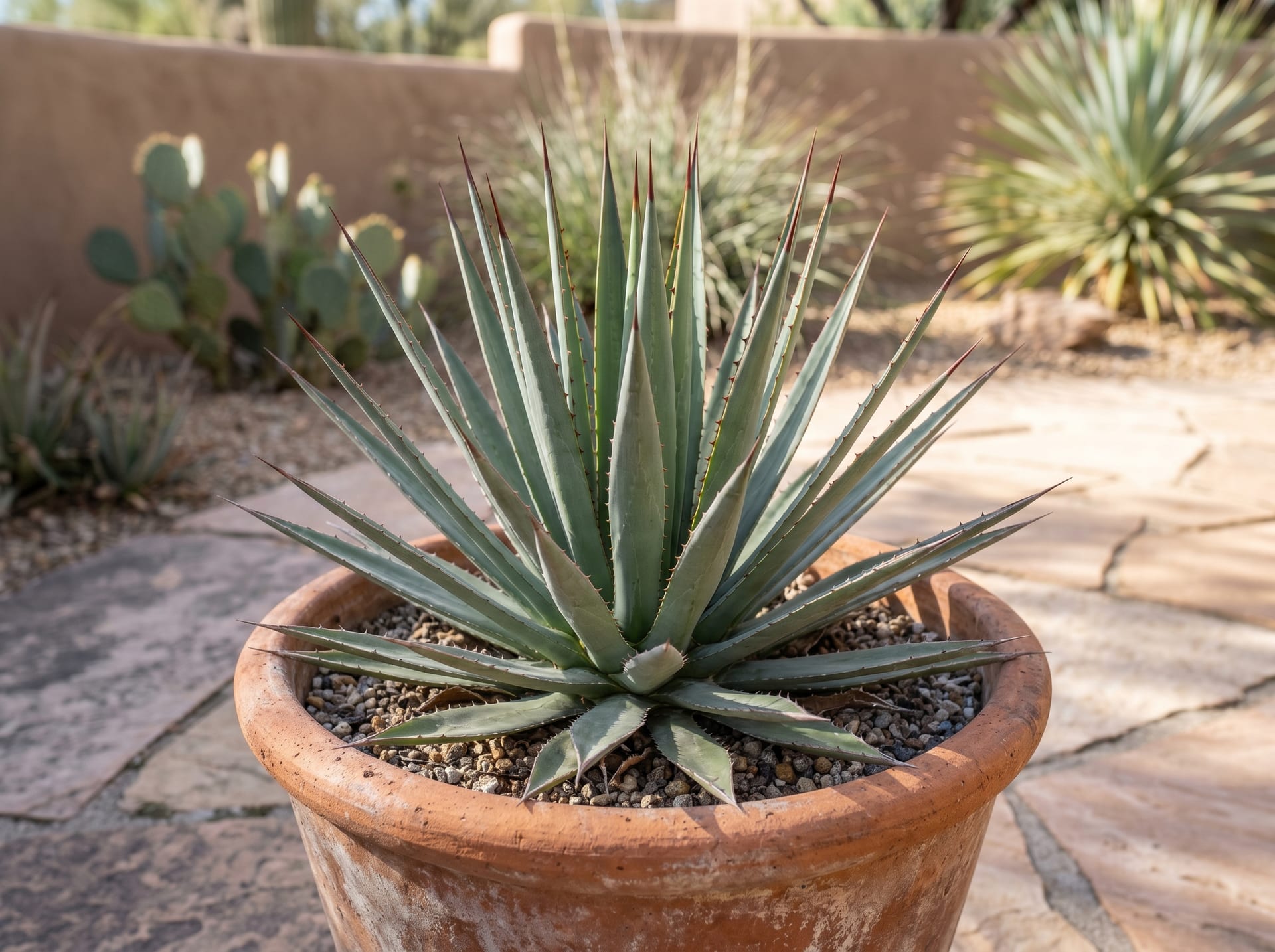
Agave Palmeri
Agave palmeri
A medium-sized agave from southern Arizona to northwestern Mexico. Beautiful gray-green rosette. An important nectar source for bats. Produces many flowers on a tall, straight flower stalk.
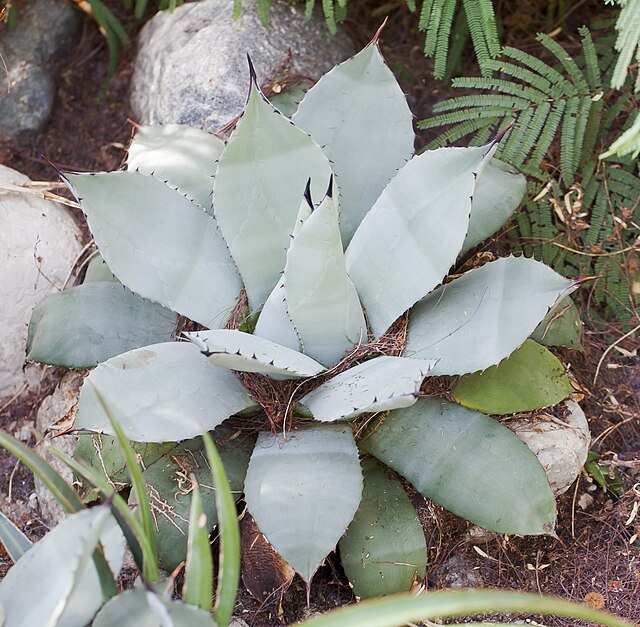 © Diego Delso / CC BY-SA 3.0
Agave Parryi
Agave parryi
Compact rosette with densely layered blue-grey leaves. Extremely cold-hardy, suitable for year-round outdoor planting.
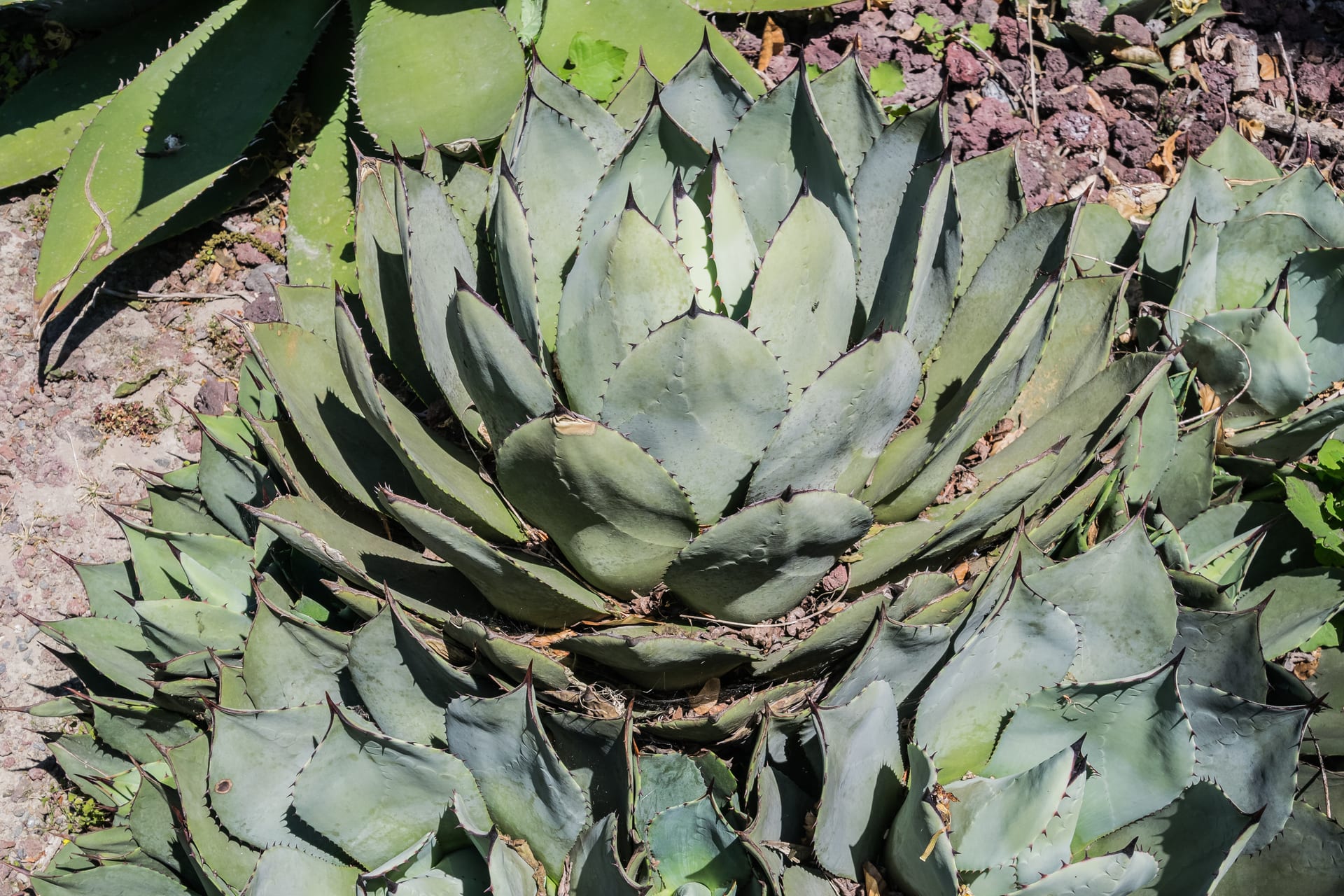 © Krzysztof Golik / CC BY-SA 4.0
Agave parryi var. huachucensis
Agave parryi var. huachucensis
A variety of Agave parryi: a tight, rounded rosette of short, broad grey leaves tipped with prominent brown spines. It suckers freely into clumps and is cold-hardy enough for garden planting.
Agave potatorum 'Kisshoukan' variegated
Agave potatorum 'Kisshoukan Nishiki'
The variegated form of Kissho Kan: short blue-grey leaves edged pale yellow to creamy white, with spines that emerge reddish and age to brown. A small, dome-shaped agave long grown in Japan.
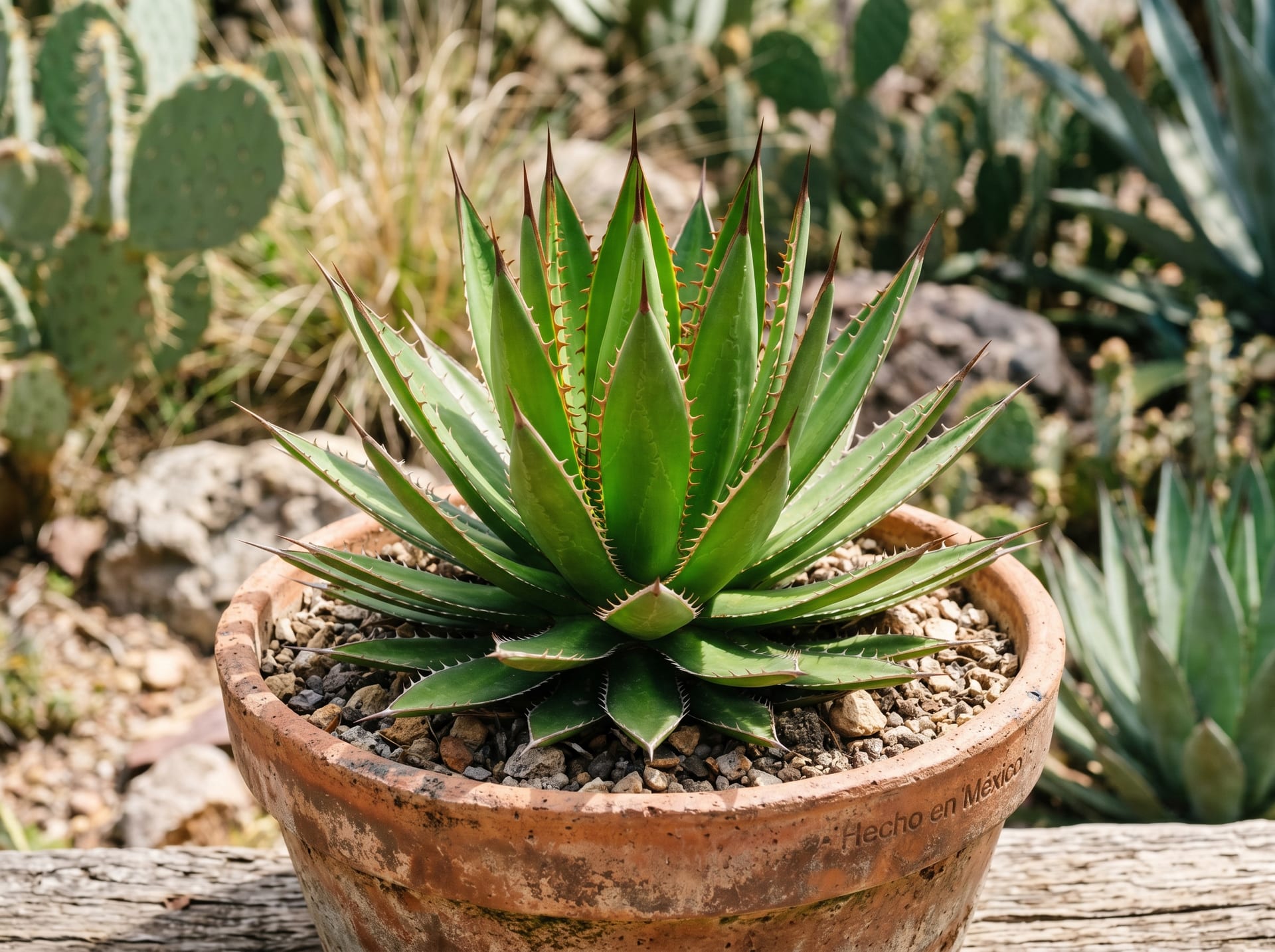
Agave Potrerana
Agave potrerana
Native to northern Mexico. Slender leaves form sharp rosettes. Gray-green leaves with small spines. Excellent cold hardiness and relatively easy cultivation.
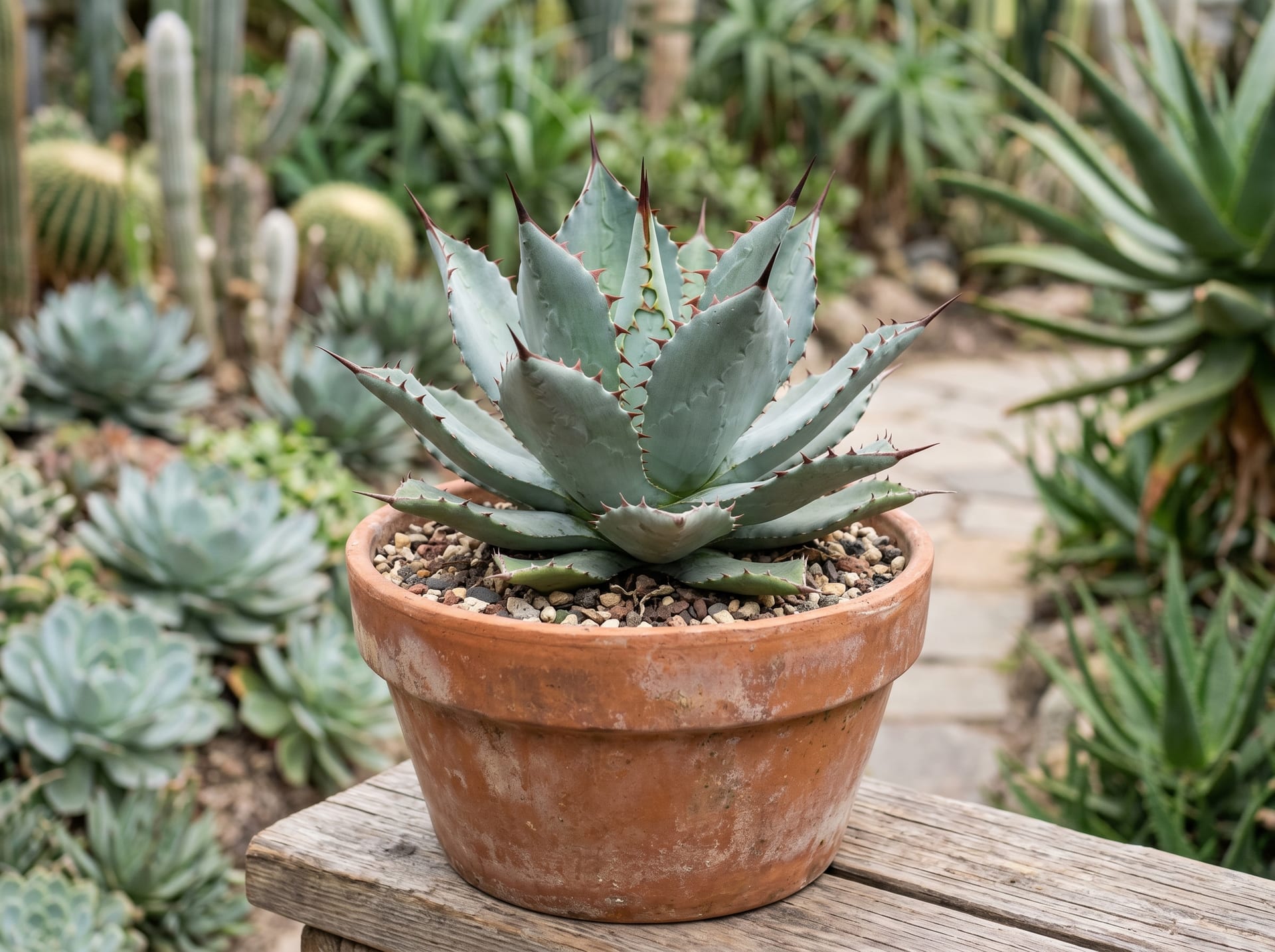
Agave Pygmaea 'Dragon Toes'
Agave pygmaea 'Dragon Toes'
A cultivar of Agave pygmaea, a small agave native to Chiapas in southern Mexico. Wavy margins and distinctive blue-green leaves resembling 'dragon toes' give it its name. Very compact and suitable for indoor cultivation. A popular garden cultivar.
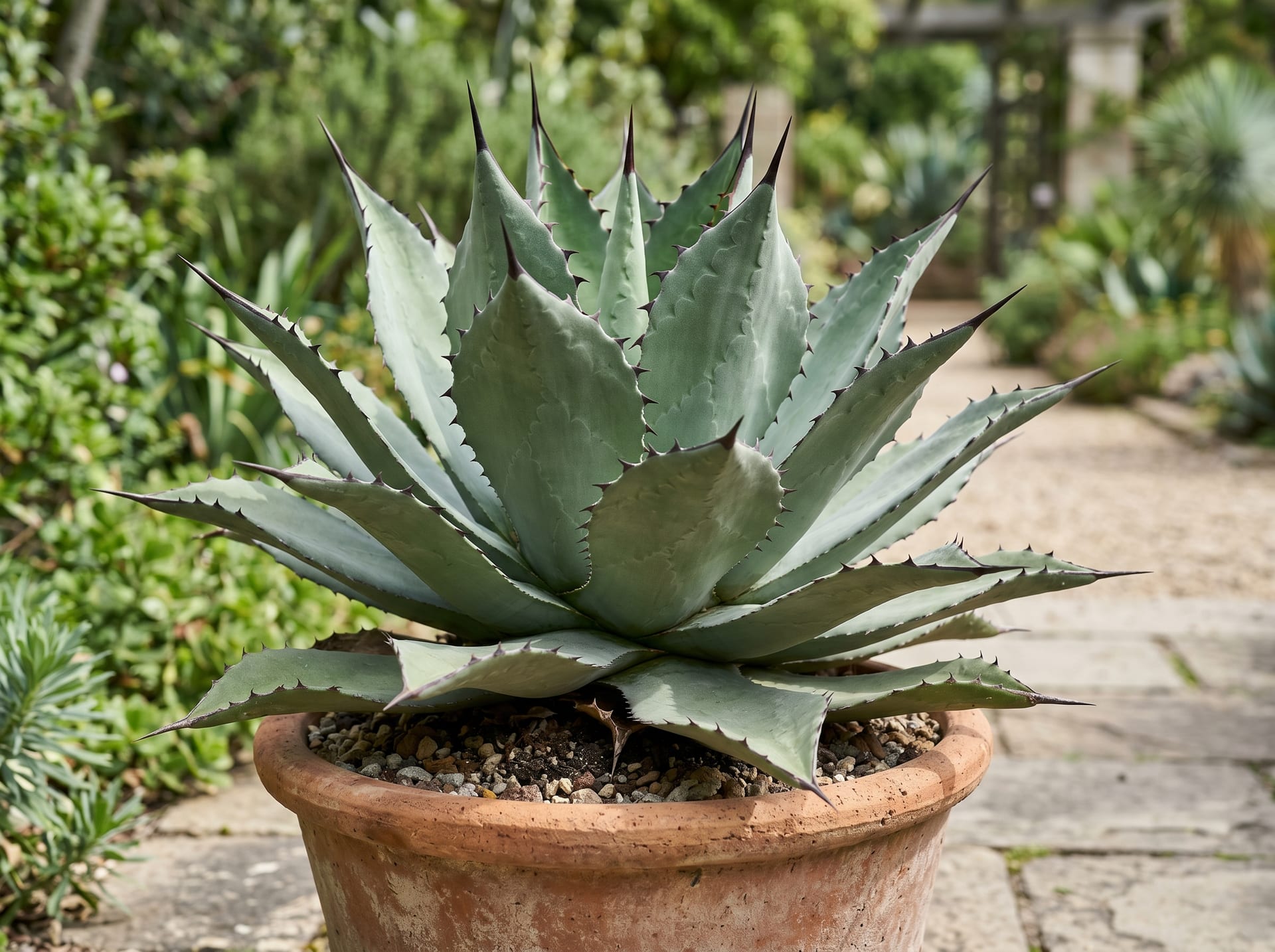
Agave Scabra
Agave scabra
Native to Texas and northern Mexico. Named for its rough leaf surface. Thick blue-gray leaves with black teeth. Similar to Americana but more compact.
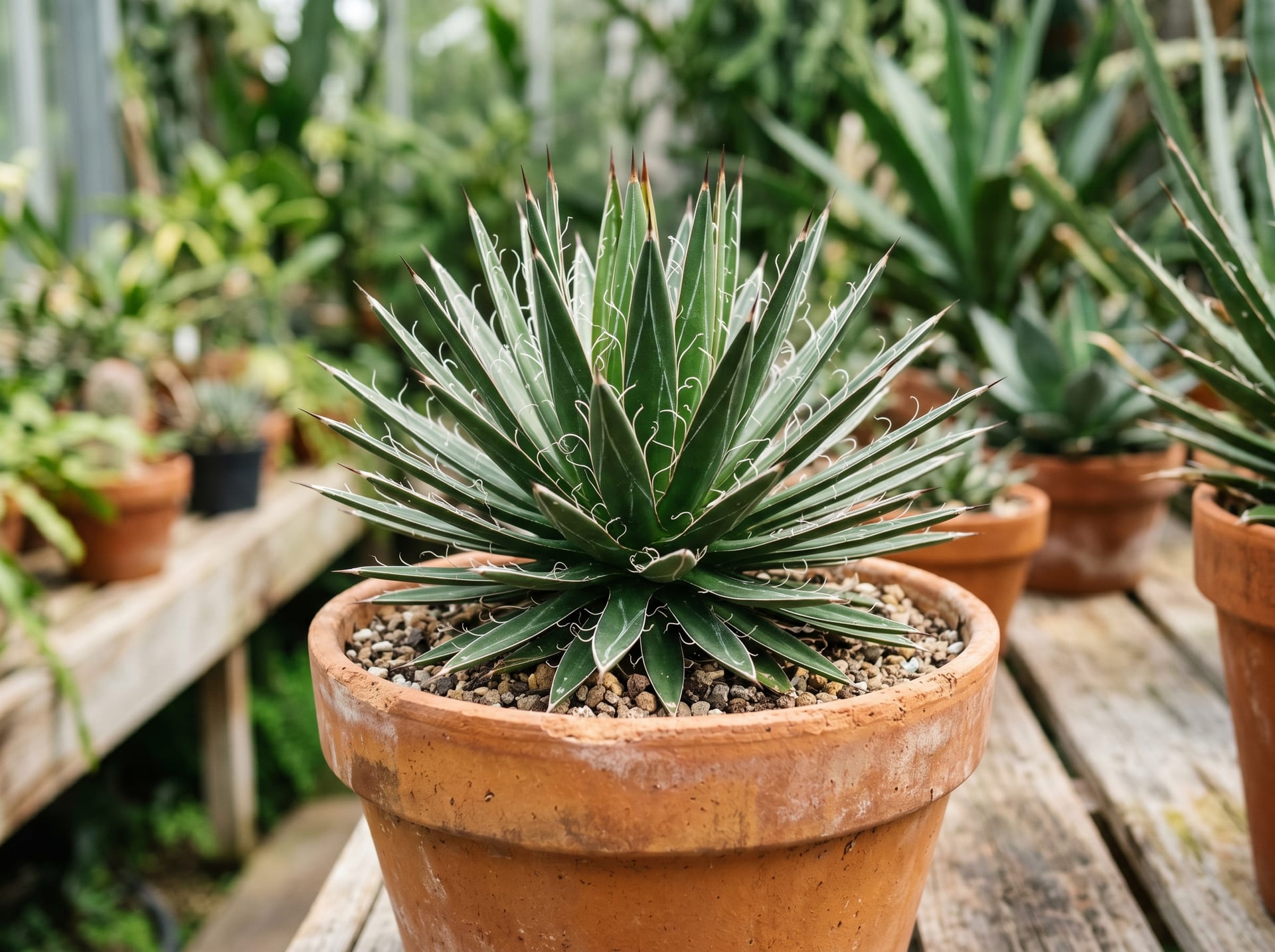
Agave Schidigera
Agave schidigera
Beautiful agave producing numerous white filaments along leaf margins. Similar to Filifera but with harder leaves and more prominent teeth. Cold-hardy enough for ground planting.
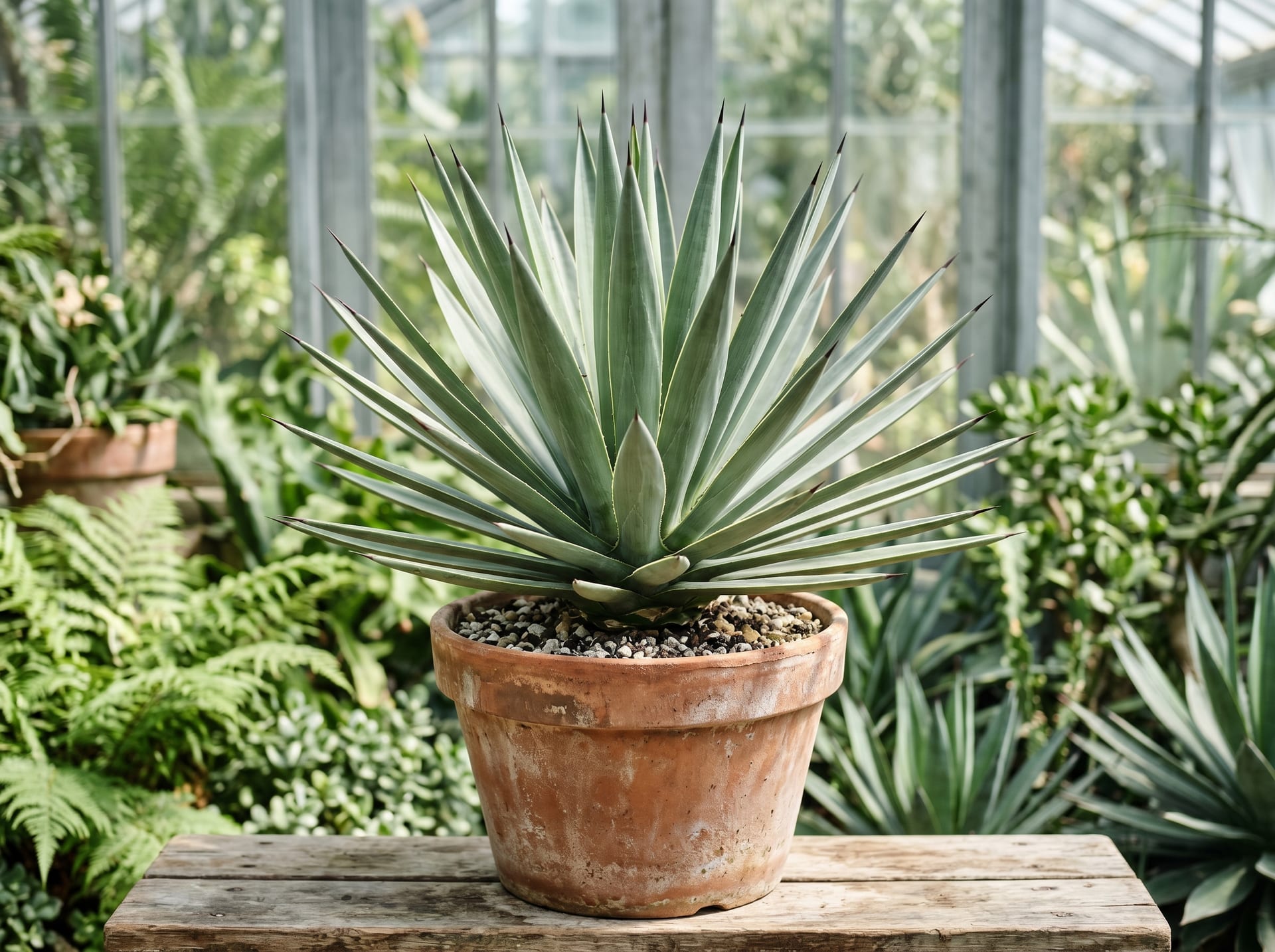
Agave Sisalana (Sisal)
Agave sisalana
One of the world's largest natural fiber crops. Strong 'sisal' fibers from its leaves are widely used for rope, sacks, and carpets. From Mexico, now cultivated widely in Africa and Southeast Asia.
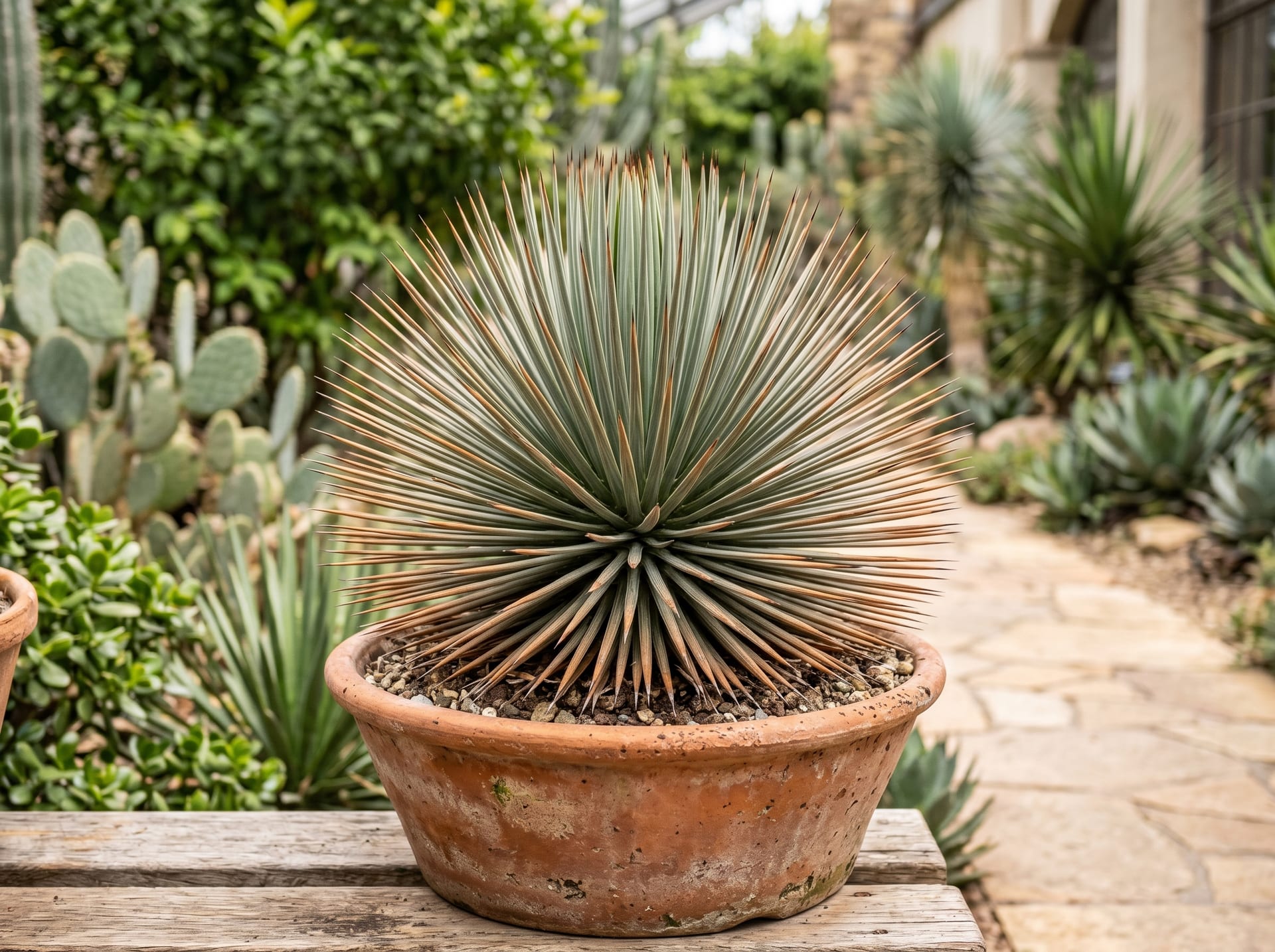
Agave Striata
Agave striata
An agave from central Mexico with dense, narrow needle-like leaves. Unique form distinct from typical agaves. Produces many offsets and forms clumps.
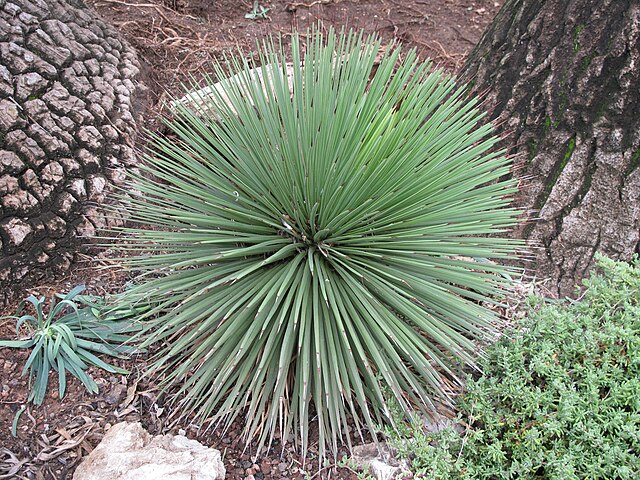 © Tangopaso / Public domain
Agave Stricta
Agave stricta
Unique agave with needle-thin leaves spreading in a sphere. Sea urchin-like appearance is distinctive. Cold-hardy.
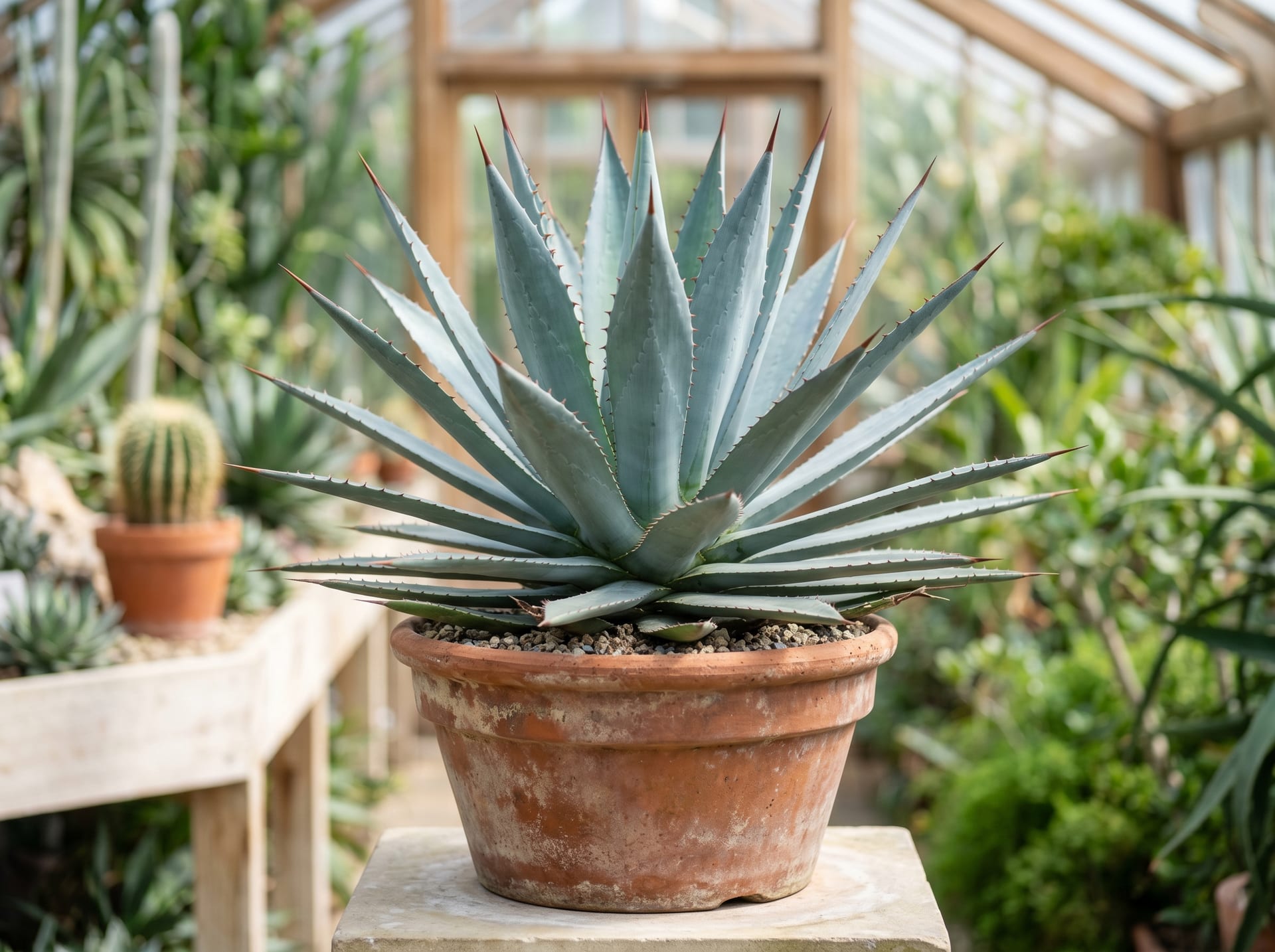
Agave Tequilana
Agave tequilana
The world-famous agave used to produce tequila. Called 'Blue Agave' for its blue-gray-green leaves. Grown extensively in Jalisco, Mexico. Also popular as an ornamental plant.
Agave titanota 'Blue'
Agave titanota 'Blue'
Titanota with long, pale blue-white leaves and small, numerous teeth. The trade name refers to the original Rancho-type titanota rather than the popular Sierra type (oteroi), and is mostly sold as seedlings or seed.
Agave titanota 'Red Catweazle'
Agave titanota 'Red Catweazle'
A titanota cultivar that turns reddish all over in strong sun, making its rugged, wavy teeth stand out. Known in Japan as 'Akaneko' (red cat); it reverts to green in weak light.
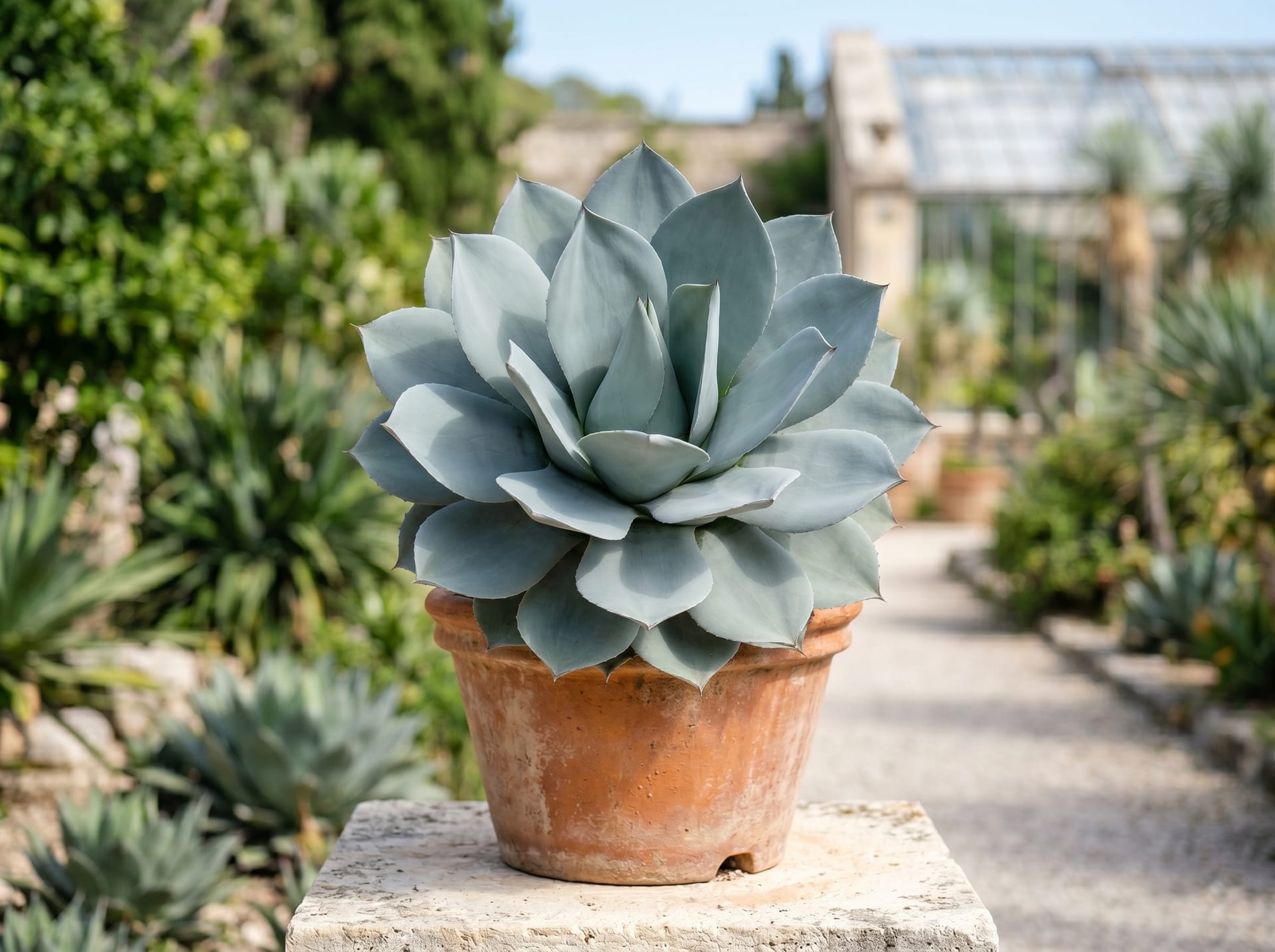
Agave Truncata
Agave truncata
A Mexican agave with distinctively compact rosette of short, thick leaves. Dense, wide leaves create an impressive sculptural form. Drought tolerant and beginner-friendly.
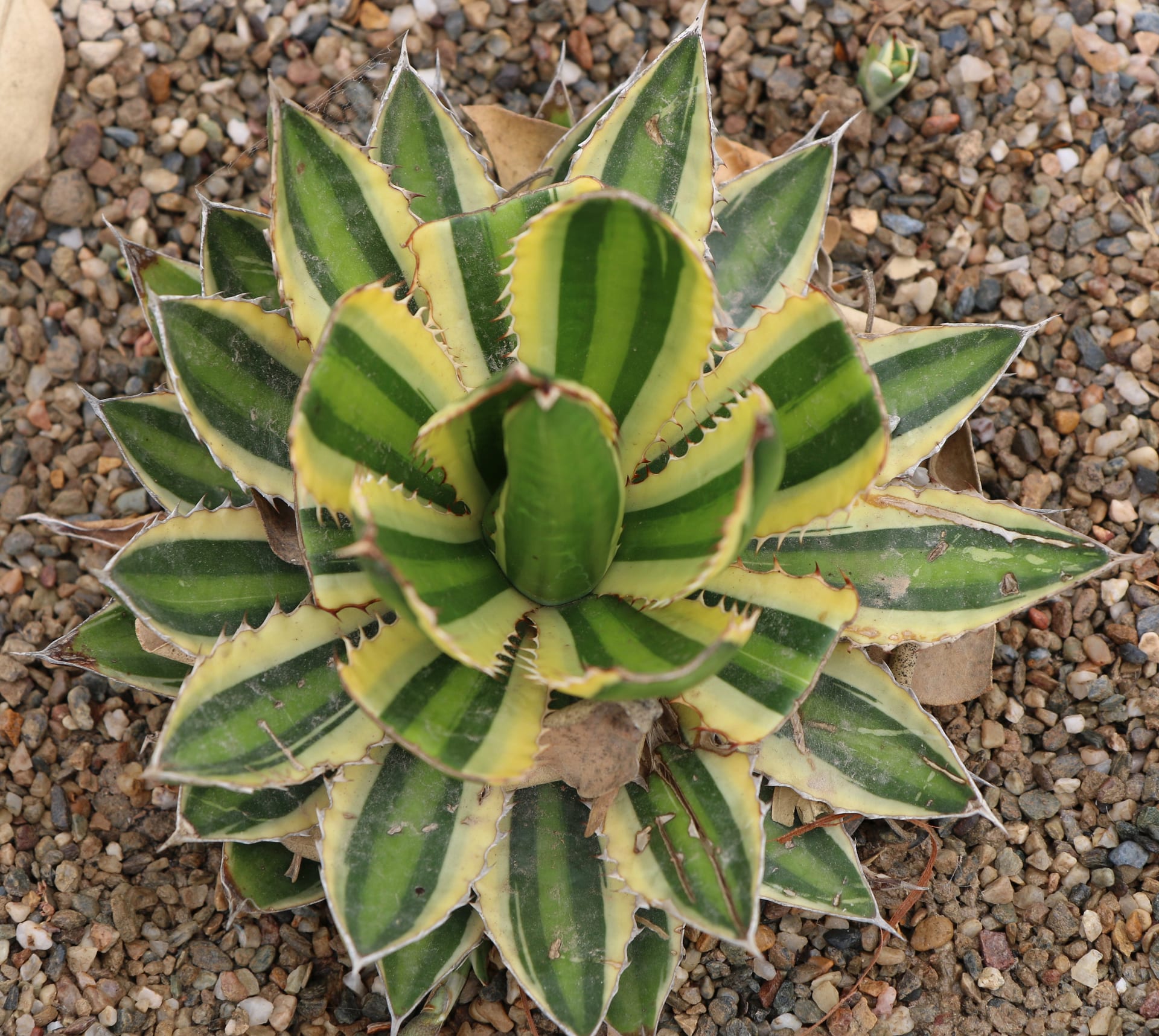 © Тајга / CC BY-SA 4.0
Agave univittata 'Quadricolor' (Goshiki Bandai)
Agave univittata 'Quadricolor'
A variegated cultivar with dark green leaves edged yellow and striped pale green down the centre; red teeth and winter flush make four colours. It suckers freely and is fairly cold-hardy for an agave.
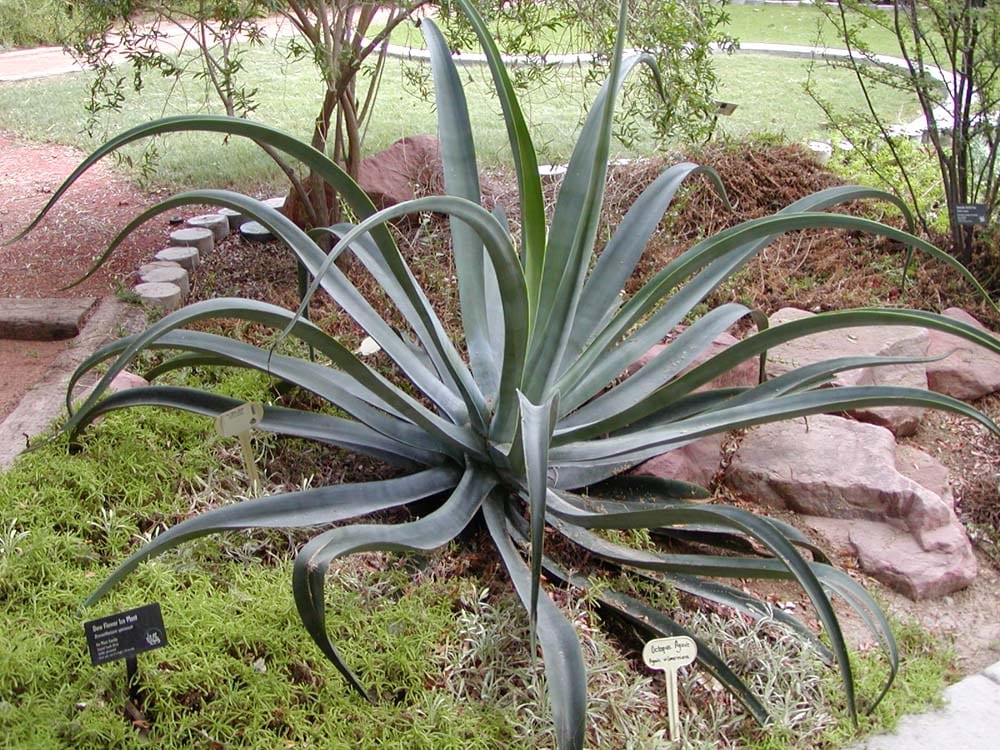 © Stan Shebs / CC BY-SA 3.0
Agave vilmoriniana (Octopus agave)
Agave vilmoriniana
A large agave whose long, narrow green leaves arch and twist toward the ground like octopus arms. The leaves lack obvious teeth, and instead of offsets it produces bulbils on the flower stalk.
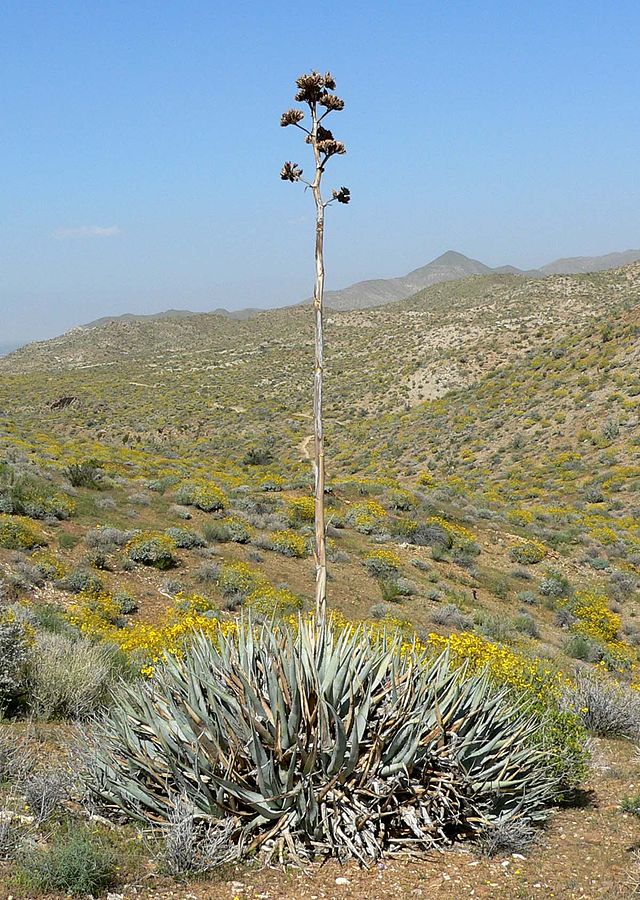
Desert Agave
Agave deserti
An agave native to California-Mexico deserts, tolerant of both heat and cold.
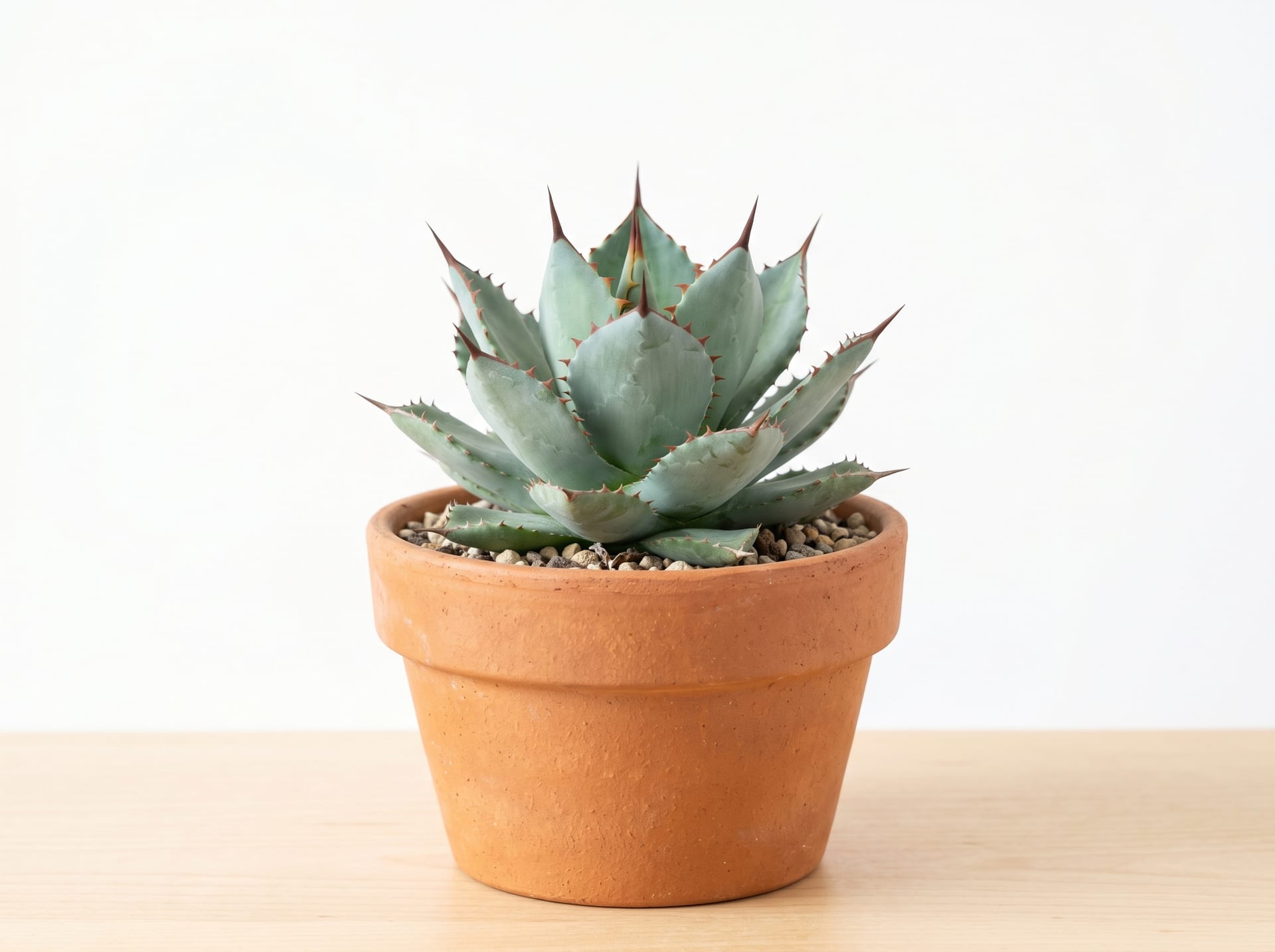
Dwarf Agave
Agave seemanniana
A palm-sized dwarf agave. Also called Dragon Toes, charming for its cute size.
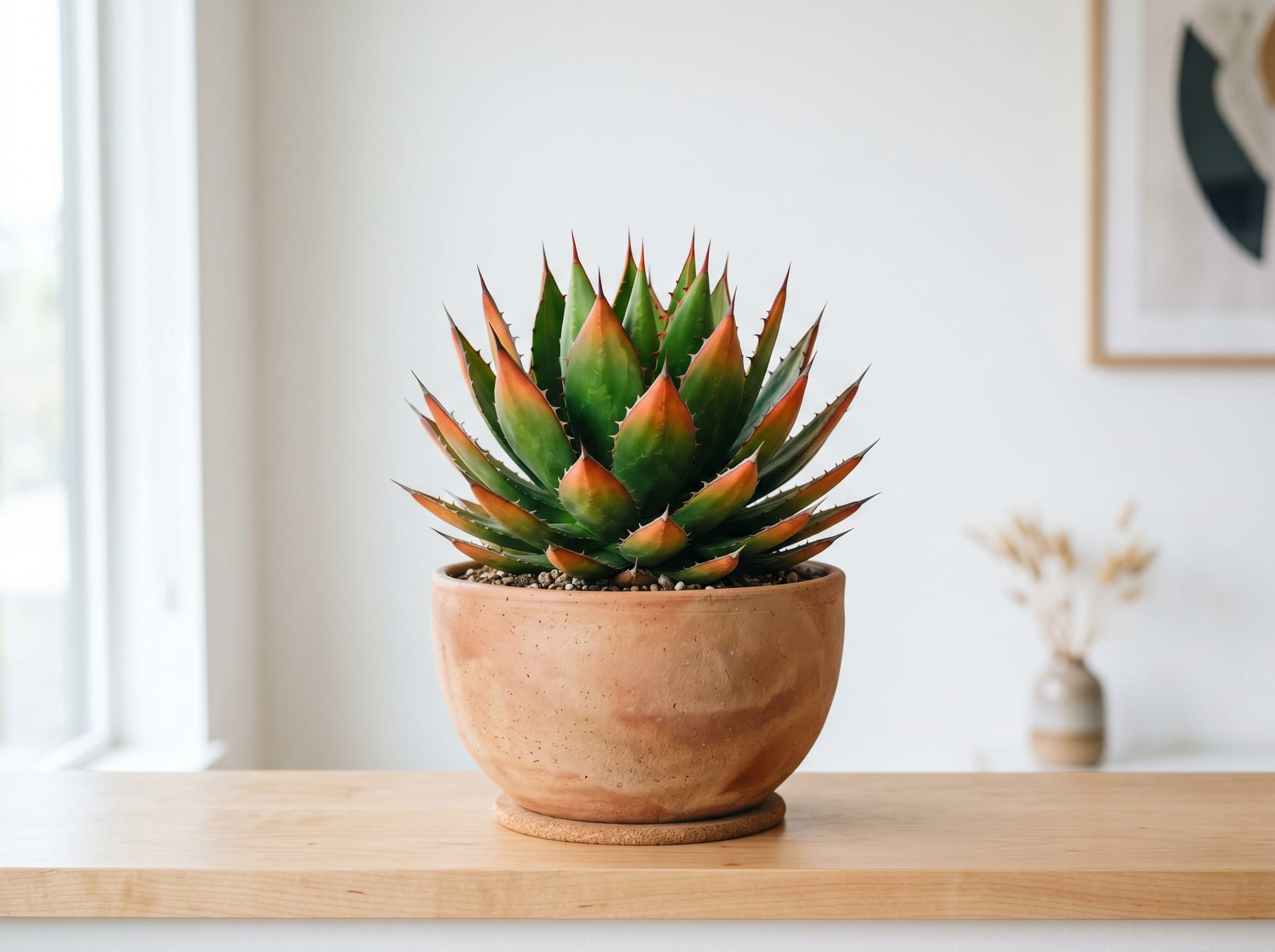
Fireball
Agave × 'Fireball'
A variegated cultivar of Agave parrasana, distinguished by short, broad blue-grey leaves edged with a thin yellow to cream margin. Medium-sized with easy maintenance requirements. Popular as an accent plant in mixed succulent arrangements and landscapes.
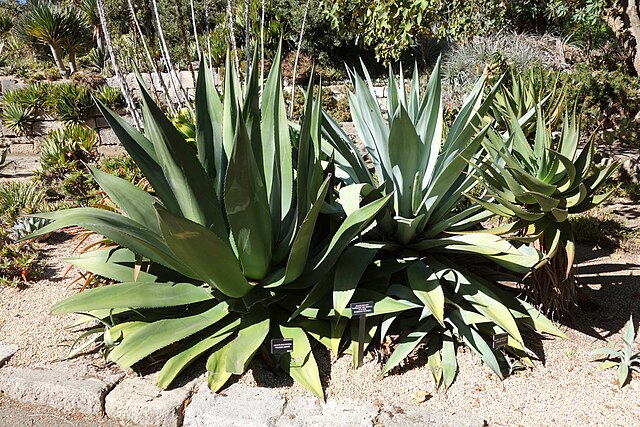 © Daderot / CC0
Giant Agave
Agave salmiana
A large agave used to make Mexican Pulque (fermented drink). Impressive with large thick leaves.
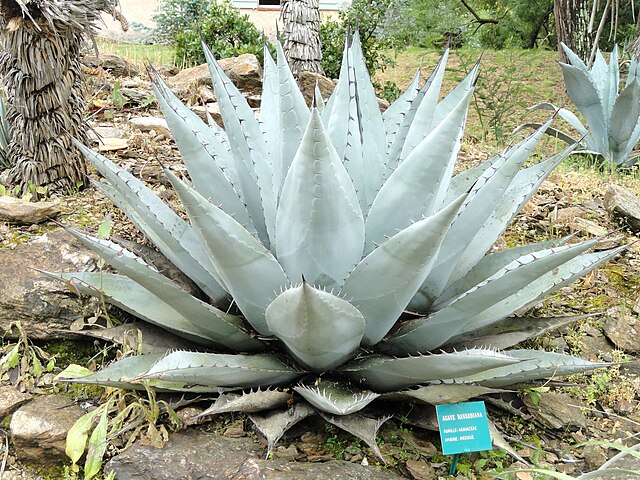 © Daderot / Public domain
Havard's Agave
Agave havardiana
An agave from West Texas mountains with top-class cold tolerance. Survives -20°C.
Related Content
Agave FAQ
- How much do agave cost?
- Small Titanota seedlings cost 2,000-10,000 yen, medium plants 10,000-50,000 yen, and select or rare varieties like Hakugei and Caesar can exceed 100,000 yen. Prices vary greatly by variety and condition.
- Can beginners grow agave?
- Agaves are drought-tolerant and hardy, making them easy for beginners. Place in a sunny spot with well-draining soil, and they're quite hard to fail with.
- What are the key points for growing agave?
- Sunlight, airflow, and drainage are the three essentials. Provide direct sunlight, use pumice or akadama-based soil, and water only when the pot is completely dry.
- What should I check when buying agave?
- Check whether it's rooted, leaves are developing healthily, and lower leaves aren't excessively dried. Imported bare-root plants require root establishment, so beginners should start with rooted domestically grown seedlings.
- How long do agave live?
- Agaves grow over decades and bloom only once in their lifetime before dying. However, they produce offsets, so with proper care you can enjoy them across generations.