Aquatic Plant Encyclopedia
Encyclopedia of popular aquatic plants with care guides, traits, and aquascaping tips.
Showing 77 of 127 species(49–72)
 © Krzysztof Ziarnek, Kenraiz / CC BY-SA 4.0
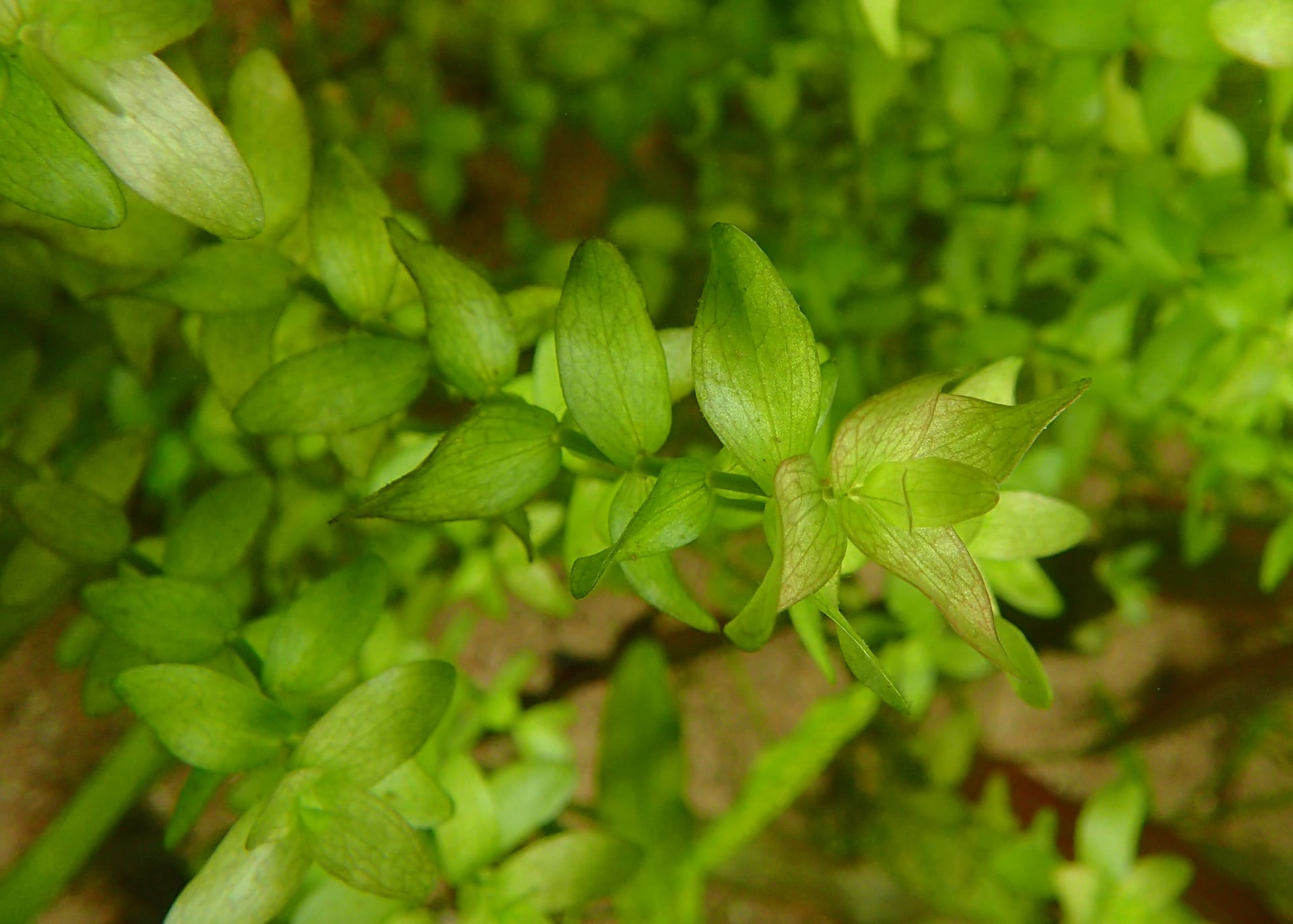
Lemon bacopa
Bacopa caroliniana
A tough, slow-growing stem plant with thick oval leaves in opposite pairs. Crushed leaves smell of lemon, and under strong light the leaves take on a bronze to reddish-brown tint.
 © Forest & Kim Starr / CC BY 3.0
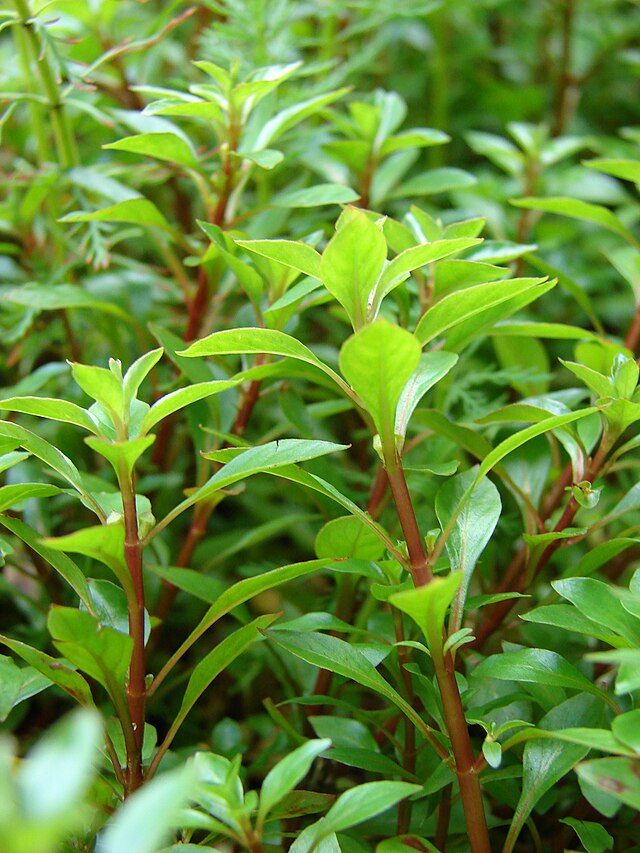
Ludwigia Palustris
Ludwigia palustris
A hardy stem plant that turns red. Easy for beginners and perfect for adding color to aquariums.
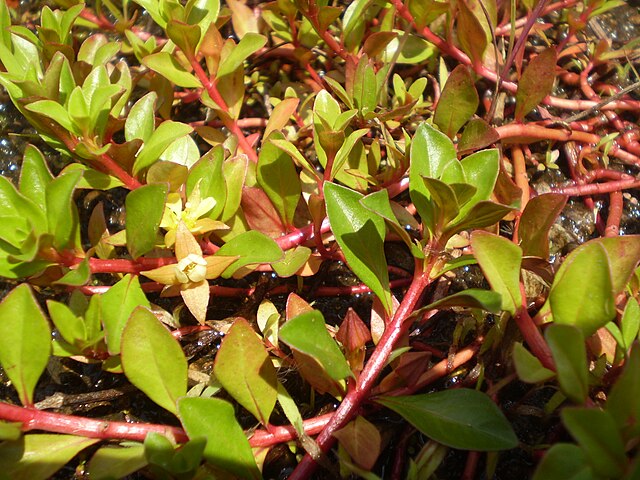
Ludwigia Repens
Ludwigia repens
A popular stem plant that turns red-orange with adequate light and CO2.
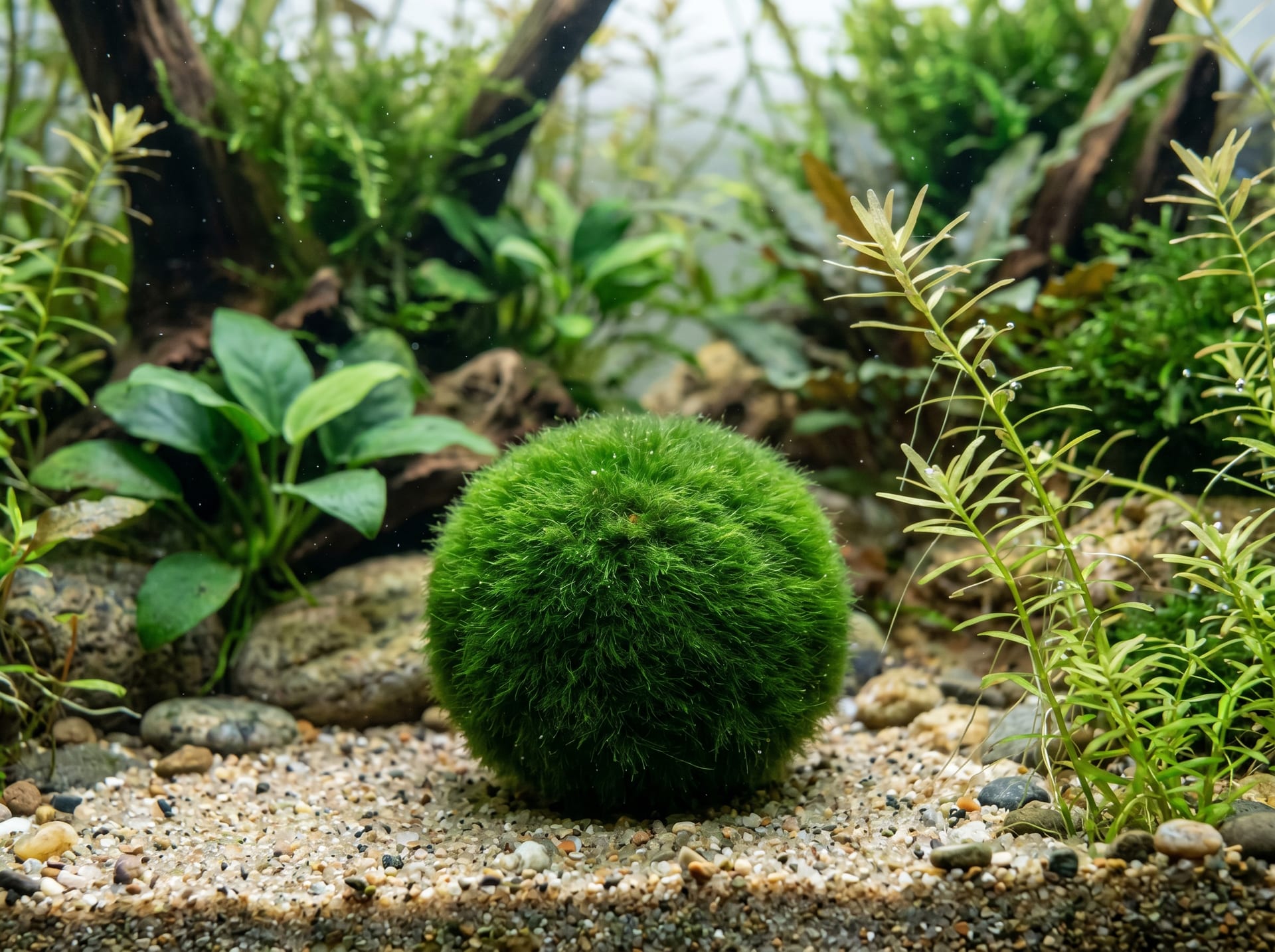
Marimo Moss Ball
Aegagropila linnaei
Spherical algae famous as a natural monument of Lake Akan, Hokkaido. Simply sink in tank. Rolling maintains shape. Extremely slow growing but can live for decades.
 © Macleay Grass Man / CC BY 2.0
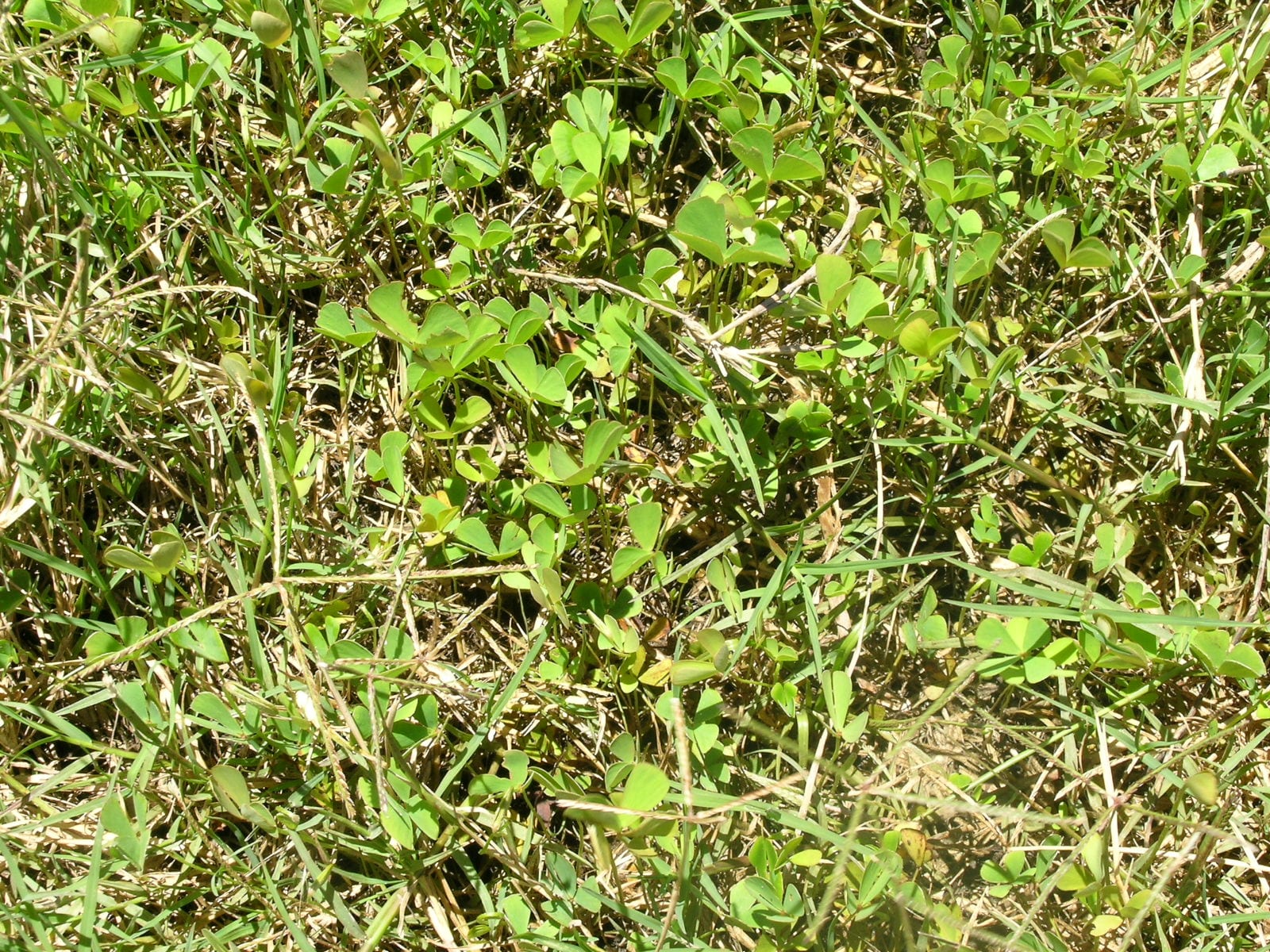
Marsilea Hirsuta
Marsilea hirsuta
A foreground plant with four-leaf clover shaped leaves. Mysteriously becomes single leaf underwater.
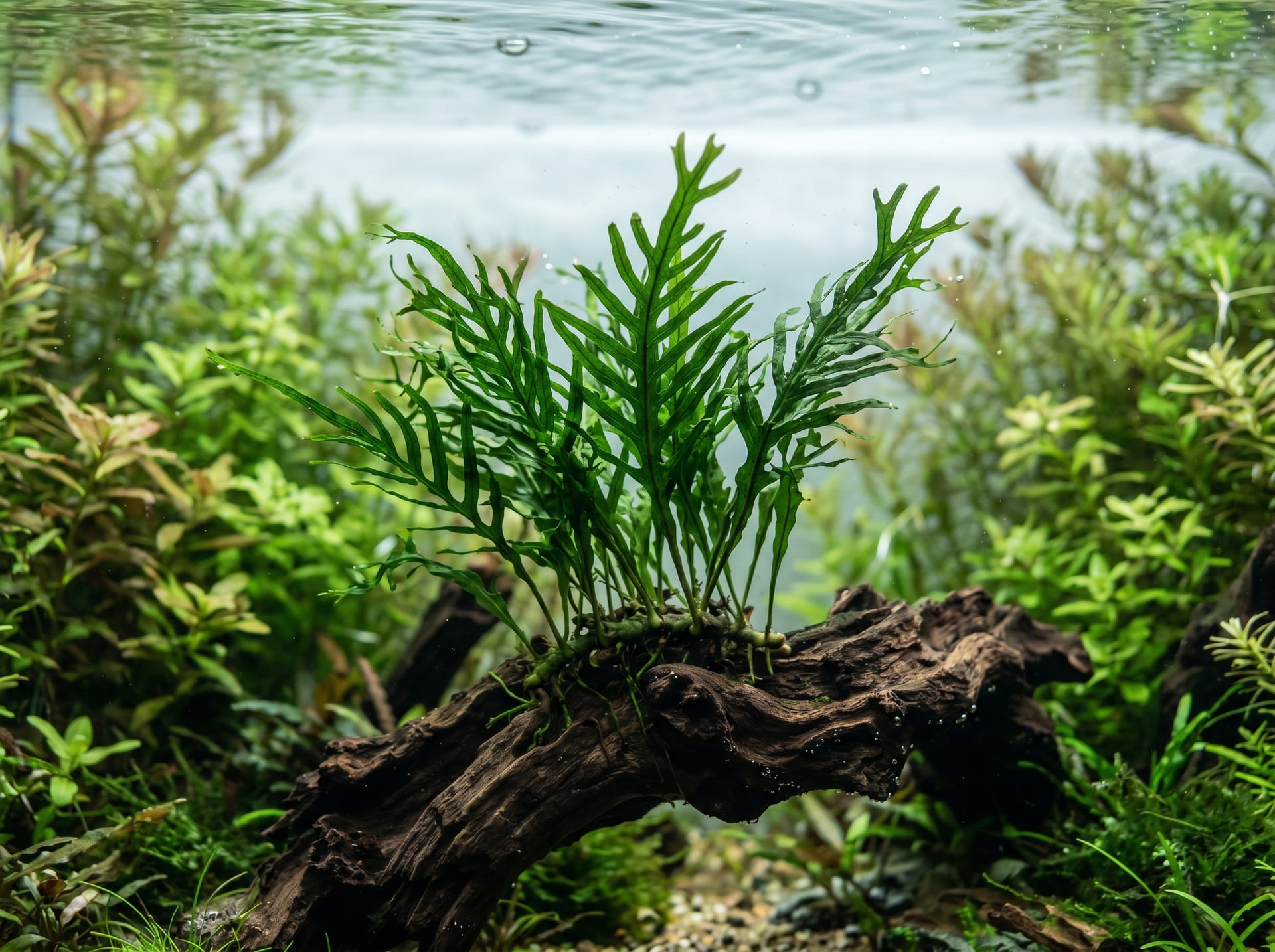
Microsorum Trident
Leptochilus pteropus 'Trident'
A microsorum with distinctive trident-shaped thin leaves. Delicate look suits small tanks too.
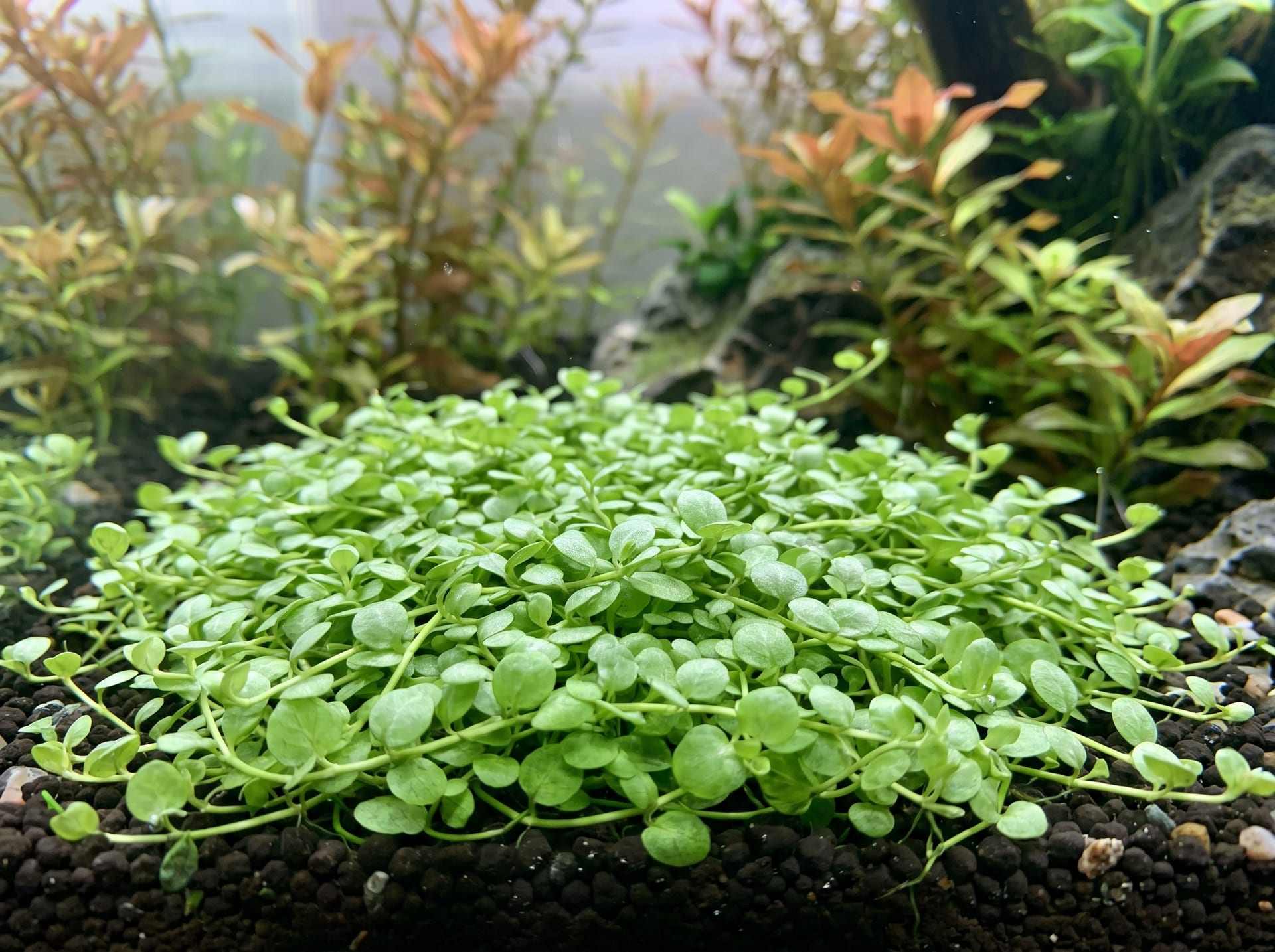
New Large Pearl Grass
Micranthemum sp. 'Monte Carlo'
A foreground plant with larger leaves than Pearl Grass. Spreads carpet-like, naturally forming dome shapes. Beginner-popular as it grows without CO2. The fluffy texture is charming.
Nymphaea Lotus Green
Nymphaea lotus
A water lily relative with beautiful green leaves. Becomes focal point when placed in midground.
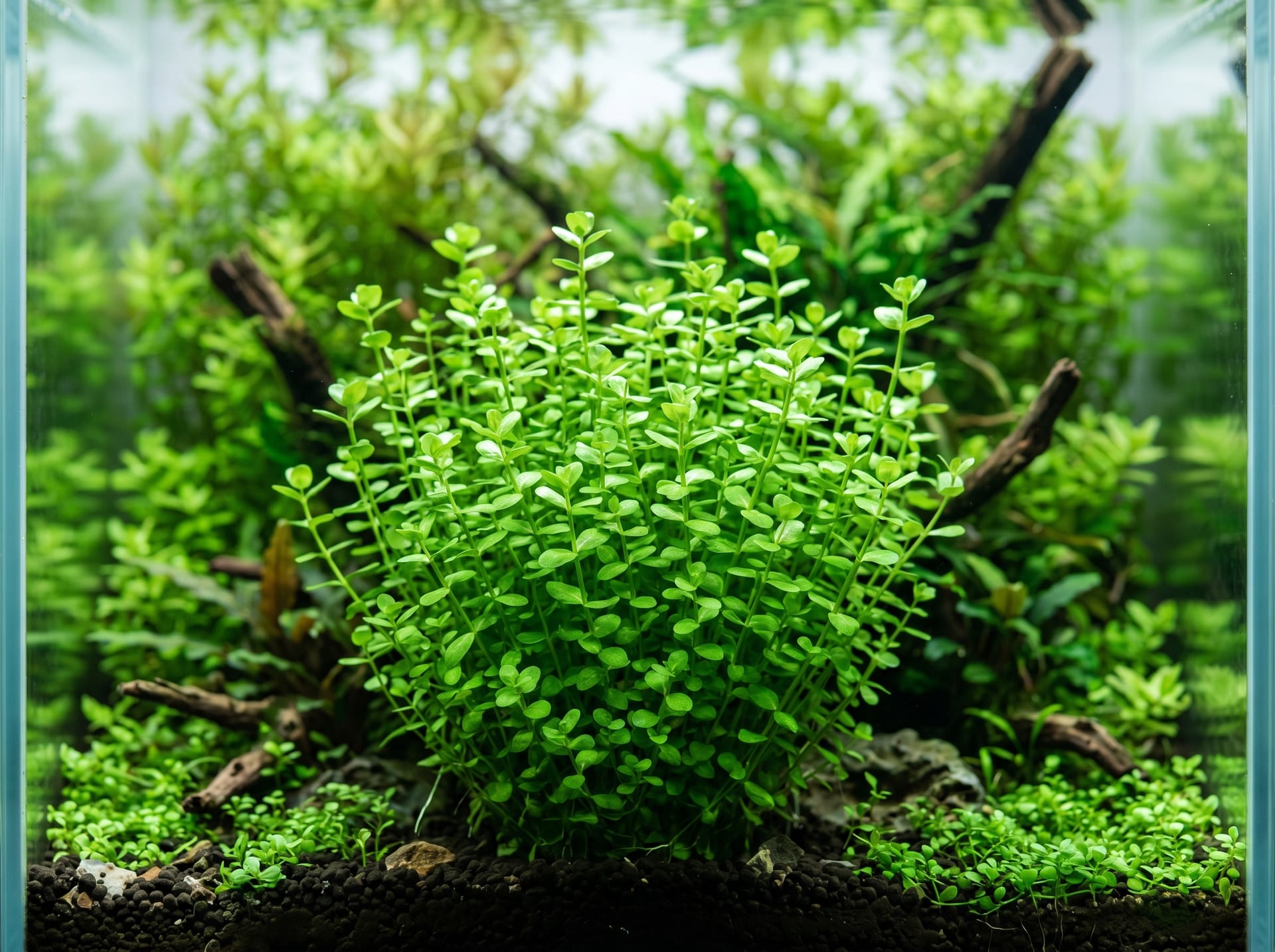
Pearl Grass
Micranthemum umbrosum
A stem plant with small round leaves strung like pearls. Used in mid to background planting. Produces beautiful bubbles in water. CO2 injection encourages lush growth.
 © Cephas / CC BY-SA 3.0
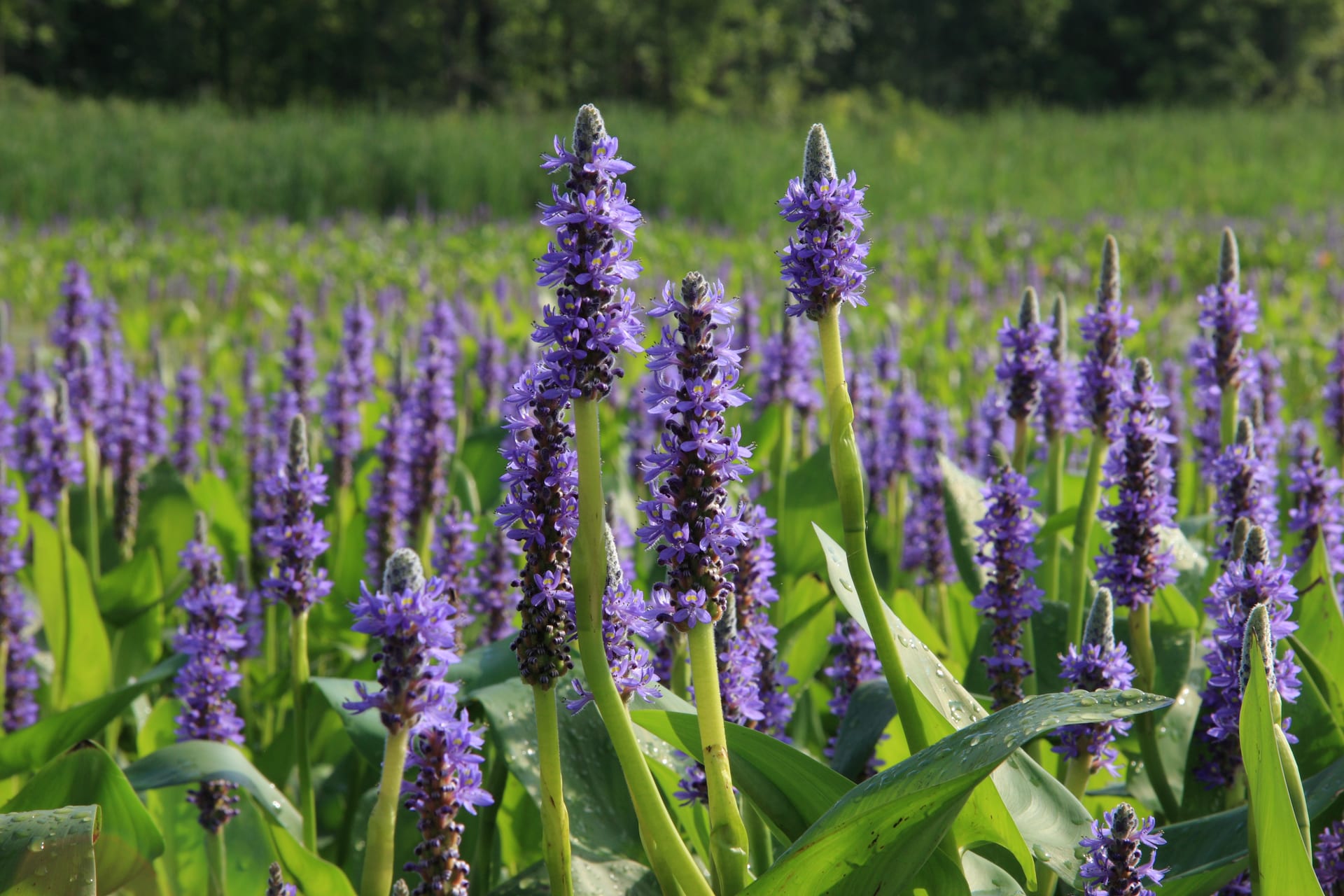
Pickerel weed
Pontederia cordata
A North American emergent plant (Japanese name Nagabamizuaoi) that holds glossy heart- to arrow-shaped leaves above the water and produces spikes of soft blue-violet flowers from June to October. Cold-hardy, it suits pond margins and large containers.
 © Krzysztof Ziarnek, Kenraiz / CC BY-SA 4.0
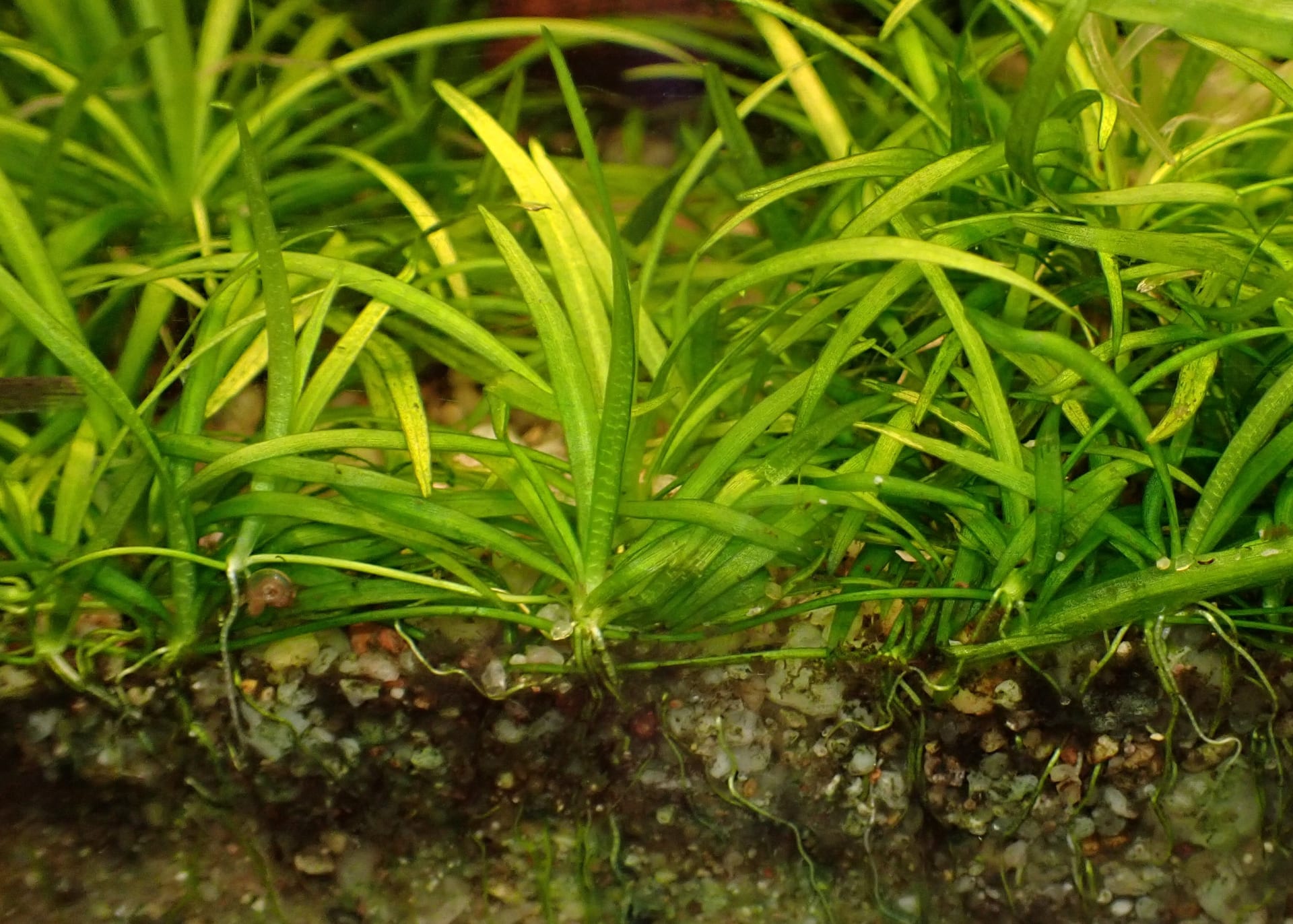
Pygmy chain sword (Helanthium tenellum)
Helanthium tenellum
A small plant with leaves about 1.5 mm wide that spreads by runners into a foreground lawn. Best known by its old name Echinodorus tenellus. It reddens in strong light; a 'Green' form that stays green is also sold.
 © Monarchatto / CC BY-SA 4.0
Red Root Floater
Phyllanthus fluitans
A floating plant with beautiful red roots and round leaves. Red roots floating on surface add accent.
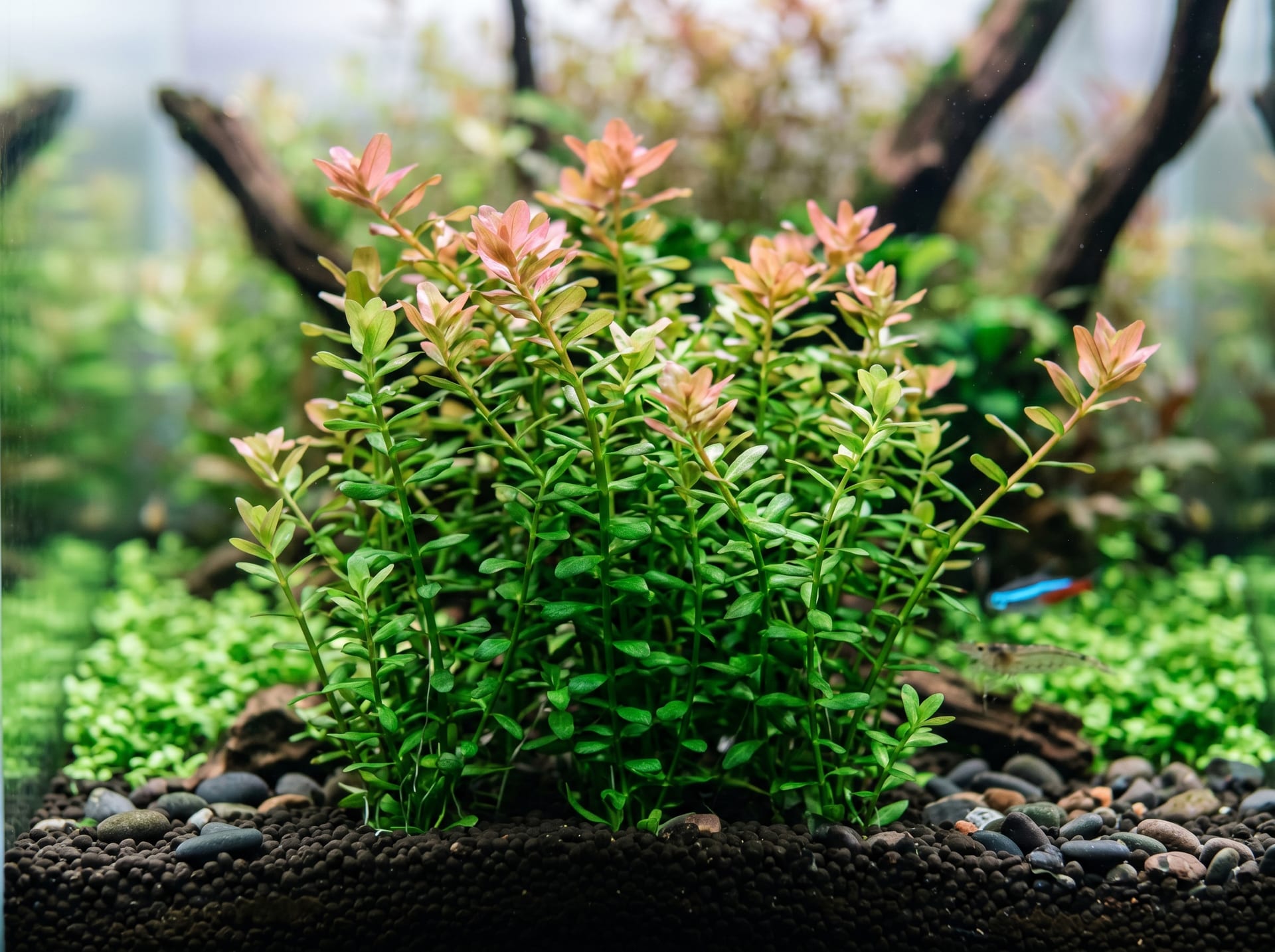
Rotala
Rotala spp.
Essential background stem plant genus. Many species including R. rotundifolia and R. indica. Beautiful red coloration and dense bushes achievable through trimming.
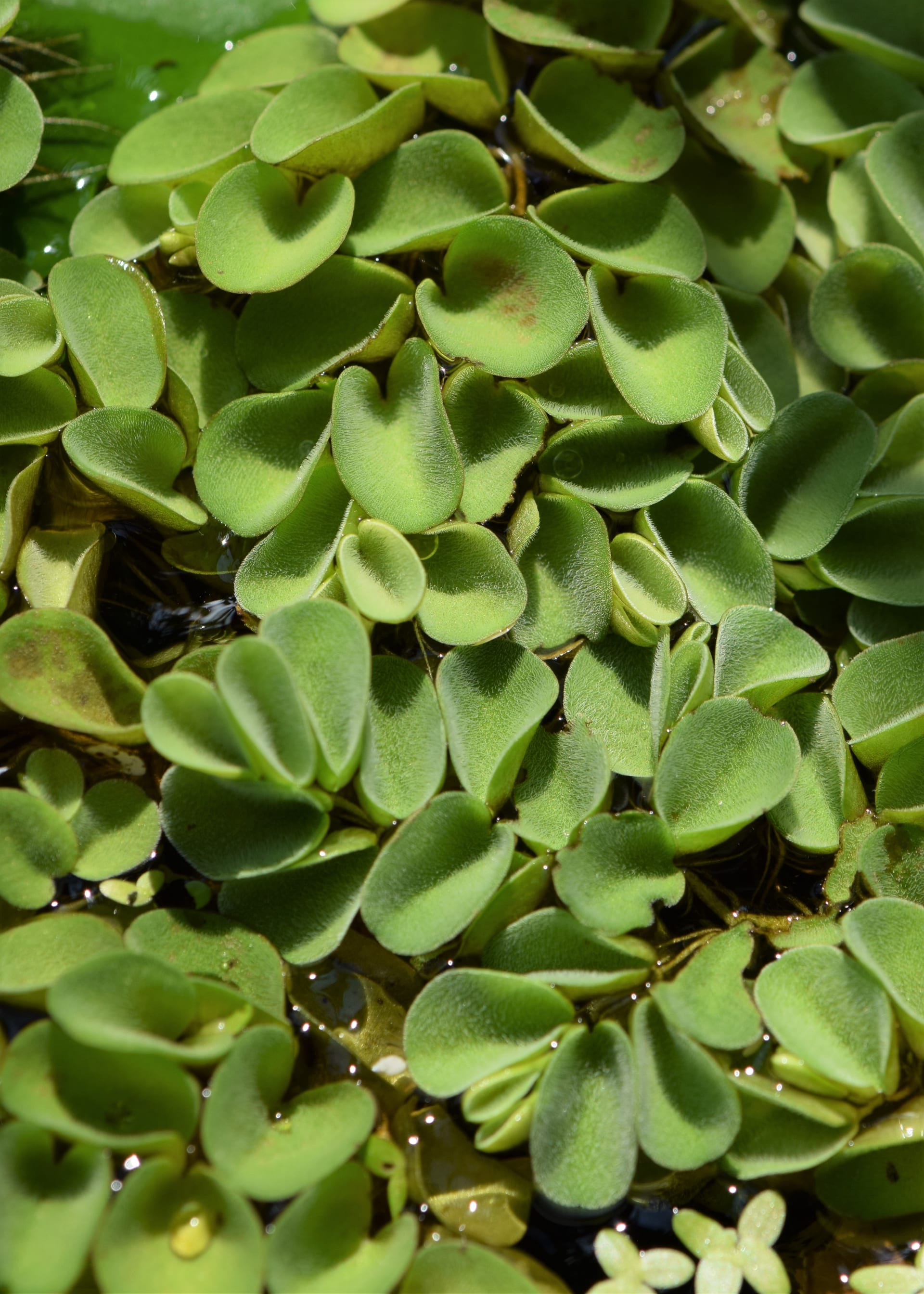 © Krzysztof Ziarnek, Kenraiz / CC BY-SA 4.0
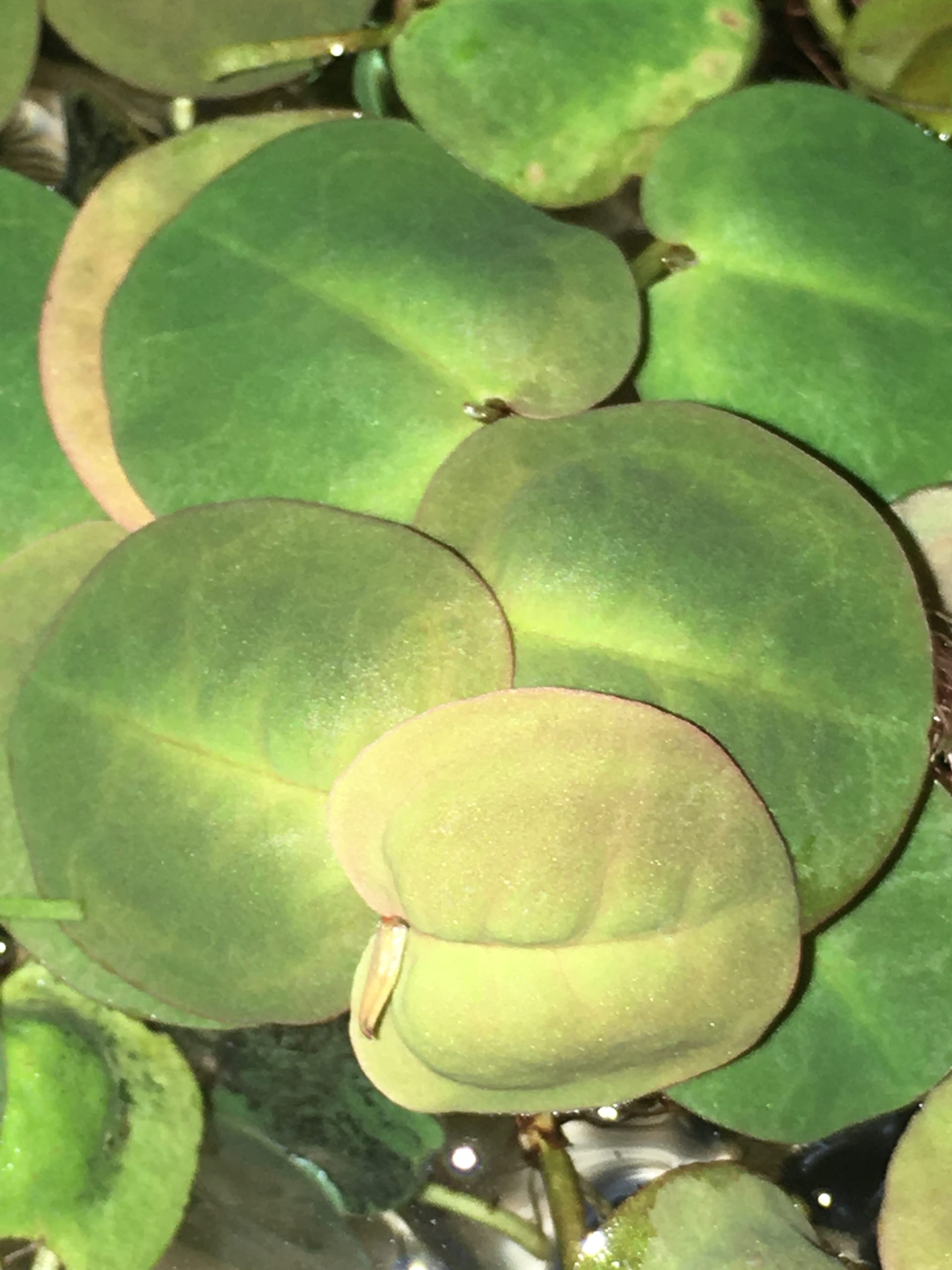
Salvinia cucullata
Salvinia cucullata
A tropical Asian floating fern whose velvety, light green floating leaves curl up like boats or hoods. Well grown it forms thick cushions; under poor conditions the leaves lie flat.
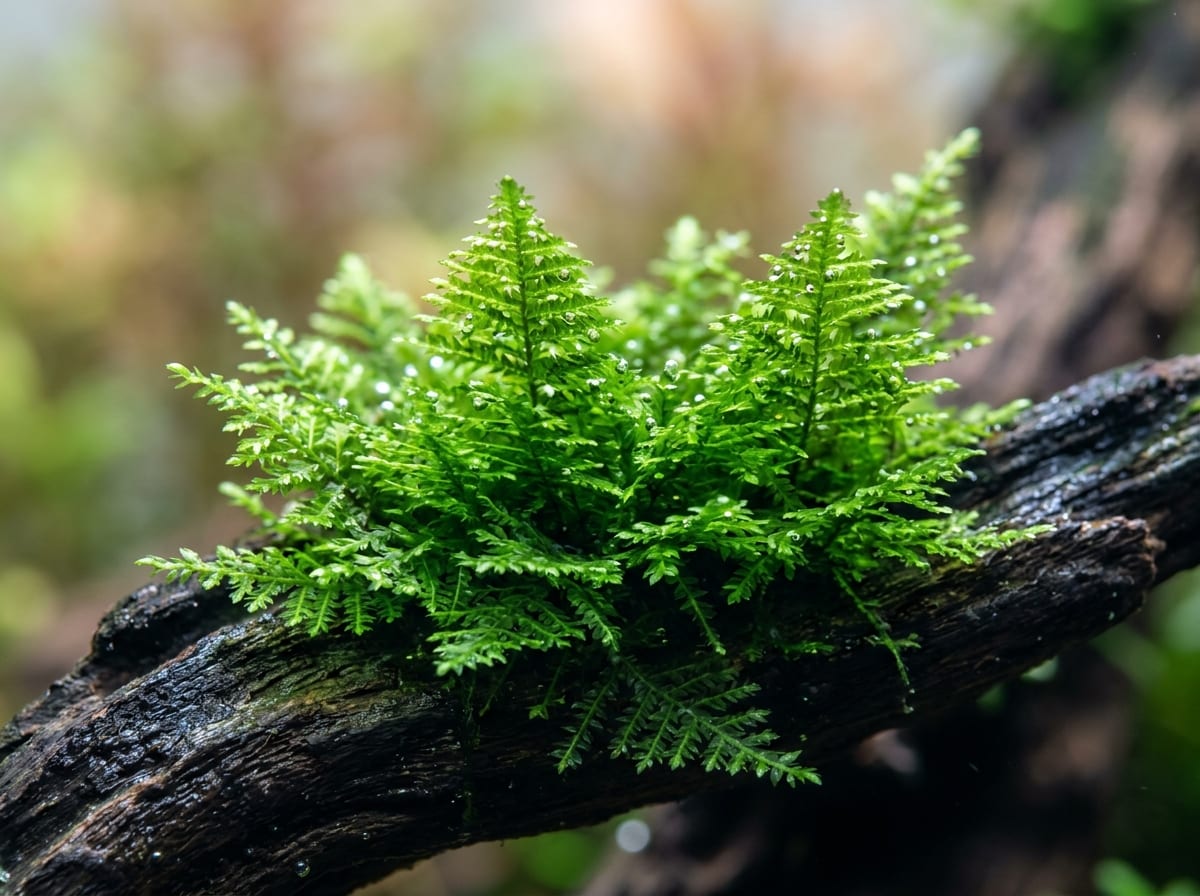
South American moss
Vesicularia sp. (South America)
A full, fairly bright green aquatic moss whose branches spread in neat triangles. Despite the name there is no evidence it comes from South America. It grows in low light without CO2 and is tied onto wood or stone.
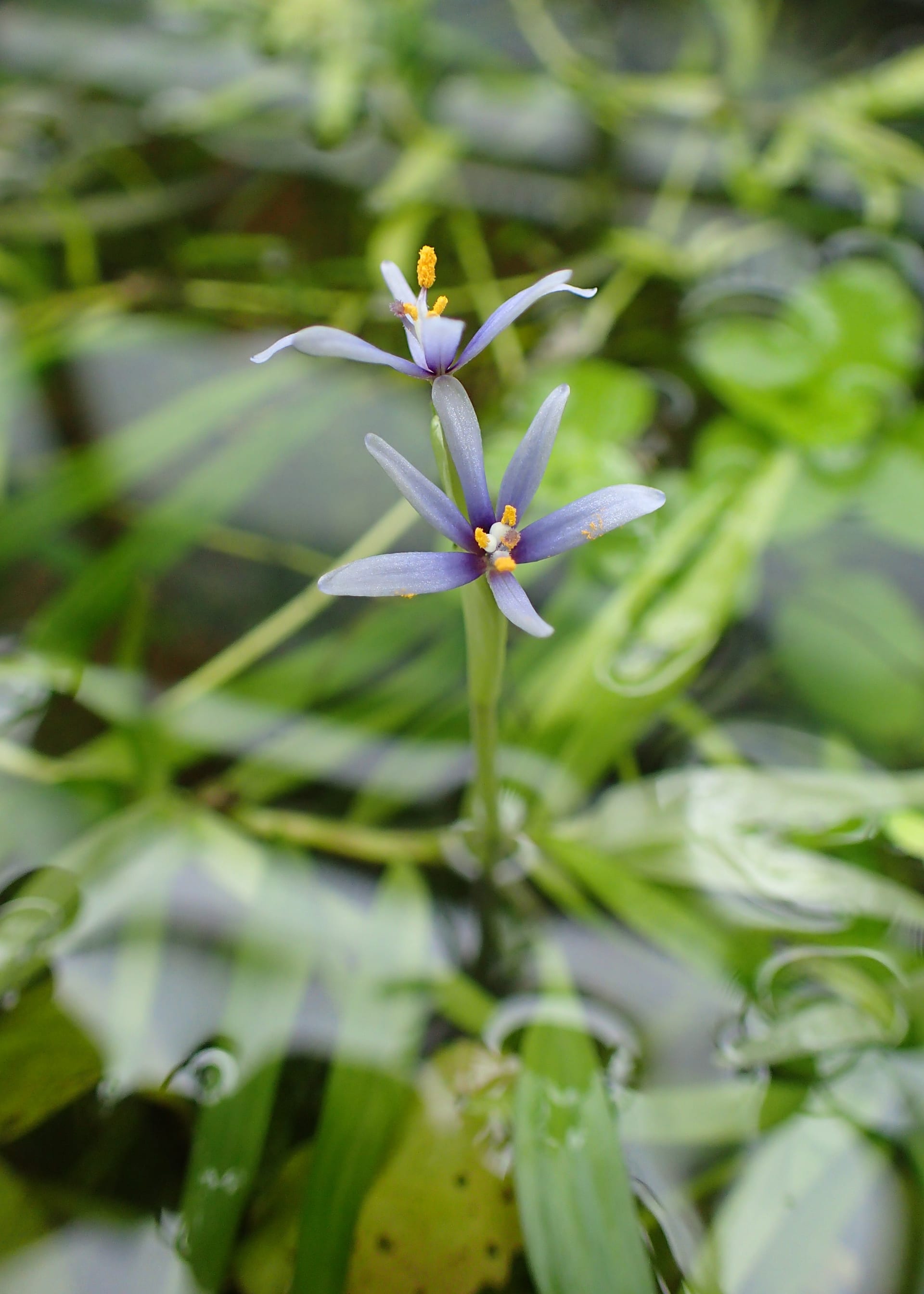 © Krzysztof Ziarnek, Kenraiz / CC BY-SA 4.0
Stargrass
Heteranthera zosterifolia
A Brazilian stem plant with narrow, bright green lanceolate leaves that branches freely into a bush. Easily trimmed to any height, it works from foreground to background, and shoots reaching the surface bear small blue flowers.
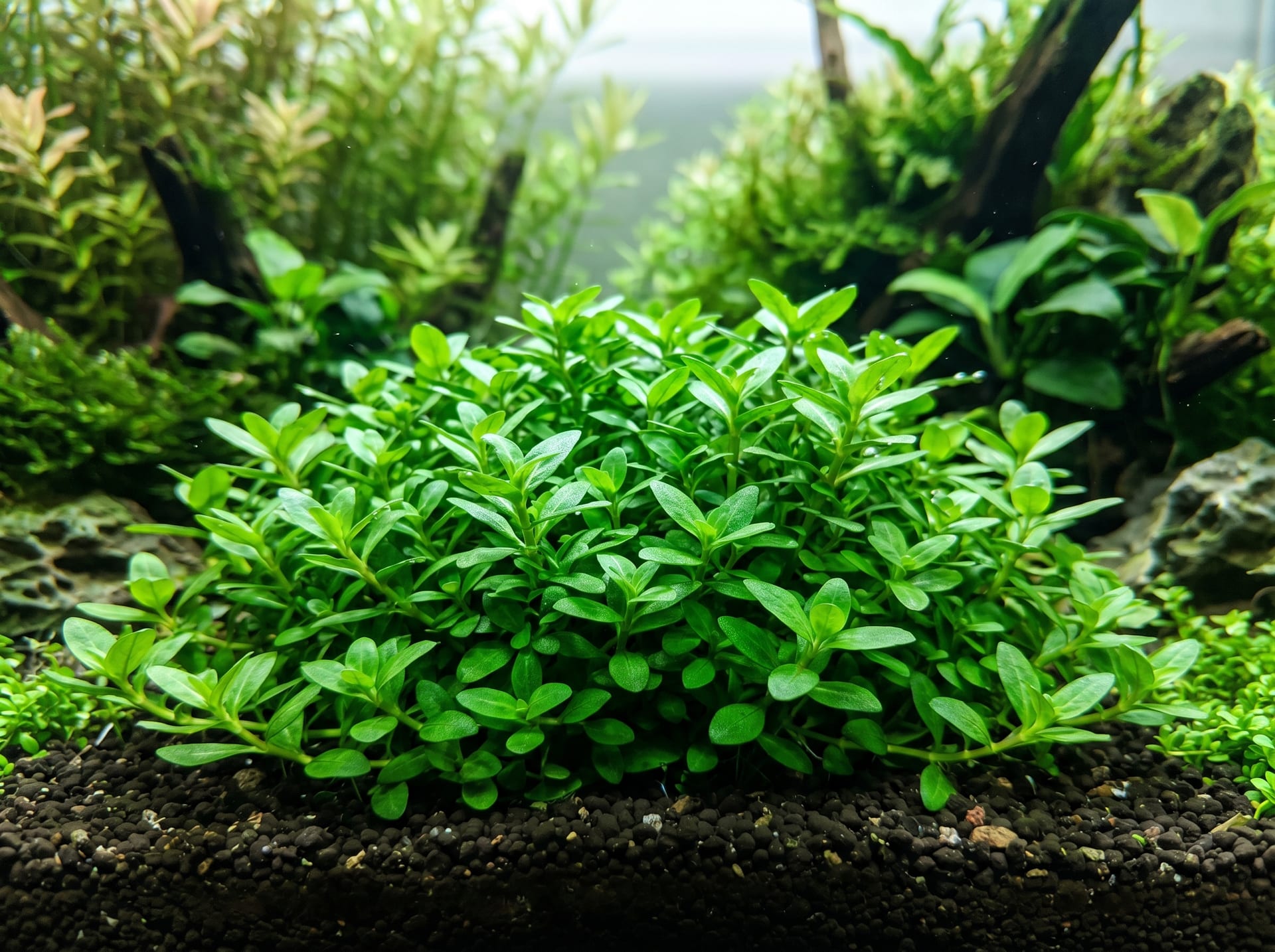
Staurogyne Repens
Staurogyne repens
South American low-growing plant for foreground to midground. Hardy and easy to grow, even without CO2. Forms beautiful green bushes when densely planted. Tolerates trimming well.
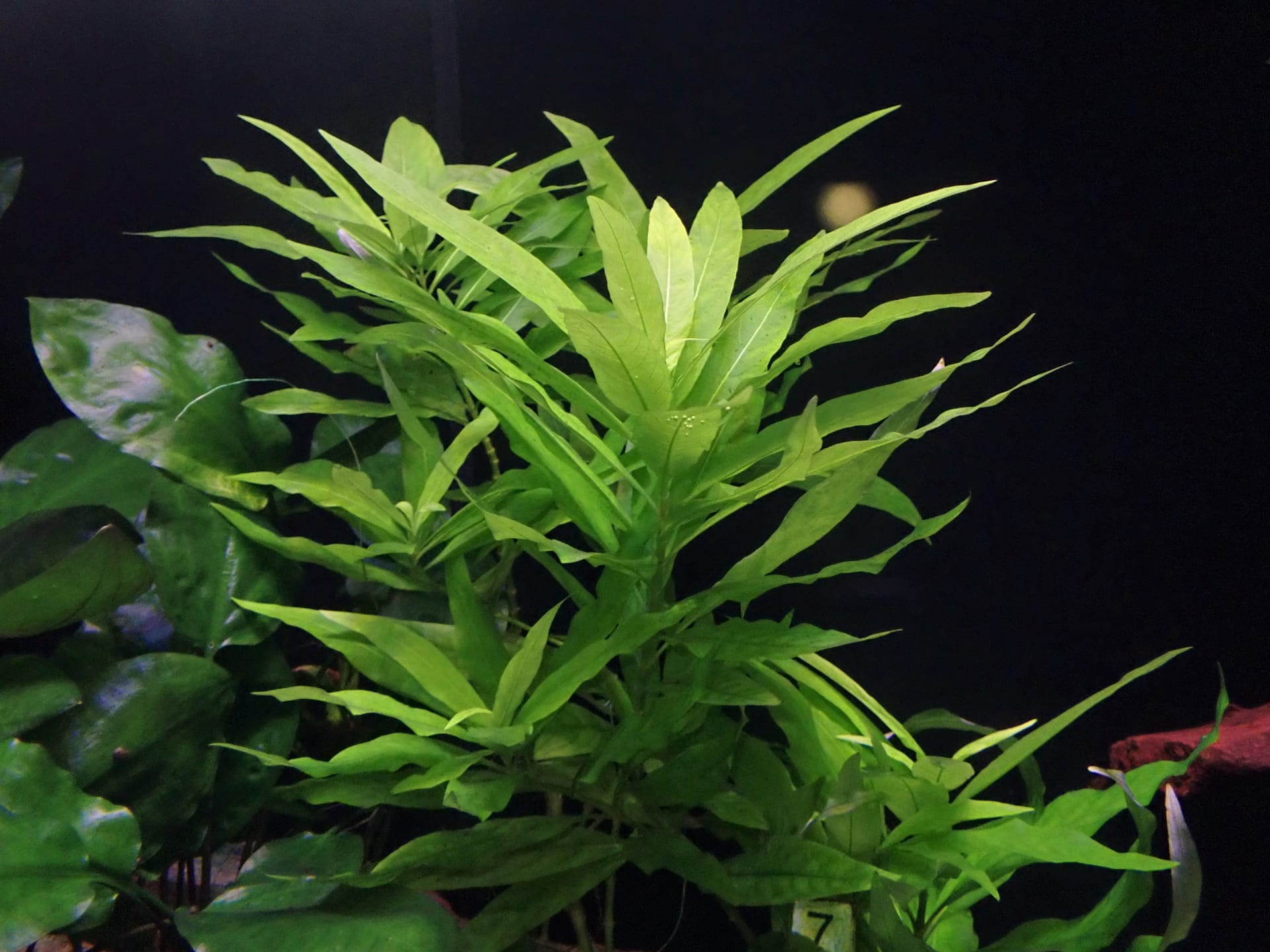 © Krzysztof Ziarnek, Kenraiz / CC BY-SA 4.0
Temple plant (Hygrophila corymbosa)
Hygrophila corymbosa
A large stem plant with long, broad, bright green opposite leaves. Fast-growing and bushier after trimming, it bears fragrant purple flowers when grown out of the water. Many forms such as 'Siamensis' exist.
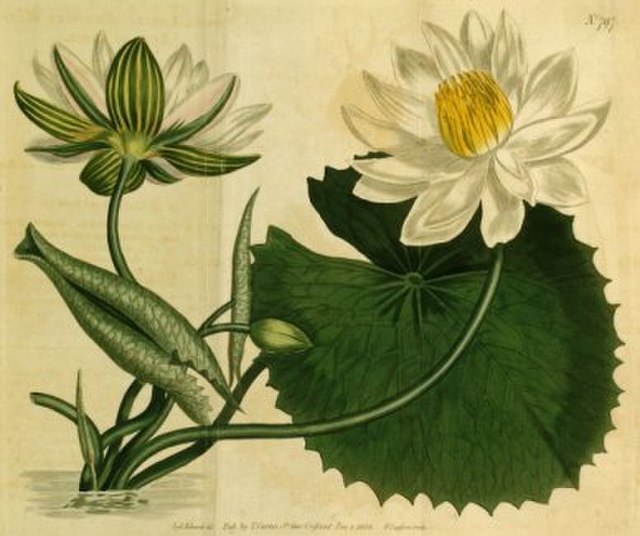
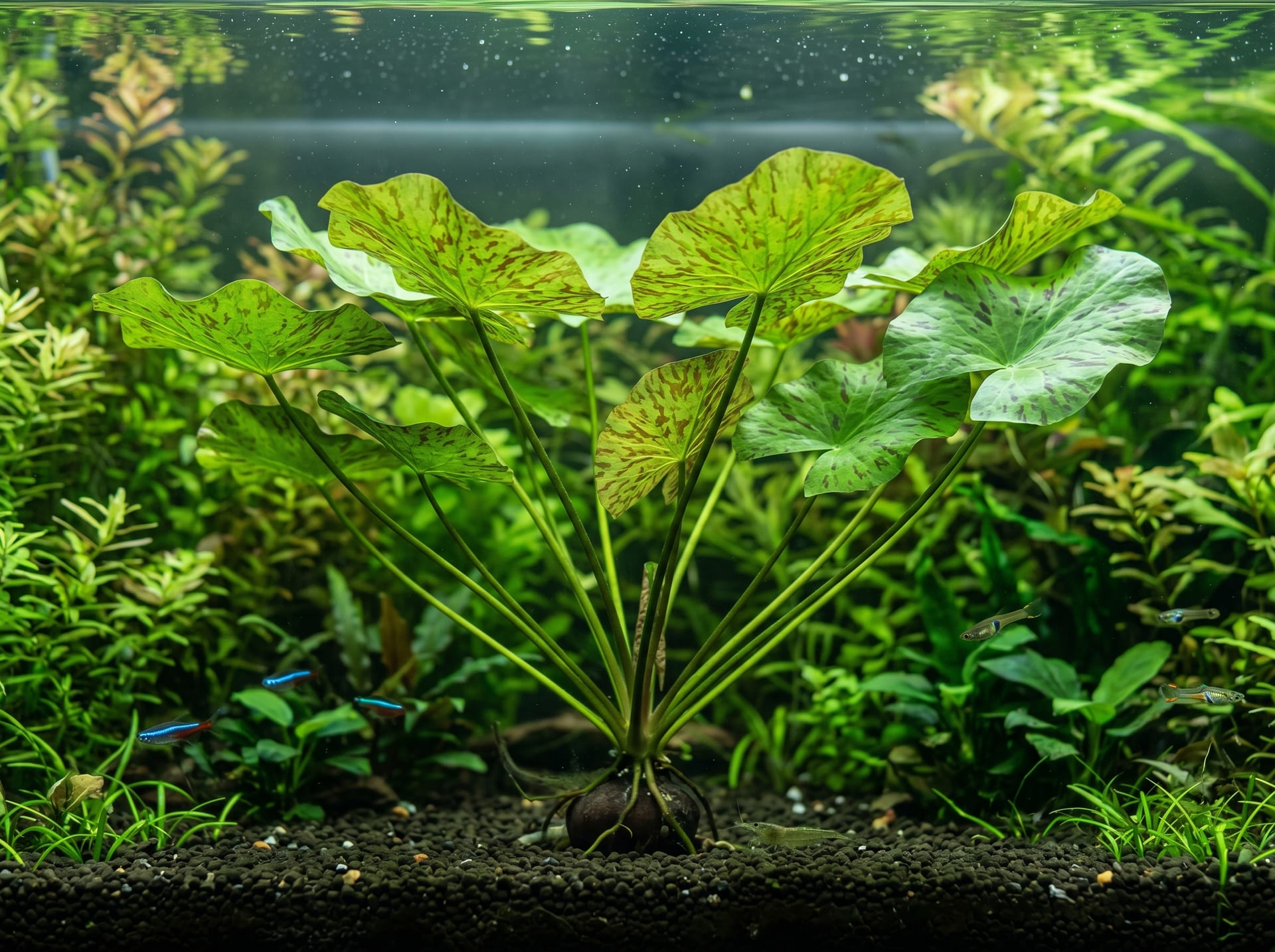
Tiger Lotus
Nymphaea lotus
A water lily relative with beautiful round leaves featuring red-brown spots. Creates accent in tank midground.
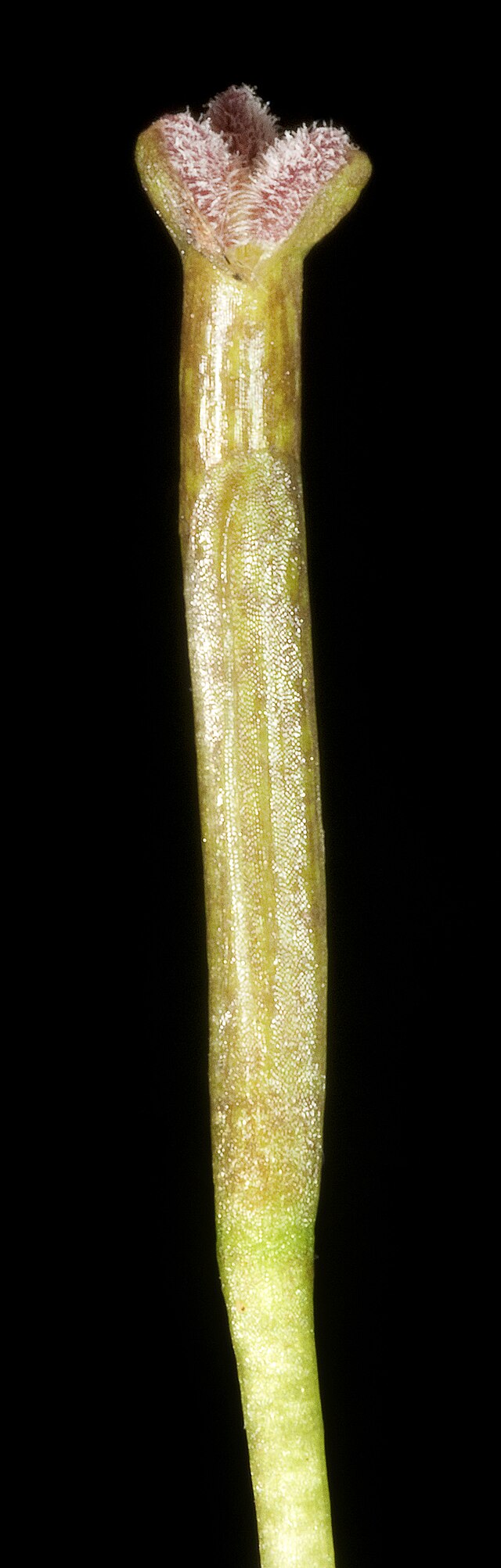 © Kevin Thiele from Perth, Australia / CC BY 2.0
Vallisneria Nana
Vallisneria nana
A small vallisneria with thin leaves swaying coolly. Hardy and easy for beginners to grow.
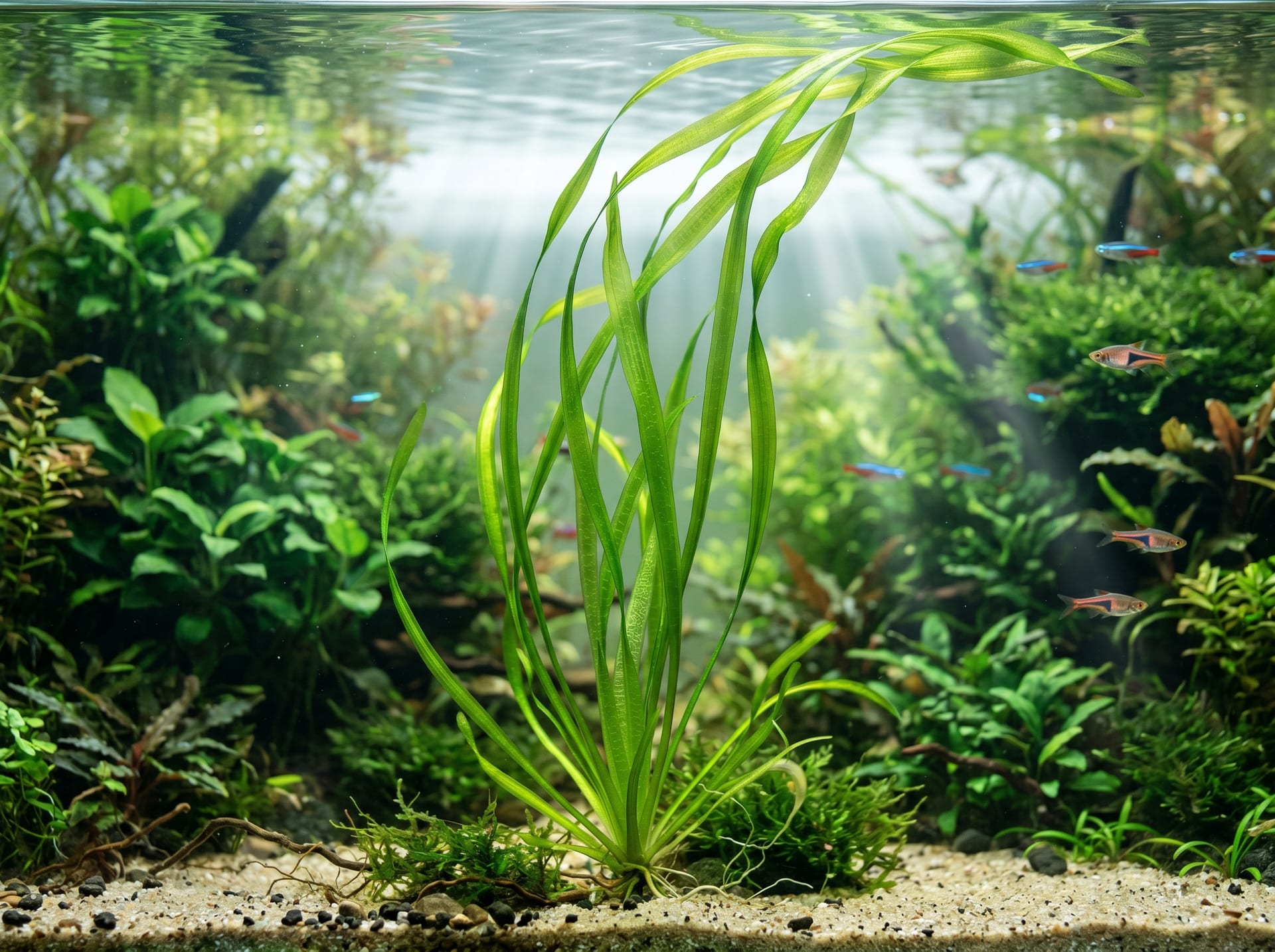
Vallisneria spiralis
Vallisneria spiralis
A background plant with long ribbon-like leaves that wave in water current. Propagates abundantly by runners, creating a natural river scene. Hardy in low light without CO2. Often used in goldfish tanks.
 © Vengolis / CC BY-SA 4.0
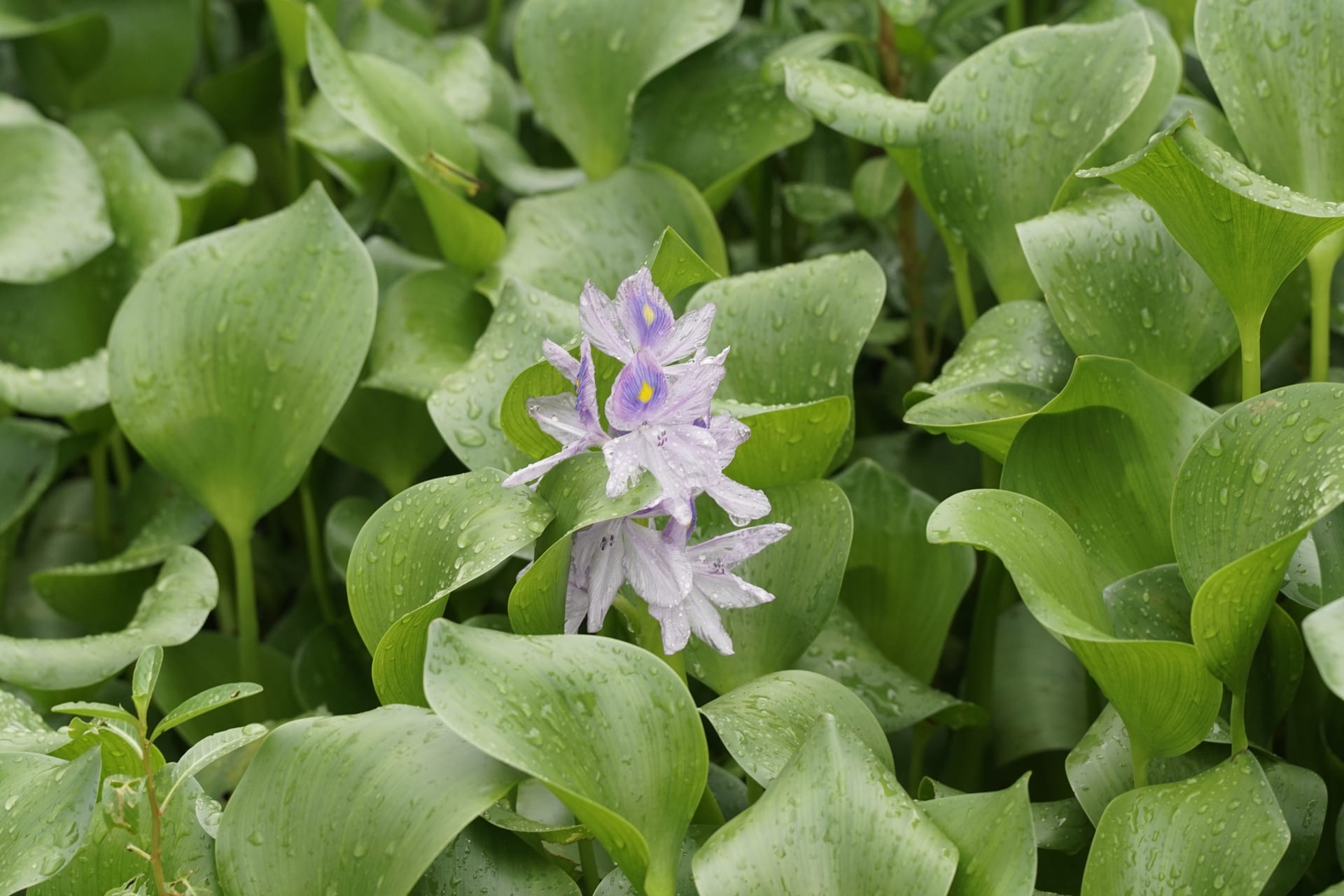
Water hyacinth
Pontederia crassipes
A South American floating plant buoyed by swollen, bladder-like petioles, bearing pale violet flowers in summer. Extremely prolific and designated a Priority Control Alien Species in Japan, so it must never escape into outdoor waters.
 © Krzysztof Ziarnek, Kenraiz / CC BY-SA 4.0
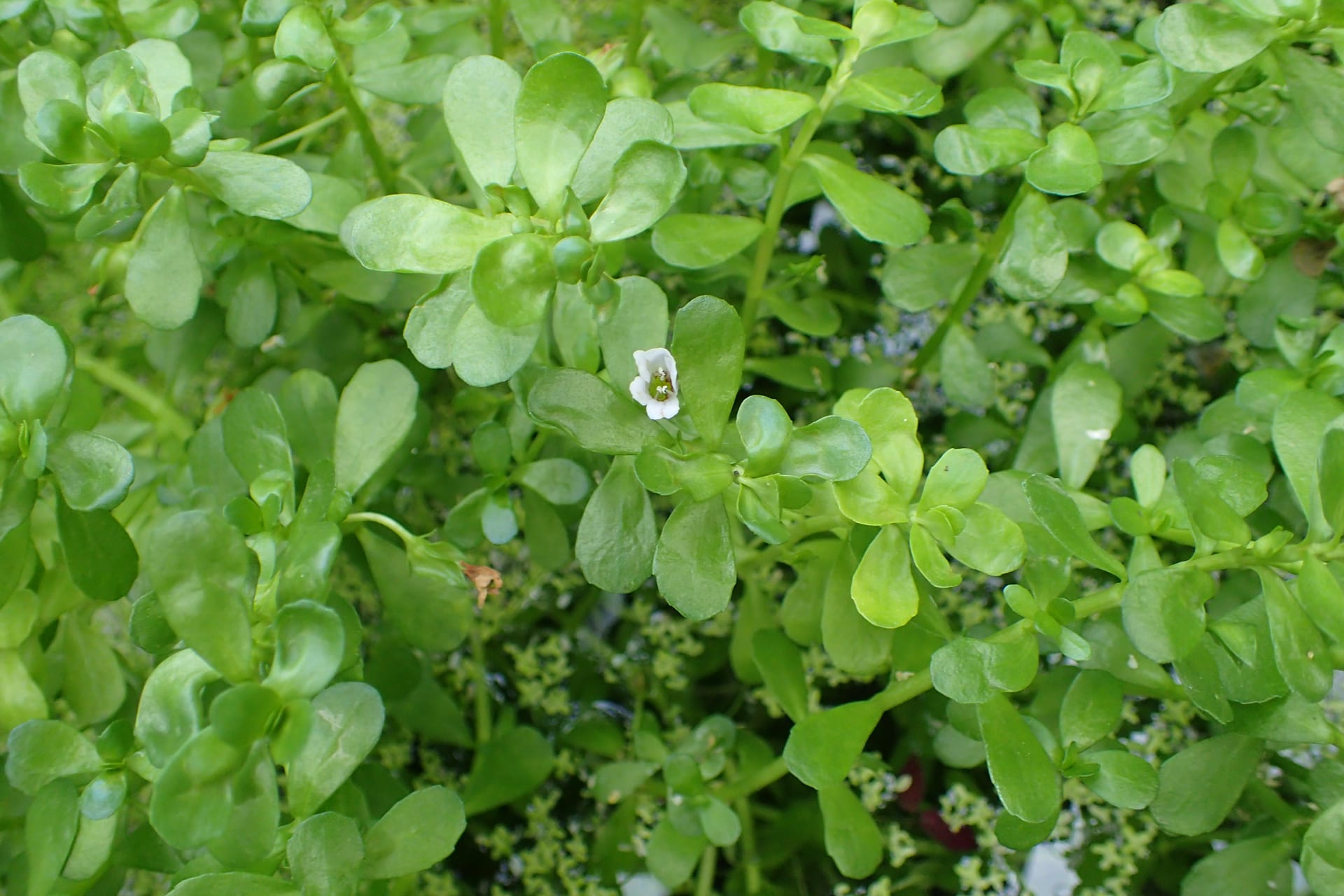
Water hyssop
Bacopa monnieri
A tough, bright green stem plant (Japanese name Otomeazena) with small, thick leaves that widen toward the tip, in opposite pairs. A staple that tolerates almost any water and grows without CO2; emersed it bears pale pink to white flowers.
 © Vengolis / CC BY-SA 4.0
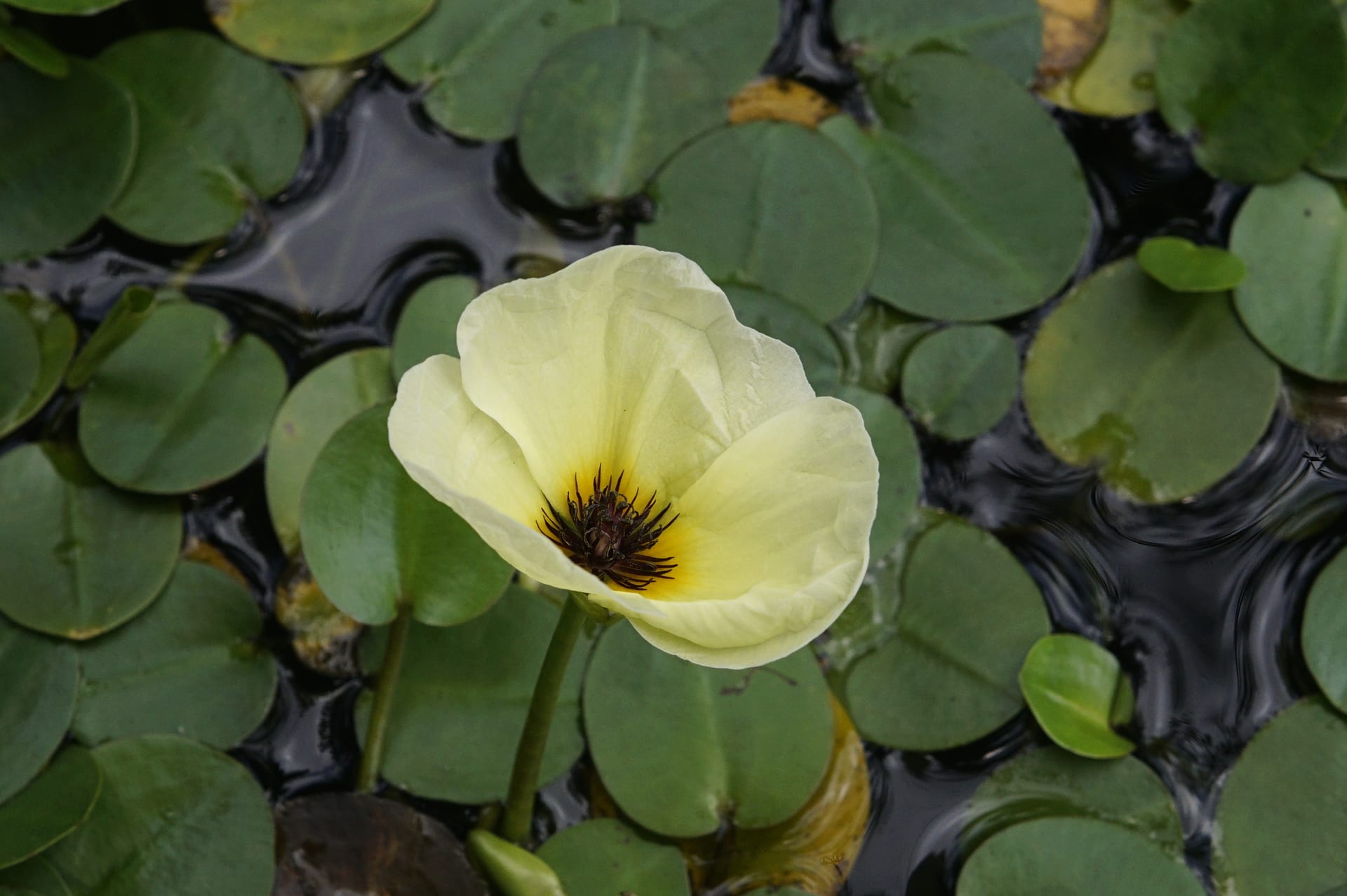
Water poppy
Hydrocleys nymphoides
A South American floating-leaved plant with round leaves that produces a succession of one-day, poppy-like yellow flowers. Called mizuhinageshi in Japanese. Cold-sensitive and listed as an alien species under consideration for control, so keep it out of the wild.
Related Content
Aquatic Plant FAQ
- How much do aquatic plants cost?
- Common Rotala and Anubias cost 300-1,000 yen, Bucephalandra 1,000-5,000 yen, and rare wild-collected specimens 5,000-20,000+ yen depending on species.
- Can beginners grow aquatic plants?
- Anubias Nana and Java Moss require no CO2 injection and grow in low light, making them ideal for beginners. Start with hardy shade-loving plants.
- What equipment is needed for aquatic plants?
- A tank, LED light, filter, and aqua soil are the basics. For advanced layouts, CO2 injection and high-performance lighting significantly improve growth and coloration.
- What should I check when buying aquatic plants?
- Ensure leaves are green and healthy, not melting or dying, and free of snails or pests. Tissue-cultured cups are pest-free and reliable.
- Why do aquatic plants die?
- Insufficient light, CO2, or nutrients are the main causes. Each species has different requirements, so matching the environment to your specific plants is essential.