Bonsai Encyclopedia
Encyclopedia of popular bonsai species with care guides, traits, and styling tips.
Featured Bonsai
Showing 21 of 137 species
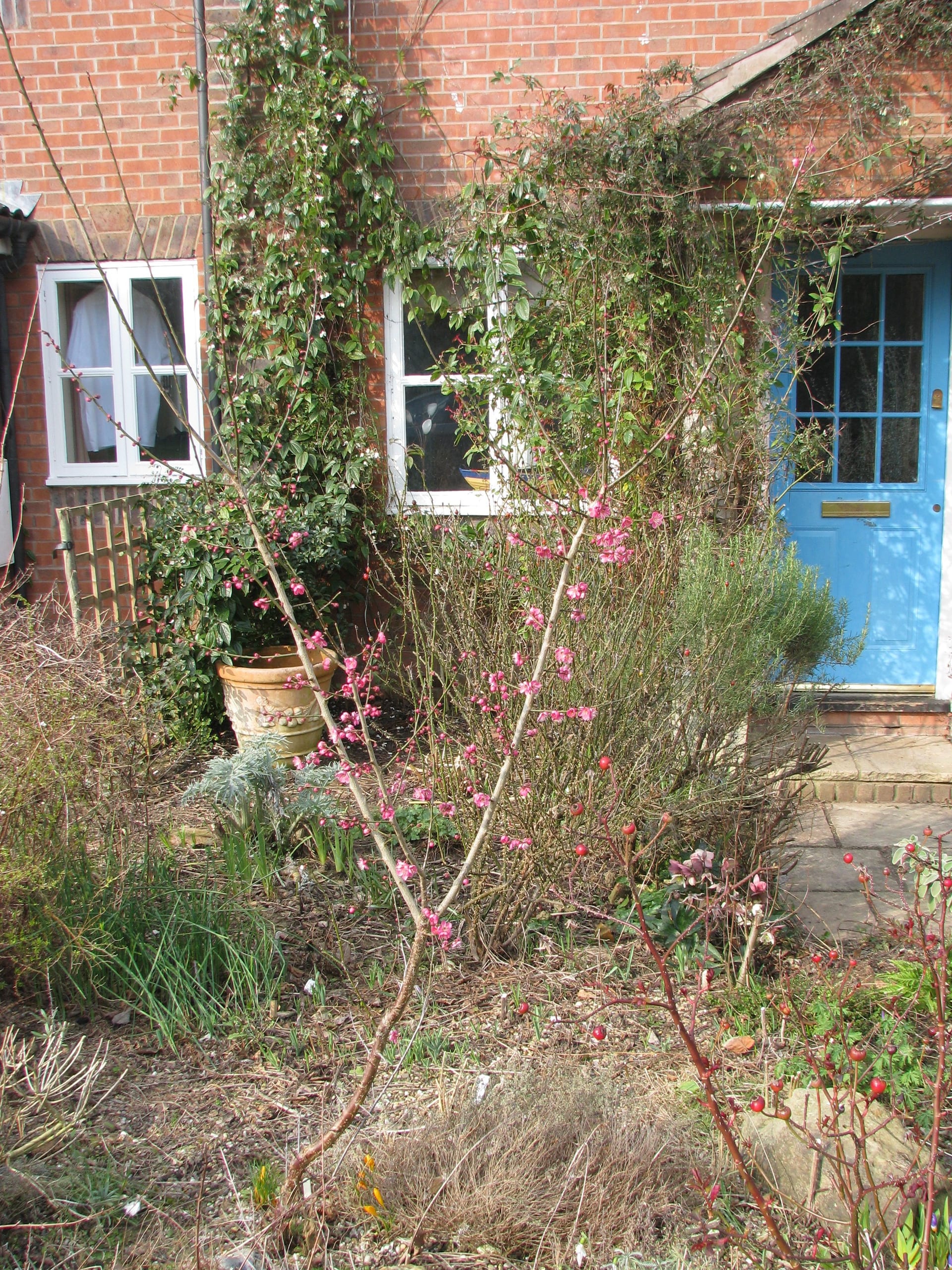 © peganum from Small Dole, England / CC BY-SA 2.0
Beni-chidori Japanese apricot
Prunus mume 'Beni-chidori'
A flowering ume with deep red single flowers in which some stamens have turned petal-like, said to look like plovers (chidori) in flight. It blooms late among flowering ume and had no pollen in a prefectural trial.
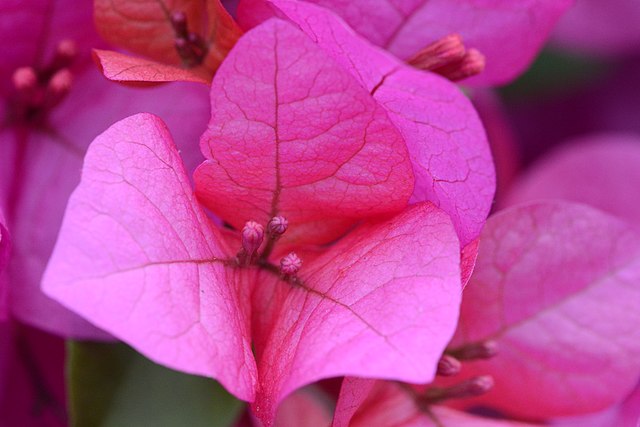 © Clint Budd / CC BY 2.0
Bougainvillea
Bougainvillea
Iconic tropical flowering plant. The colorful parts are bracts, not flowers. Best in warm regions but can be grown indoors in cooler areas. Thick trunks add character.
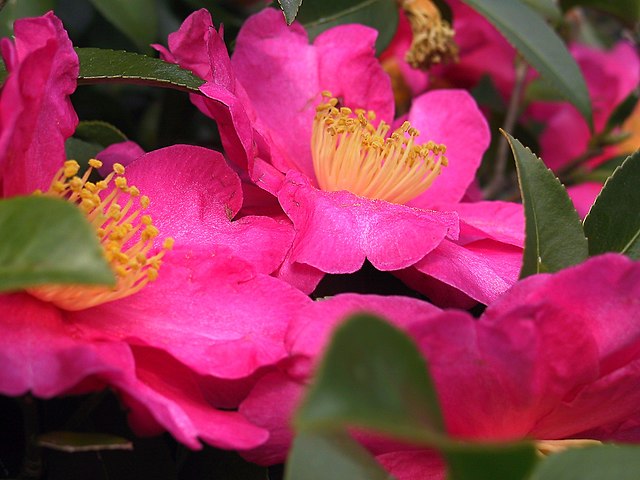 © junichiro aoyama from Kyoto, Japan / CC BY 2.0
Camellia
Camellia japonica
Iconic Japanese evergreen flowering tree. Blooms in winter to spring in red, white, and pink varieties. Glossy dark green leaves complement flowers perfectly in bonsai.
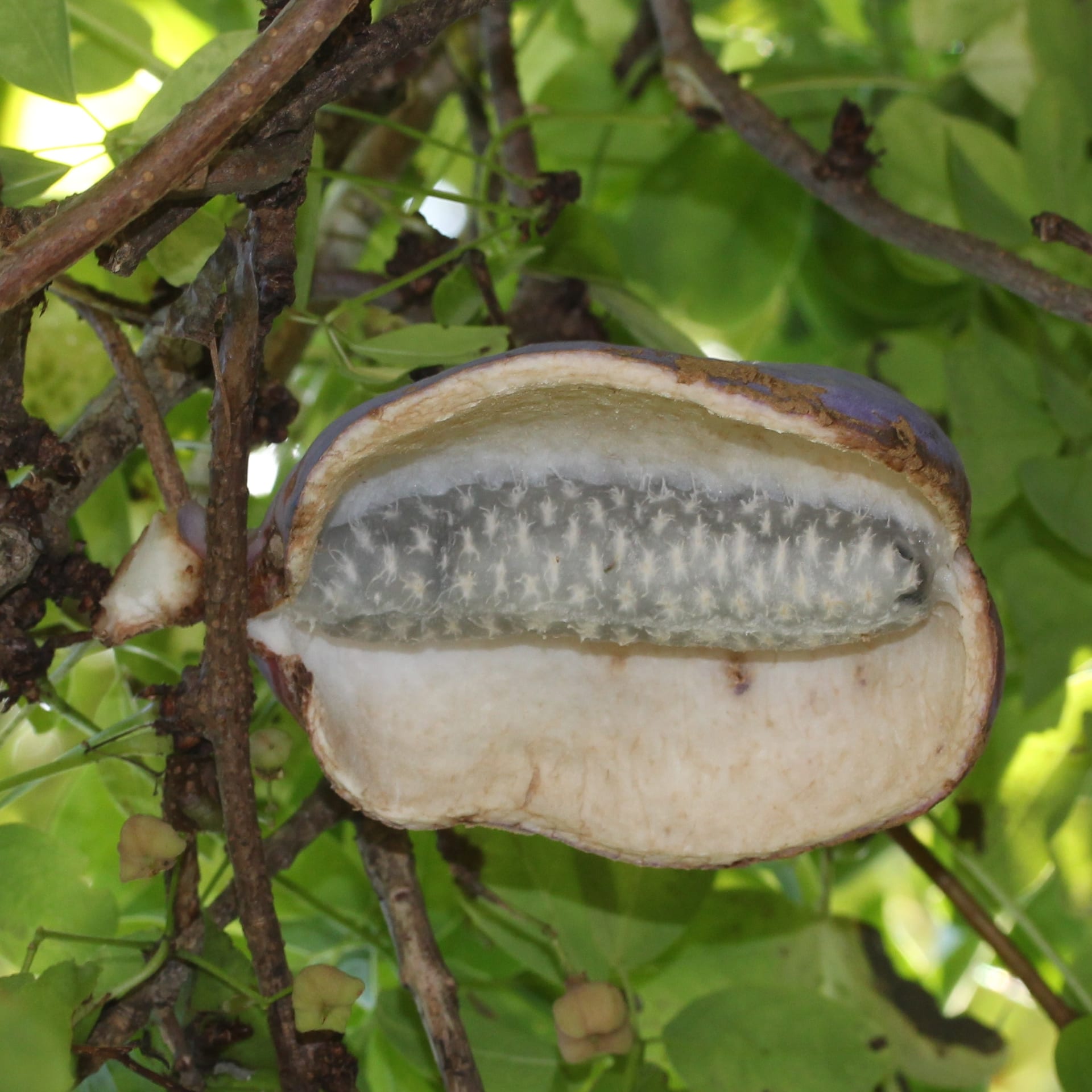 © Alpsdake / CC BY-SA 4.0
Chocolate vine
Akebia quinata
A deciduous climber with palmate leaves of five leaflets, pale purple flowers in spring and purple fruits 7–10 cm long in autumn that split lengthwise when ripe. It is self-incompatible, so fruit needs pollen from another plant.
 © 松岡明芳 / CC BY-SA 4.0
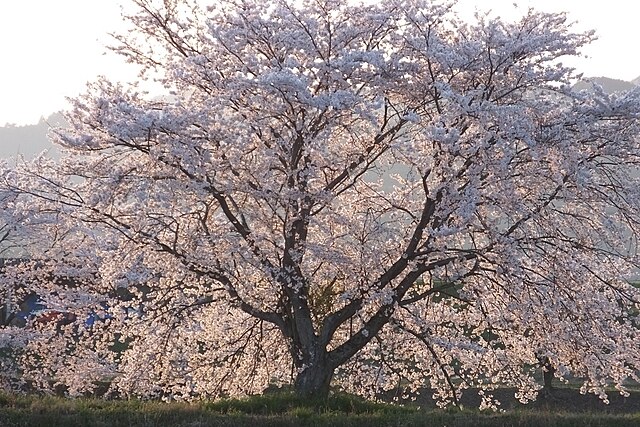
Flowering Cherry
Japans iconic flowering tree. Spring blooms are spectacularly beautiful even as bonsai. Compact varieties like Fuji-zakura suit bonsai. Post-bloom care determines next years flowering.
 © Σ64 / CC BY 3.0
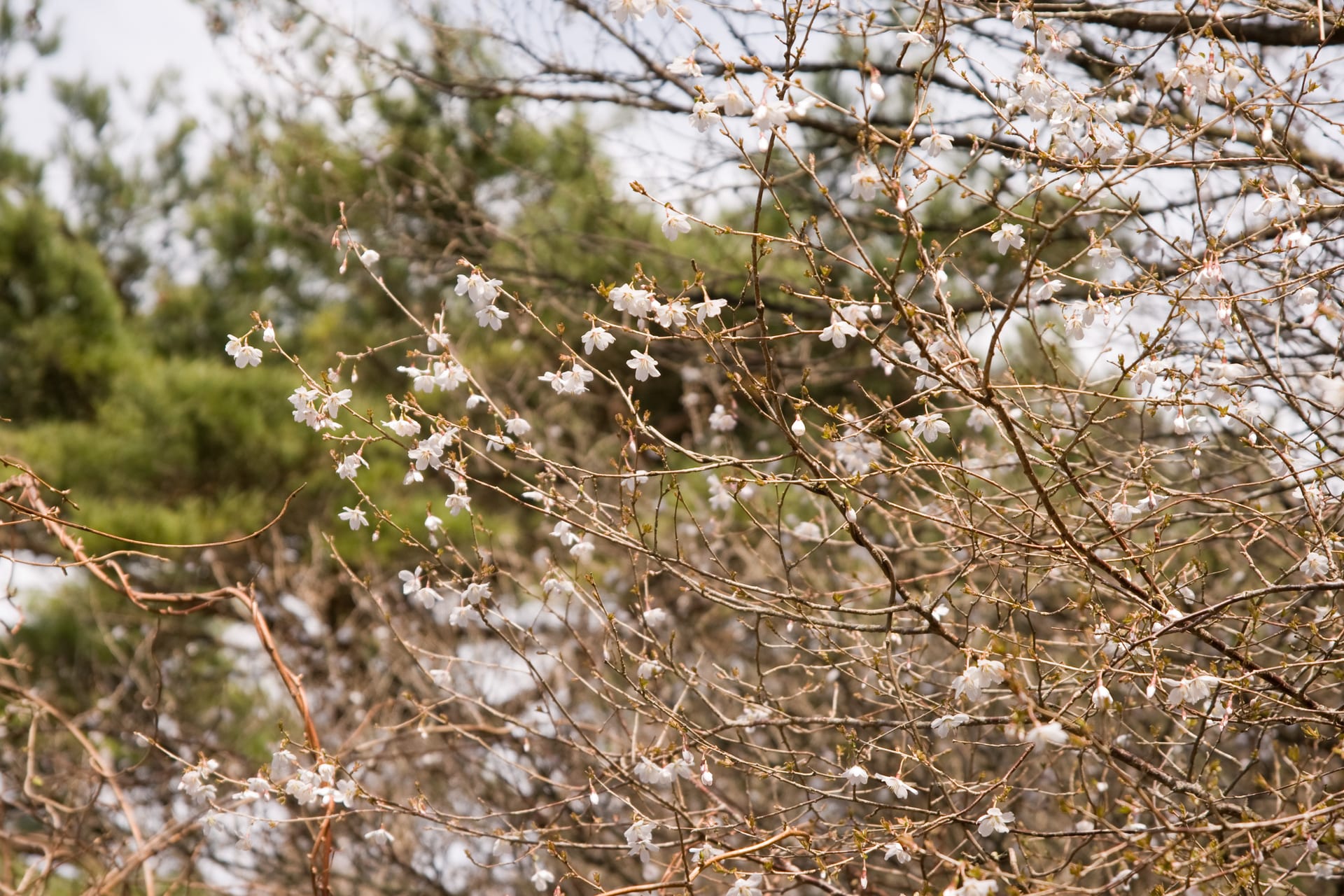
Fuji cherry
Prunus incisa
Another name for the mame-zakura, a small wild cherry endemic to Japan and common around Mt. Fuji and Hakone. Small in flower, leaf and stature, it bears little white to pale pink, nodding flowers even on short trees, so it blooms well as bonsai.
 © Queerbubbles / CC BY-SA 3.0
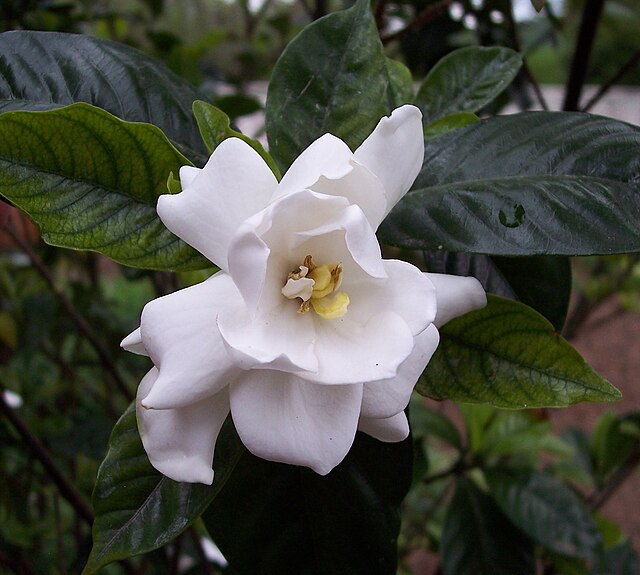
Gardenia
Gardenia jasminoides
Evergreen shrub with pure white fragrant flowers. Single-flower types bear orange fruit in autumn, enjoying both blooms and berries. Popular from shohin to mini bonsai.
 © Kakidai / CC BY-SA 3.0
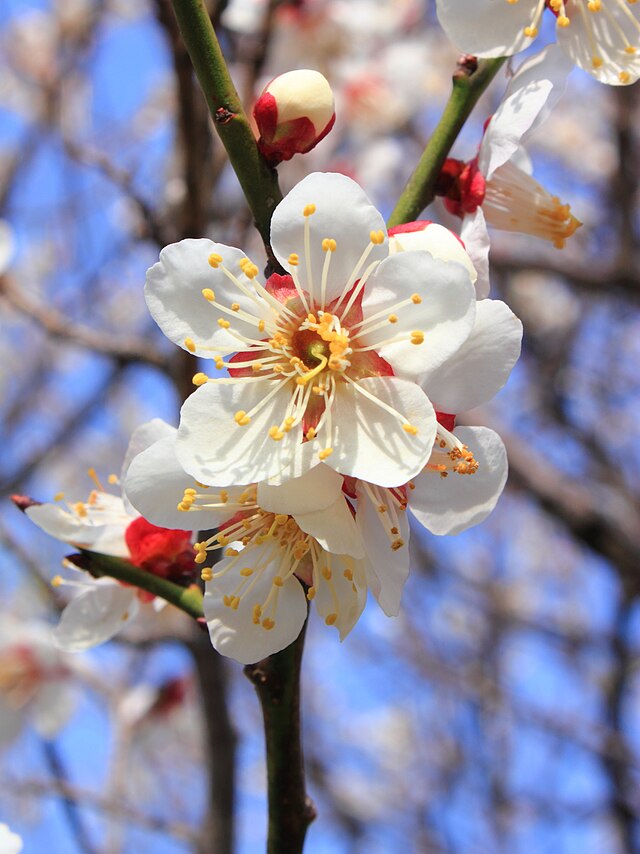
Japanese Apricot
Prunus mume
The quintessential flowering bonsai, blooming with fragrant flowers in early spring. Aged bark and elegant blossoms embody traditional Japanese beauty. Cherished since ancient times.
 © Ans / CC BY-SA 3.0
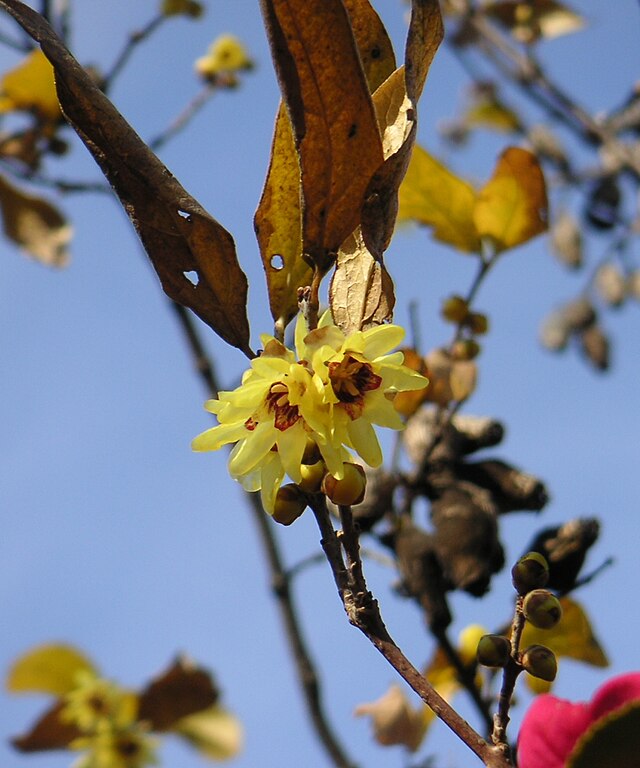
Japanese Wintersweet
Chimonanthus praecox
Flowering bonsai with translucent waxy yellow blooms in midwinter. Sweet fragrance drifts through winter gardens. Precious species blooming when few others do. Improves with age.
 © KENPEI / CC BY-SA 3.0
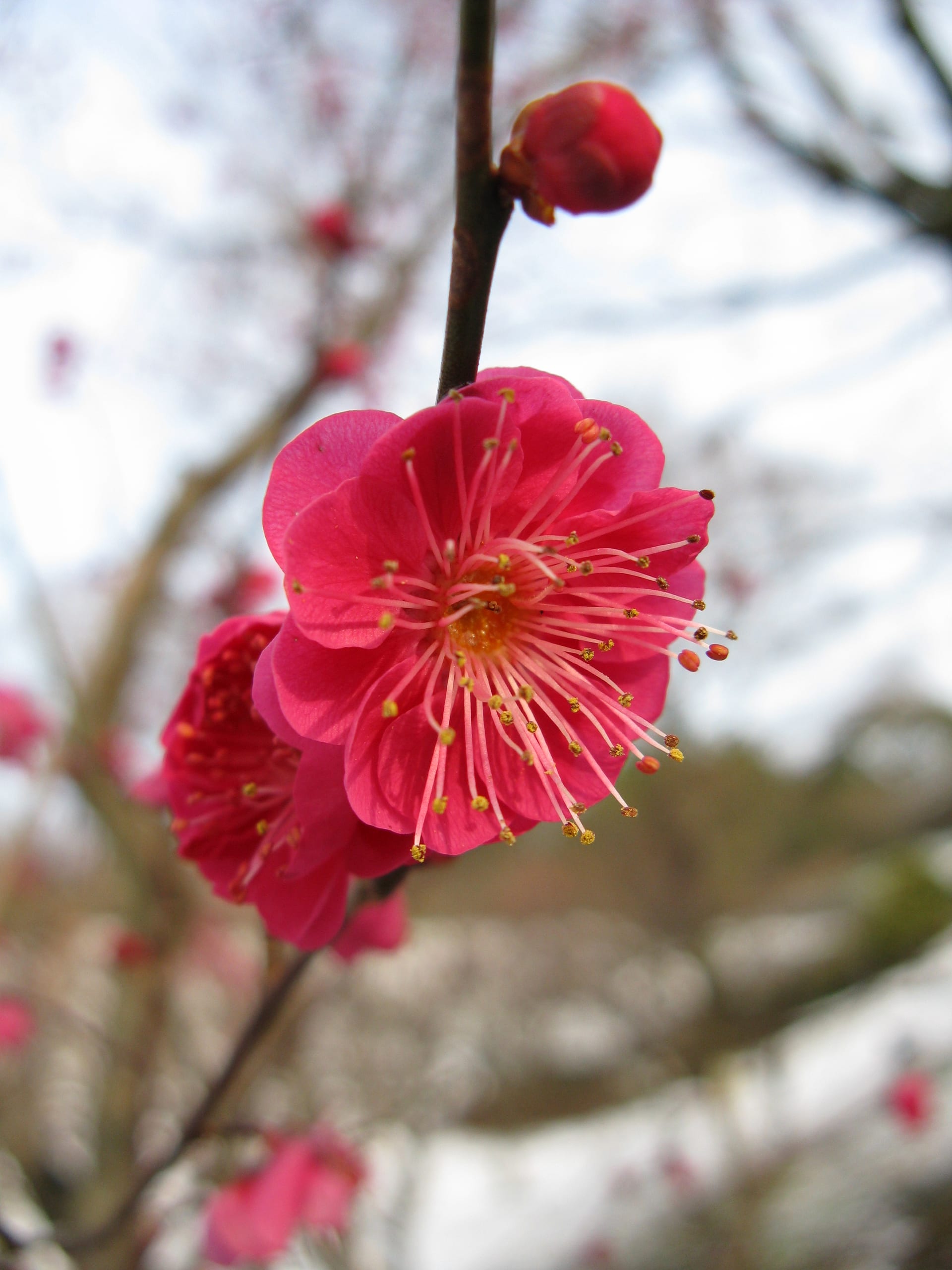
Kagoshima-beni Japanese apricot
Prunus mume 'Kagoshima-beni'
A hibai-group cultivar regarded as the classic red ume. It bears deep red, double, medium flowers, and even the pith of thin twigs and the leaf stalks are deep red. Fragrant and a standard red ume for bonsai.
 © Marisa DeMeglio from NYC, USA / CC BY 2.0
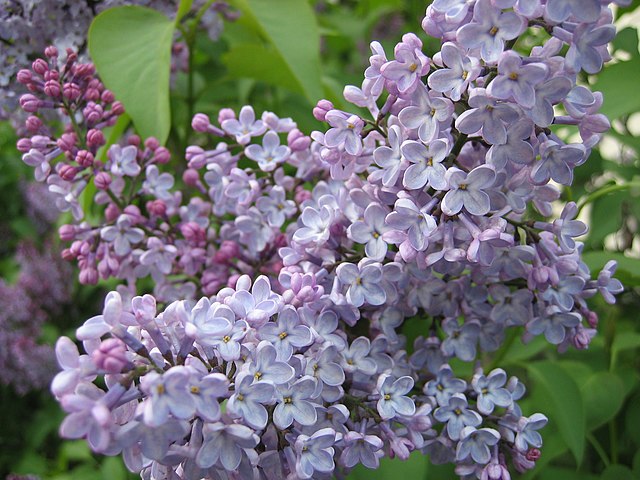
Lilac
Syringa vulgaris
Fragrant purple flowers are the main attraction. Suited for cool regions like Hokkaido and Tohoku. Dwarf varieties work well for small bonsai. Enjoy spring fragrance up close.
 © KENPEI / CC BY-SA 3.0
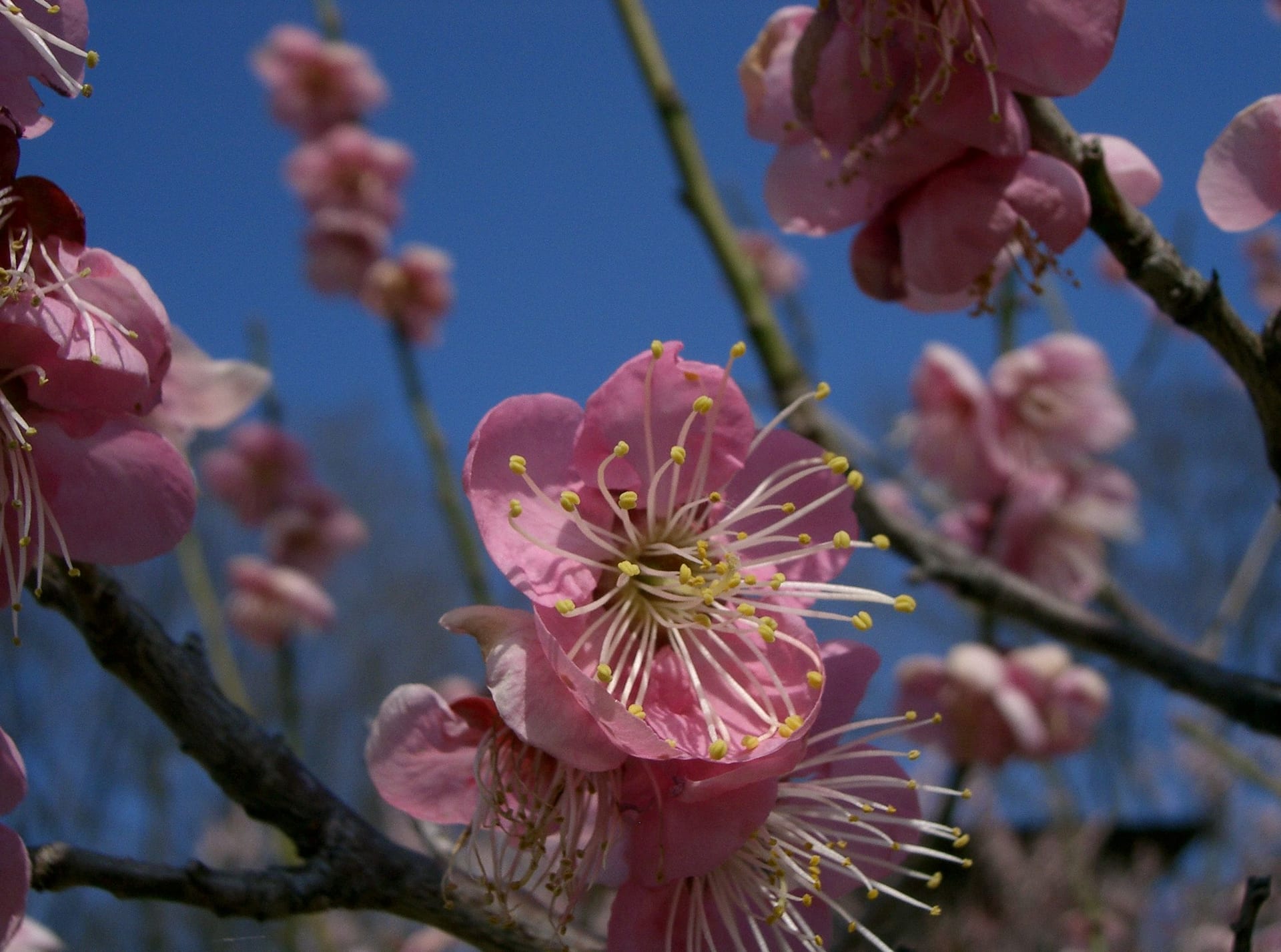
Michishirube Japanese apricot
Prunus mume 'Michishirube'
A flowering ume said to have been planted along old highways as a waymark for travellers. Large single flowers described as pale pink to red. A prefectural trial found it thickens its trunk well and grows very vigorously.
Omoi-no-mama Japanese apricot
Prunus mume 'Omoi-no-mama'
A late yabai-group cultivar that bears double flowers in red, white, pale pink and striped on one tree, even on the same branch. Also called Rinchigai. Where each colour appears changes every year, and some years bring a single colour.
 © albert kok / CC BY 3.0
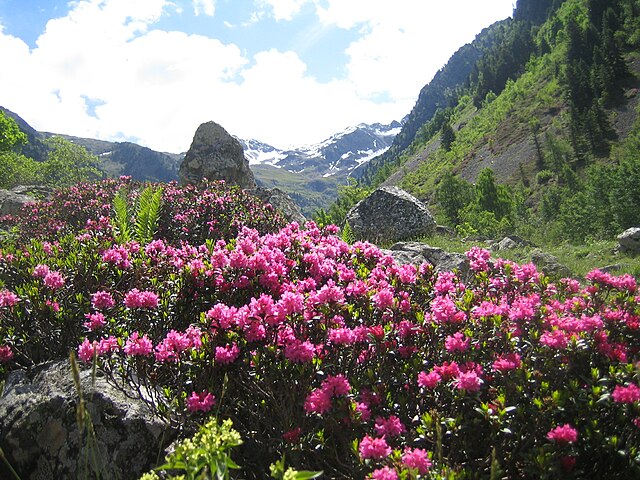
Rhododendron
Rhododendron
Evergreen shrub with gorgeous flowers. Large flower clusters color spring. Alpine varieties prefer cool conditions, requiring some experience. Post-bloom care is crucial.
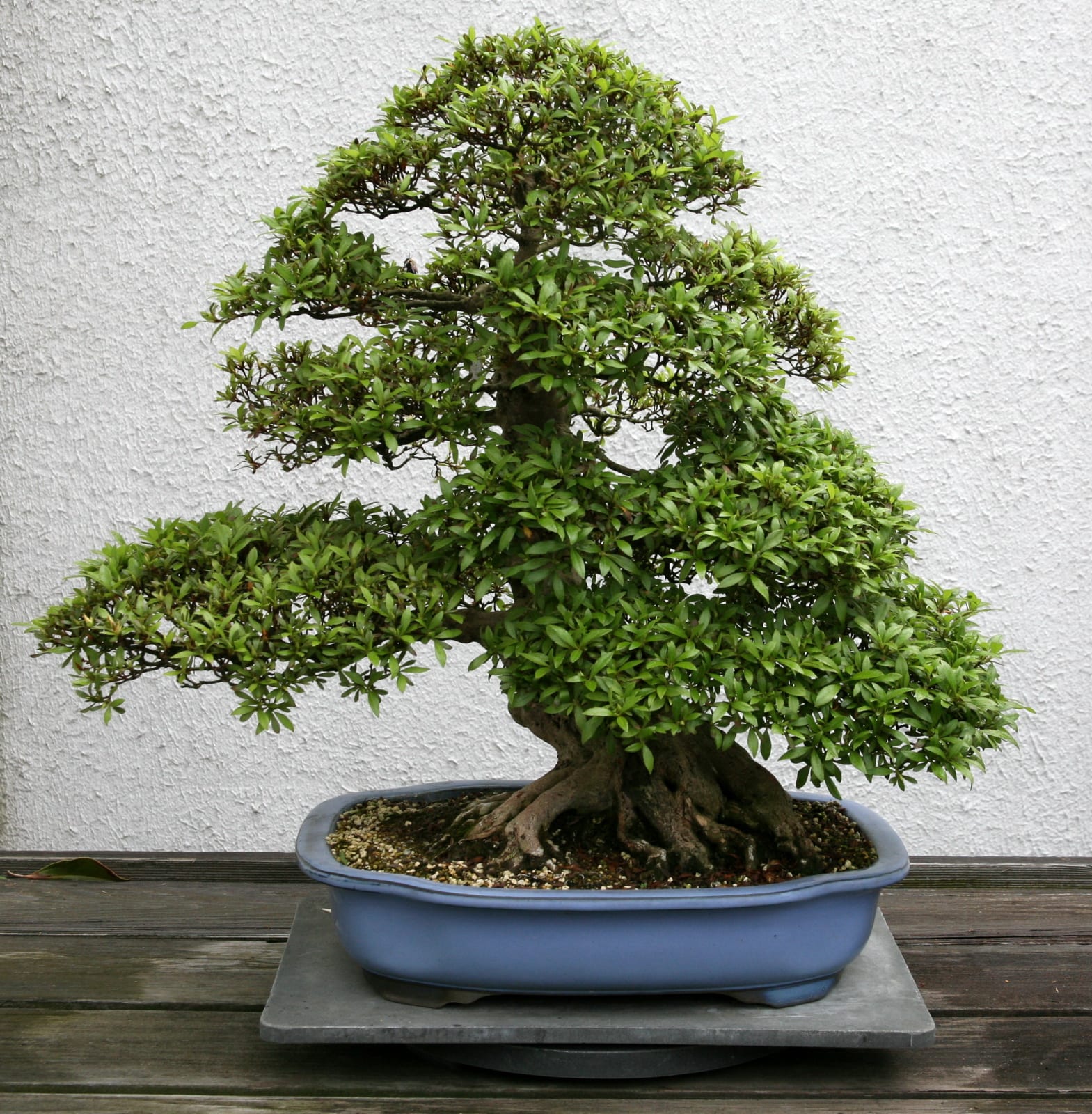
Satsuki azalea 'Juko'
Rhododendron indicum 'Juko'
A satsuki bred from 'Kotobuki' × 'Gyoten'. Medium flowers of pinkish purple with red-purple stripes, white centres or pure white on one plant; both petals and leaves are thick. Esteemed as a classic and parent of many named sports.
 © Cliff from Arlington, Virginia, USA / CC BY 2.0
Satsuki azalea 'Kozan'
Rhododendron indicum 'Kozan'
An old satsuki of unknown parentage grown since before the Meiji era, with small, pale salmon-pink single flowers. Its slightly narrow small leaves, good branching and vigorous budding make it easy to train as bonsai.
Satsuki azalea 'Shinnyo-no-tsuki'
Rhododendron indicum 'Shinnyo-no-tsuki'
A satsuki with large purple flowers whose centres fade to white. Said to come from 'Zetsurin' × 'Adesugata' in the early Showa era, it has fairly large leaves and is usually grown as a larger tree to show off the flowers.
 © Alpsdake / CC BY-SA 4.0
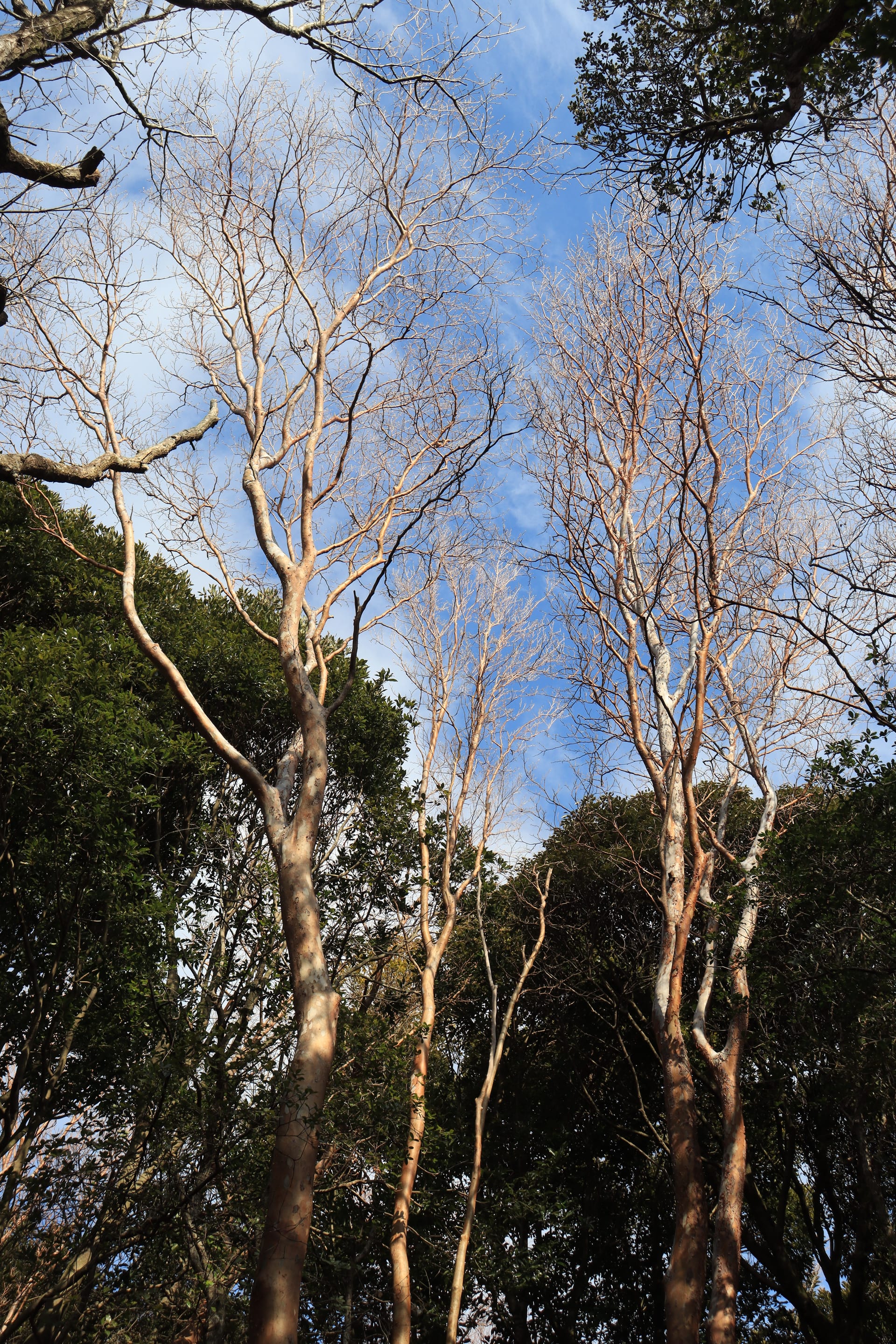
Tall stewartia
Stewartia monadelpha
A deciduous tree of the camellia family whose smooth, red-brown trunk is counted among Japan's three most beautiful barks. Small white flowers 1.5–2 cm across nod in early summer, and leaves turn red in autumn. Smaller in flower and leaf than Stewartia pseudocamellia.
 © KENPEI / CC BY-SA 3.0
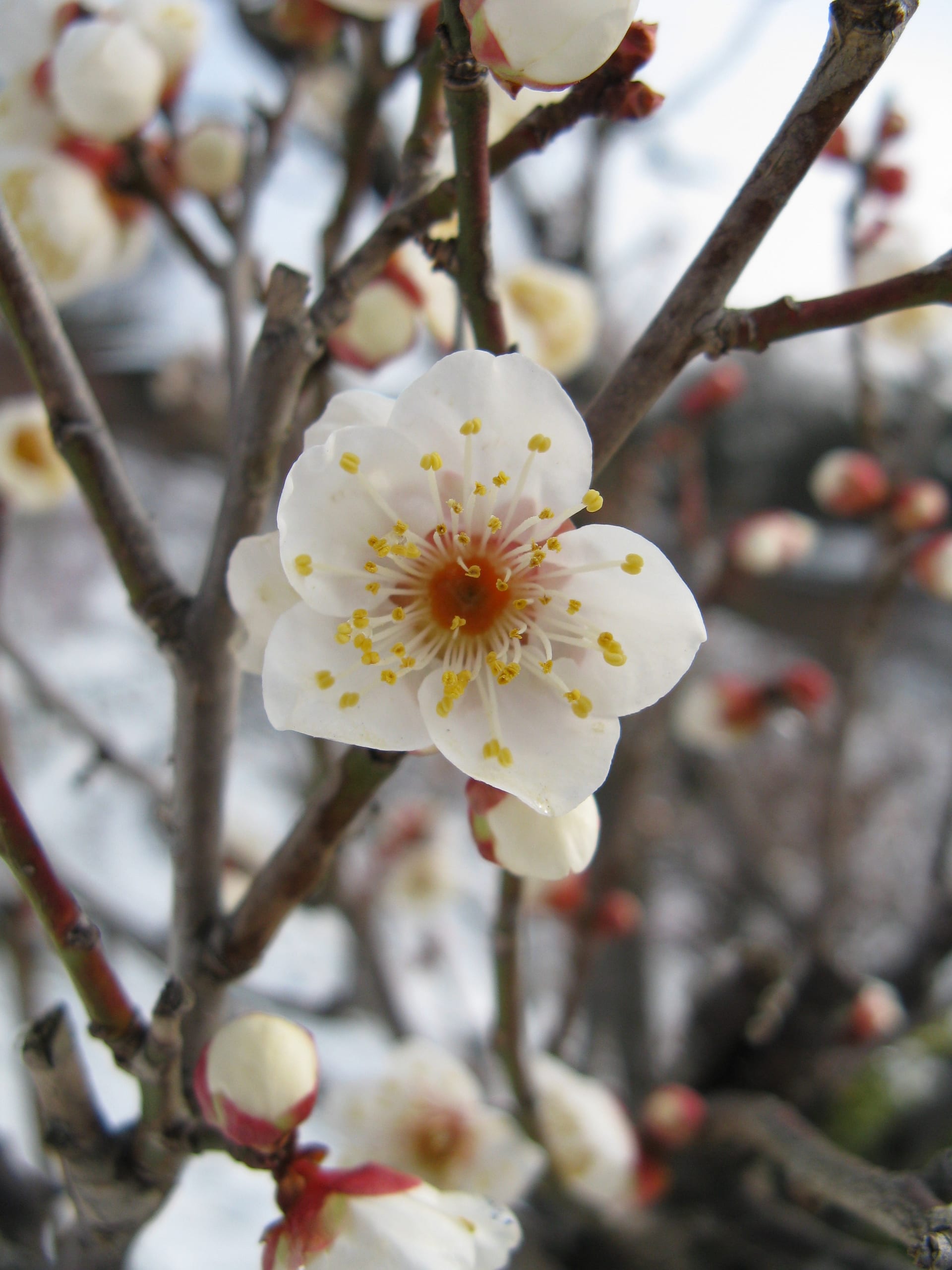
Toji Japanese apricot
Prunus mume 'Toji'
A white yabai-group ume named for starting to bloom around the winter solstice (toji). It bears single white medium flowers very early and in great numbers, and thickens its trunk well. Also called Toji-bai; a staple starter plant for ume bonsai.
 © 3268zauber / CC BY-SA 3.0
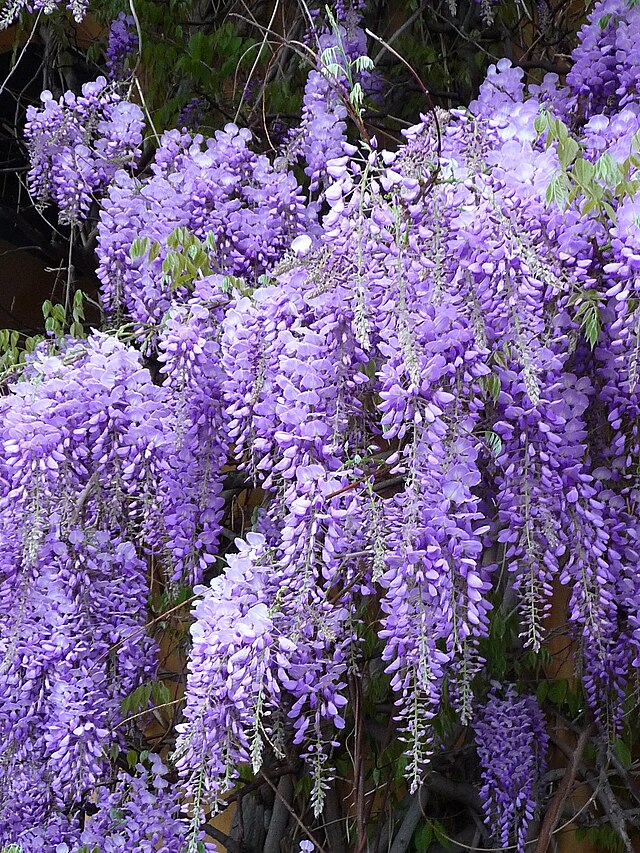
Wisteria
Wisteria floribunda
Elegant flowering bonsai with cascading purple flower clusters in spring. Cascade or display-shelf styles maximize bloom beauty. Flowering improves with age.
 © KENPEI / CC BY-SA 3.0
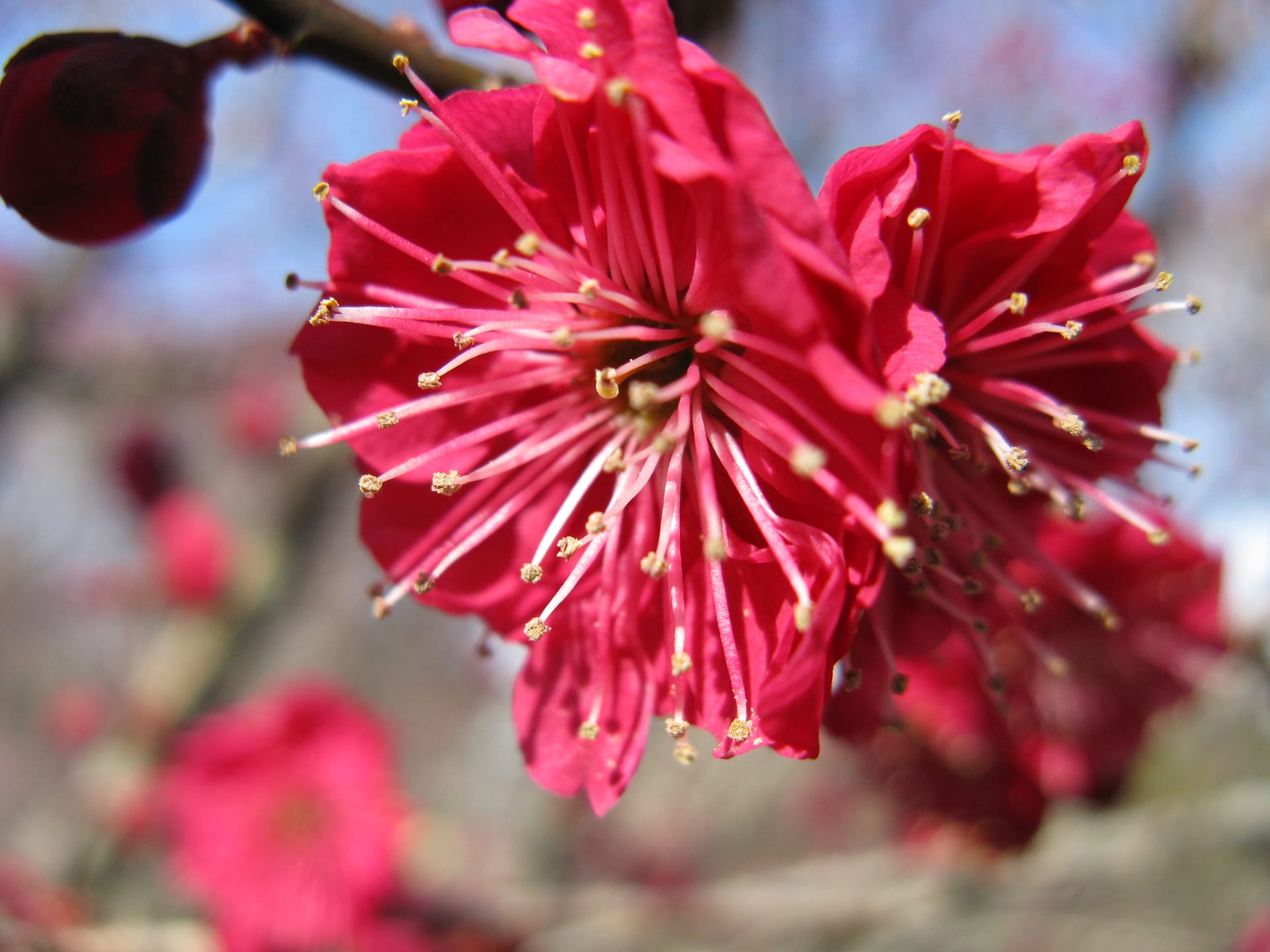
Yae-kanko Japanese apricot
Prunus mume 'Yae-kanko'
One of the kanbai ('winter ume') that bloom from early January to early February, bearing deep red double flowers very early. It was the earliest of seven cultivars to flower in a prefectural trial.
Related Content
Bonsai FAQ
- How much do bonsai cost?
- Mini bonsai cost 1,000-5,000 yen, medium bonsai 5,000-50,000 yen, and masterpiece-class large bonsai hundreds of thousands to millions of yen depending on age, size, and form.
- Can beginners start bonsai?
- Starting with small Japanese maple, Shimpaku juniper, or Japanese white pine is recommended. With basic watering and 1-2 annual prunings, beginners can fully enjoy bonsai.
- How long do bonsai live?
- With proper care, bonsai can live for hundreds of years. Japan has many bonsai several centuries old, valued as art pieces passed down across generations.
- What should I check when buying bonsai?
- Look at root spread, trunk movement, and branch balance. Beginners may enjoy starting with affordable raw material trees and shaping them, rather than finished specimens.
- What's most important for bonsai care?
- Daily watering is the most important task. Water thoroughly when the soil surface dries, twice daily in summer (morning and evening). Keep outdoors in a spot with good airflow and sunlight.