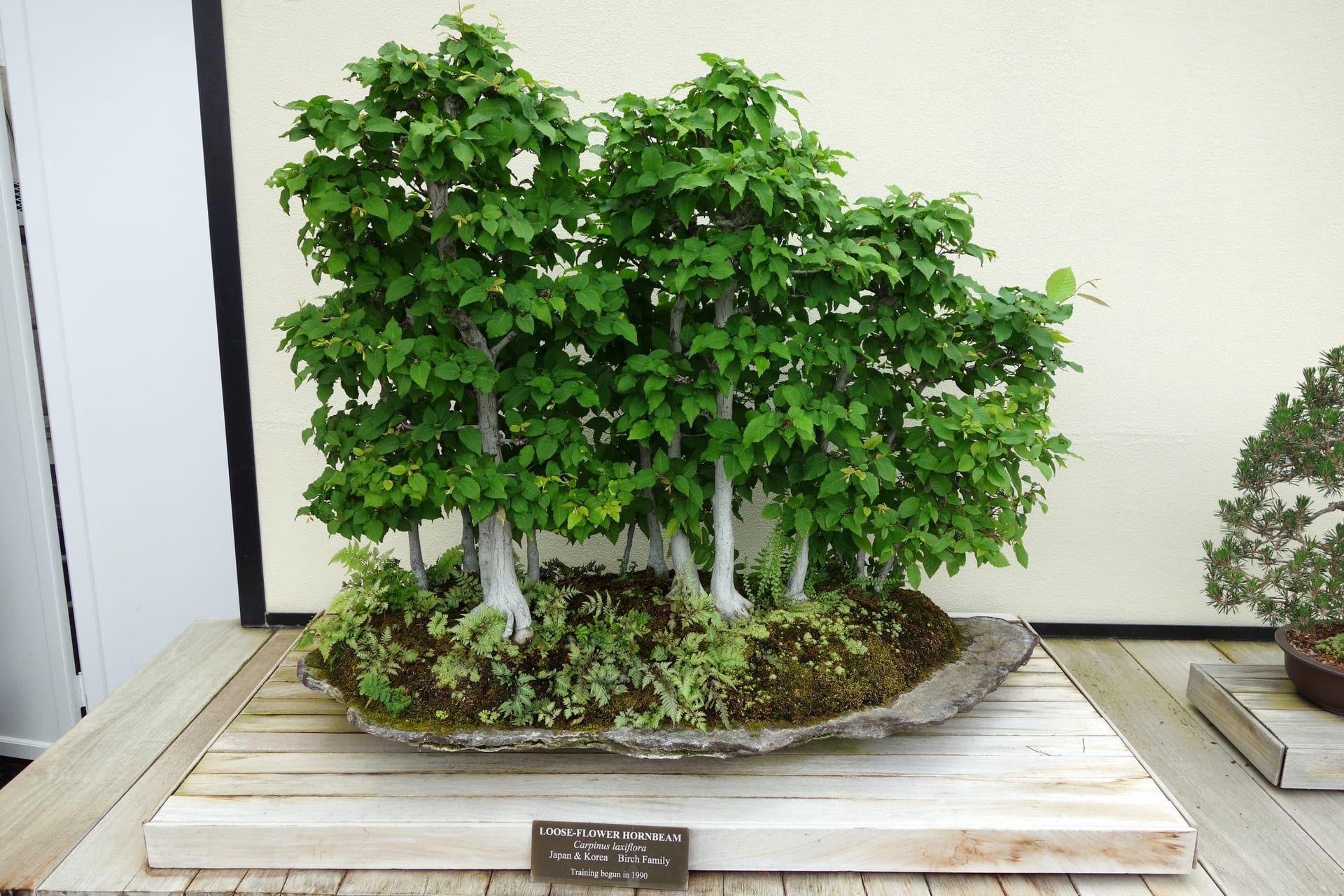
 © Daderot / CC0
疏花鹅耳枥
The Loose-flower hornbeam, known in bonsai circles by its Japanese nicknames "Akame-soro" or "Aka-soro," is a deciduous tree in the birch family valued for the reddish tint of its spring buds, young leaves, and autumn foliage. Among hornbeams, it stands out for its especially small leaves and fine branching, lending a delicate, twiggy character prized in deciduous bonsai. Even after the leaves fall, its bare winter silhouette has quiet appeal, so there is something to enjoy in every season. It is generally considered a good choice for beginners, making it an approachable species for anyone starting out in bonsai.
View 疏花鹅耳枥 encyclopedia →成交手续费0%!2026年9月30日前注册,前 2 株免佣金!
生产者 招募中!
在GrowerDirect上销售,直接面向全国客户销售吗?
GrowerDirect的 6 项透明性承诺
在盆景的上架中,生产者公开以下信息。确保树种、产地、光照需求、栽培难度的透明度。
- 树种公开
- 实物照片
- 色彩
- 产地公开
- 光照需求
- 难度公开
查看全部144个品种
盆景分类正在招募认证生产者
生产者正在陆续注册,即将上架。设置上架通知,不错过新商品。
「接收上架通知」需免费注册会员即可设置。当有符合您保存条件的新商品上架时,我们会通过邮件和站内通知提醒您。
已注册的生产者(抢先看)
疏花鹅耳枥的基本数据
- 养护难度
- 适合新手
- 寿命
- 树龄资料较少
- 体型
- 自然树高10~15米(盆景根据造型而定)
- 浇水
- 肥料(4~10月,除去梅雨季和盛夏)
- 光照与放置位置
- 放置在日照良好、通风的室外。夏季强直射阳光会导致叶灼,应放置在半阴处。
- 浇水
- 表土干燥后充分浇水。从新芽出现到夏季容易干燥,要注意避免缺水。
- 温度·越冬
- 耐寒能力强,但冬季需充分经历寒冷,同时要保护其免受寒风和霜冻。落叶后无需日光照射。
- 土壤·换盆
- 单独使用赤玉土或混合鹿沼土。幼树每2年换盆一次,成树每3年换盆一次,在春季初期或初秋进行。
- 肥料
- 4~10月每月一次施用固体肥料,梅雨季和盛夏除外。
- 修剪·造型
- 新叶展开后留下2~3片叶子,摘除顶端。5~9月经常剪去徒长枝,2~3月整形调整整体形态。
- 病虫害·注意事项
- 注意蚜虫、介壳虫、卷叶虫和梅雨季节的白粉病。由于是野生种,应选择栽培品而不是野生采集品。
关于疏花鹅耳枥
The Loose-flower hornbeam is a deciduous bonsai tree whose new shoots and autumn leaves turn red, prized for its small leaves and fine branching — an approachable choice for beginners.
开始养护疏花鹅耳枥前需要了解的7件事
1Choose a Sunny Spot
Akashide thrives in a spot with plenty of sun and good air circulation. Strong afternoon sun in midsummer can scorch the leaves, so moving potted trees into partial shade during the hottest hours helps. In winter, keep it somewhere sheltered from frost and cold wind.
2Watering: Let It Dry, Then Soak
Water thoroughly once the surface of the soil has dried out. Because Akashide has fine branches and small leaves, it doesn't tolerate drought well, so extra care is needed in summer. At the same time, a pot that stays constantly wet can lead to root rot, so aim for a clear dry-then-wet rhythm.
3Soil: Prioritize Drainage
A bonsai soil mix that balances drainage with moisture retention works best, typically combining components like akadama and kiryu sand. Keeping the roots healthy in well-draining soil helps maintain the fine branching and small leaves this species is known for.
4Repot During Dormancy
As a deciduous tree, Akashide is best repotted during its dormant season after the leaves have dropped. Its roots tend to fill the pot fairly readily, so trimming and refreshing them roughly every few years, depending on the tree's condition, helps keep growth healthy.
5Pinch and Prune to Keep Its Shape
Akashide puts out vigorous new growth in spring, so pinching back shoots and pruning as needed helps preserve its fine, delicate branching. Because the bare winter silhouette is also part of its appeal, shaping the branch structure with that dormant-season view in mind lets you enjoy the tree year-round.
6Look at Branch Tips and Leaf Size
Since Akashide is prized among hornbeams for its especially small leaves and fine branches, choosing a tree that clearly shows these traits helps you get the most out of its character. It's also worth checking that leaves are healthy all the way out to the branch tips.
7Keep Airflow Good to Prevent Pests
Because Akashide's branches can grow dense, poor air circulation makes it more prone to pests and disease. Thinning out crowded twigs and leaves, and checking the tree regularly so you catch changes early, goes a long way toward keeping it healthy.
疏花鹅耳枥的常见问题
- Q.Is it suitable for bonsai beginners?
- A.Yes, Akashide is generally considered a beginner-friendly species. As long as you keep up with basic watering and give it enough sun, it's manageable even for those new to bonsai.
- Q.When can I enjoy its autumn color?
- A.Along with reddish new shoots in spring, Akashide's autumn foliage also takes on a red tint. The exact timing varies with climate and the individual tree's condition, so it's best to watch each year's progress rather than expect a fixed date.
- Q.What does the nickname "Akame-soro" mean?
- A.It's an alternate name used in the bonsai world for Akashide, referring to its characteristically reddish buds. "Aka-soro" is another name used for the same tree.
- Q.How does it differ from other hornbeam species used in bonsai?
- A.Among hornbeams grown as bonsai, Akashide is noted for having the smallest leaves and the finest branches. That delicacy is part of why it lends itself so well to creating the fine branch structure typical of deciduous bonsai.
- Q.How large does it grow?
- A.In the wild, Akashide can reach a natural height of around 10 to 15 meters, but as a bonsai its size is determined by how it's trained. Regular pruning and pinching keep it at a compact size suited to bonsai.
疏花鹅耳枥种植的实用工具
在图鉴中详细了解疏花鹅耳枥
查看疏花鹅耳枥的图鉴条目 →
收录栽培难度、尺寸、原产地、日照等基础数据。