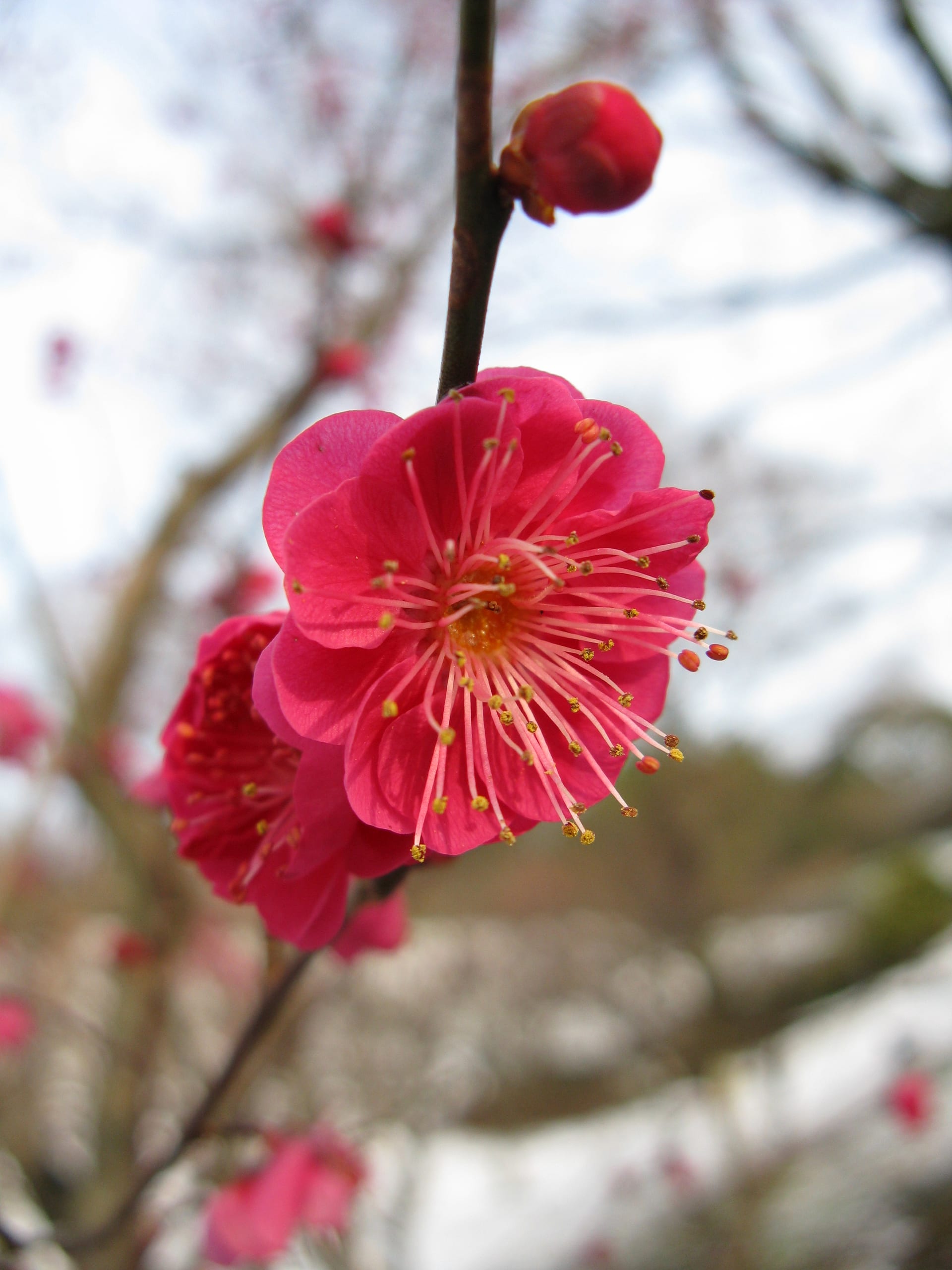
 © KENPEI / CC BY-SA 3.0
鹿儿岛红
Kagoshima-beni is one of the most iconic red-flowering plum (ume) varieties, belonging to the hibai group known for its richly colored blossoms. Its deep crimson, double-petaled flowers are medium-sized and bloom generously along the branches. What sets this variety apart is that the color runs deeper than the petals alone — even the pith of young branches and the leaf stalks take on the same rich red, so the tree carries a touch of its color even when not in bloom. Hibai varieties are also prized for their fragrance, and Kagoshima-beni is often the first name that comes up when bonsai growers talk about red ume. Ume trees are long-lived, and over the years this variety develops the dignified, aged character bonsai enthusiasts look for. Because it calls for solid basic care knowledge, it tends to suit growers who already have some experience with ume.
View 鹿儿岛红 encyclopedia →成交手续费0%!2026年9月30日前注册,前 2 株免佣金!
生产者 招募中!
在GrowerDirect上销售,直接面向全国客户销售吗?
GrowerDirect的 6 项透明性承诺
在盆景的上架中,生产者公开以下信息。确保树种、产地、光照需求、栽培难度的透明度。
- 树种公开
- 实物照片
- 色彩
- 产地公开
- 光照需求
- 难度公开
查看全部144个品种
盆景分类正在招募认证生产者
生产者正在陆续注册,即将上架。设置上架通知,不错过新商品。
「接收上架通知」需免费注册会员即可设置。当有符合您保存条件的新商品上架时,我们会通过邮件和站内通知提醒您。
已注册的生产者(抢先看)
鹿儿岛红的基本数据
- 养护难度
- 适合中级者
- 寿命
- 梅是长寿树种,有些盆景梅树的树龄据说达到400年。
- 体型
- 梅是高度3-10米的落叶小乔木。盆景中根据花盆进行造型。
- 浇水
- 肥料(花后的3-6月和9-11月。夏季停止)
- 光照和放置位置
- 为了长出花芽,需要从春季开始充分的光照。放在阳光充足、通风良好的地方,夏季因强光易导致叶灼伤,需要遮阳。
- 浇水
- 梅喜水,长叶期间要经常浇水。春秋季每天1-2次,夏季2-3次,冬季每2-3天1次为参考,表土干燥后充分浇水。
- 温度和越冬
- 梅在冬季休眠。需要防止花盆冻结或晚霜伤害根系,应放在架下或地窖等处保护。
- 土壤和换盆
- 以红玉土为主,混合约2成排水良好的沙子。换盆在2月芽萌发前进行,与花后修剪同时进行。1-2年换一次,老树2-3年换一次。
- 肥料
- 梅喜肥。花后3-6月间少量多次施肥,花芽形成的夏季停止施肥,9-11月的秋肥要充足。选用磷酸含量高的花果肥料为佳。
- 修剪和造型
- 在5-7分花时摘去花谢以维持树势,花后立即修剪。花芽在7-8月形成,对于成型树,5月左右摘去新梢顶端4-6节。
- 病虫害和注意事项
- 注意蚜虫、红蜘蛛、介壳虫、蛀干虫(会渗出树脂)、白粉病和黑星病。梅易感染溃疡病,应避免强风。
关于鹿儿岛红
Kagoshima-beni is a classic red-flowering bonsai plum from the hibai group, known for its deep crimson double blooms and red-tinted branch pith. Ume are long-lived trees, and growing this variety calls for some basic care experience.
开始养护鹿儿岛红前需要了解的7件事
1Give It Full Sun
Ume are sun-loving trees, and Kagoshima-beni needs light reaching even its outer branch tips to flower well. Keep it outdoors in a well-ventilated, sunny spot rather than growing it indoors long-term.
2Water in Wet-Dry Cycles
Water thoroughly once the soil surface has dried out. Avoid keeping the soil constantly damp, since overwatering can lead to root rot — alternating between moist and dry is the safer rhythm.
3Choose Well-Draining Soil
A soil mix based mainly on akadama with good drainage and aeration works best. Fine, compacted soil can cause root congestion, so a blend formulated for bonsai is a safer choice.
4Repot Before Bud Break
Repot around February, before the buds break, together with the post-bloom pruning. Tidying the roots once every one to two years (every two to three years for old trees) keeps the tree from becoming pot-bound and healthy.
5Prune Right After Flowering
Kagoshima-beni sets flower buds on the previous year's growth, so pruning at the wrong time reduces next year's blooms. Trim back the branches right after flowering ends, letting the new shoots develop the following season's buds.
6Red Runs Into the Pith
Beyond the flower color, Kagoshima-beni is known for turning deep red even in the pith of thin branches and the leaf stalks. This inner coloring is a useful clue for identifying the variety even outside the blooming season.
7Watch for Pests Early
Ume can be affected by aphids and black spot disease, among other issues. Keeping the tree well-ventilated and checking the branches and leaves regularly makes it easier to catch problems early.
鹿儿岛红的常见问题
- Q.Is Kagoshima-beni suitable for beginners?
- A.This variety is considered intermediate-level, requiring a basic understanding of pruning and watering. Growers who already have some experience with ume can take it on without much difficulty.
- Q.When does it bloom?
- A.Ume flower in late winter to early spring, and Kagoshima-beni blooms with deep crimson flowers during that same window. The exact timing shifts depending on the region and climate.
- Q.What makes Kagoshima-beni distinctive?
- A.Beyond its deep red, double-petaled, medium-sized flowers, its defining trait is that even the pith of thin branches and the leaf stalks turn deep red. The fragrance, typical of hibai varieties, is another draw.
- Q.How long can this tree live?
- A.With ongoing care it can be grown for many years, and over time it develops the dignified character of an aged specimen.
- Q.How large does it get as a bonsai?
- A.As a bonsai it is shaped to fit its pot, so it stays compact. Pruning lets you keep it at the size you prefer.
鹿儿岛红种植的实用工具
在图鉴中详细了解鹿儿岛红
查看鹿儿岛红的图鉴条目 →
收录栽培难度、尺寸、原产地、日照等基础数据。