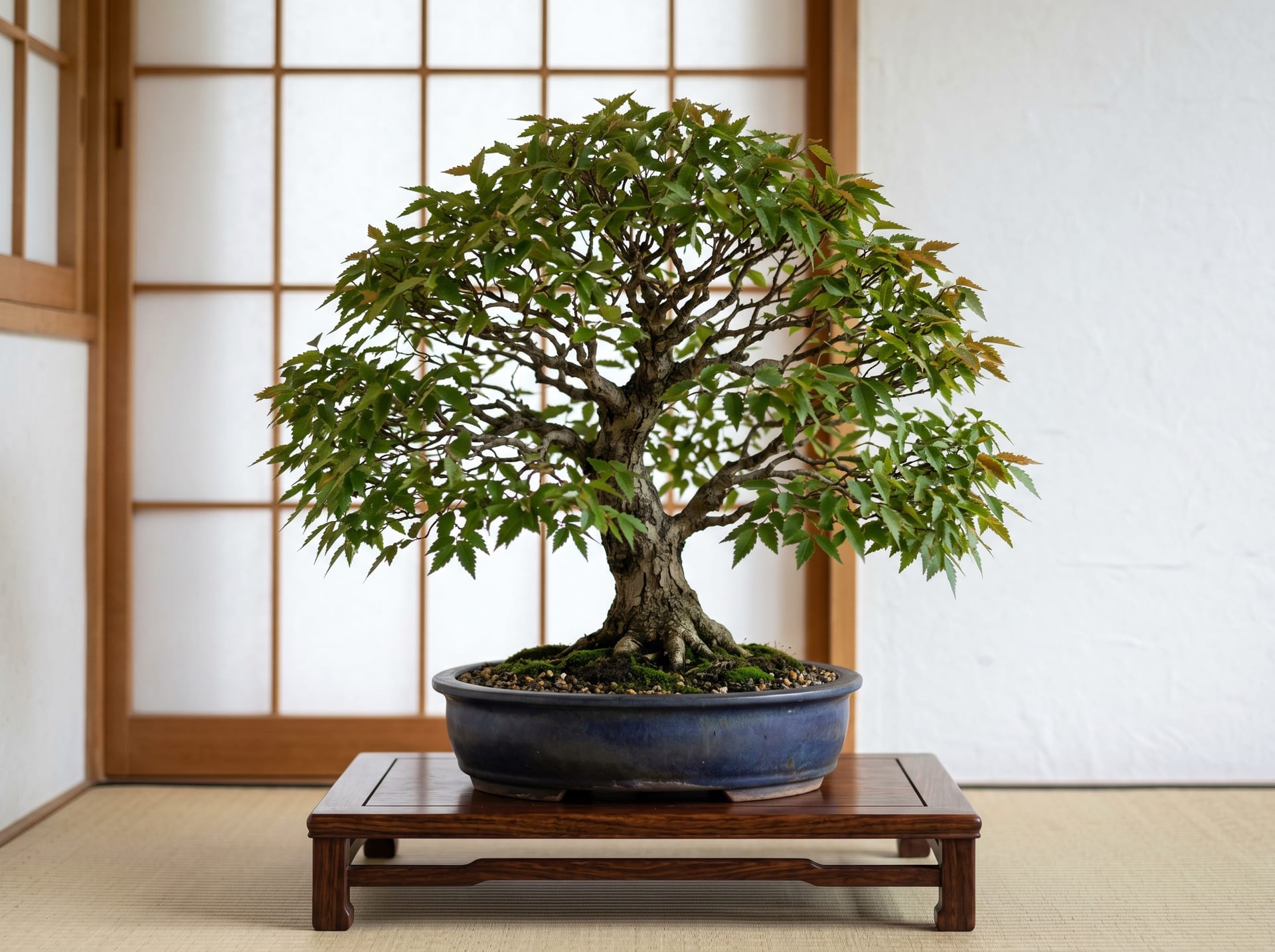
榉树
The signature broom-style bonsai tree. Fan-shaped fine branching is its greatest charm. The winter silhouette after leaf drop is considered the pinnacle of bonsai aesthetics.
View 榉树 encyclopedia →前3笔销售免佣金!在2026年8月31日前注册生产者账户 → 前3笔成交的手续费免费!
栽培者 招募中!
在BoTachoku上销售,直接面向全国客户销售吗?
ボタちょく的 6 项透明性承诺
在盆景的上架中,栽培者公开以下信息。确保树种、产地、光照需求、栽培难度的透明度。
- 树种公开
- 实物照片
- 色彩
- 产地公开
- 光照需求
- 难度公开
盆景分类正在招募认证栽培者
栽培者正在陆续注册,即将上架。设置上架通知,不错过新商品。
「接收上架通知」需免费注册会员即可设置。当有符合您保存条件的新商品上架时,我们会通过邮件和站内通知提醒您。
已注册的栽培者(抢先看)
榉树的基本数据
- 养护难度
- 适合中级者
- 寿命
- Centuries (50+ years as bonsai)
- 体型
- 10-80cm (bonsai size)
- 浇水
- −
- Placement
- Outdoor in sun. Keep outdoors in winter for cold exposure
- Watering
- Loves water. Excessive drying causes branch dieback
- Styling
- Broom style is standard. Remove unwanted branches early
- Notes
- Thick branch wounds heal poorly. Set structure while young
关于榉树
Keyaki (Japanese Zelkova, Zelkova serrata) is a native Japanese deciduous tree of the elm family, widely known as a street tree and sacred shrine tree — one of Japan's most iconic species. Its history in bonsai stretches back to the Edo period, when it stood as the premier subject of "zoki bonsai" (deciduous woodland bonsai) enjoyed by samurai and townspeople alike. Its defining characteristic is the broom-style form — branches radiate from a single trunk and subdivide into increasingly fine twigs, creating an elegant, upswept silhouette. Each season brings a distinct beauty: soft spring foliage, dense summer shade, brilliant autumn gold, and finally the breathtaking winter silhouette of bare branches traced against the sky — a season many bonsai artists consider the year's finest. Vigorous and resilient, Keyaki responds readily to repeated pinching and pruning, offering growers a deeply satisfying path to developing refined ramification over time.
开始养护榉树前需要了解的7件事
1Grow Outdoors Year-Round
Keyaki thrives with good airflow and full sun outdoors. Place it in a bright, sunny spot from spring through autumn, shading only from harsh afternoon sun in summer to prevent leaf scorch. Bring it indoors only briefly for display.
2Cold Dormancy Is Essential
As a deciduous tree, Keyaki needs genuine cold dormancy to produce vigorous spring growth. It tolerates temperatures around 0°C, but move the pot under eaves to protect the rootball from hard frost and freezing. Overwintering in a heated room weakens the tree over time.
3Water Thoroughly When Dry
During the growing season (spring–autumn), water thoroughly once the soil surface dries out, until water flows from the drainage hole. In peak summer, twice-daily watering may be needed. In winter dormancy, water sparingly — a few days after the soil dries is sufficient. Avoid waterlogging to prevent root rot.
4Pruning Builds Fine Branching
Keyaki's elegant broom silhouette is built through patient, repeated pruning. Pinch new shoots after every 2–3 nodes to encourage finer branching. Prune larger branches in winter after leaf drop to minimize sap bleeding and allow clean healing.
5Fertilize in Spring and Autumn
Apply slow-release solid fertilizer before spring bud-break and again in autumn to maintain vigour. Reduce the amount in summer, as heat makes roots sensitive to fertilizer burn. Choose a balanced formulation — excess nitrogen causes oversized leaves that detract from the miniature aesthetic.
6Repot Every 2–3 Years
Repot young trees annually and mature specimens every 2–3 years, just before spring budding. Trim roots by about one-third and use well-draining bonsai soil (primarily akadama). After repotting, keep the tree in dappled shade for 1–2 weeks to reduce transplant stress.
7Watch for Aphids and Powdery Mildew
Aphids often target Keyaki's tender spring shoots — early detection is key. Powdery mildew can develop during the rainy season if airflow is poor, so thinning crowded branches helps prevent it. Both can usually be managed in early stages by washing with water or applying an appropriate treatment.
榉树的常见问题
- Q.Can beginners grow Keyaki bonsai?
- A.Yes, Keyaki is widely recommended as a beginner bonsai species due to its resilience and vigor. With consistent watering, fertilizing, and adequate sunlight, it is relatively forgiving and rewarding for new growers.
- Q.Can Keyaki be grown indoors?
- A.Keyaki requires outdoor cultivation. Indoor conditions lack sufficient light and airflow, causing rapid decline in tree vigor. It is strongly recommended to keep the tree outdoors except when briefly brought in for display. Outdoor winter dormancy is essential for healthy growth the following year.
- Q.How can I get smaller leaves in summer?
- A.A technique called "leaf trimming" (hagari) — removing all leaves in early summer — can encourage a second flush of smaller leaves. However, this places significant stress on the tree and should only be done on vigorous, healthy specimens.
- Q.Does Keyaki need winter protection?
- A.In most lowland areas of Honshu and warmer regions, Keyaki overwinters well outdoors. In areas with severe frost, light protection such as covering the pot with frost cloth is sufficient to prevent root freezing. Bringing it into a fully heated indoor space is unnecessary and inadvisable.
- Q.How many years does it take to develop a broom-style form?
- A.With consistent pinching and pruning from a young tree, the basic broom-style framework typically takes 5–10 years to establish. Developing truly fine ramification requires additional years, but the gradual yearly transformation is itself the core pleasure of growing Keyaki bonsai.
榉树种植的实用工具
Learn more about 榉树 in the encyclopedia
View 榉树 encyclopedia entry →
Care difficulty, size, origin and light needs — all basics covered.