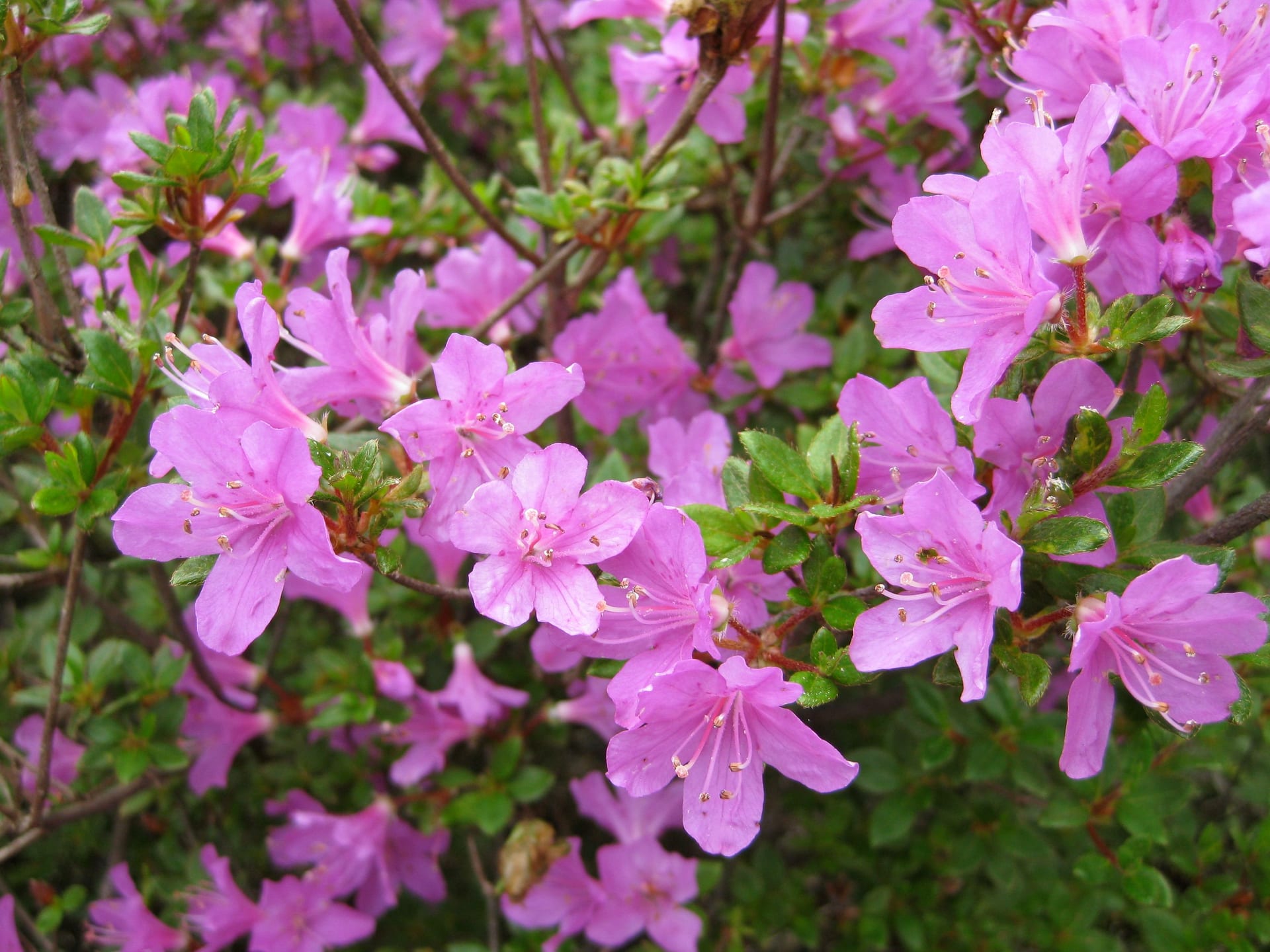
 © Ray_go / CC BY-SA 3.0
深山雾岛杜鹃
Miyama Kirishima is a compact azalea native to the volcanic highlands of Kyushu, including Mount Kirishima, Mount Aso, and the Kuju mountains. It has small leaves and a densely branching habit, producing masses of small flowers—mostly reddish-purple, with some pink and white—that cover the branch tips. In the wild it grows to about 1-2 meters, but in a pot it's commonly trained into a compact form around 30cm, prized for the balance of fine branching and flowers in small-scale (shohin) bonsai. It's hardy and easy to manage, making it approachable for those new to bonsai, and in bloom its small flowers give the whole tree a lively, colorful look.
View 深山雾岛杜鹃 encyclopedia →成交手续费0%!2026年9月30日前注册,前 2 株免佣金!
生产者 招募中!
在GrowerDirect上销售,直接面向全国客户销售吗?
GrowerDirect的 6 项透明性承诺
在盆景的上架中,生产者公开以下信息。确保树种、产地、光照需求、栽培难度的透明度。
- 树种公开
- 实物照片
- 色彩
- 产地公开
- 光照需求
- 难度公开
查看全部144个品种
盆景分类正在招募认证生产者
生产者正在陆续注册,即将上架。设置上架通知,不错过新商品。
「接收上架通知」需免费注册会员即可设置。当有符合您保存条件的新商品上架时,我们会通过邮件和站内通知提醒您。
已注册的生产者(抢先看)
深山雾岛杜鹃的基本数据
- 养护难度
- 适合新手
- 寿命
- 树龄资料较少
- 体型
- 野生环境下高度1~2米。盆栽中通常修剪为30厘米左右的小品
- 浇水
- 肥料(花后和冬季寒肥)
- 光照和摆放位置
- 放在光照充足、通风良好的室外。充分日照能提高开花质量。夏季强烈直射光时用半阴处或遮阳网遮挡
- 浇水
- 喜湿润,怕干燥。特别是花期和新叶期容易干燥,需要特别注意。过干燥容易长红蜘蛛
- 温度和越冬
- 耐热耐寒的强健品种(可耐至约-23℃)。冬季放在室外经受寒冷,在干燥严寒的地区需避免寒风和霜冻
- 培养土和换盆
- 使用酸性培养土,如鹿沼土和赤玉土各半配置。幼树每2~3年换盆一次,在花后或秋季进行
- 肥料
- 对肥料反应良好。基本施肥为花后6月左右和休眠后12月左右的冬肥。若夏季叶色较浅可适量补肥
- 修剪和整型
- 花后尽早修剪,保留2片叶子左右剪去当年萌发的枝条(5~6月为目标)。摘除残花。枝条过密容易因潮湿而受损
- 病虫害和注意事项
- 干燥时易长红蜘蛛,过度潮湿时枝叶易受损。大部分原生地位于国立公园,特别地区的植物采集受到管制。应选择栽培品而非野生采集品
关于深山雾岛杜鹃
Miyama Kirishima is a hardy, compact Kyushu azalea from Japan's volcanic highlands, with dense branching and small red-purple, pink, or white blooms—well suited to beginner-friendly shohin bonsai.
开始养护深山雾岛杜鹃前需要了解的7件事
1Give It Full Sun
Miyama Kirishima flowers best with plenty of direct sunlight, so keep it in a bright spot for most of the year. During the height of summer, though, move it to partial shade to prevent the leaves from scorching.
2Watch for Dry Soil
Because shohin-style pots hold very little soil, this azalea can dry out quickly. Water thoroughly once the surface soil feels dry, and check more often during the growing season and hot summer months.
3Use Acidic Soil
As a member of the azalea family, Miyama Kirishima prefers acidic, well-draining soil—kanuma soil is a common base for bonsai growers. Ordinary potting mix isn't well suited to its needs and can lead to poor growth.
4Repot After Flowering
The best time to repot is right after the flowers finish. Avoid breaking up the root ball too aggressively—just remove the old soil and refresh it, which keeps stress on the roots low while you shape the tree.
5Prune for Density
This azalea naturally branches densely, and trimming new growth after flowering encourages even more branching for that classic compact shohin look. Regular pinching of new shoots gradually refines the branch structure.
6Summer and Winter Care
Miyama Kirishima is a tough azalea that tolerates both heat and cold, reportedly down to about -23°C. In midsummer, watch for dryness and soften strong sun with partial shade or a reed screen. In winter, keep it outdoors so it experiences the cold; only in especially dry regions does it need shelter from cold wind and frost.
7Choose by Branch Structure
The appeal of Miyama Kirishima lies in its small leaves and dense branching, so when choosing a plant, look for one with plenty of branches and short internodes—it will be easier to shape from there. It's also worth checking how flower buds are forming.
深山雾岛杜鹃的常见问题
- Q.Can beginners grow this azalea?
- A.Miyama Kirishima is hardy and generally considered a beginner-friendly bonsai variety. As long as you keep to the basics of sunlight and watering, it's fairly forgiving to grow.
- Q.How large does it grow?
- A.In the wild it reaches about 1-2 meters, but when trained as bonsai in a pot it's commonly kept to a compact size around 30cm. Pruning and pinching let you control its size over time.
- Q.When does it bloom?
- A.Most azaleas bloom in spring, and Miyama Kirishima is no exception. Small flowers—mostly reddish-purple, with some pink and white—cover the branch tips when in season.
- Q.Can it be grown indoors?
- A.Miyama Kirishima does best outdoors where it gets plenty of sunlight, and outdoor care is standard practice for this bonsai. Indoors it tends to suffer from insufficient light, so a sunny balcony or garden spot is recommended instead.
- Q.Is it sensitive to cold?
- A.No. Miyama Kirishima is a tough azalea that handles both heat and cold, reportedly down to about -23°C. The standard approach is to keep it outdoors through winter so it experiences the cold. In especially dry regions, place it where it is sheltered from cold wind and frost.
深山雾岛杜鹃种植的实用工具
在图鉴中详细了解深山雾岛杜鹃
查看深山雾岛杜鹃的图鉴条目 →
收录栽培难度、尺寸、原产地、日照等基础数据。