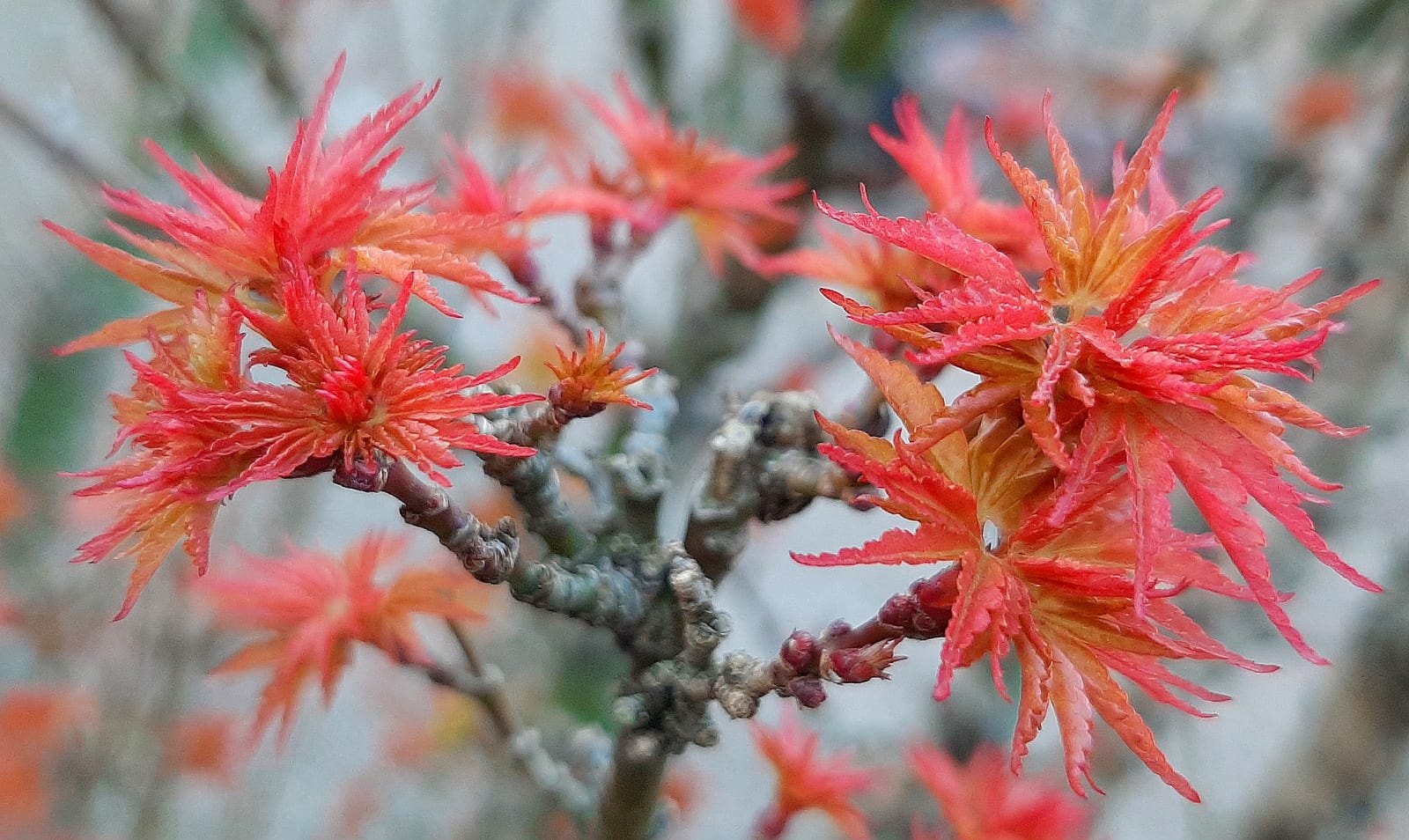
 © Jonathan Billinger / CC BY-SA 2.0
狮子头
Shishigashira is a distinctive Japanese maple cultivar known for its thick, tightly curled small leaves that cluster densely at the branch tips. Unlike typical Japanese maples with thin, flat-opening leaves, its foliage has such a unique texture that the cultivar can be identified by its leaves alone. With a compact, tightly branching growth habit, it is trained as a small-to-medium bonsai and is also grown as a garden tree. Beyond its striking foliage through spring and summer, it offers attractive autumn color as well, giving year-round visual interest. Because it benefits from general Japanese maple growing knowledge, it suits growers with some prior experience rather than absolute beginners.
View 狮子头 encyclopedia →成交手续费0%!2026年9月30日前注册,前 2 株免佣金!
生产者 招募中!
在GrowerDirect上销售,直接面向全国客户销售吗?
GrowerDirect的 6 项透明性承诺
在盆景的上架中,生产者公开以下信息。确保树种、产地、光照需求、栽培难度的透明度。
- 树种公开
- 实物照片
- 色彩
- 产地公开
- 光照需求
- 难度公开
查看全部144个品种
盆景分类正在招募认证生产者
生产者正在陆续注册,即将上架。设置上架通知,不错过新商品。
「接收上架通知」需免费注册会员即可设置。当有符合您保存条件的新商品上架时,我们会通过邮件和站内通知提醒您。
已注册的生产者(抢先看)
狮子头的基本数据
- 养护难度
- 适合中级者
- 寿命
- 该品种作为栽培品种的寿命记载较少
- 体型
- 盆景中为小品~中品,也作为庭木流通(成树尺寸的记载较少)
- 浇水
- 肥料(春季和秋季,适量施肥)
- 光照·置放位置
- 光照充足、通风良好的场所。由于叶片密集,应隔开花盆间距以保证通风。梅雨明后~9月上旬进行遮光以防叶烧。
- 浇水
- 叶片展开后干燥迅速。春季每天浇2次,夏季浇2~3次,冬季每1~2天浇1次,浇在株根部。夏季缺水会影响红叶效果。
- 温度·越冬
- 耐寒性强(羽毛枫为美国农业部耐寒区5区)。落叶后经历2~3次霜冻,然后避开干风和晚霜进行保护。
- 用土·换盆
- 使用排水性良好的用土。换盆在芽萌动前的3月左右进行。每隔2~3年,小型盆景每隔1~2年进行一次,整理根系以促进细根增长。
- 肥料
- 4月中旬新叶硬化时施有机质肥料,5月进行追肥。秋肥在8月中旬~9月结束,以促进红叶。
- 修剪·造型
- 3月中旬~4月中旬摘除中心芽。由于叶片密集,比起全叶刈,通过疏叶来增加内部光照和通风较好。修剪在落叶前后进行。
- 病虫害·注意事项
- 由于叶片密集,梅雨之后需注意白粉病和叶片蒸烤。新芽易遭蚜虫危害。即使使用稀释浓度的药剂也需注意药害。
关于狮子头
Shishigashira is a Japanese maple cultivar prized for its thick, curled leaves clustered at the branch tips, with attractive autumn color. Suited to small-to-medium bonsai, it's best for intermediate growers.
开始养护狮子头前需要了解的7件事
1Light & Airflow
Like most Japanese maples, Shishigashira prefers a spot with good sun and airflow. Strong direct west sun in midsummer can scorch the leaves, so partial shade or light filtering in the afternoon is a safer bet.
2Watch for Dryness
Because the thick, densely clustered leaves cover the pot, the soil can dry out faster than expected. Water thoroughly once the surface soil dries, and be especially careful not to let the pot dry out during summer.
3Well-Draining Soil
As with Japanese maples generally, it does best in soil that balances drainage with moisture retention. A bonsai potting mix or an akadama-based blend is a practical starting point.
4Regular Repotting
The roots tend to fill the pot fairly quickly, so repotting every few years is recommended. Do this before the buds start moving in spring, gently loosening the root ball before placing it in fresh soil.
5Thin Leaves for Airflow
Shishigashira's leaves crowd tightly at the branch tips, so the interior easily gets stuffy. Full defoliation to force a second flush tends to weaken maples in general, so avoid it and instead thin out leaves selectively to let light and air into the canopy. This also helps prevent powdery mildew and humidity problems from the rainy season onward.
6Winter Care
After the leaves drop, some exposure to cold helps set up healthy budding the following spring, but extreme dryness and hard frost should still be avoided. For potted trees, choose a spot where the roots won't freeze.
7Choosing a Healthy Plant
When selecting one, check that the leaves are thick and tightly curled, and that they cluster densely at the branch tips. A tree with little leggy growth and tightly spaced branching tends to show the cultivar's characteristic leaf texture more clearly.
狮子头的常见问题
- Q.Is Shishigashira suitable for beginners?
- A.Shishigashira is generally considered a variety for intermediate growers, so it's best approached after gaining some experience with Japanese maples. Basic care like watering and placement follows the same principles as other maples, so starting with an easier cultivar first can help build a solid foundation.
- Q.How is it different from a regular Japanese maple?
- A.The biggest difference is the leaf shape: Shishigashira has thick, curled small leaves that cluster densely at the branch tips. This looks very different from the thin, flat-opening leaves of typical Japanese maples, so the cultivar can be identified by its foliage alone.
- Q.Is it better suited to a pot or the garden?
- A.Shishigashira is trained as a small-to-medium bonsai and is also sold as a garden tree, so it can be grown either way. Potted and garden-grown trees differ in how often they need watering and repotting, so it helps to match your care routine to the growing style you choose.
- Q.When does the autumn color appear?
- A.Shishigashira does develop attractive autumn color. The exact timing varies with your local climate and region, so it's best to use your area's general autumn foliage season as a guide.
- Q.How often does it need repotting?
- A.As a general guide, repotting every few years before the roots become pot-bound works well. The exact interval depends on pot size and growth, so it's best to check the root condition periodically and decide accordingly.
狮子头种植的实用工具
在图鉴中详细了解狮子头
查看狮子头的图鉴条目 →
收录栽培难度、尺寸、原产地、日照等基础数据。