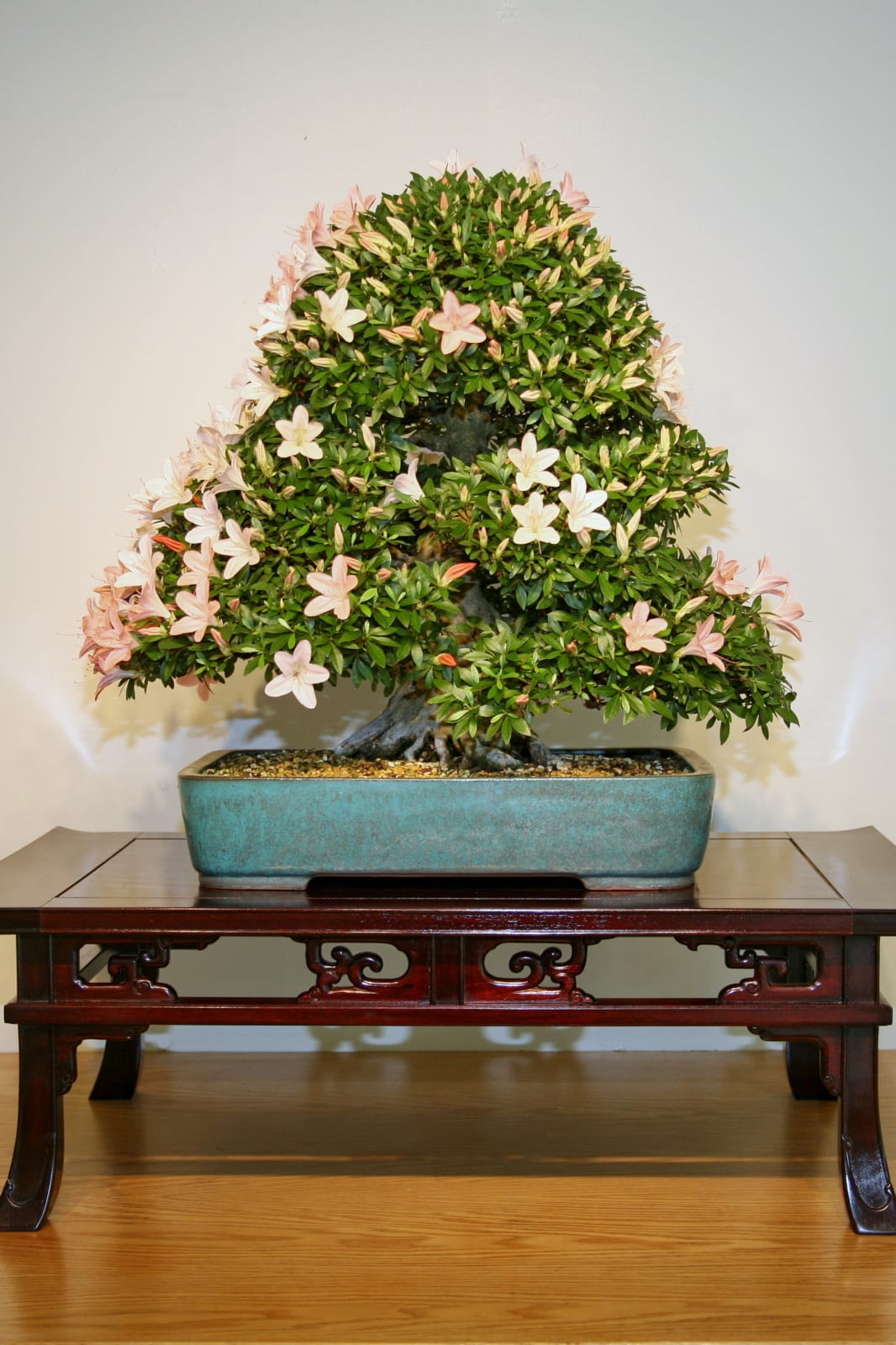
 © Cliff from Arlington, Virginia, USA / CC BY 2.0
日光
Nikko is a Satsuki azalea that arose as a branch sport of the old cultivar Kozan. Its small flowers are pale pink (toki-iro) with a variegated pattern, and the same plant can also produce solid red, pink, and white blooms, a distinctive trait sometimes called sporting. With small leaves and good branching and budding habits, it trains easily as bonsai, making it a popular choice for beginners. Satsuki azaleas are evergreen shrubs that typically reach 0.5 to 1 meter in height, and as bonsai they are shaped to fit the size of the pot, making Nikko easy to enjoy even in limited space.
View 日光 encyclopedia →成交手续费0%!2026年9月30日前注册,前 2 株免佣金!
生产者 招募中!
在GrowerDirect上销售,直接面向全国客户销售吗?
GrowerDirect的 6 项透明性承诺
在盆景的上架中,生产者公开以下信息。确保树种、产地、光照需求、栽培难度的透明度。
- 树种公开
- 实物照片
- 色彩
- 产地公开
- 光照需求
- 难度公开
查看全部144个品种
盆景分类正在招募认证生产者
生产者正在陆续注册,即将上架。设置上架通知,不错过新商品。
「接收上架通知」需免费注册会员即可设置。当有符合您保存条件的新商品上架时,我们会通过邮件和站内通知提醒您。
已注册的生产者(抢先看)
日光的基本数据
- 养护难度
- 适合新手
- 寿命
- 关于此品种寿命的资料很少
- 体型
- 皐月是高度约0.5~1米的常绿灌木。盆栽时根据花盆进行成型。
- 浇水
- 肥料(4月、花后的6月、9~10月)
- 光照和摆放位置
- 喜好充足日照,但夏季强光会导致叶片灼伤和根部受伤。幼树应充分接受日照,在树形维持阶段可放置于半阴处。确保通风良好。
- 浇水
- 喜好湿润环境但根系细弱,过湿易腐烂。春季每天1~2次,夏季2~3次,冬季每2~3天1次为标准。避免在高温日中时浇水。
- 温度和越冬
- 具有耐寒性,但不耐冬季寒风。在檐下等处保护,防止花盆土壤冻结。
- 用土和换盆
- 以鹿沼土为主的酸性粗质用土。换盆在花后立即进行(6月)或在秋季(9月下旬~10月上旬)。
- 施肥
- 新芽成形时(4月左右)、花后6月、9~10月期间,每月1次施用固体肥料。肥料不足会导致枝条枯死。
- 修剪和造型
- 花芽在7~8月中旬形成,因此芽摘和修剪应在花后6月内完成(关东以西地区可延至7月初旬)。铁丝造型在4月和9~10月进行。
- 病害虫和注意事项
- 这是一个容易遭受病害虫的树种,需注意军配虫、红蜘蛛、蚜虫和蓟马。由于某些植株只开出与晃山相同的花,应通过观察花朵来选择。
关于日光
Nikko is a Satsuki azalea that arose as a branch sport of the old cultivar Kozan. It bears small pale pink flowers with a variegated pattern, and can also produce solid red, pink, and white blooms on the same plant, a popular, beginner-friendly bonsai variety valued for its small leaves and easy shaping.
开始养护日光前需要了解的7件事
1Sunny, airy placement
Growing Nikko in a bright, well-ventilated spot helps bring out the variegated toki-iro pattern and the vivid red, pink, and white blooms more clearly. Strong midsummer sun can scorch the leaves, so moving potted plants to partial shade during the hottest months is a good precaution.
2Small leaves mean careful watering
With its small leaves and fine roots, Nikko is sensitive to drying out. Water thoroughly once the soil surface feels dry, and be especially careful during flowering and summer months.
3Soil built around kanuma
Bonsai growers commonly use kanuma soil, valued for balancing drainage with moisture retention, as the main component for Satsuki azaleas. Since Nikko is trained with a compact root mass, choosing the right soil helps keep it vigorous.
4Repot after flowering, thanks to strong budding
The best time to repot is just after the flowers fade. Because Nikko buds reliably, it recovers well even when the root ball is worked on at this stage, making it easier to maintain as bonsai.
5Prune after flowering to shape it
With its small leaves and good branching habit, Nikko is easy to shape through pruning and pinching after flowering. Regular care helps maintain a compact, bonsai-like form.
6One plant, several flower colors
Along with its variegated toki-iro blooms, Nikko can produce solid red, pink, or white flowers on the same plant. Watching how the pattern varies by year or branch is part of the appeal.
7Check leaves and branching when choosing
When choosing a plant, look for undamaged leaves and dense branching, which makes shaping easier later on. Its small leaves and reliable budding make it manageable even for beginners.
日光的常见问题
- Q.Is Nikko suitable for beginners?
- A.Yes, Nikko is considered a beginner-friendly variety. Its small leaves, reliable budding, and manageable growth habit make it a good choice for those new to growing Satsuki azaleas as bonsai.
- Q.What do the flowers look like?
- A.The typical bloom is a small flower with a variegated pattern on a pale pink (toki-iro) base, but the same plant can also produce solid red, pink, or white flowers. The exact pattern can vary from year to year.
- Q.How large does it grow?
- A.Satsuki azaleas are evergreen shrubs that reach about 0.5 to 1 meter in height, but as bonsai they are kept small and shaped to fit the pot. Pruning makes it easy to control the plant's overall form.
- Q.How is Nikko related to Kozan?
- A.Nikko arose as a branch sport of the old cultivar Kozan. It carries traits inherited from Kozan while showing its own mix of variegated toki-iro blooms and solid red, pink, and white flowers.
- Q.When is the best time to repot?
- A.The ideal time to repot is right after flowering ends. Repotting without disturbing the root ball too much helps minimize stress on the plant.
日光种植的实用工具
在图鉴中详细了解日光
查看日光的图鉴条目 →
收录栽培难度、尺寸、原产地、日照等基础数据。