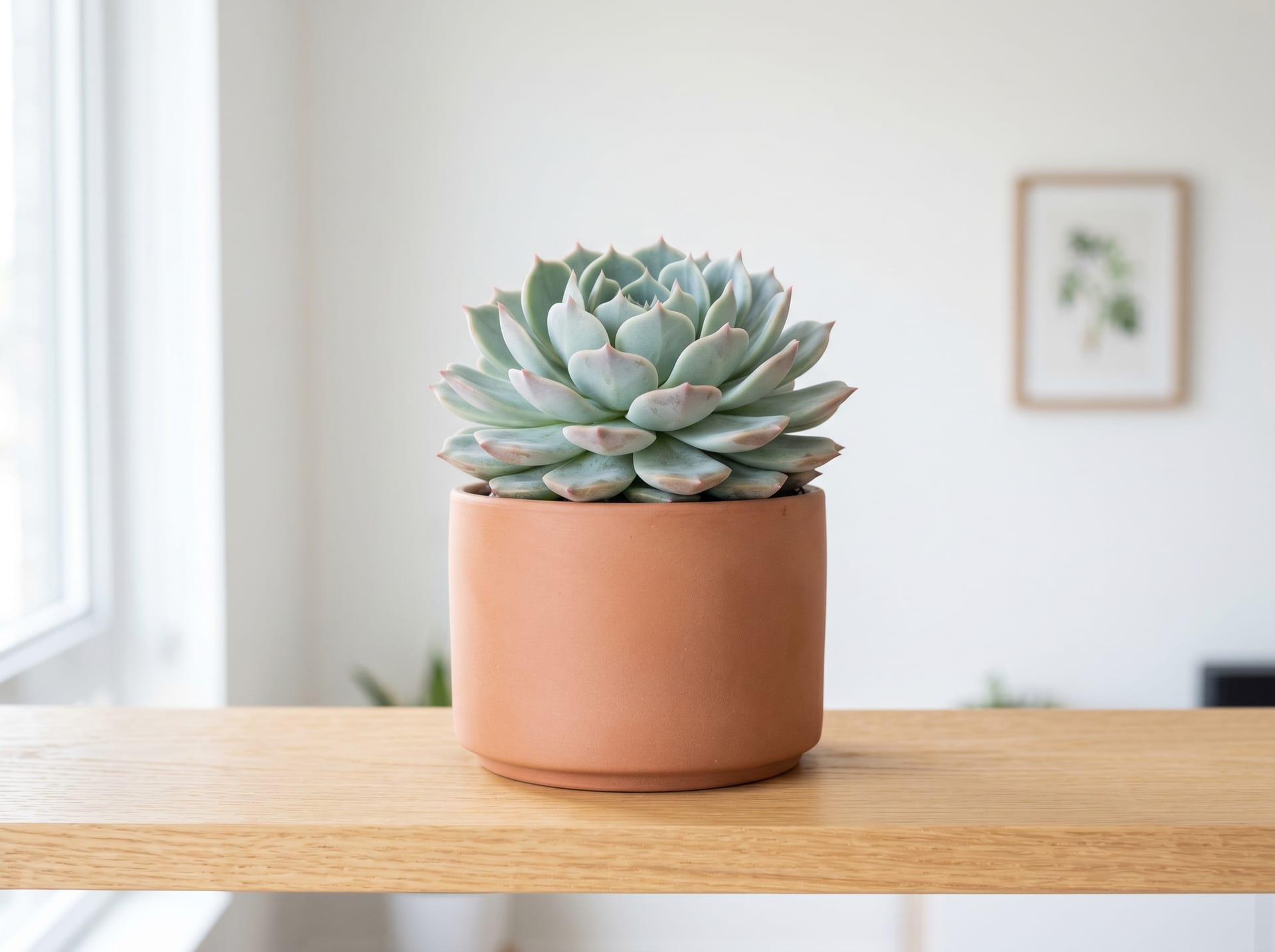
拟石莲花
The quintessential rosette succulent, with flower-like leaf arrangements in hundreds of species. Beautiful stress coloring in autumn/winter. Easy leaf propagation makes collecting irresistible.
View 拟石莲花 encyclopedia →前3笔销售免佣金!在2026年8月31日前注册生产者账户 → 前3笔成交的手续费免费!
栽培者 招募中!
在BoTachoku上销售,直接面向全国客户销售吗?
ボタちょく的 6 项透明性承诺
栽培者在多肉植物与仙人掌上架时将明示以下信息。确保品种、产地、所需光照、栽培难度的透明性。
- 品种明示
- 实物照片
- 色泽
- 产地明示
- 所需光照
- 难度明示
Browse all 17 varieties
没有符合条件的商品
请调整筛选条件,或在有新商品时接收通知。
「接收上架通知」需免费注册会员即可设置。当有符合您保存条件的新商品上架时,我们会通过邮件和站内通知提醒您。
已注册的栽培者(抢先看)
拟石莲花的基本数据
- 养护难度
- 适合新手
- 体型
- 3-30cm rosette
- 适宜温度
- 5〜35℃(適温10〜25℃)
- 浇水
- Water: when dry in spring/fall / reduce in summer and winter
- Soil
- Succulent mix. Akadama, Kanuma, pumice blend also works
- Light
- Full sun preferred. Insufficient light causes etiolation
- Propagation
- Easy via leaf propagation, beheading, or offset division
- Notes
- Leaf bloom (powder) rubs off easily. Water at the base, not on leaves
关于拟石莲花
Echeveria is a genus of succulents native to the arid regions of Mexico and Central America, named after 19th-century Mexican botanical illustrator Atanasio Echeverría. In the wild, these plants grow on rocky cliffs and hillsides, storing water in their leaves to survive harsh dry seasons. Their defining feature is the symmetrical rosette form — layers of leaves radiating outward with geometric precision, creating a beauty that resembles a sculpted flower made of stone or ceramic. Leaf colors range widely by variety, from silvery blue-green and deep purple to powdery pastel tones, and many cultivars display vivid autumn coloration in shades of red and orange when exposed to cool temperatures and strong sunlight. Echeverias are relatively hardy plants; with proper sunlight and careful watering, even beginners can grow them successfully. Because they propagate readily from leaf cuttings and offsets, collecting and trading rare cultivars has become an enthusiastic hobby within the succulent community.
开始养护拟石莲花前需要了解的7件事
1Sunlight Is Essential
Echeveria thrives in bright light and ideally needs 4–6 hours or more of direct sunlight per day. Insufficient light causes etiolation—the stems stretch and the rosette loses its compact shape. A south-facing windowsill or an outdoor spot is the ideal placement.
2Avoid Overwatering
Root rot from overwatering is the most common cause of failure with Echeveria. The golden rule is to water thoroughly only after the soil has completely dried out. Never leave standing water in the saucer, as prolonged moisture promotes rot.
3Use Well-Draining Soil
Standard potting mix retains too much moisture for Echeveria. Use a dedicated succulent and cactus mix, or improve drainage by blending regular potting soil with 30–50% pumice or perlite. Adding a layer of drainage stones at the bottom of the pot also helps.
4Tips for Autumn Coloring
Cooler temperatures and larger day-to-night temperature swings from autumn into winter trigger the red, orange, and purple leaf coloring Echeveria is famous for. Maximizing sun exposure and slightly reducing watering will enhance the colors. That said, Echeveria is frost-sensitive, so bring plants indoors before temperatures drop below freezing.
5Easy Propagation by Leaf Cuttings
Echeveria can be easily propagated by removing a single leaf, letting it callous for a day or two, then placing it on top of dry soil. A clean break at the base significantly improves success rates. Keep the leaf in bright, indirect light and hold off on watering until roots and a new rosette appear.
6Summer Heat and Humidity Care
Japan's hot, humid summers are challenging for Echeveria, as excess moisture causes leaves to rot. During the rainy season and summer months, move plants to a sheltered spot out of direct rain and ensure good airflow. Reduce watering further and water only during the cooler parts of the day—early morning or evening.
7Choosing the Right Pot
Terracotta pots are an excellent choice for Echeveria thanks to their breathability and fast drainage. Choose a pot that is only slightly larger than the plant's diameter—oversized pots hold excess moisture and increase the risk of root rot. Always confirm the pot has drainage holes at the bottom.
拟石莲花的常见问题
- Q.Can echeverias be grown entirely indoors?
- A.Echeverias can be grown indoors near a bright window, but insufficient light causes them to become leggy and lose their compact shape. A south-facing windowsill or a supplemental grow light will help keep plants healthy and well-formed.
- Q.What happens if I forget to water?
- A.Since echeverias store water in their leaves, forgetting to water for a few weeks will not kill them. Leaves beginning to wrinkle or shrivel are a signal that it is time to water, and plants typically recover quickly afterward. Over-watering causes more damage than under-watering, so beginners should err on the side of dryness.
- Q.How cold can echeverias tolerate in winter?
- A.Most echeveria varieties can tolerate temperatures down to around 0–5°C, though this varies by cultivar. However, frost exposure will damage the leaves, so in areas that experience frost, plants should be moved indoors or under shelter for winter. The key is ensuring the soil in the pot does not freeze.
- Q.Why do my echeveria leaves fall off easily?
- A.Leaves that fall off easily are often a sign of overwatering or root rot beginning to develop. Outer leaves can also detach when the plant is moved or handled, which is normal. Rather than discarding fallen leaves, lay them on dry soil — they may root and produce new rosettes through leaf propagation.
- Q.What type of pot is best for echeverias?
- A.Unglazed terracotta pots are the best choice due to their breathability, which helps soil dry out faster. Plastic pots retain moisture longer and increase the risk of rot, so watering frequency should be reduced if using them. Choose a pot only slightly larger than the plant, as oversized containers hold excess moisture and slow drying.
拟石莲花种植的实用工具
Learn more about 拟石莲花 in the encyclopedia
View 拟石莲花 encyclopedia entry →
Care difficulty, size, origin and light needs — all basics covered.