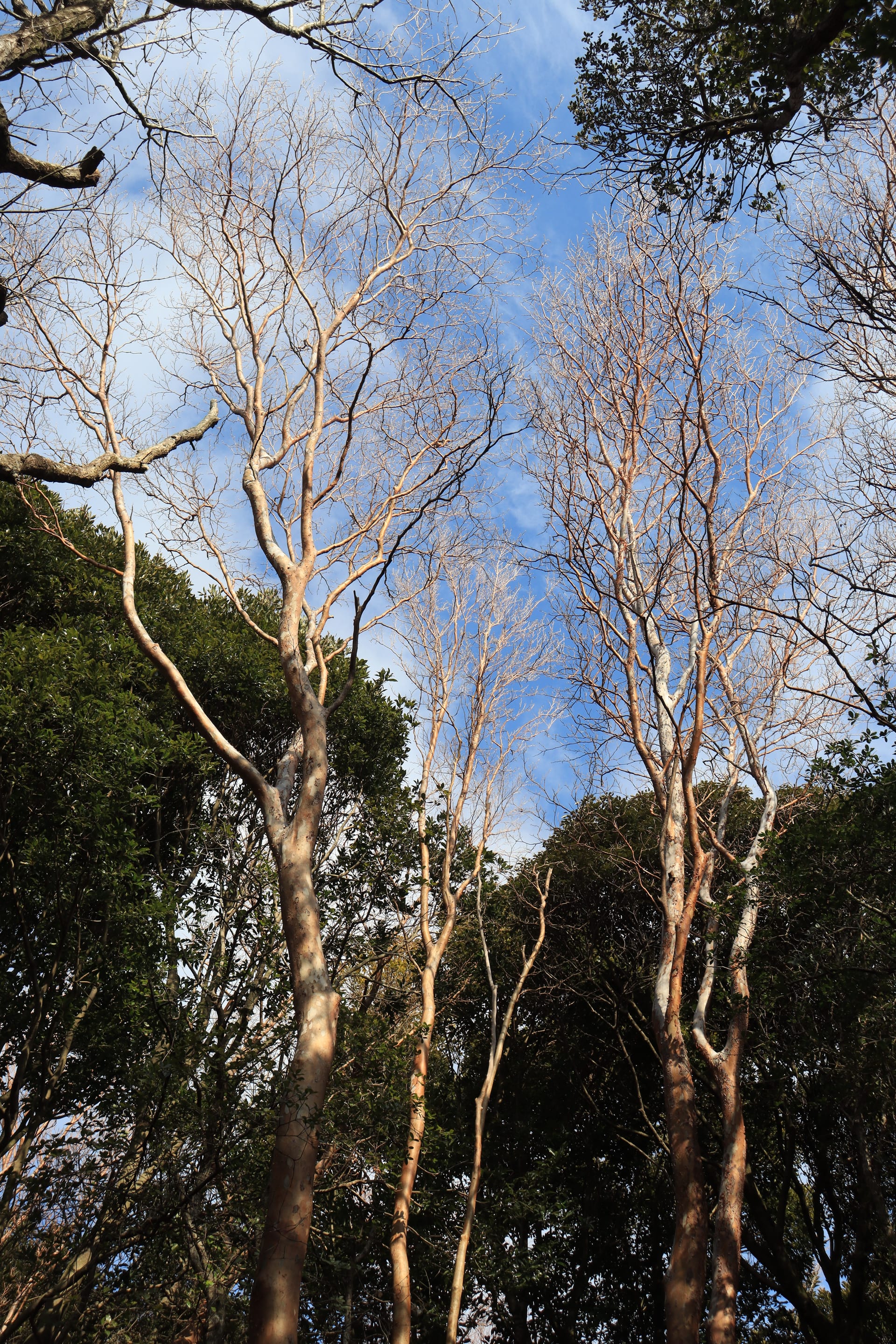
 © Alpsdake / CC BY-SA 4.0
姬沙羅 (Stewartia monadelpha)
Tall stewartia is a deciduous tree in the tea family, prized in bonsai for its smooth, reddish-brown bark, one of Japan's three great barks. Even in winter, once the leaves have fallen, the trunk remains a quiet centerpiece. In early summer it produces small white flowers, about 1.5 to 2 cm across, that nod modestly downward, and in autumn its foliage turns a warm red. Both its flowers and leaves are smaller than those of the related Japanese stewartia (natsu-tsubaki), giving it a more compact, refined presence that suits bonsai training well. With bark, blossom, and autumn color each taking their turn through the seasons, it is a tree that rewards year-round attention. It calls for some intermediate-level know-how, but that effort pays off in a tree with real character.
View 姬沙羅 (Stewartia monadelpha) encyclopedia →成交手續費 0%!2026年9月30日前註冊,前 2 株免佣金!
生產者 招募中!
在 GrowerDirect 上架,直接銷售給全國的客戶吧!
GrowerDirect承諾的 6 項透明性重點
盆景的出品中,生產者將明示以下資訊。確保樹種、產地、所需光照、栽培難度的透明度。
- 樹種明示
- 實物照片
- 色澤
- 產地明示
- 所需光照
- 難度明示
查看全部144個品種
已註冊的生產者(搶先看)
姬沙羅 (Stewartia monadelpha)的基本資料
- 栽培難度
- 適合中級者
- 壽命
- 壽命相關資料缺乏
- 體型
- 樹高7~15公尺(盆栽可根據花盆大小培育成較小的形態)
- 澆水
- 肥料(生育期適度施用)
- 光照與放置位置
- 喜愛陽光,但不耐夏日強光或西曬,乾燥時易產生葉燒。夏季應置於半蔭或遮蔭處。作為花木對陰影有相當耐受力。
- 澆水
- 根系淺易乾燥。本種生於濕潤山地,夏季尤其要避免缺水。
- 溫度與越冬
- 喜好稍溫暖的環境。野生分布北限為箱根(USDA耐寒區6b~8b)。對高溫相當耐受。
- 用土與換盆
- 偏好肥沃濕潤且排水良好的用土;土壤不適合時生長困難。不耐移植,換盆後枝梢有時會乾枯。
- 修剪與整形
- 花卉開於當年生枝上,應避免春~初夏修剪。過度修剪容易破壞樹形。
- 病蟲害與注意事項
- 如同山茶類易被茶毒蛾幼蟲寄生;4~5月應及早清除葉背上的蟲卵。本為野生種,應選購栽培品而非野生採集的苗木。
關於姬沙羅 (Stewartia monadelpha)
Tall stewartia is a deciduous bonsai tree known for its smooth reddish-brown bark, small white summer flowers, and red autumn foliage. It suits growers with some intermediate experience.
開始照料姬沙羅 (Stewartia monadelpha)前需要了解的7件事
1Sunny Spot, Shaded in Summer
Tall stewartia thrives in a bright spot with good air circulation. Strong summer afternoon sun, especially western exposure, can scorch the leaves, so moving it to partial shade during the hottest months helps keep the foliage healthy. An open outdoor spot lets you enjoy its seasonal changes best.
2Do Not Let It Dry Out
This tree is somewhat sensitive to drought, so water thoroughly once the soil surface dries out. It needs the most attention from spring through summer when its leaves are full, so check it morning and evening during that stretch. In winter, once it is dormant and leafless, you can ease off on watering.
3Use Fast-Draining Soil
Tall stewartia dislikes soggy roots, so a fast-draining mix built around akadama is a good base. Since it also appreciates organic matter, blending in a little leaf mold encourages healthy root growth. Make sure the pot drains well so the soil never stays waterlogged.
4Repot Only When Needed
Tall stewartia does not transplant well, and branch tips can die back after repotting. It also struggles in soil that does not suit it, so repot only when necessary, such as when the tree is root-bound, and handle it gently without breaking up the root ball or stripping away much of the old soil.
5Follow the Seasonal Rhythm
From spring through autumn, give it plenty of outdoor light while shielding it from harsh summer sun and dryness. After the autumn color show it drops its leaves naturally, and exposing it to winter cold during dormancy actually supports next year's flowering. Even bare in winter, the trunk remains worth looking at.
6Train Around the Bark
The tree's biggest draw is its smooth, reddish-brown bark, so many growers thin out lower and crowded branches to let the trunk take center stage. Do any heavy pruning during dormancy, and seal larger cuts to keep the bark looking its best.
7What to Look for in a Tree
When choosing a young or already-trained specimen, start by checking the color and smoothness of the bark. A tree with evenly spaced branches and a solid overall structure will be easier to shape going forward. Since it is typically kept small to suit its pot, consider the balance between the tree and its container too.
姬沙羅 (Stewartia monadelpha)的常見問題
- Q.Is tall stewartia suitable for beginners?
- A.Tall stewartia is generally considered a tree for growers with some intermediate experience, since it can be a bit particular about light and moisture. Learning its placement and watering needs takes some practice, and that experience builds over time as you grow it.
- Q.When does it flower, and what do the flowers look like?
- A.It blooms in early summer, producing small white flowers about 1.5 to 2 cm across that face downward. Its flowers are noticeably smaller than those of the closely related Japanese stewartia (natsu-tsubaki), giving it a more understated look.
- Q.How do I keep the bark looking its best?
- A.Since the smooth, reddish-brown bark is the tree's signature feature, training that thins lower and crowded branches to expose the trunk works well. Sealing any large pruning cuts also helps keep the bark looking clean.
- Q.Can it be trained to a compact bonsai size?
- A.In the ground, tall stewartia can reach 7 to 15 meters, but as bonsai it is shaped and kept much smaller to suit the pot. Because it dislikes transplanting and branch tips can die back after repotting, repot only when necessary and rely on pruning to maintain a compact form.
- Q.How is it different from Japanese stewartia (natsu-tsubaki)?
- A.Both are closely related deciduous trees in the tea family, but tall stewartia has smaller flowers and leaves than natsu-tsubaki. Both are valued for beautiful bark, and tall stewartia is counted among Japan's three great barks.
姬沙羅 (Stewartia monadelpha)栽培的實用工具
在圖鑑中詳細了解姬沙羅 (Stewartia monadelpha)
查看姬沙羅 (Stewartia monadelpha)的圖鑑條目 →
收錄栽培難度、尺寸、原產地、日照等基礎資料。