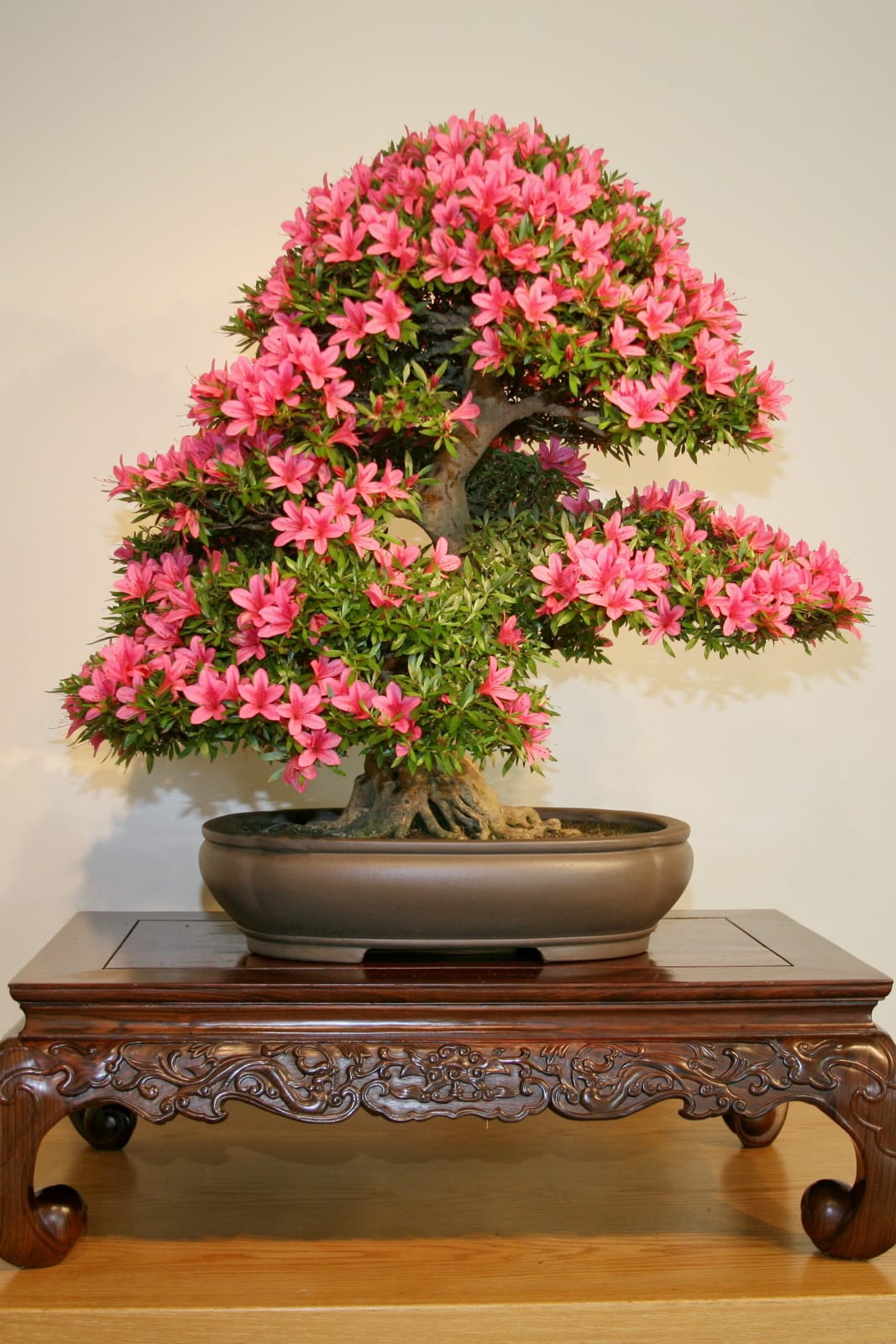
 © Cliff from Arlington, Virginia, USA / CC BY 2.0
光琳
Korin is a beloved Satsuki azalea bred from 'Kozan' and 'Ogata', prized for its abundant purplish-red single-color blooms. The thick, pointed sword-shaped petals give each flower a crisp, elegant look, and the plant's naturally good branching makes it easy to train into a range of bonsai shapes despite its small flower size. It grows vigorously, flowers reliably, and tolerates a range of conditions, making it a great choice for anyone starting out with Satsuki bonsai. Its small, narrow leaves turn red in autumn, extending the plant's seasonal interest well beyond the spring bloom.
View 光琳 encyclopedia →成交手續費 0%!2026年9月30日前註冊,前 2 株免佣金!
生產者 招募中!
在 GrowerDirect 上架,直接銷售給全國的客戶吧!
GrowerDirect承諾的 6 項透明性重點
盆景的出品中,生產者將明示以下資訊。確保樹種、產地、所需光照、栽培難度的透明度。
- 樹種明示
- 實物照片
- 色澤
- 產地明示
- 所需光照
- 難度明示
查看全部144個品種
已註冊的生產者(搶先看)
光琳的基本資料
- 栽培難度
- 適合新手
- 壽命
- 作為品種的壽命資料較少
- 體型
- 皐月為高度約0.5~1m的常綠灌木。盆栽中根據盆的大小進行造型
- 澆水
- 肥料(4月、花後的6月、9~10月)
- 日照・放置位置
- 喜愛日照,但夏季陽光會導致葉燒和根傷。幼樹應置於充足日照處,樹形維持階段放在半陰處。確保通風
- 澆水
- 喜愛水分,但根細且不耐過濕。春季每天1~2次,夏季2~3次,冬季每2~3天1次為目安。避免在高溫的白天澆水
- 溫度・越冬
- 有耐寒性但不耐冬季寒風。需在簷下等處保護,防止盆土結凍
- 培養土・換盆
- 以鹿沼土為主的酸性粗質培養土。換盆在花後立即進行(6月)或秋季(9月下旬~10月上旬)
- 肥料
- 新芽定形期的4月左右、花後的6月、9~10月每月1次固形肥料。肥料不足會導致枝枯
- 修剪・造型
- 花芽在7~8月中旬形成,所以摘芽、修剪須在花後6月內完成(關東以西地區可至7月初)。布線在4月和9~10月進行
- 病蟲害・注意事項
- 病蟲害較多的樹種,需注意軍配蟲、紅蜘蛛、蚜蟲和薊馬。株腳容易長出徒長枝,發現時應及早自根部修剪整理
關於光琳
Korin is a purplish-red Satsuki azalea bred from 'Kozan' and 'Ogata'. Its dense sword-shaped blooms, reliable flowering, and hardy nature make it an easy, rewarding choice for bonsai beginners.
開始照料光琳前需要了解的7件事
1Light & Airflow
Korin thrives in full sun with good air circulation outdoors. In the height of summer, move it to bright, indirect light during the hottest part of the day to prevent leaf scorch, and keep it under an eave in winter to shield it from frost.
2Watering Basics
Water thoroughly until it drains from the pot's base once the soil surface has dried. Watch closely for dryness during summer, when flower buds are forming, and water more sparingly in winter, keeping the soil slightly on the dry side.
3Well-Draining Soil
Like other Satsuki azaleas, Korin prefers acidic, well-draining soil. A mix based on kanuma pumice helps prevent root rot, and a ready-made Satsuki/azalea potting mix is a convenient option.
4When to Repot
Early summer, right after flowering ends, is the best time to repot. Since roots fill the pot readily, repotting every two to three years — either into a slightly larger pot or the same one after removing old soil — keeps the plant vigorous.
5Pruning & Feeding
Because Korin grows vigorously, cut back the branches right after flowering to maintain its shape. Applying a slow-release solid fertilizer after pruning supports next year's flower buds; avoid feeding during the height of summer and winter.
6Choosing a Plant
Since Korin flowers freely, look for a plant with buds packed densely along the branch tips for a fuller bloom. Glossy leaves and smooth, unblemished bark are also good signs of a healthy, vigorous plant.
7Watch for Pests
Poor airflow can invite spider mites and lace bugs, so check the undersides of leaves regularly. During the rainy season, thin out crowded branches to keep air moving and prevent fungal problems caused by excess humidity.
光琳的常見問題
- Q.Is Korin easy for beginners to grow?
- A.Yes, Korin is considered a beginner-friendly variety. It's hardy and flowers reliably, so with basic watering and good sun exposure it makes an approachable first Satsuki azalea bonsai.
- Q.What do Korin's flowers look like?
- A.Korin produces small, solid purplish-red blooms. The petals are thick and sword-shaped, giving each flower a crisp, well-defined form.
- Q.How large does Korin grow?
- A.As a Satsuki azalea, it's naturally an evergreen shrub reaching roughly 0.5 to 1 meter in height. When trained as bonsai, its size is shaped to match the pot, so it can be kept compact.
- Q.When should I repot Korin?
- A.The best time is early summer, right after flowering ends. Repotting roughly every two to three years, depending on root growth, helps keep the plant healthy.
- Q.Does Korin offer interest beyond its blooms?
- A.Yes — its small, narrow leaves turn red in autumn. So even after the flowering season ends, you can enjoy the seasonal change in foliage color.
光琳栽培的實用工具
在圖鑑中詳細了解光琳
查看光琳的圖鑑條目 →
收錄栽培難度、尺寸、原產地、日照等基礎資料。