Adenium Variety Popularity Ranking TOP 8 | How to Choose Desert Roses: Arabicum, Obesum, Socotranum, and More
A thorough comparison of popular Adenium genus varieties ranked. Covers Obesum, Arabicum, Thai Socotranum, Socotranum, Somalense, and more with explanations of origin, trunk shape, flowers, growth rate, seed propagation/grafting, and price range. A comprehensive desert rose variety selection guide covering beginner-friendly choices, cautions about toxic sap and import quarantine, and FAQs.
Key Takeaways
A thorough comparison of popular Adenium genus varieties ranked. Covers Obesum, Arabicum, Thai Socotranum, Socotranum, Somalense, and more with explanations of origin, trunk shape, flowers, growth rate, seed propagation/grafting, and price range. A comprehensive desert rose variety selection guide covering beginner-friendly choices, cautions about toxic sap and import quarantine, and FAQs.
Related Species

The World of Adenium (Desert Rose) Varieties
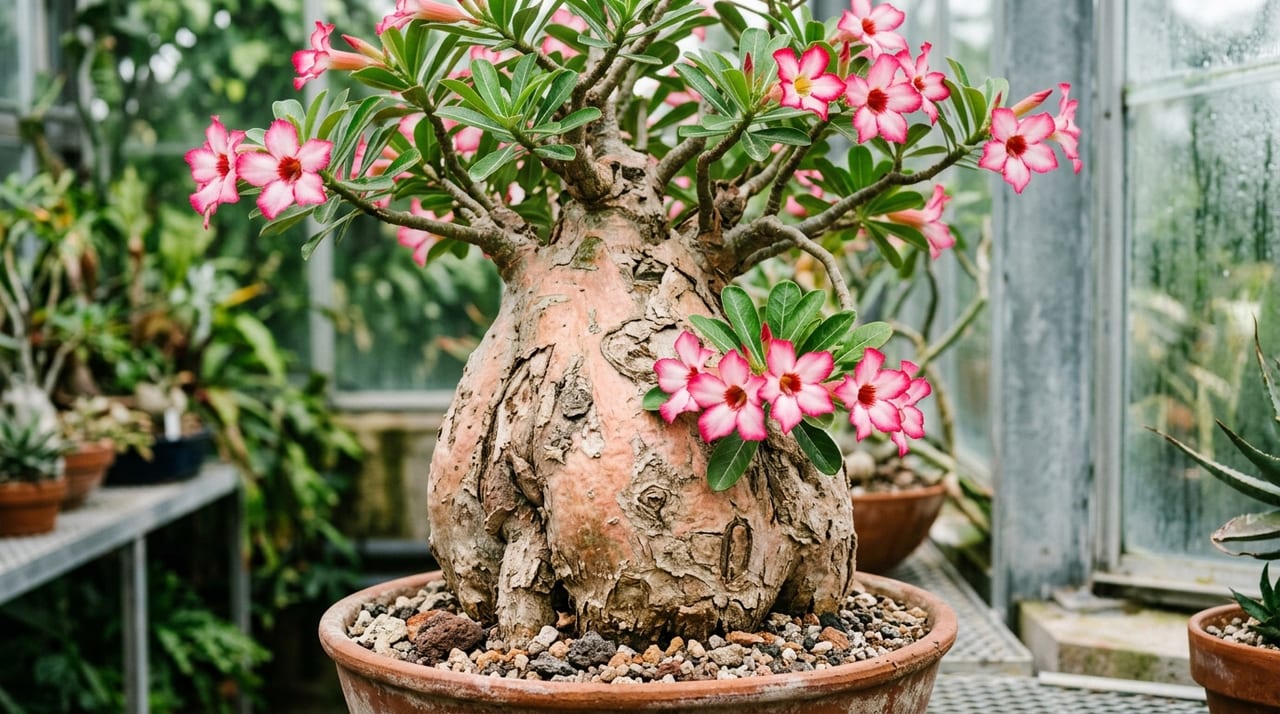
Adenium is a succulent plant classified in the Apocynaceae family, genus Adenium, and grows wild in arid regions stretching from East Africa to the Arabian Peninsula. The plump, swollen caudex (tuberous root) and elegant flowers reminiscent of roses have earned it the affectionate nickname "Desert Rose," and it stands out among caudex plants as one of the easiest entry-level species to obtain and cultivate, making it increasingly popular.
However, a single term "Adenium" encompasses multiple wild species with distinctly different trunk forms and flowers, as well as ornamental cultivars developed primarily in Thailand. Some species have stout, squat trunks; others grow upright like trees; still others develop massive bottle-shaped trunks as rare specimens. Each has its own character. This article focuses specifically on "which Adenium variety to choose within the genus" rather than caudex plants as a whole, and compares popular varieties in a ranked format from the perspectives of origin, trunk shape, flowers, growth rate, propagation method, and cold tolerance. If you're looking for a ranking that spans all caudex plants, also check out Caudex Plant (Caudex) Popularity Ranking TOP 10.
Adenium Variety Comparison Chart (2026 Edition)
Major varieties are compared across five axes: "origin, trunk characteristics, flowers, growth rate, and recommended audience." As distribution and individual variation can fluctuate, please use this as a general guide.
| Rank | Variety | Origin | Trunk (Caudex) Characteristics | Flowers | Growth Rate | Recommended For |
|---|---|---|---|---|---|---|
| 1 | Adenium Obesum | East Africa to Arabia | Plump, standard swollen form | Abundant colors, high ornamental value | Fast | Beginners |
| 2 | Adenium Arabicum | Arabian Peninsula | Thick trunk from base, often multi-headed with squat form | Modest | Medium | Intermediate growers prioritizing form |
| 3 | Adenium Thai Socotranum | Thailand-developed (ornamental cultivar) | Improved strain with selected thick trunk | White to pale pink | Medium | Intermediate growers seeking impressive caudex |
| 4 | Adenium Socotranum | Socotra Island (Yemen) | Massive bottle-shaped form, largest species | Pale pink | Very slow | Advanced collectors |
| 5 | Adenium Somalense | Somalia to East Africa | Slender, upright tree-like form | Blooms abundantly | Fast | Those wanting early flowers |
| 6 | Adenium Multiflorum | Southern Africa | Slender deciduous branches | Many flowers during winter/dry season | Medium | Intermediate growers enjoying flowering displays |
| 7 | Adenium Boehmianum | Namibia to Angola | Slightly thickening summer-growing type | Pale purple to pink | Medium | Species collectors |
| 8 | Double-flowered & Multi-color Ornamental Cultivars | Thailand-improved (grafted distribution) | Easily fattened from rootstock | Showy double and multi-color blooms | Fast | Those prioritizing flower magnificence |
Beginners are safest starting with the easy-to-grow, free-flowering Adenium Obesum. For those seeking impressive caudex (trunk) impact, Adenium Arabicum or Adenium Thai Socotranum are excellent choices. Advanced enthusiasts pursuing form perfection may aspire toward Adenium Socotranum.
Adenium Variety Ranking TOP 8
Rank 1 | Adenium Obesum (Desert Rose)
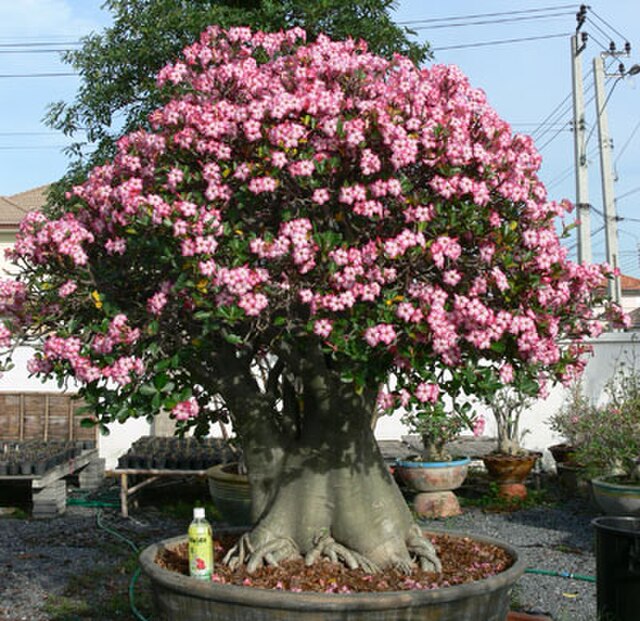
The representative species of the Adenium genus and the variety most commonly seen in garden centers and home improvement stores. Its charm lies in the plump, standard caudex and a wide range of flower colors—white, pink, red, and multi-color—and as horticultural breeding advances, there's the pleasure of choosing flower colors. It thrives in high temperatures, and summer in Japan is ideal for vigorous growth. Growth is rapid, and you can enjoy flowers in a relatively short time even from seed. In winter, it goes dormant when temperatures drop below about 10°C, so water sparingly. The basics of cultivation are explained in detail in How to Grow Adenium and the Secrets to Getting Blooms.
Recommended for: Beginners wanting to keep costs down, those who enjoy flower colors and double-flowered varieties.
Rank 2 | Adenium Arabicum
Native to the Arabian Peninsula, this variety is enjoyed more for its trunk (caudex) sculpture than for flowers. Multiple branches arise from the base of the trunk, creating a multi-headed form with squat, lateral spread. When grown from seed, the trunk thickens naturally without grafting, developing into an impressively thick caudex over time. While flowers are more modest than in Obesum, the variety is favored by intermediate and advanced growers for its capacity to pursue "bonsai-like form beauty."
Recommended for: Those prioritizing trunk thickness and form over flowers, intermediate growers who enjoy slowly developing from seed.
Rank 3 | Adenium Thai Socotranum
Despite its "Socotranum" name, this generally refers not to the rare wild Socotranum native to Socotra Island, but rather to a horticultural cultivar selected and hybridized in Thailand for thick trunks. Its appeal is the dramatic bottle-shaped form close to the genuine Socotranum, achieved at more accessible prices and growth rates. The thick, white-skinned trunk that swells upward is popular, and it has become a standard choice for those seeking impressive caudex impact.
Recommended for: Those who find the genuine Socotranum too expensive but want a thick trunk, intermediate growers prioritizing form.
Rank 4 | Adenium Socotranum
An endemic wild species on Yemen's Socotra Island and the largest species in the Adenium genus. When mature, it can reach several meters tall with trunk diameters of tens of centimeters, featuring a massive bottle-shaped trunk as its defining characteristic. However, growth is extremely slow, and large specimens are rare and expensive. Imported specimens (wild-collected) often require careful root development management, making both management difficulty and acquisition difficulty high. It's a species for long-term cultivation as a symbol of a collection.
Recommended for: Advanced collectors wanting to long-term cultivate a unique giant caudex.
Rank 5 | Adenium Somalense
A wild species distributed from Somalia to East Africa, characterized by a slender, upright tree-like form compared to other Adeniums. It grows quickly and blooms readily even while small, making it ideal for those wanting to enjoy flowers soon. Individual plants sometimes display fine patterning on their slender trunks, offering enjoyment of trunk variation.
Recommended for: Those wanting to enjoy flowers quickly, those who prefer an upright, tree-like appearance.
Rank 6 | Adenium Multiflorum
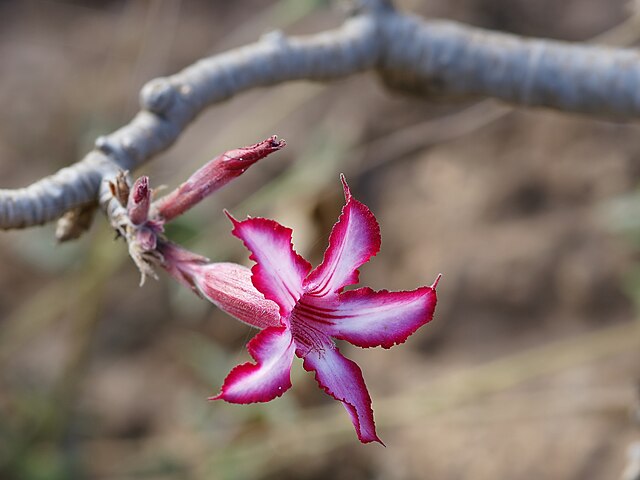
A deciduous wild species distributed in southern Africa (Mozambique and South Africa), also called "Impala Lily" in Japanese. It drops its leaves during the dry season (winter), and the sight of multiple flowers blooming on leafless branches is beautiful, offering enjoyment of flowering displays. Its unique growth rhythm, different from other Adeniums, is popular among enthusiasts who appreciate seasonal change.
Recommended for: Intermediate growers who enjoy the seasonal appeal of leaf-drop and flowering.
Rank 7 | Adenium Boehmianum
A summer-growing wild species distributed from Namibia to Angola. It produces pale purple to pink flowers with an appealingly wild character befitting a true species. The milky sap (latex) is known to be highly toxic—historically used as arrow poison in its native regions (handling precautions noted below). It's suited for collectors wanting to add diversity to their wild species collection.
Recommended for: Collectors assembling a diverse range of wild species.
Rank 8 | Double-flowered & Multi-color Ornamental Cultivars
A group of horticultural cultivars developed primarily in Thailand, producing showy double flowers, multi-colors, and variegated forms. They are often propagated by grafting to fix flower traits, using Obesum or Arabicum as rootstocks, which also encourages thicker trunks. Perfect for those prioritizing flower magnificence above all, with exceptionally high ornamental value as potted flowers.
Recommended for: Those wanting to enjoy showy flowers above all, those choosing for gifts or indoor display.
Variety Selection Guide | Three Key Axes
Choosing by Flowers or Caudex (Form)
The biggest decision point in selecting Adenium is "enjoying flowers versus enjoying trunk sculpture." For flower focus, Obesum and double-flowered cultivars are candidates; for dramatic caudex, Arabicum, Thai Socotranum, and Socotranum are contenders. Obesum offers balanced enjoyment of both, and if uncertain, starting here is the safest, most failure-proof choice.
Seed-grown or Grafted Plants
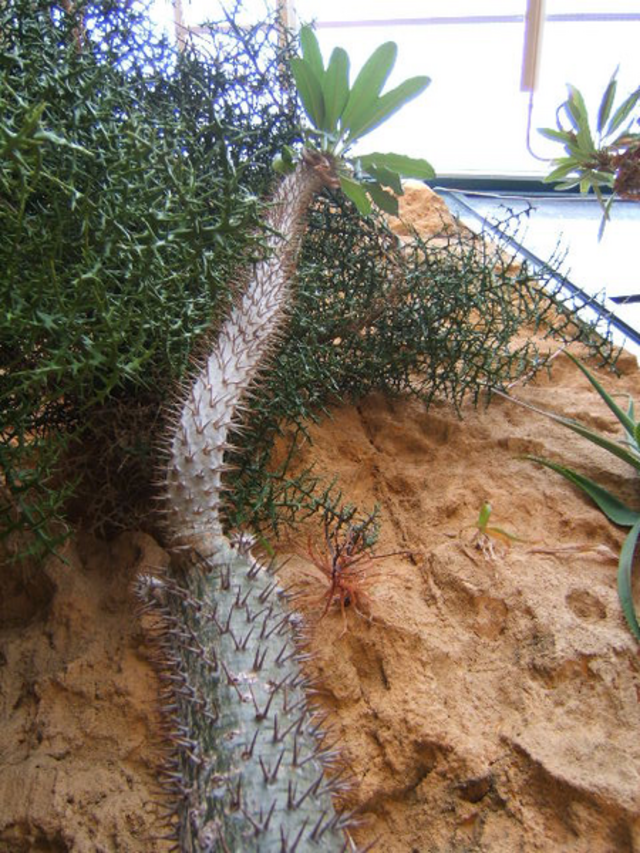
The same Adenium develops differently depending on propagation method. Seed-grown plants naturally develop thicker trunks (caudex) from the base, suitable for those wanting to slowly develop form. Grafted plants, conversely, allow you to fix ornamental flower traits and achieve faster flowering. Choose seed-grown for caudex sculpture, grafted for guaranteed specific flower colors or double blooms. For those wanting to compare caudex plant ease across Pachypodium as well, Pachypodium vs. Adenium: Which is Easier to Grow? is also helpful.
Price Range Guide
- ¥1,000 to several thousand: Small to medium Obesum, Somalense, and potted ornamental cultivars. Ideal price range for beginners.
- Several thousand to tens of thousands: Seed-grown cultivated specimens of Arabicum or Thai Socotranum, selected thick-trunked individuals.
- Tens of thousands to hundreds of thousands: Large Socotranum or long-cultivated impressive wild-collected or seed-grown large specimens. Rarity sends prices soaring.
Recommendations and Basic Cultivation for Beginners
For your first plant, I strongly recommend hardy, free-flowering Adenium Obesum with accessible pricing. Keeping the following points in mind allows even beginners to enjoy flowers.
- Abundant sunlight: Spring to autumn, direct outdoor sun is ideal. Insufficient light causes etiolation and poor flowering.
- Water only when dry: The caudex stores water, so water only after soil is completely dry. Overwatering and root rot are the biggest enemies.
- Winter above 10°C, water sparingly: Most varieties go dormant in winter. Bring indoors aiming for a minimum around 10°C, and reduce watering.
- Imported specimens (wild-collected) require root development management: Bare-root specimens arriving without roots present the first challenge of establishing roots. Detailed steps are explained in Adenium Root Development Management Complete Manual.
Actual plants available for purchase can be found through GrowerDirect's Caudex Plant Category. The advantage of purchasing directly from growers and being able to consult on cultivation is a real strength.
Safety Notes | Trunk Sap (Latex) Toxicity
Adenium is a member of the Apocynaceae family, and the milky-white sap that flows when branches or trunks are cut contains cardiac glycosides, a toxic compound. Particularly for Adenium Boehmianum and certain other species, the toxicity is well-known—historical use as arrow poison. When cutting or grafting and handling sap, be careful it doesn't enter the mouth or eyes, and wash your hands thoroughly after work. Consider placement carefully to prevent small children or pets from accidentally ingesting it.
Note: While Adenium species are not listed in the CITES Appendix (Washington Convention), plants imported from overseas are subject to quarantine inspections under the Plant Protection Law. When purchasing imported plants, it's reassuring to confirm they've passed proper quarantine.
Frequently Asked Questions (FAQ)
Q. Which Adenium variety is easiest to grow? A. Adenium Obesum. It's hardy with good flowering, and abundant distribution makes acquisition easy. It's the perfect first plant.
Q. I want a thick trunk. Which variety should I choose? A. Arabicum and Thai Socotranum excel at trunk (caudex) thickness. Selecting seed-grown specimens makes them naturally thicken from the base even more. For ultimate thickness, Socotranum is the goal, though growth is slow and expensive.
Q. Which is better: seed-grown or grafted plants? A. For enjoying form (caudex sculpture), seed-grown is recommended; for guaranteed specific flower colors or double blooms, grafted plants are ideal. Choose based on your goals.
Q. How should I manage them in winter? A. Most varieties go dormant below about 10°C. Bring indoors to a sunny spot, and keep water minimal (sparse watering) to overwinter. Some varieties like Multiflorum flower during the dry season, so confirm the growth rhythm for each variety.
Summary
Adenium is a genus with depth, allowing enjoyment of both the elegant flowers befitting the "Desert Rose" name and the impressive caudex unique to caudex plants. Choosing varieties matched to your goals—Obesum and ornamental cultivars for flowers, Arabicum, Thai Socotranum, and Socotranum for trunk sculpture refinement—is the shortcut to satisfaction. Start with the easy-to-grow Obesum, and as you gain experience, expand your collection to form-boasting varieties and rare wild species. That's the recommended approach.
GrowerDirect allows you to purchase a wide range directly from growers specializing in Adenium—from seed-grown and grafted specimens to wild-collected plants. Confirming individual plant condition via photos and being able to consult with growers on cultivation are major strengths. Please visit GrowerDirect's Caudex Plant Category to find your own unique specimen. For those wanting to understand Adenium's position within all caudex plants, Caudex Plant (Caudex) Popularity Ranking TOP 10 is also worth reviewing.