Complete Guide to LED Grow Lights for Houseplants | How to Choose, Installation Methods, and Light Intensity Standards
A comprehensive guide to LED grow lights for raising houseplants healthily even in poorly lit indoor spaces. We introduce the basics of spectrum and PPFD, the required light intensity for each variety, recommended installation methods, and electricity cost guidelines.
Key Takeaways
A comprehensive guide to LED grow lights for raising houseplants healthily even in poorly lit indoor spaces. We introduce the basics of spectrum and PPFD, the required light intensity for each variety, recommended installation methods, and electricity cost guidelines.
Related Species
Even if you cannot secure a bright windowsill, you can raise houseplants healthily indoors using LED grow lights. As of 2026, there are even more compact, interior-friendly products, and the number of people enjoying plant cultivation in apartments and north-facing rooms is rapidly increasing.
In this article, we explain from the basic mechanisms of LED grow lights to how to choose them, appropriate light intensity for each variety, installation tips, and electricity cost guidelines in an easy-to-understand way for beginners. For specific product comparisons, please also refer to 【2026】5 Best Recommended Plant Grow Lights | LED Ideal for Indoor Gardening.
Why LED Grow Lights Are Necessary
For houseplants to grow healthily, "light necessary for photosynthesis" is essential. Indoors away from windows often have less than one-tenth of the light intensity found outdoors.
Problems Caused by Insufficient Light Intensity
- Etiolation (stretching): Stems elongate, and the spacing between leaves widens
- Leaf discoloration: Variegation becomes unclear on variegated varieties, and overall color becomes faded
- Reduction in new growth: New leaves become smaller, and the overall balance of the plant is disrupted
- Leaf drop: Ficus species in particular are prone to dropping leaves when light is insufficient
- Indirect cause of root rot: Reduced photosynthesis slows water uptake, making soil dry more slowly
Even varieties said to have "shade tolerance" mean "endure without dying," not "grow vigorously with little light." By introducing a grow light, you can bring out the plant's natural beauty wherever you place it indoors. For more on placement and natural light considerations, please also see Houseplant Sunlight & Lighting Guide.
Fundamentals of LED Grow Lights
Basics of Spectrum (Light Color)
The following wavelengths are mainly involved in light that plants use for photosynthesis.
| Wavelength | Color | Role |
|---|---|---|
| 400–500nm | Blue | Suppresses stem stretching and creates a compact, tight plant form |
| 500–600nm | Green | Penetrates deep into leaves, assisting photosynthesis throughout the chloroplast |
| 600–700nm | Red | The wavelength with the highest photosynthesis efficiency; strongly promotes growth |
| 700–800nm | Far-red | Promotes stem elongation and induces flowering |
What is Full-Spectrum?
The current mainstream is full-spectrum LED. It includes balanced amounts of blue and red components in white light and covers the wavelengths necessary for healthy plant growth. Since the appearance is also natural white light, it won't damage the room's atmosphere even when used indoors.
The purple light with only red and blue colors that was formerly mainstream has high photosynthesis efficiency, but it has the drawback that the room is colored unnaturally, making it difficult to match with interior design. Since full-spectrum LED now provides sufficient results, choosing full-spectrum is the safest option for home use.
What is PPFD (Photosynthetic Photon Flux Density)?
The most important indicator of grow light performance is PPFD (Photosynthetic Photon Flux Density). The unit is μmol/m²/s (micromoles per square meter per second), representing "the amount of light plants actually receive that can be used for photosynthesis."
General indoor illuminance (lux) is based on human eye sensitivity and does not directly correspond to plant photosynthesis efficiency. When choosing plant lights, always check the PPFD value.
Don't Judge by Wattage Alone
Higher wattage does not always mean brighter. Even with the same 20W, PPFD varies significantly depending on LED chip quality and lens design. Comparing PPFD values published by manufacturers (measurements at different distances) is the most reliable approach.
Light Intensity Guide by Variety
The required light intensity varies significantly depending on houseplant variety. Below are PPFD value guidelines measured at the light's illumination surface.
Varieties That Grow Under Low Light (50–100 μmol/m²/s)
- Pothos: High shade tolerance and grows well even under modest lighting
- Aglaonema: Prone to leaf burn under strong light; soft light is best
- Zamioculcas (ZZ Plant): Extremely high shade tolerance; even a few hours of supplemental light per week is effective
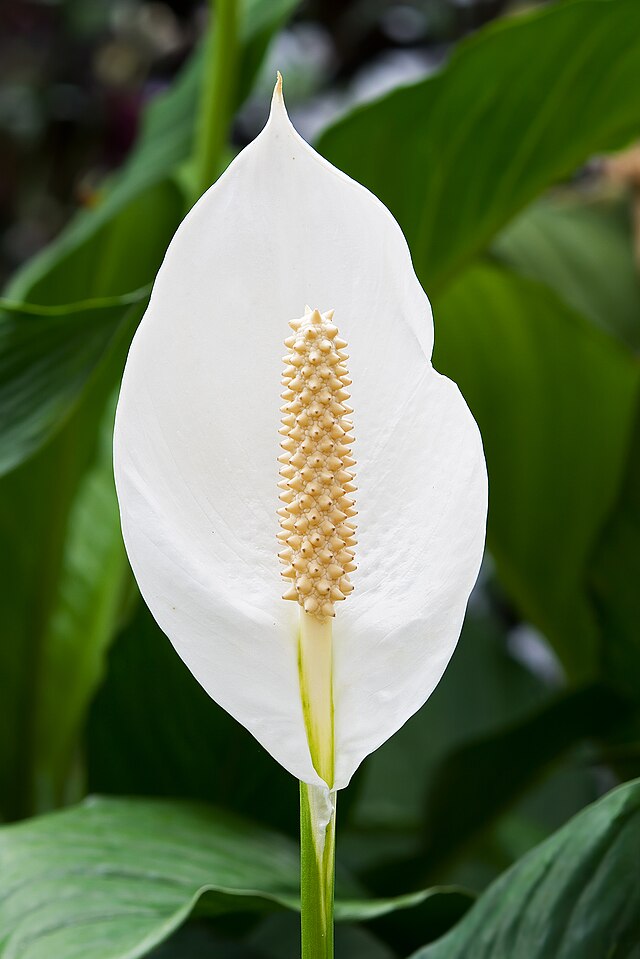
- Spathiphyllum: Can even flower under low light conditions
Varieties Requiring Medium Light (100–200 μmol/m²/s)
- Monstera: Requires sufficient light to develop leaf fenestration (cut leaves)
- Philodendron: Varies by variety, but most maintain beautiful leaf color under medium light
- Calathea: Leaves curl under strong light; moderate intensity is best
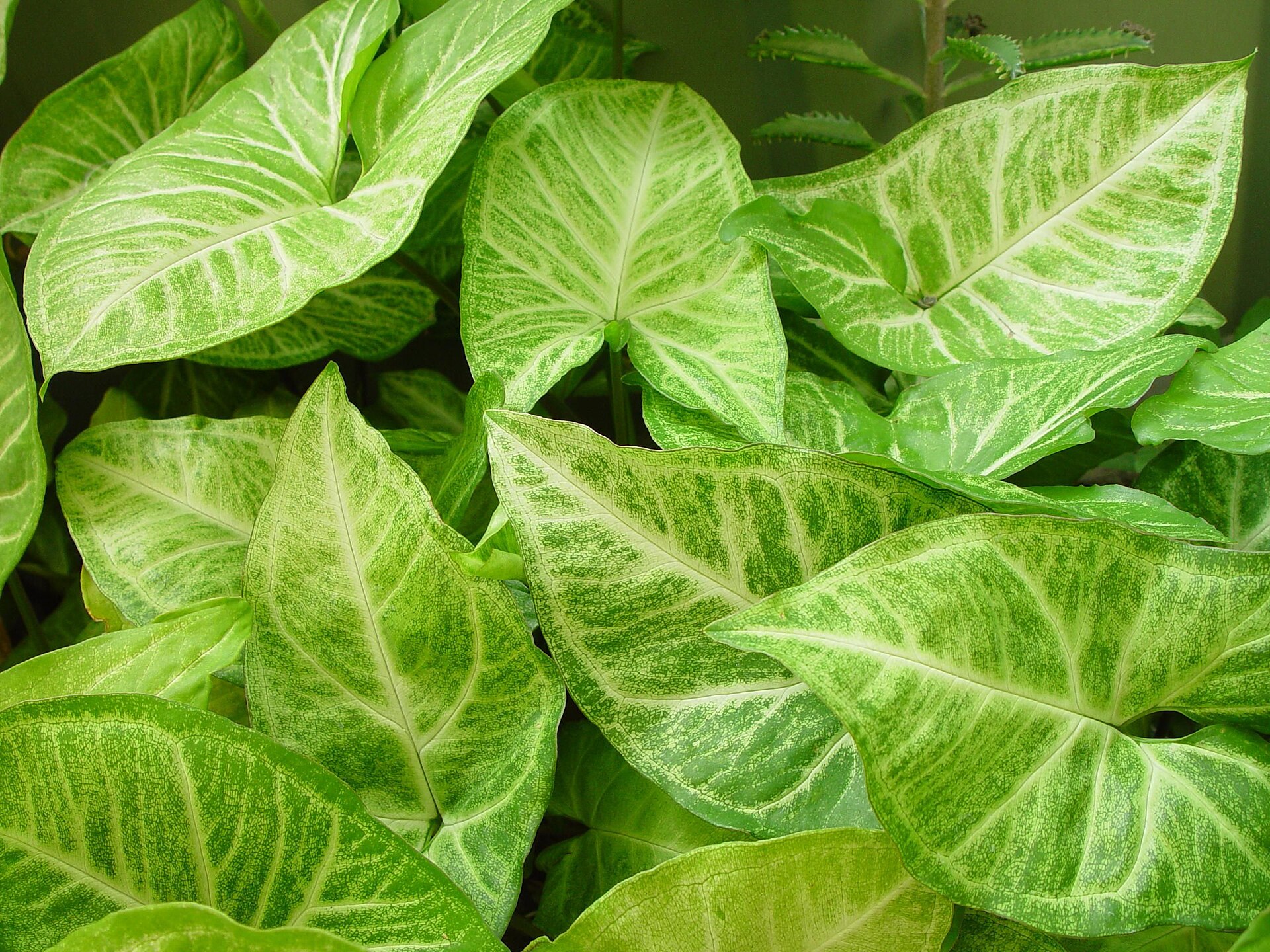
- Syngonium: Variegated varieties show clearer variegation with more light
Varieties Requiring High Light (200–400 μmol/m²/s)
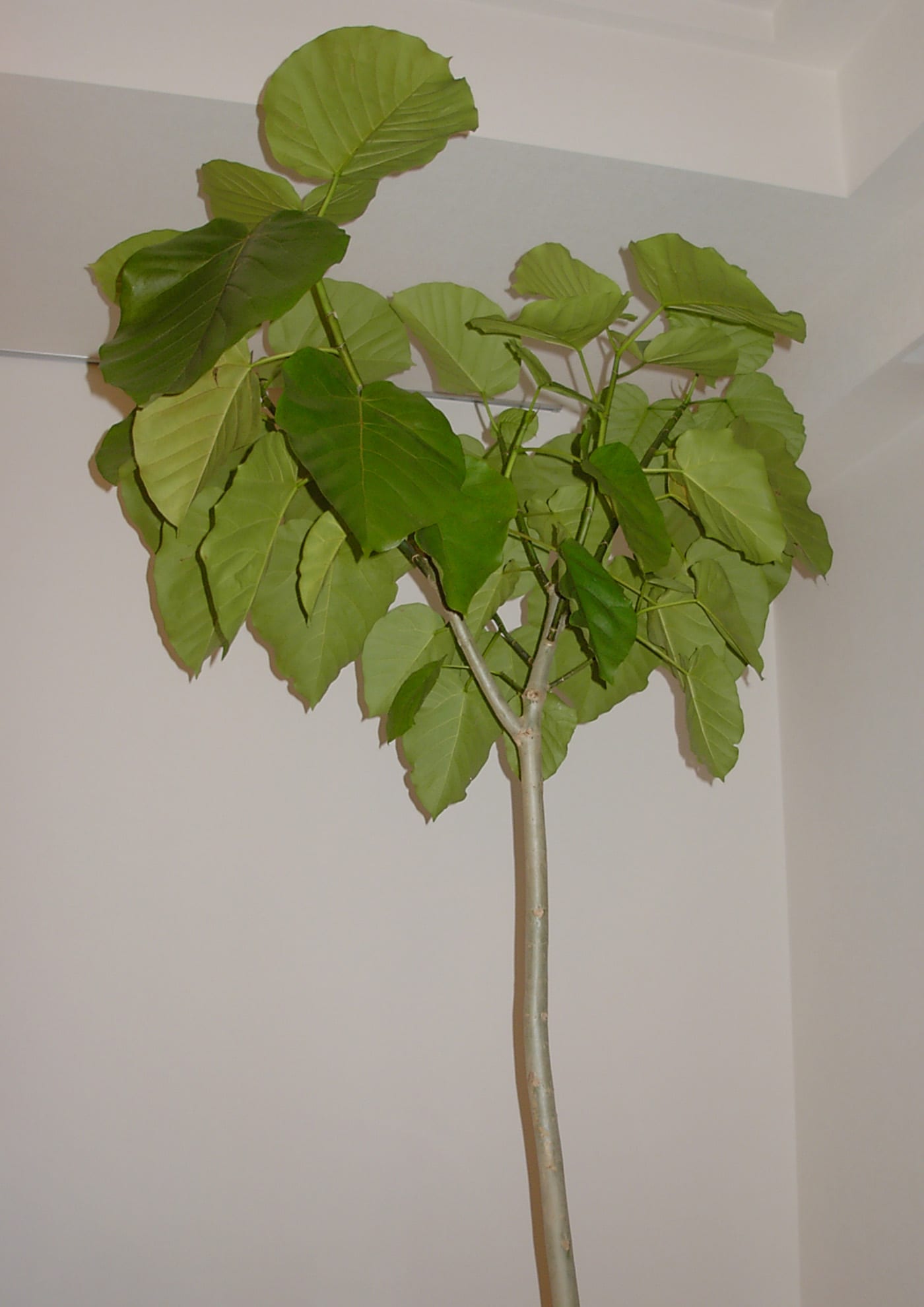
- Ficus species: Particularly Ficus lyrata and Ficus elastica prefer bright light
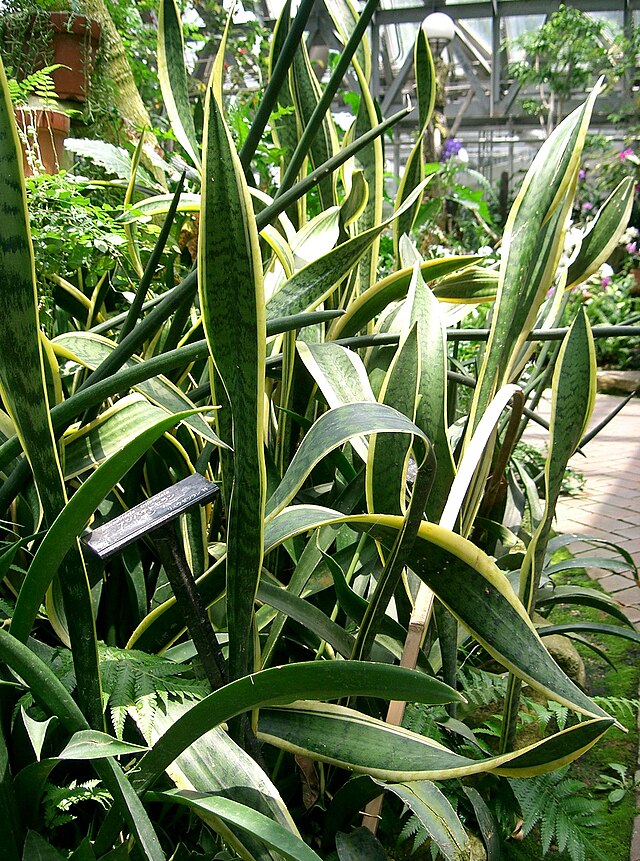
- Sansevieria: Has shade tolerance but develops a tight, compact form under strong light
- Strelitzia (Bird of Paradise): Large plants that require abundant light
- Variegated Monstera: Requires more light because the variegated portions cannot photosynthesize
The relationship between Monstera's leaf fenestration and light is explained in detail in Conditions for Monstera Leaf Fenestration Development.
Types of LED Grow Lights and How to Choose
Clip-Type Lights
Compact lights that clamp onto desks or shelves. Available with 1–3 arms.
- Advantages: Affordable (¥2,000–5,000), easy to install, space-saving
- Disadvantages: Narrow illumination range, many models have low PPFD values
- Best for: Supplemental lighting for 1–3 small plants
Panel-Type Lights
Flat panels that hang from the ceiling or mount on stands. Provide uniform light over a wide area.
- Advantages: Large illumination area, many models have high PPFD values
- Disadvantages: Somewhat bulky, higher electricity costs
- Best for: Managing multiple plants together, such as an entire shelf or rack
Bar-Type (Linear) Lights
Slender bar-shaped lights installed beneath shelf surfaces. Excellent compatibility with plant cultivation shelves.
- Advantages: No wasted shelf space, uniform light distribution
- Disadvantages: Installation may require some ingenuity
- Best for: Plant shelves constructed with metal racks or steel shelving
Bulb-Type (E26 Socket)
Lights that fit directly into existing desk lamps or pendant light sockets.
- Advantages: No additional fixtures needed, blends into interior design
- Disadvantages: Wide beam angle, light disperses easily
- Best for: When appearance matters and you need supplemental light for 1–2 plants
Installation Tips and Lighting Duration
Distance Adjustment
The distance between the light and plant significantly affects light intensity. When distance doubles, light intensity decreases to about one-quarter (inverse square law).
- Guidelines: Clip-type lights 15–30cm from plants; panel-type 30–60cm
- Adjustment: If leaves stretch upward, light is insufficient; if leaf tips burn, increase distance
Lighting Duration
It is important to approximate the natural day-night cycle.
| Light Intensity Level | Recommended Lighting Duration |
|---|---|
| Low PPFD (50–100) | 12–16 hours/day |
| Medium PPFD (100–200) | 10–14 hours/day |
| High PPFD (200–400) | 8–12 hours/day |
Avoid 24-hour lighting. Plants need a "dark period"; blocking the metabolic processes that occur during darkness (such as starch translocation) actually worsens growth.
Using Timers
Manual on/off every day is impractical. It's recommended to automate using an outlet timer (around ¥1,000–2,000). Digital timers allow day-of-week programming, and smart plugs (Wi-Fi compatible) can be operated from your smartphone.
How to Assemble a Plant Cultivation Shelf
To maximize LED grow light effectiveness, assembling a dedicated cultivation shelf is most efficient.
Basic Setup
- Shelf frame: Metal rack (approximately 90cm wide × 45cm deep × 180cm tall) is standard
- Lights: Install bar-type lights under each shelf's surface. 40–50cm between shelves is recommended
- Timer: Manage all shelves together or set different schedules for each shelf
- Trays and waterproof sheeting: Protect flooring from water during watering
Layout Tips
- Top shelf: Ficus, Sansevieria, and other high-light plants
- Middle shelf: Medium-light varieties like Monstera and Philodendron
- Bottom shelf: Low-light varieties like Pothos and Aglaonema
- Reflective material: Aluminum sheeting on shelf sides reduces light waste
Electricity Cost Estimate
LED grow lights are significantly more energy-efficient than fluorescent or HID lamps.
Calculation Example
- 20W panel lights × 2 units
- 12 hours of lighting per day
- Electricity rate: ¥30/kWh
Monthly electricity cost = 20W × 2 units × 12 hours × 30 days ÷ 1,000 × ¥30 = approximately ¥432
A single 10W clip-type light costs only around ¥108 per month—less than a cup of coffee. Even when managing many plants on a shelf, costs typically stay within ¥1,000–2,000 monthly. The full picture of maintenance costs including electricity is also covered in How Much Does It Cost to Grow Houseplants?.
Checklist When Purchasing
Here is a summary of items to verify when choosing a grow light.
Must-Check Items
- Is PPFD value published (values at different distances is better)
- Is it full-spectrum
- Power consumption and heat output
- Dimming capability (can accommodate variety changes and seasonal variation)
- Is timer built-in (external timer needed if not)
Convenient Features
- Dimming: Can adjust light intensity in increments (50%, 75%, 100%, etc.)
- Color temperature adjustment: Red-shifted for growth phase, white for display
- Daisy-chain connection: Link multiple units to a single power source
- Water resistance: Protection against water misting and splashing during watering
Cautions with LED Grow Lights
Risk of Leaf Burn
Excessive high-PPFD light at close range causes leaf burn, similar to outdoor direct sunlight. When first introducing a light, start at a greater distance and gradually move it closer over 1–2 weeks for safety.
Heat Management
Although LEDs produce less heat than fluorescent lights, temperature can rise inside a sealed shelf. Provide ventilation holes or install a small fan to circulate air.
Light Lifespan
The typical lifespan of an LED grow light is about 50,000 hours (approximately 11 years at 12 hours daily). However, PPFD gradually decreases with age, so check light intensity every 2–3 years and consider replacement if needed.
Conclusion
LED grow lights overturn the assumption that "low light makes plants impossible." By selecting lights with correct spectrum and appropriate PPFD, and setting distance and duration to match the variety, you can grow healthy houseplants even in rooms without windows.
Start with convenient clip-type or E26 bulb-type lights, and if you see results, upgrade to panel or bar types—a sustainable progression. Assembling a plant cultivation shelf can dramatically streamline collection management. Combining with Houseplant Winter Care & Cold Protection Guide is also effective for addressing winter light shortage.
Light is a plant's "food." Create the right light environment and enjoy a vibrant indoor green life.