Aquatic Plant Encyclopedia
Encyclopedia of popular aquatic plants with care guides, traits, and aquascaping tips.
Showing 77 of 127 species(25–48)
 © Krzysztof Ziarnek, Kenraiz / CC BY-SA 4.0
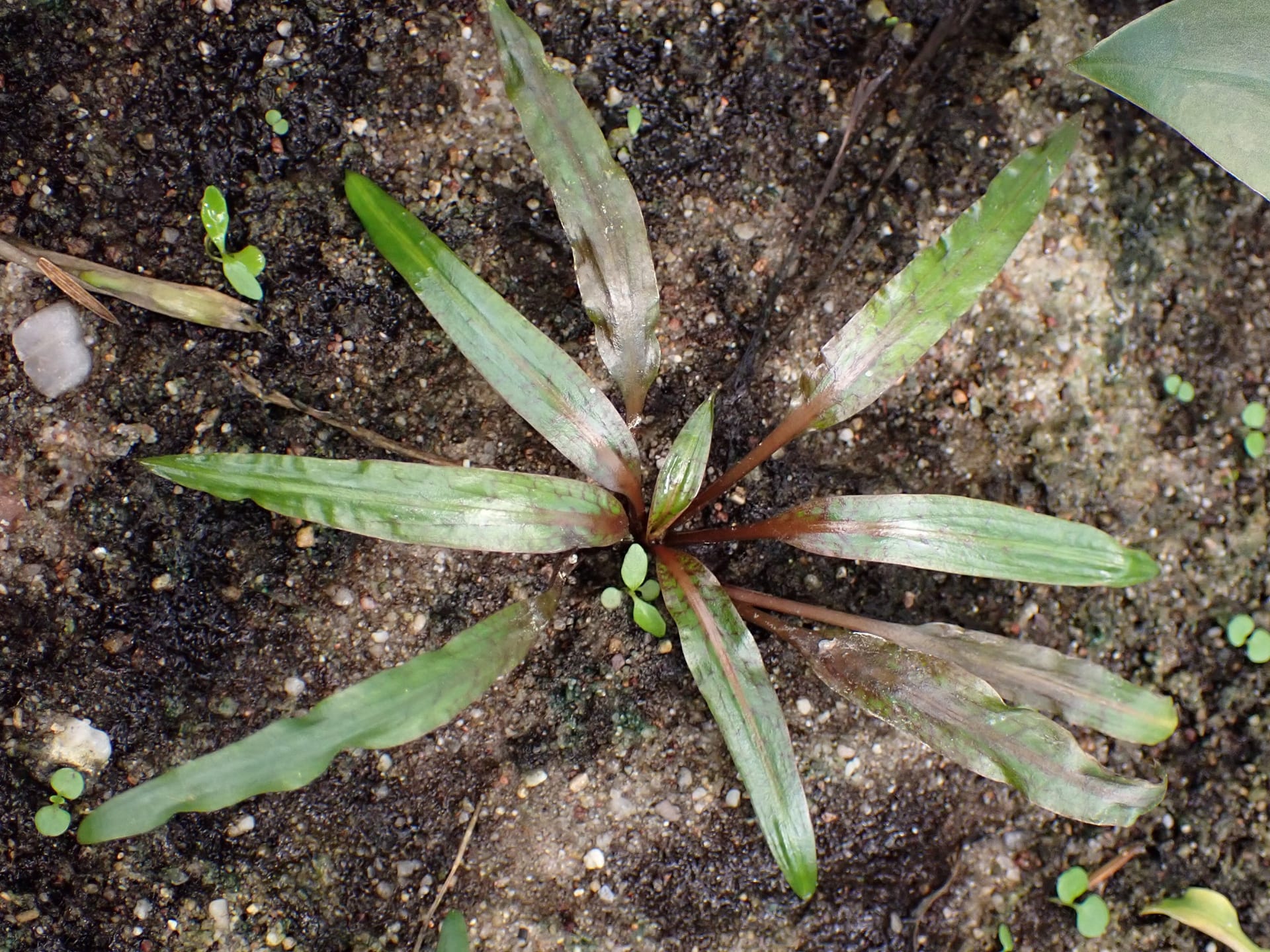
Cryptocoryne albida
Cryptocoryne albida
A Cryptocoryne with narrow lanceolate leaves and gently wavy margins. Both a green form and a 'Brown' form with red-brown, darkly feather-marked leaves are traded. It tolerates low light and combines easily with other plants.
 © Krzysztof Ziarnek, Kenraiz / CC BY-SA 4.0
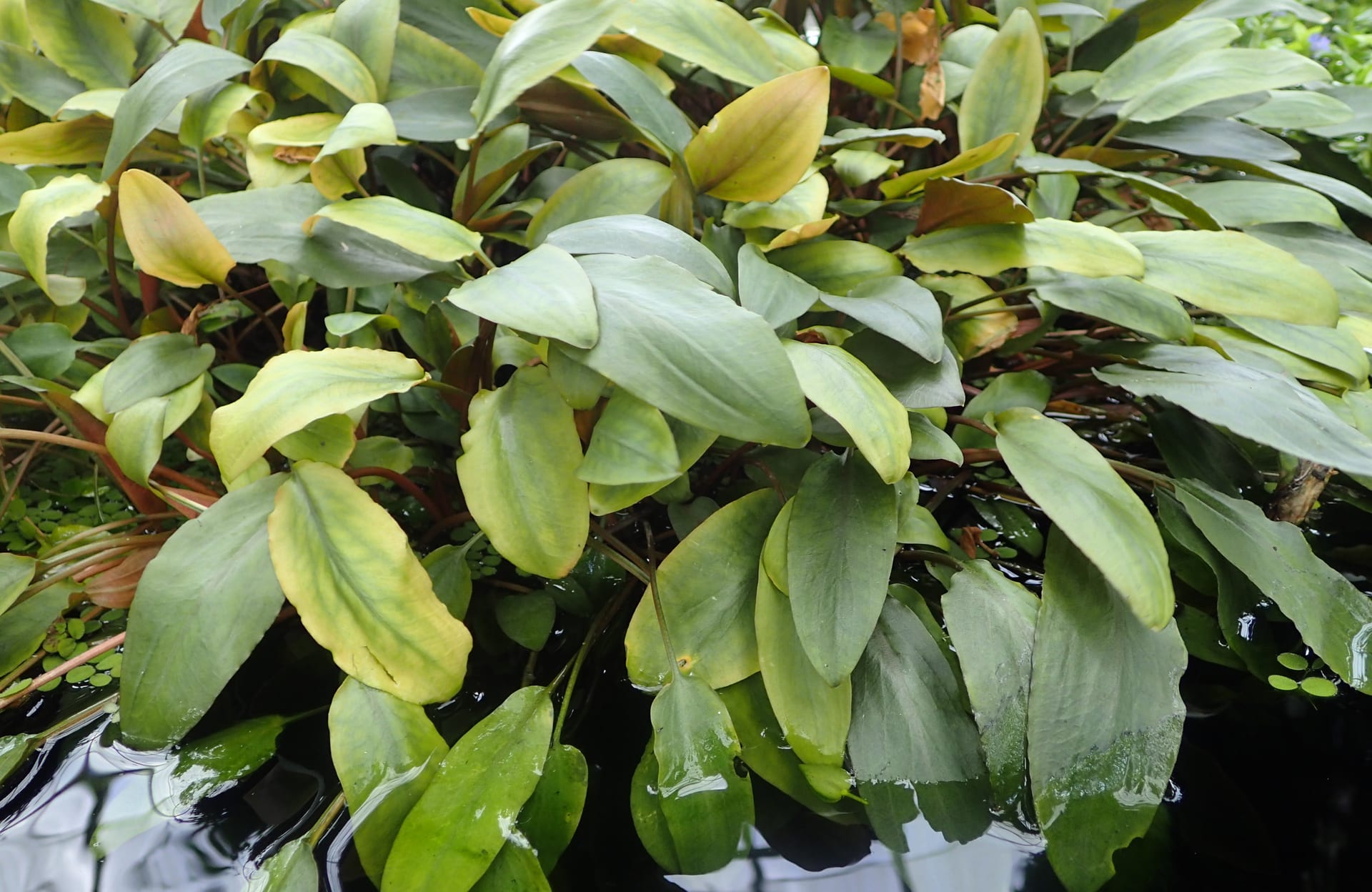
Cryptocoryne beckettii
Cryptocoryne beckettii
A Sri Lankan Cryptocoryne with pointed olive-brown to green leaves and purplish undersides. Grown for over 60 years, it adapts to soft or hard water and forms bushy stands by runners.
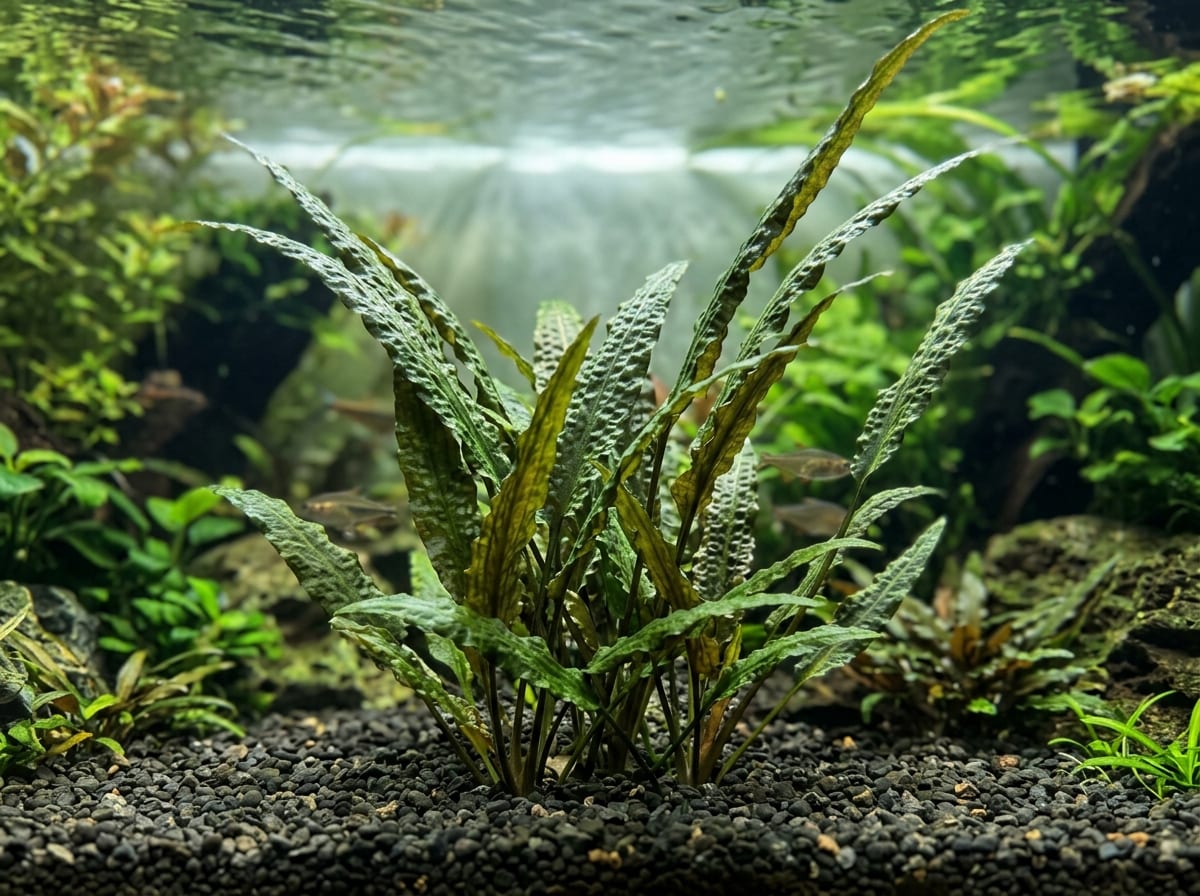
Cryptocoryne crispatula var. balansae
Cryptocoryne crispatula var. balansae
A Cryptocoryne with long, strap-like, strongly hammered leaves that can exceed 50 cm, used as a background thicket. Native to hard limestone waters, it shows twisted leaves when short of calcium.
 © Krzysztof Ziarnek, Kenraiz / CC BY-SA 4.0
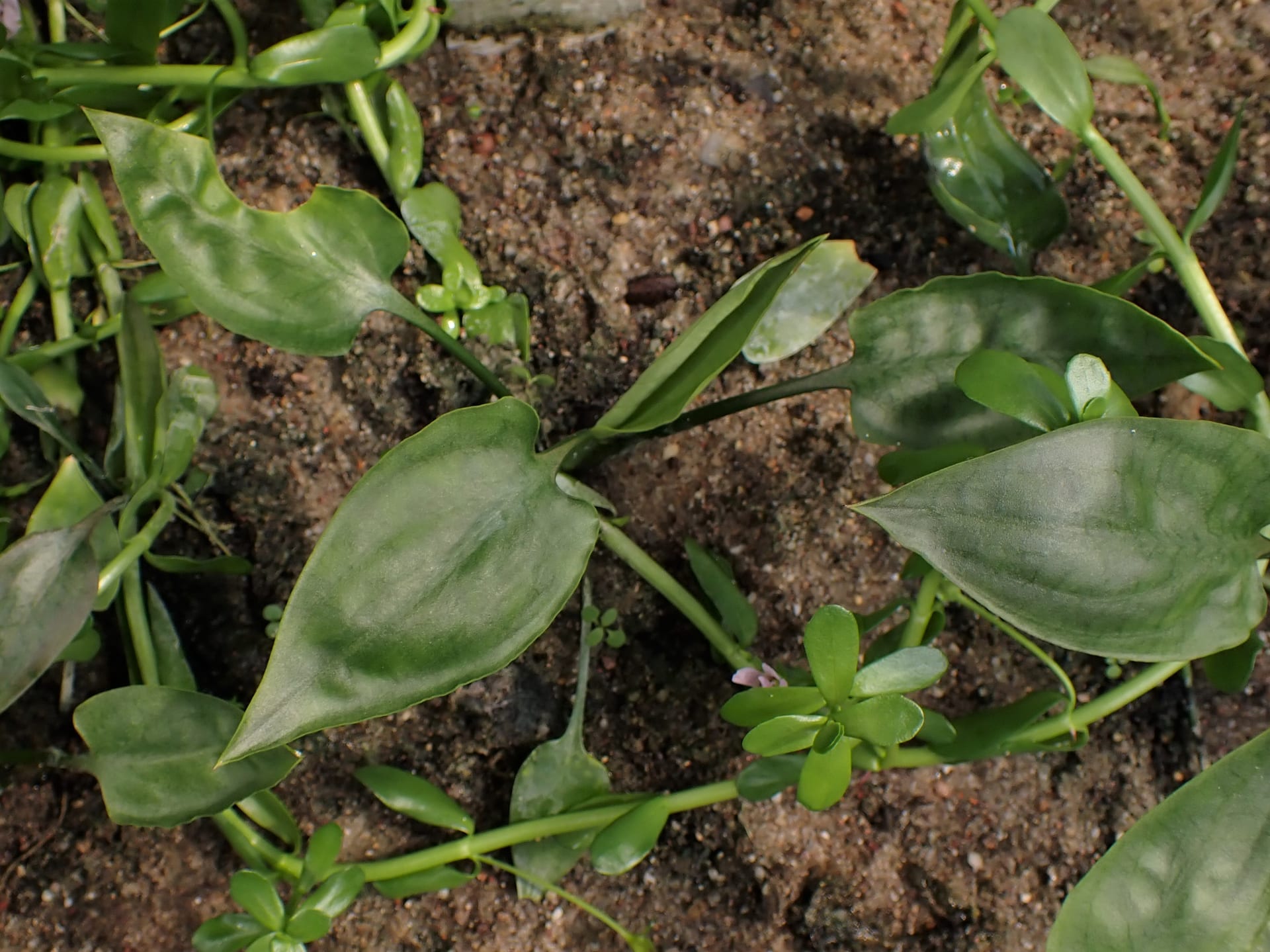
Cryptocoryne pontederiifolia
Cryptocoryne pontederiifolia
A fairly large Sumatran Cryptocoryne with broad, heart-shaped leaves, often brownish to faintly violet beneath and slightly hammered. It rarely suffers crypt melt and can stand in for Anubias.
Cryptocoryne undulata
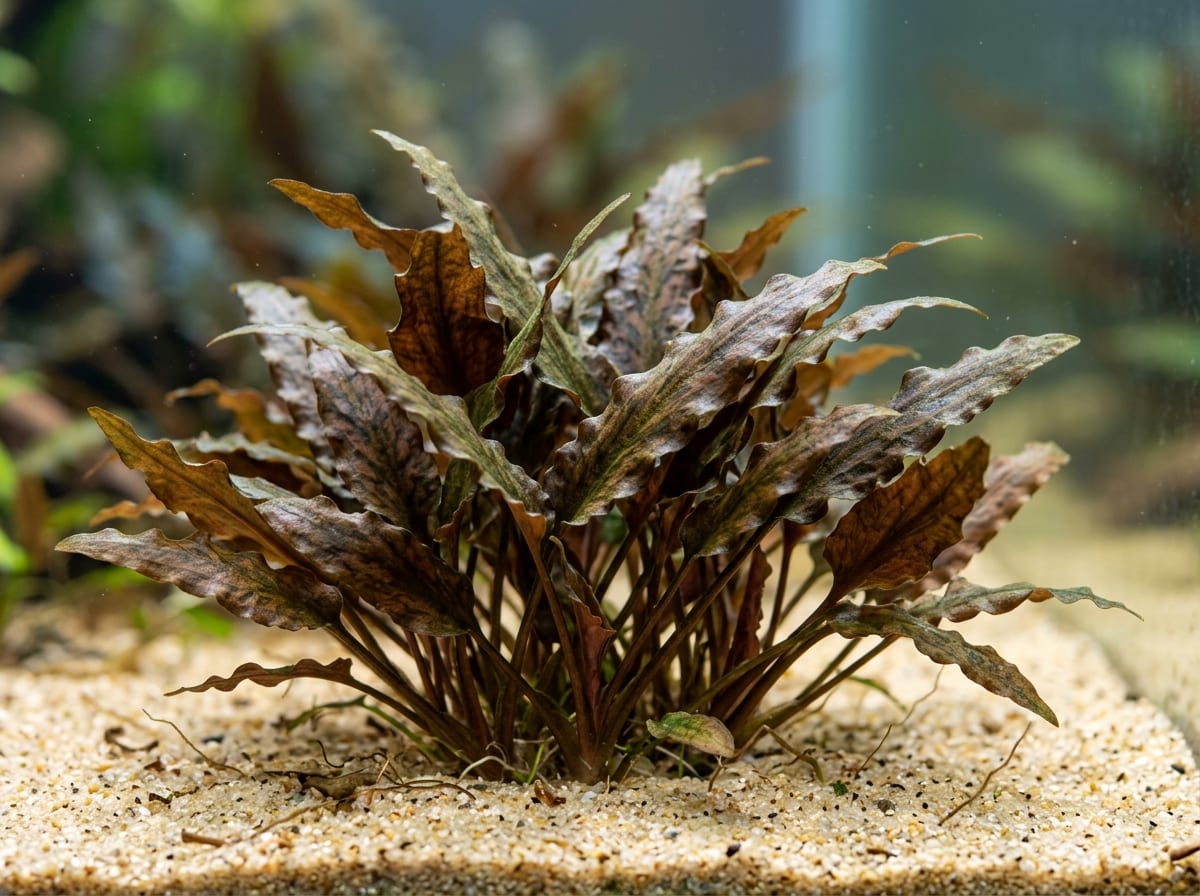
Cryptocoryne undulata
A Sri Lankan Cryptocoryne with brown, slightly wavy and sometimes marbled leaves. It grows without fertiliser in low light, and the more light and nutrients it gets, the lower and denser it becomes. A broad-leaved triploid form is also traded.
Cryptocoryne usteriana
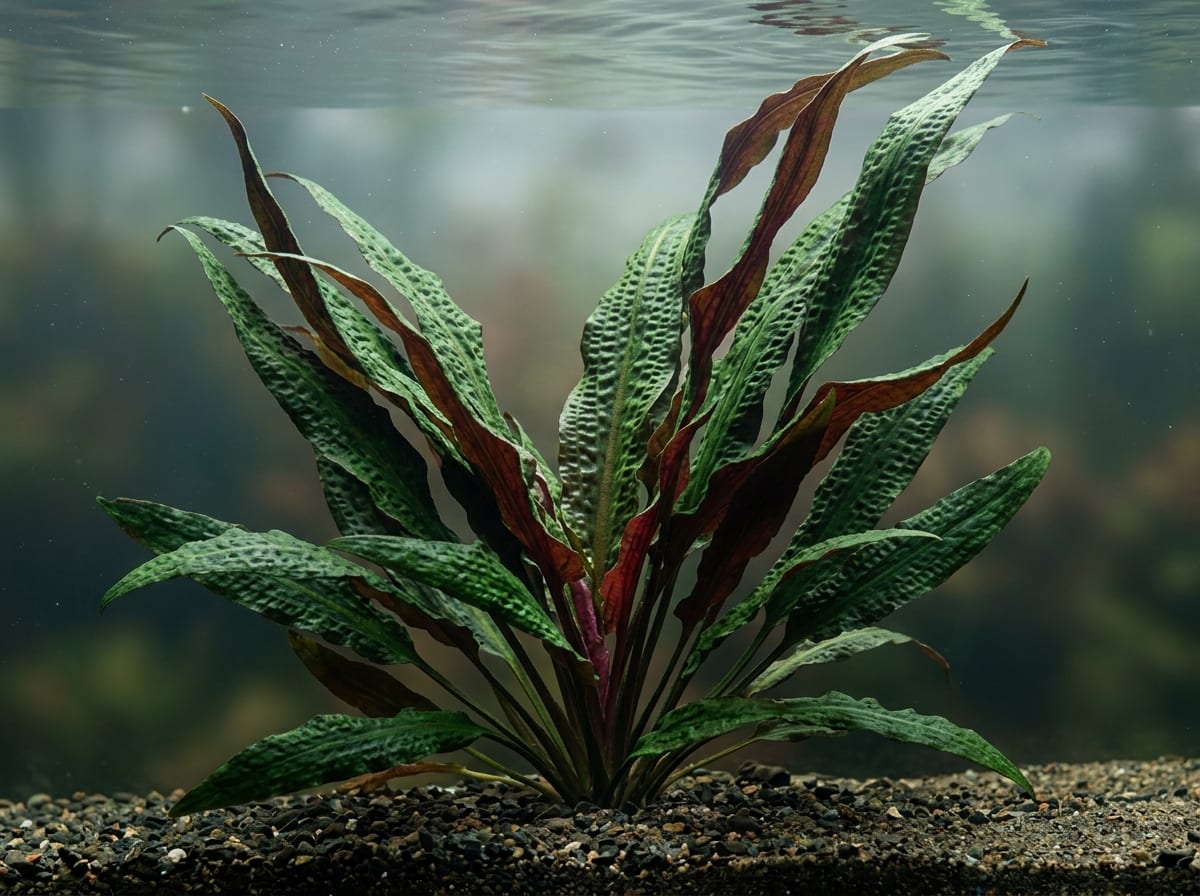
Cryptocoryne usteriana
A large Cryptocoryne from Guimaras in the Philippines. Its embossed leaves, 3–5 cm wide, grow beyond 50 cm and turn wine-red beneath under good light and fertilisation. It likes hard water and is not eaten by fish.
Cryptocoryne walkeri 'Lutea'
Cryptocoryne walkeri 'Lutea'
A form of the Sri Lankan Cryptocoryne walkeri, once treated as the species C. lutea. Its 8–12 cm leaves have finely wavy margins on the lower half. Both purple-red and green-brown plants are sold under the name.
 © Haplochromis / CC BY 2.5
Cryptocoryne Wendtii
Cryptocoryne wendtii
A hardy Cryptocoryne from Sri Lanka. Calm brown to green tones ideal for midground placement.
Dwarf Sagittaria
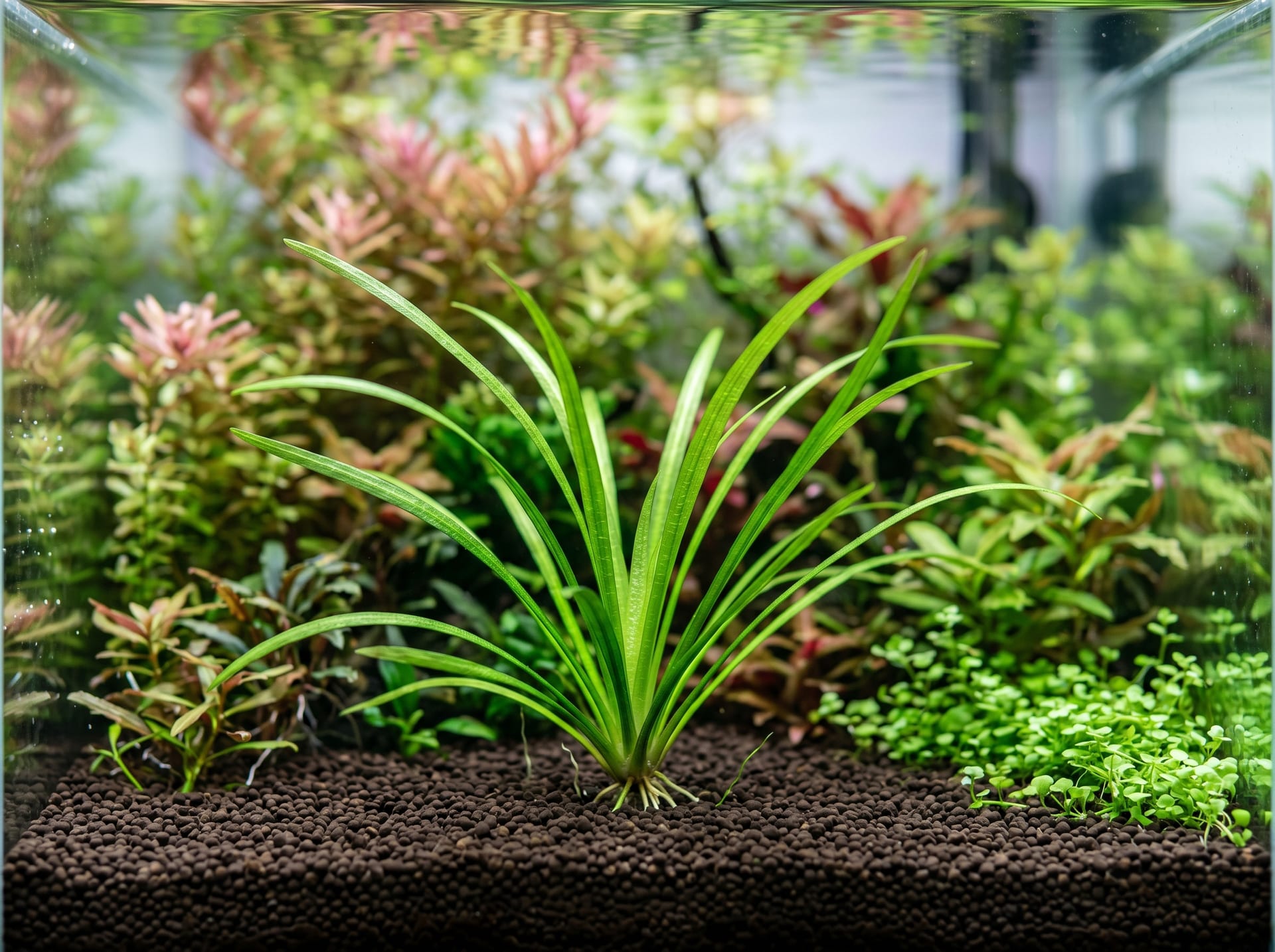
Sagittaria subulata
A foreground-midground plant growing densely like lawn. Very hardy, spreads quickly by runners.
 © Marrabbio2 / CC BY-SA 3.0
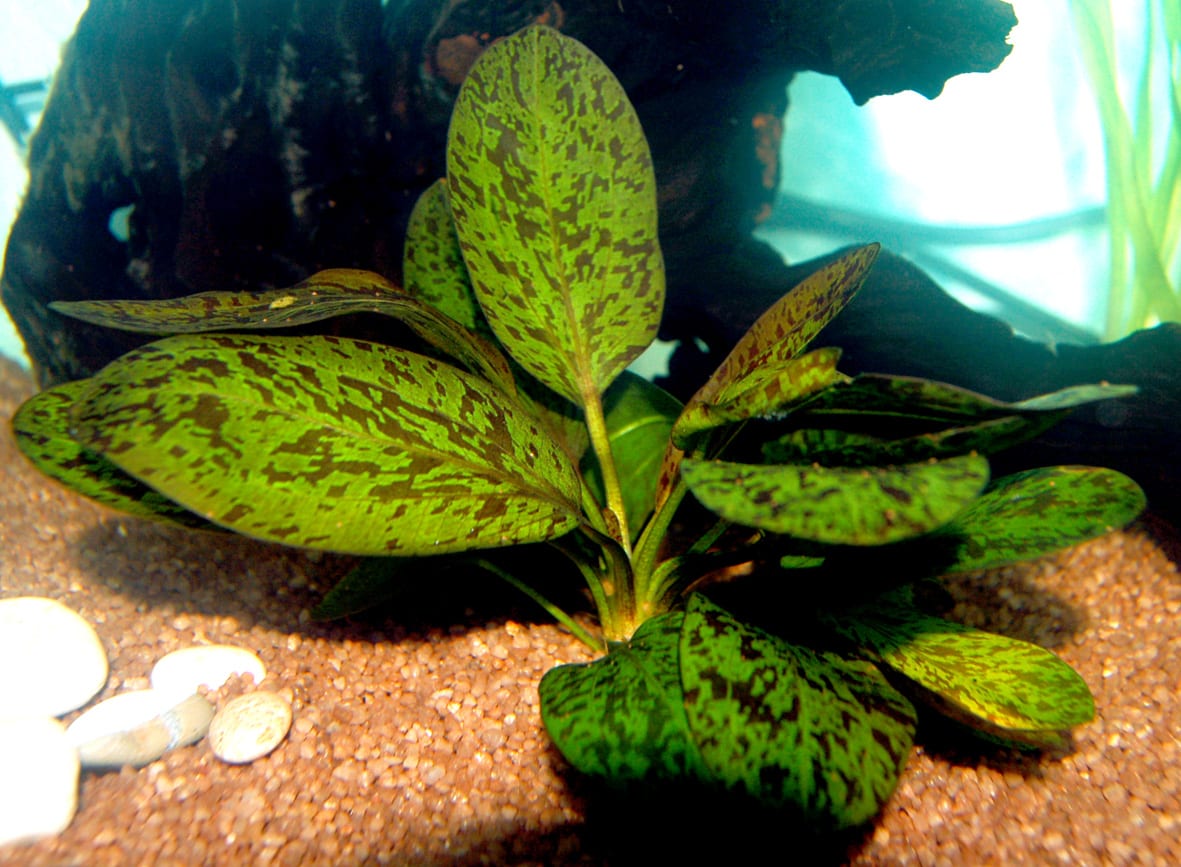
Echinodorus 'Ozelot'
Echinodorus 'Ozelot'
A hybrid sword plant with elliptical black spots on red-brown leaves. The spots are darkest on young leaves and, unlike many spotted swords, persist even in low light. Hardy and suitable for beginners.
Echinodorus 'Rubin'
Echinodorus 'Rubin'
A large hybrid sword plant with long, leathery leaves up to about 60 cm. Young leaves are vivid red-brown with conspicuously pale veins. Bred by Hans Barth of Dessau.
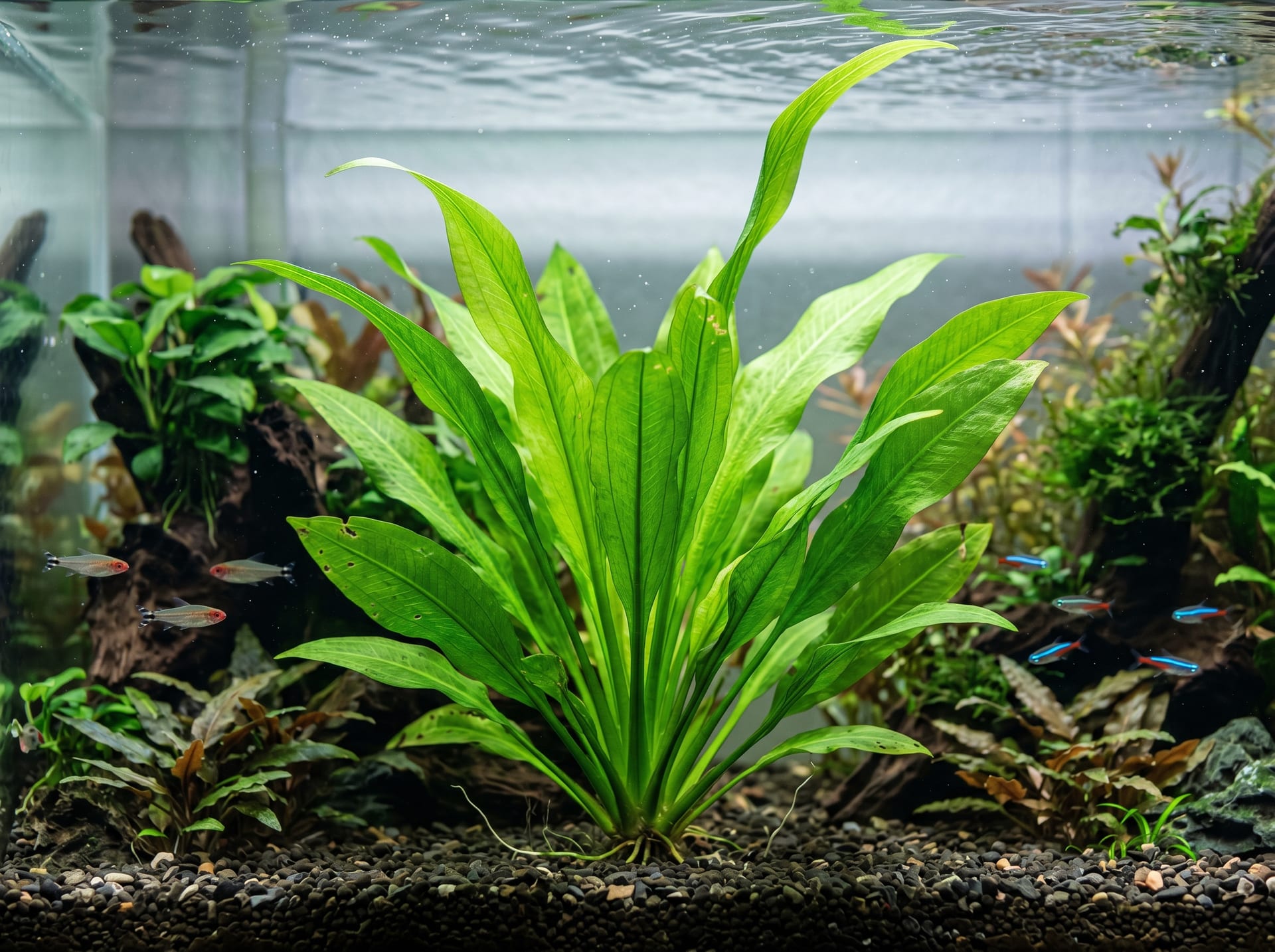
Echinodorus (Amazon Sword)
Echinodorus
Representative large aquatic plant also called Amazon Sword. Ideal for mid to background. Propagates by runners, easy for beginners.
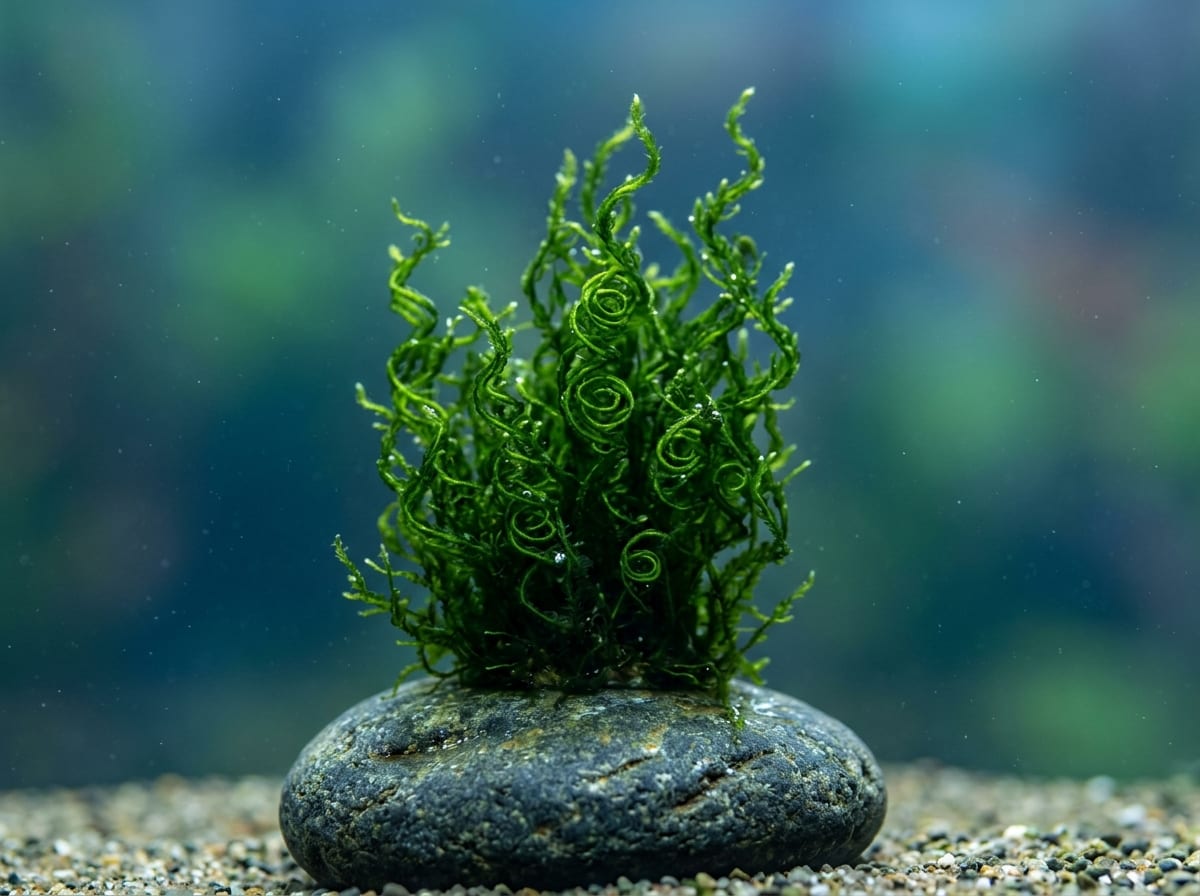
Flame moss
Taxiphyllum sp. 'Flame'
An aquatic moss whose sparsely branched shoots twist upward like rising flames. It spreads little sideways, so it is attached to the tops of wood or stones to add height.
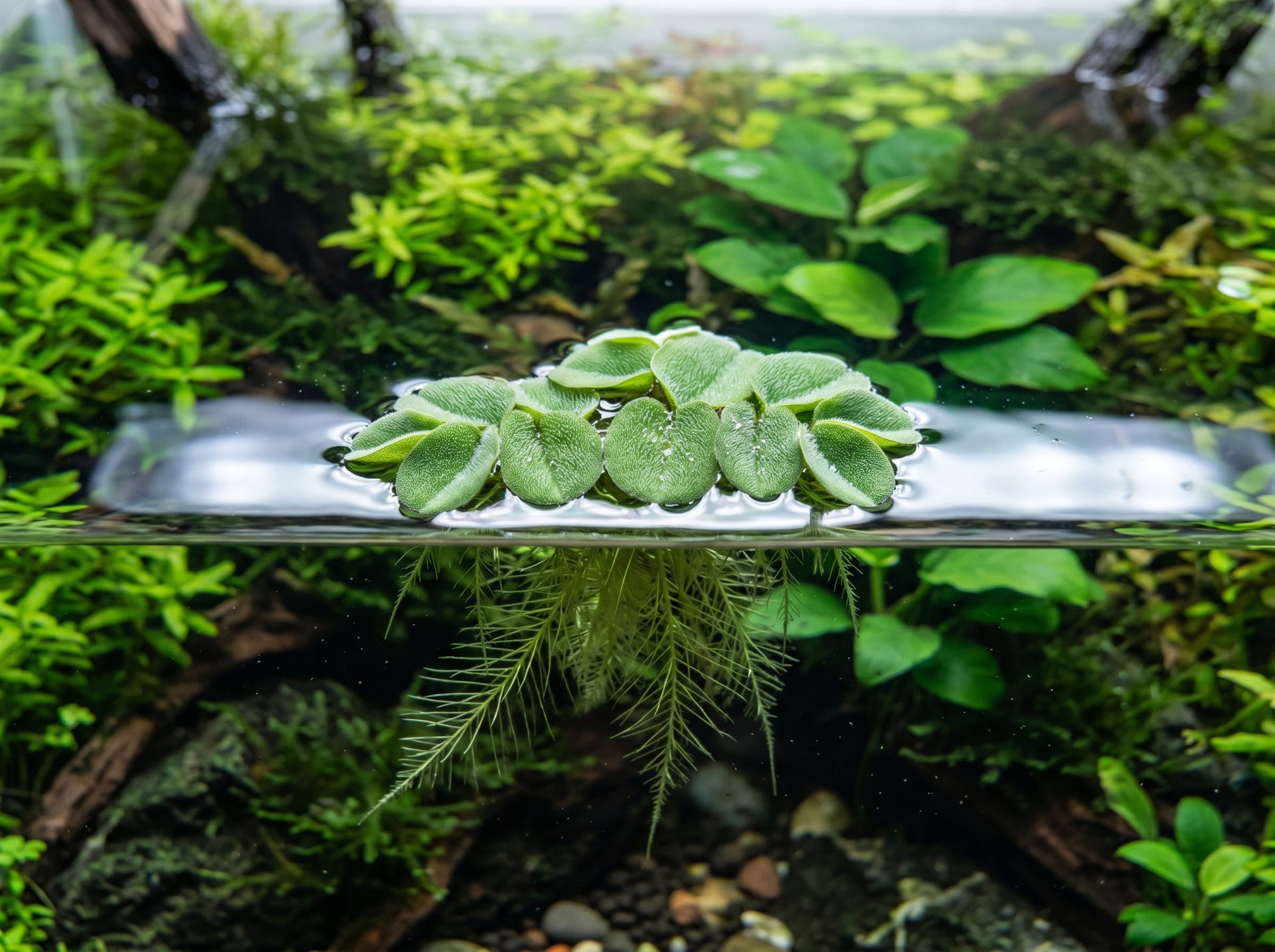
Floating Fern
Salvinia natans
Small oval floating leaves cover the surface. Fine hairs on leaves repel water. Fast multiplier with strong water purification. Popular for medaka and betta tanks.
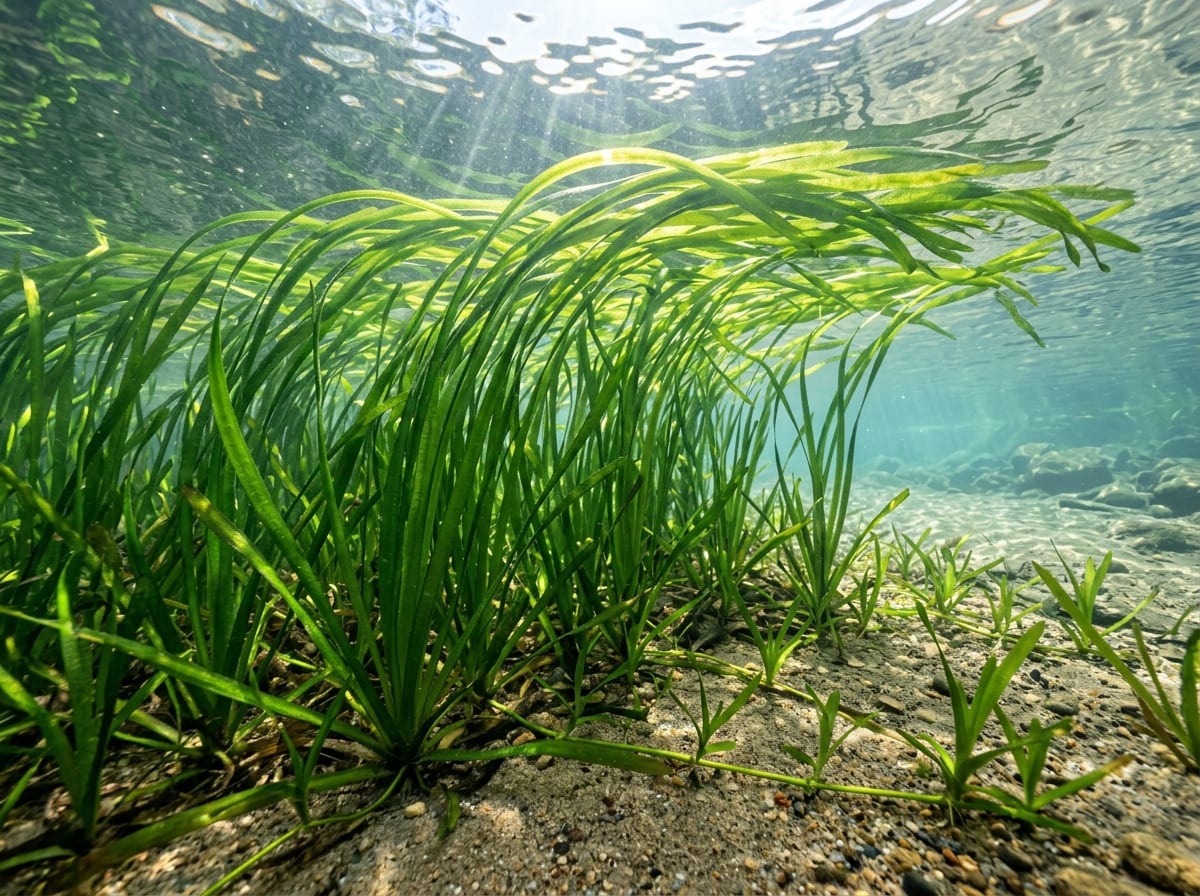
Giant vallisneria
Vallisneria australis
A large vallisneria with tough ribbon leaves about 2 cm wide that grow over 1 m long and spread across the surface. It multiplies freely by runners and resists herbivorous fish. Naturalised in Japan and listed as a Priority Control Alien Species.
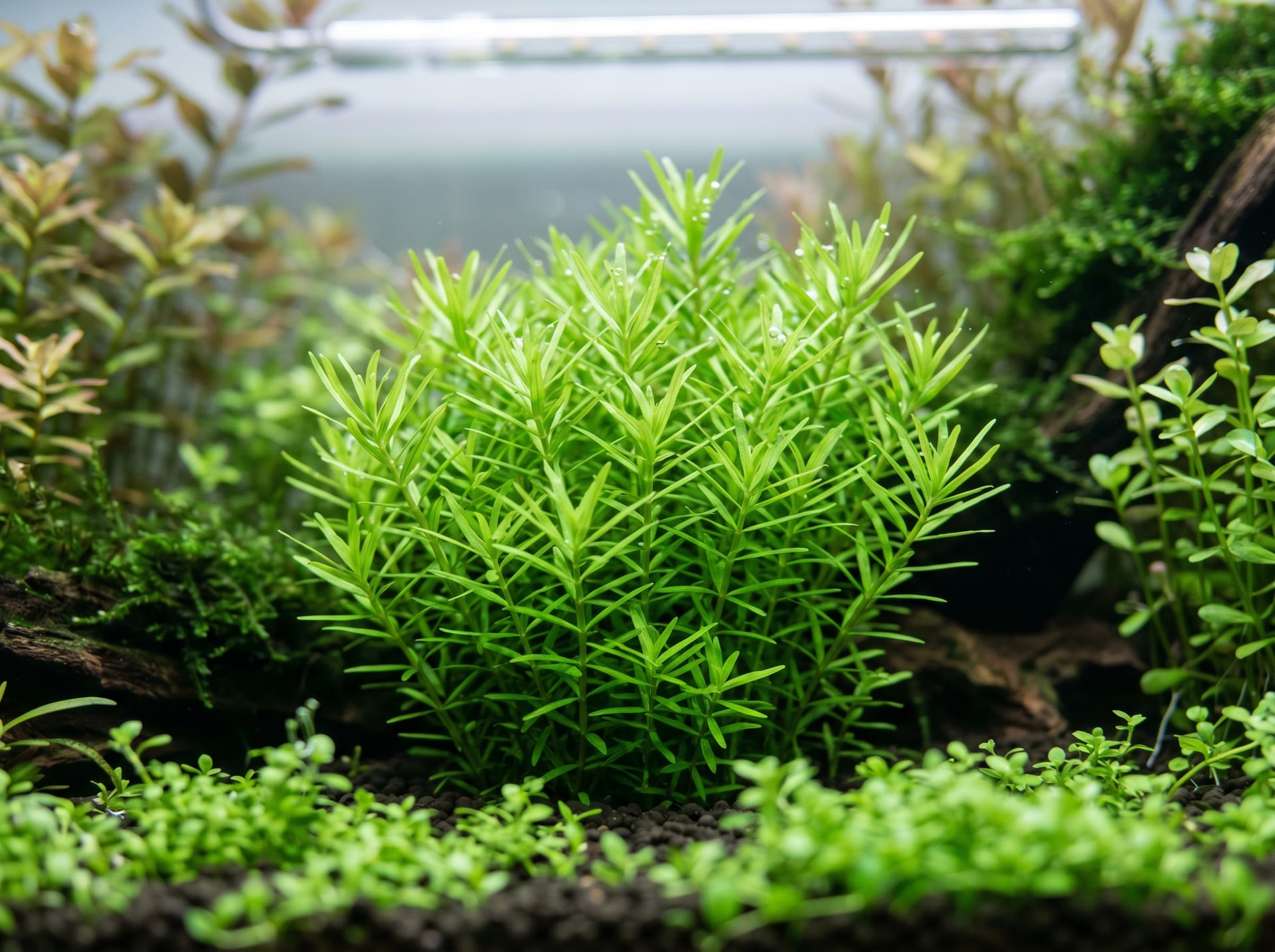
Green Rotala
Rotala rotundifolia 'Green'
A green variety of Rotala rotundifolia. Dense bright green leaves create lush background bushes. Easier than red varieties. Replant trimmings to increase density.
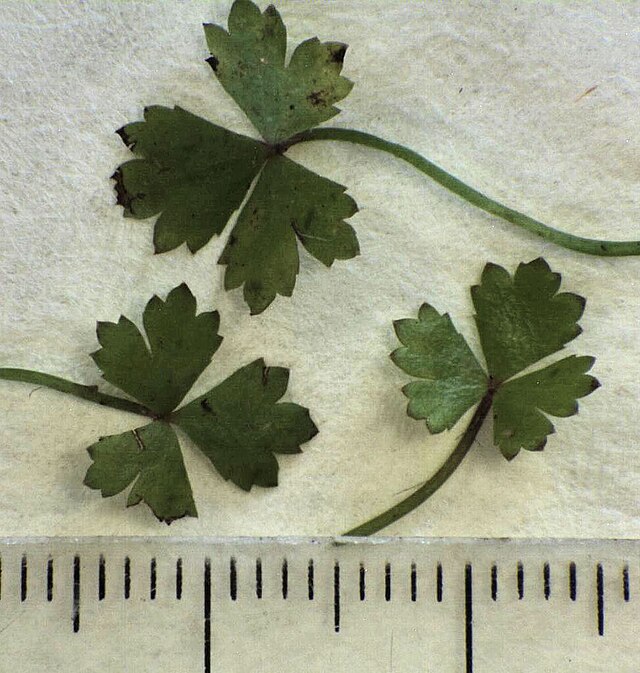 © S.E. Thorpe / Public domain
Hydrocotyle Tripartita
Hydrocotyle tripartita
A cute aquatic plant with clover-like trifoliate leaves. Grows horizontally, ideal for midground.
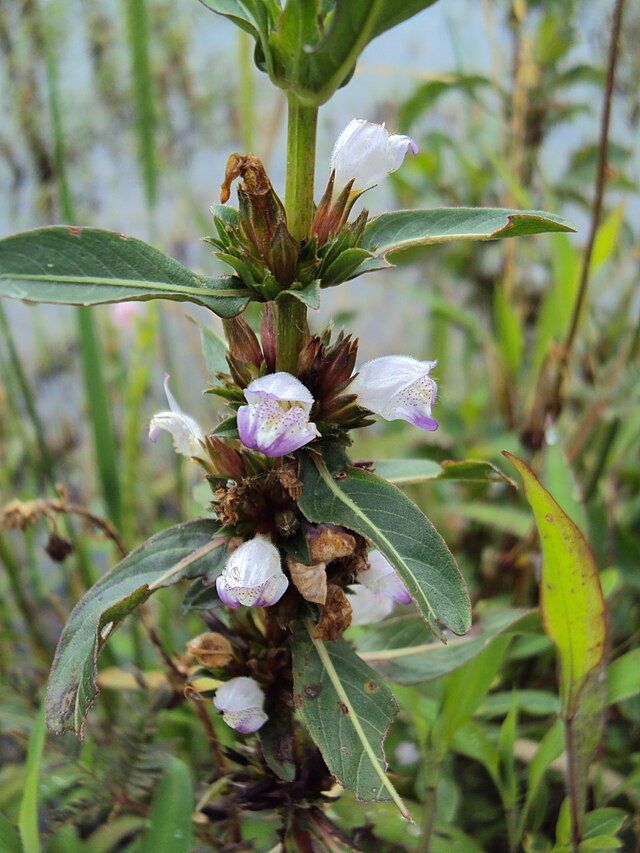 © Vinayaraj / CC BY-SA 4.0
Hygrophila
Hygrophila
Representative fast-growing hardy stem plant. Polysperma is most common. Easily propagated by trimming.
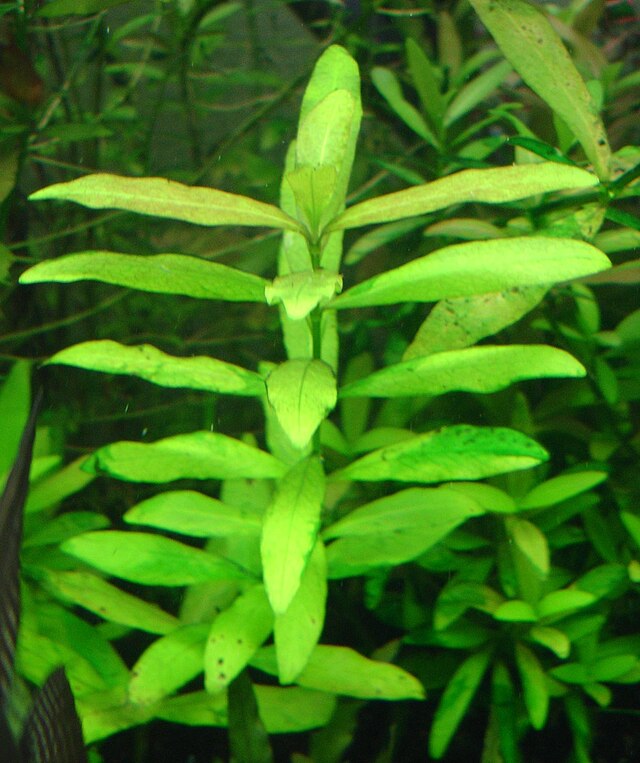
Hygrophila Polysperma
Hygrophila polysperma
An extremely hardy and fast-growing stem plant. Perfect as a first plant for beginners. Grows in any condition.
 © Cliff / CC BY 2.0
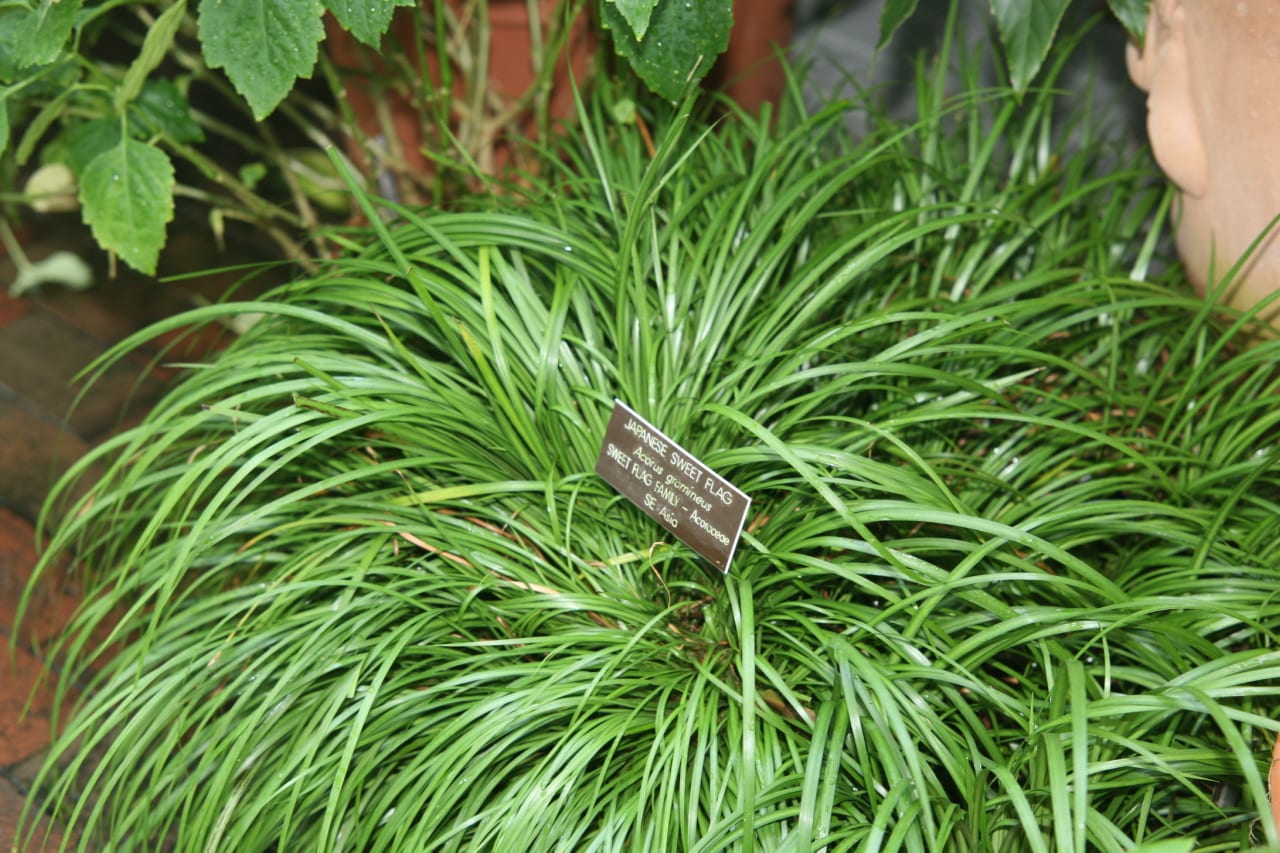
Japanese sweet flag
Acorus gramineus
A Japanese native marsh plant that fans out narrow, sword-like leaves and forms colonies on rocky stream banks. Tough at the water's edge or in terrariums, but most forms decline when fully submerged; only dwarf cultivars cope under water.
 © Tsunamicarlos at English Wikipedia / Public domain
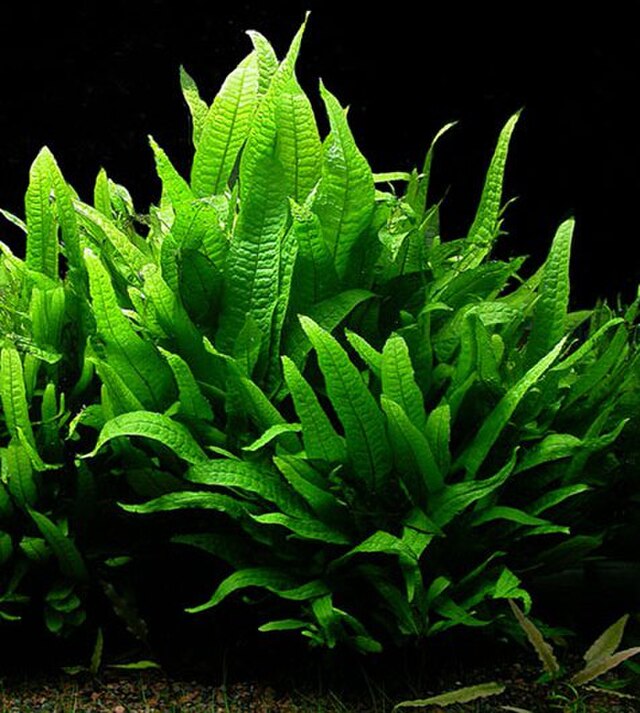
Java Fern
Leptochilus pteropus
A fern aquatic plant from Southeast Asia. Attaches to driftwood and rocks, popular for its unique leaf shape.
Java fern 'Narrow'
Microsorum pteropus 'Narrow'
A narrow-leaved form of Java fern. Its long leaves, about 1–2 cm wide, spread from the rhizome at a wider angle than the standard plant. Compact and easy to tie onto wood or stone, though differently shaped plants are sold under the same name.
 © Yercaud-elango / CC BY 4.0
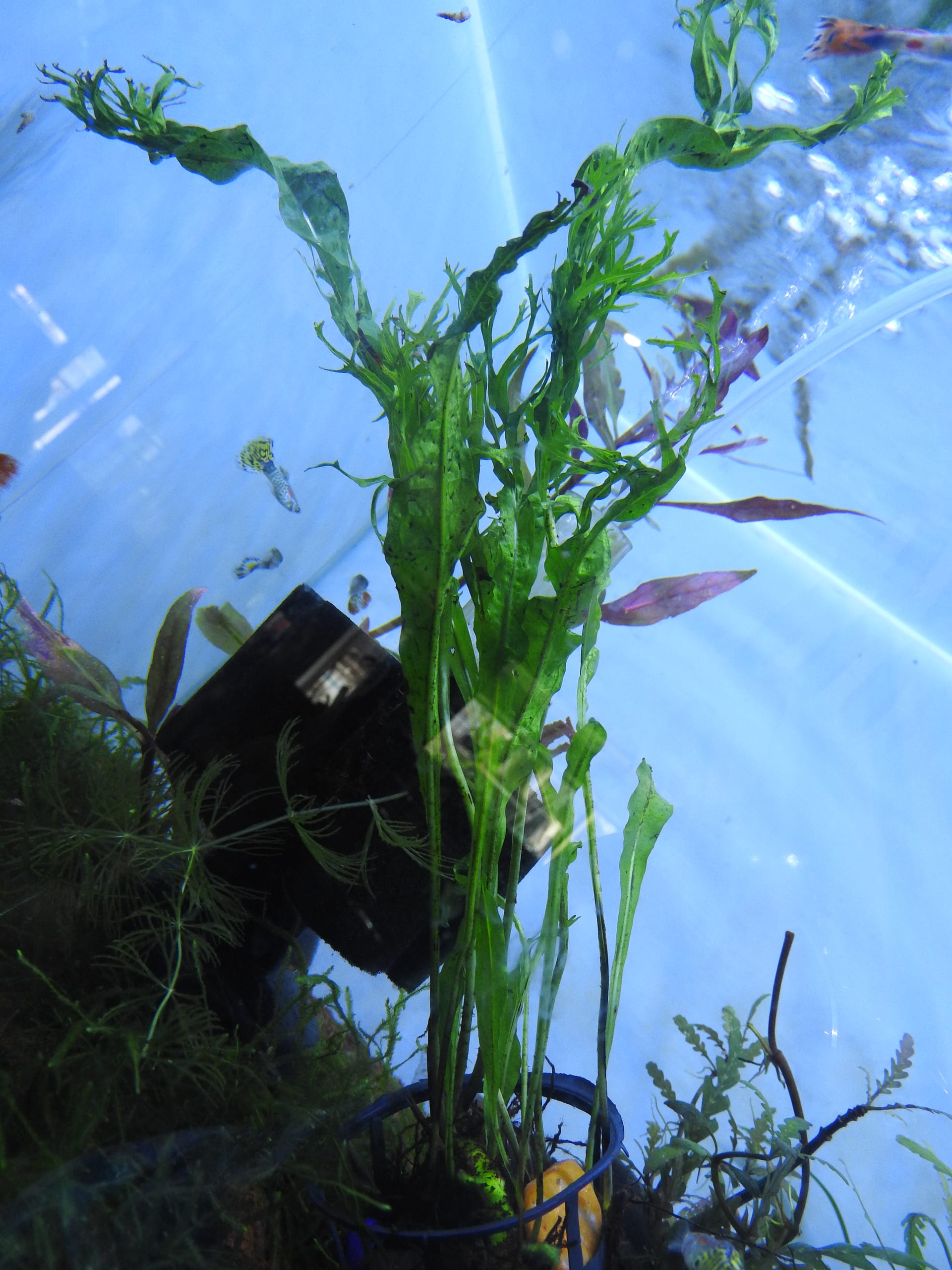
Java fern 'Windeløv'
Microsorum pteropus 'Windeløv'
A Java fern cultivar whose leaf tips fork repeatedly into fine tufts. Named after the founder of a Danish aquatic plant nursery, it entered the trade in 1994 and forms bushy clumps about 10–20 cm tall.
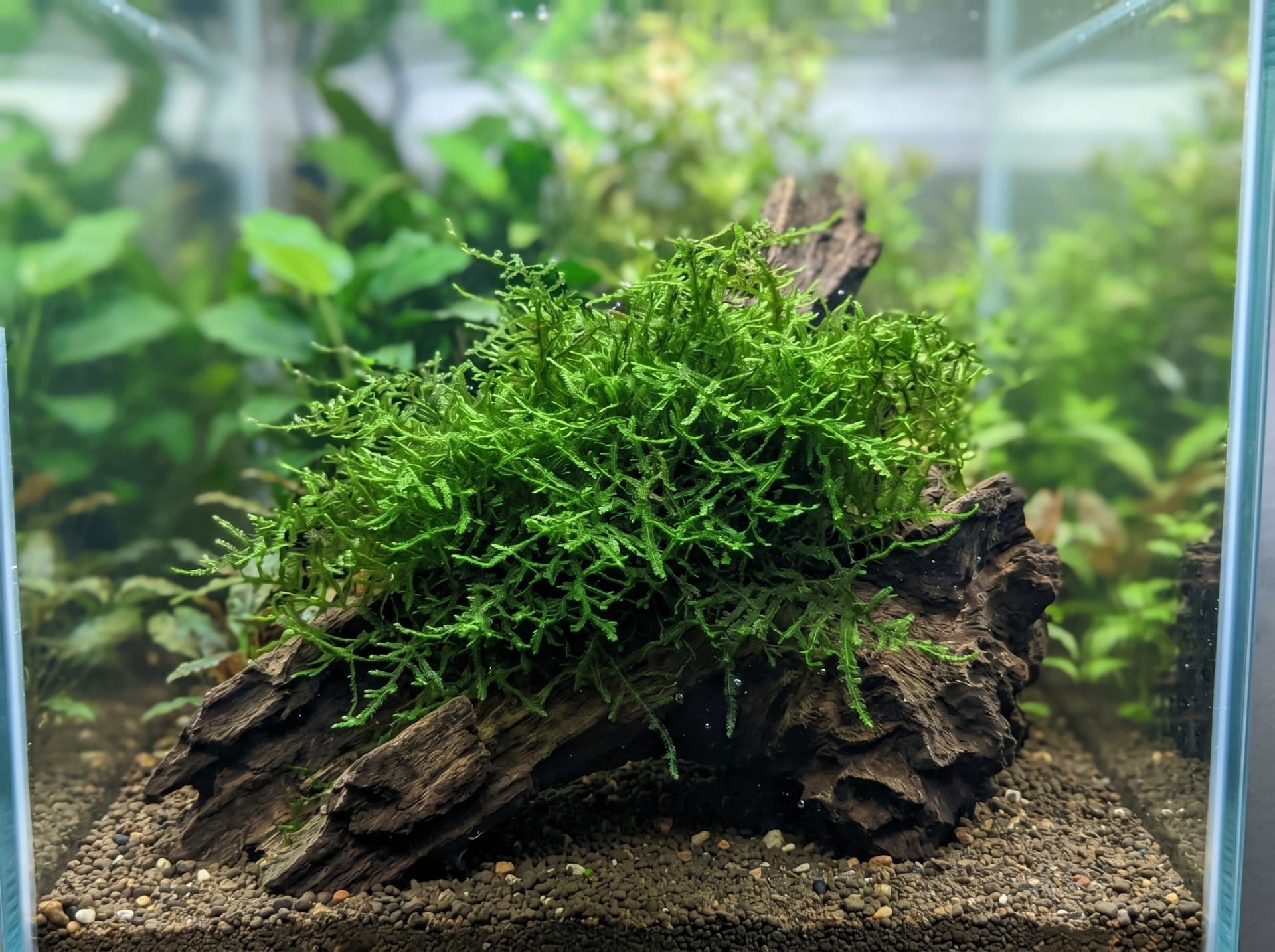
Java Moss
Ectropothecium barbieri
The most widely used moss in aquascaping. Simply attach to driftwood or rocks for a natural look. Ideal hiding spot for shrimp fry. Perfect for absolute beginners.
Related Content
Aquatic Plant FAQ
- How much do aquatic plants cost?
- Common Rotala and Anubias cost 300-1,000 yen, Bucephalandra 1,000-5,000 yen, and rare wild-collected specimens 5,000-20,000+ yen depending on species.
- Can beginners grow aquatic plants?
- Anubias Nana and Java Moss require no CO2 injection and grow in low light, making them ideal for beginners. Start with hardy shade-loving plants.
- What equipment is needed for aquatic plants?
- A tank, LED light, filter, and aqua soil are the basics. For advanced layouts, CO2 injection and high-performance lighting significantly improve growth and coloration.
- What should I check when buying aquatic plants?
- Ensure leaves are green and healthy, not melting or dying, and free of snails or pests. Tissue-cultured cups are pest-free and reliable.
- Why do aquatic plants die?
- Insufficient light, CO2, or nutrients are the main causes. Each species has different requirements, so matching the environment to your specific plants is essential.