Aquatic Plant Encyclopedia
Encyclopedia of popular aquatic plants with care guides, traits, and aquascaping tips.
Showing 10 of 127 species
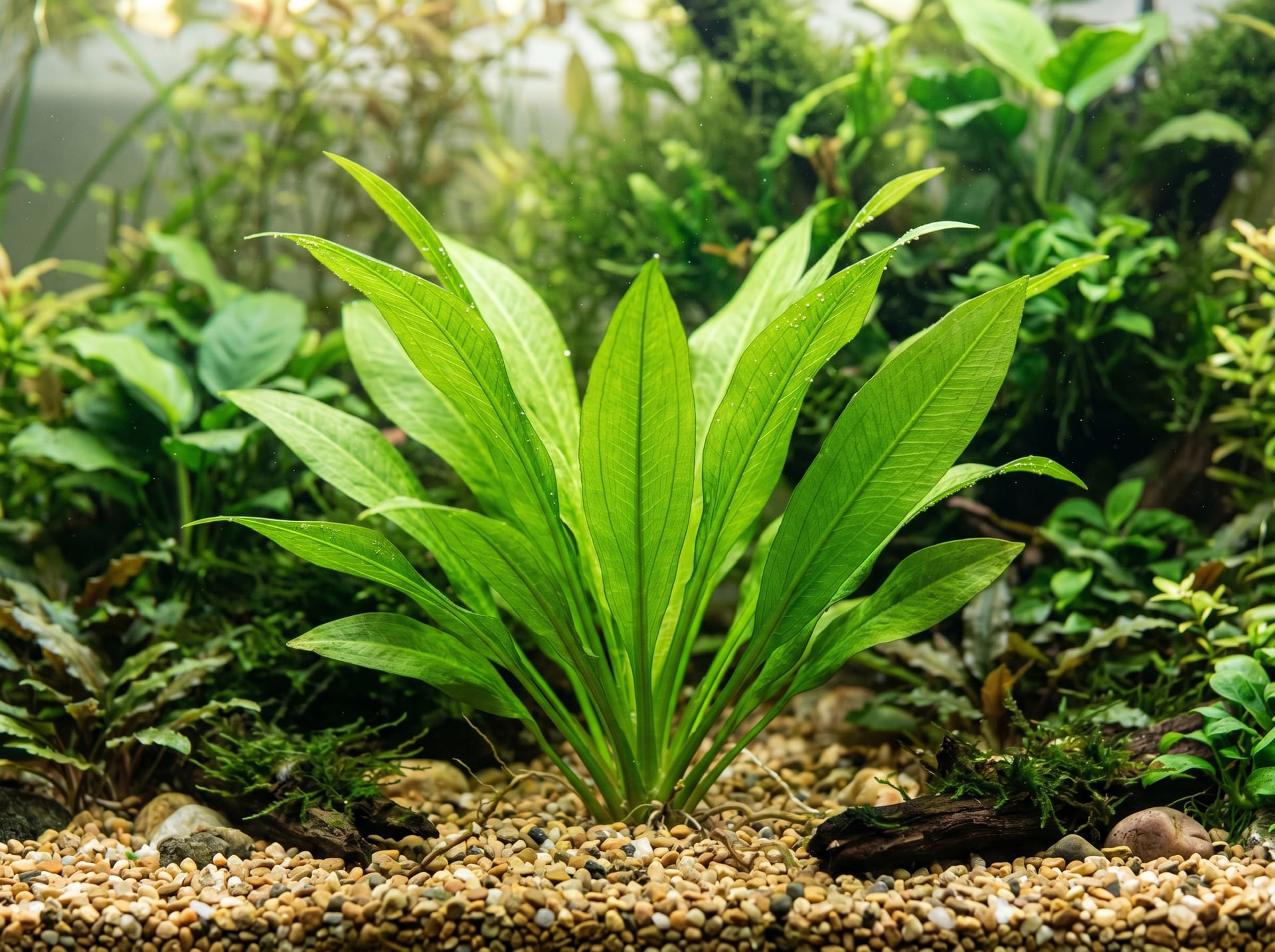
Amazon Sword
Aquarius grisebachii
A representative aquatic plant with large sword-shaped leaves. Gives strong presence as background centerpiece.
 © Krzysztof Ziarnek, Kenraiz / CC BY-SA 4.0
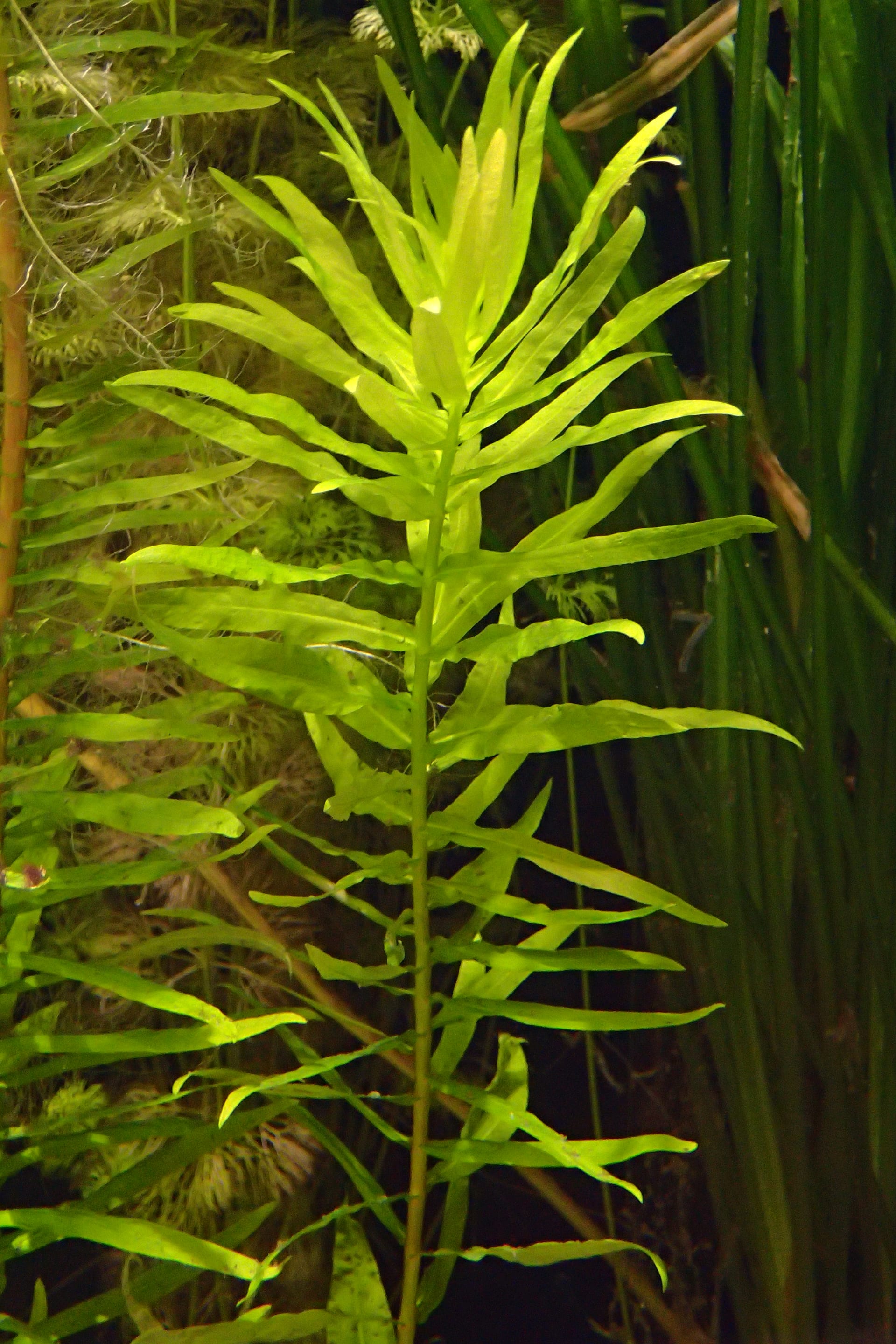
Ammannia gracilis
Ammannia gracilis
A large stem plant with long, narrow opposite leaves that turn a cognac-red in strong light. Reaching 20–50 cm tall and 12–20 cm wide, it makes a bold statement in the mid- or background of tanks of 76 litres or more.
 © Krzysztof Ziarnek, Kenraiz / CC BY-SA 4.0
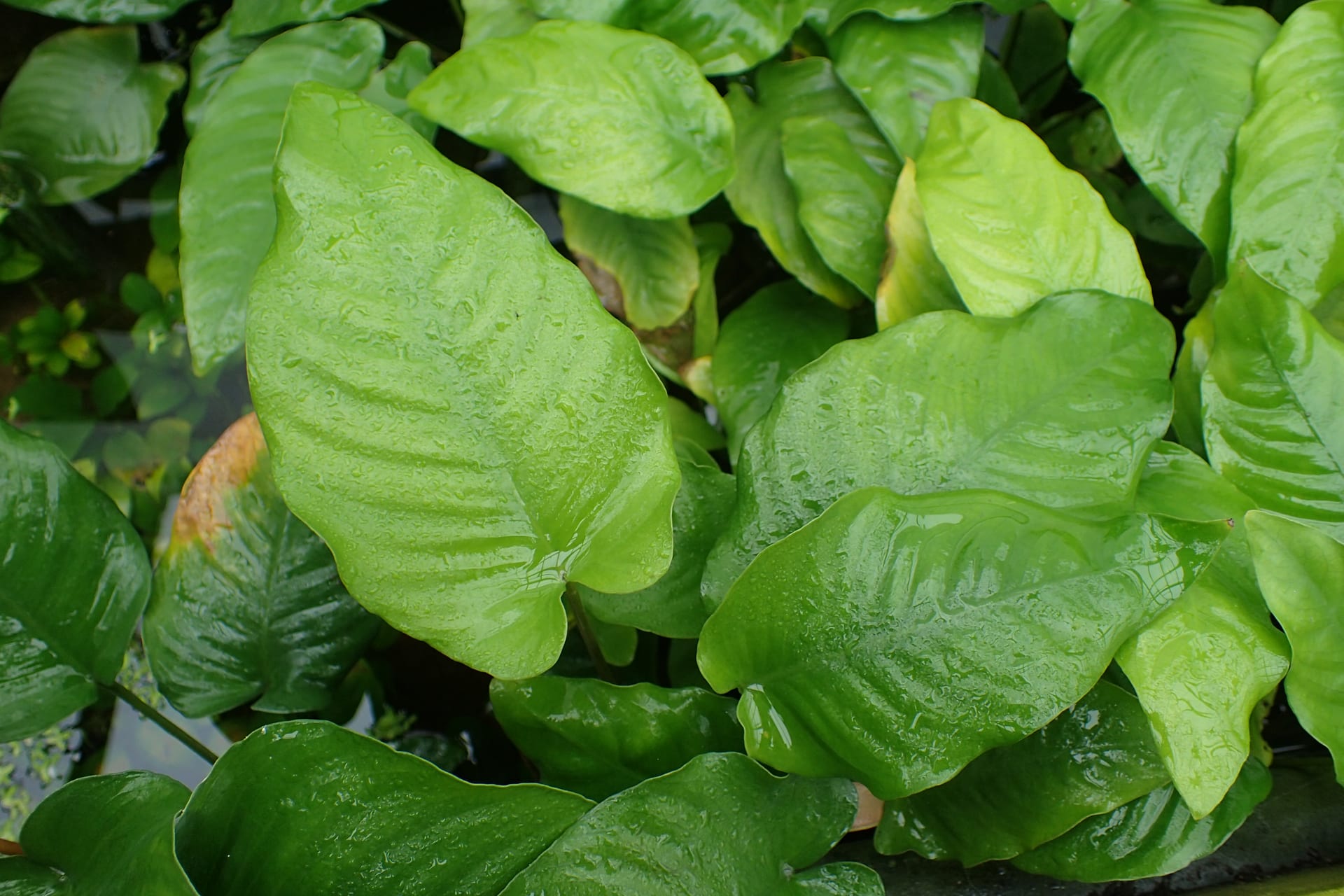
Anubias barteri var. caladiifolia
Anubias barteri var. caladiifolia
The largest variety of Anubias barteri, whose mature leaves have a deeply heart-shaped base. Leaves are paler and softer than var. barteri, and because they live for years a clump can exceed 50 cm across within a few years.
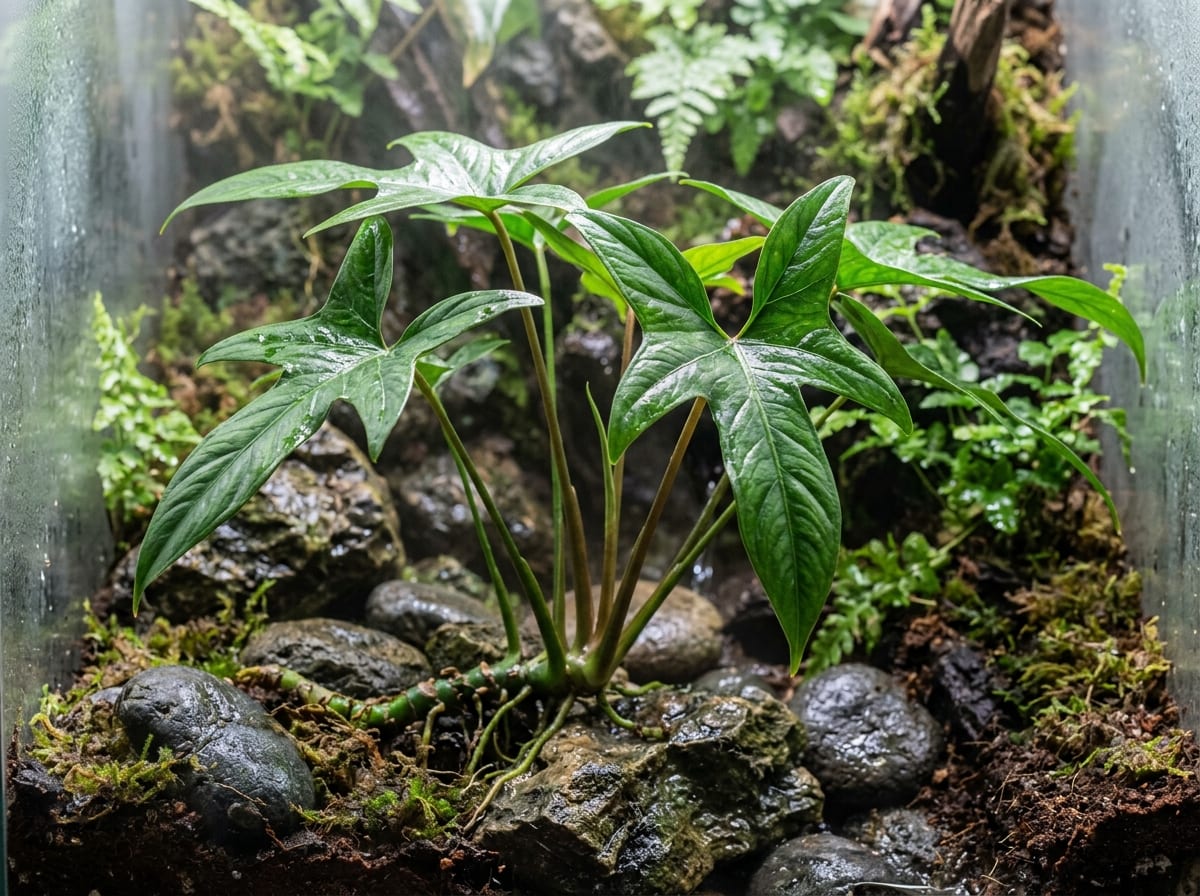
Anubias hastifolia
Anubias hastifolia
A large Anubias with hastate to almost three-lobed leaves. It is considered poorly adapted to permanent submersion and does better grown emersed in a spacious paludarium than in an aquarium.
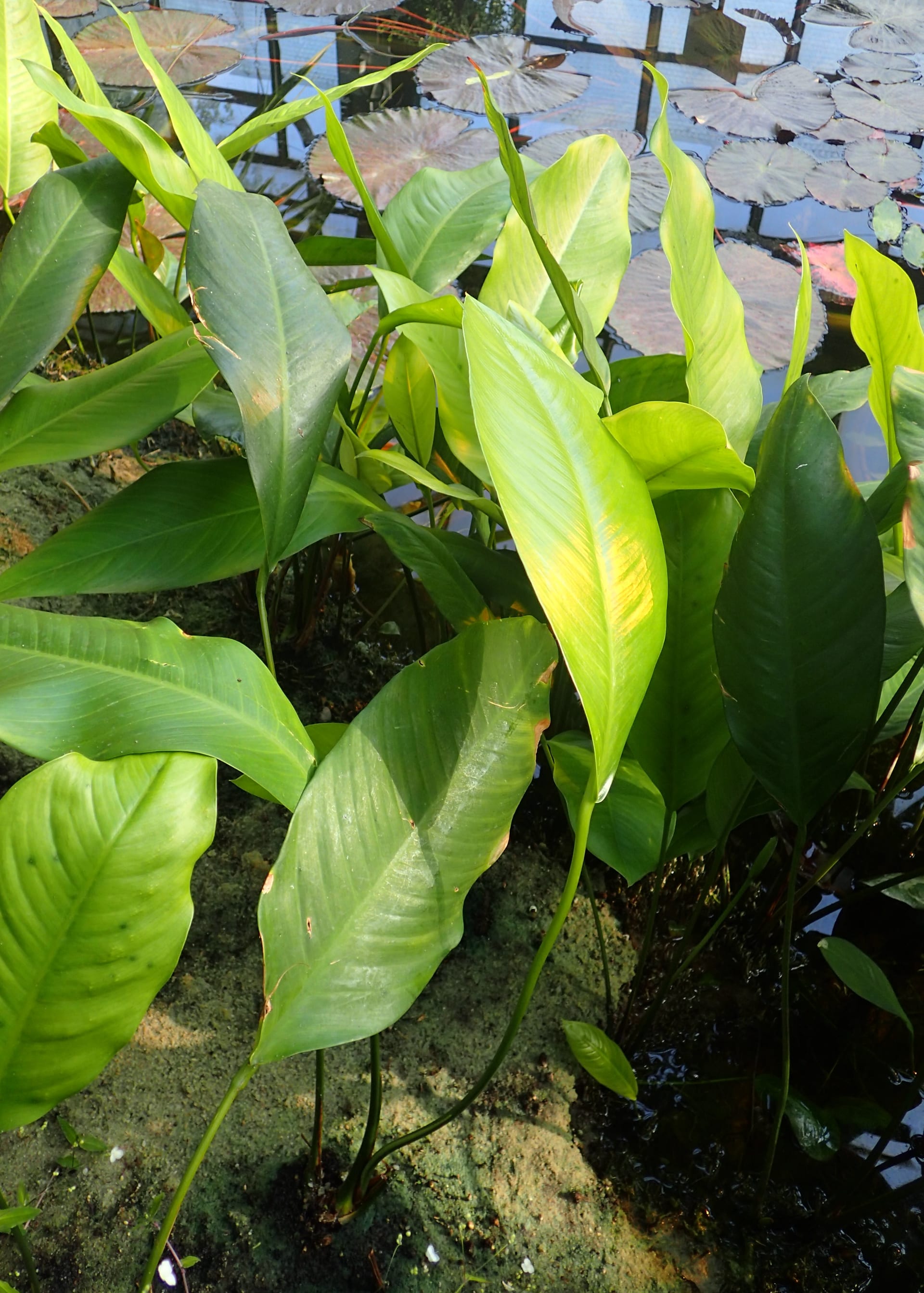 © Krzysztof Ziarnek, Kenraiz / CC BY-SA 4.0
Anubias heterophylla
Anubias heterophylla
A large Anubias carrying elliptic to lanceolate leathery blades on long petioles, the margins often somewhat wavy. Naturally a marsh plant, it grows permanently submerged too, staying smaller than on land.
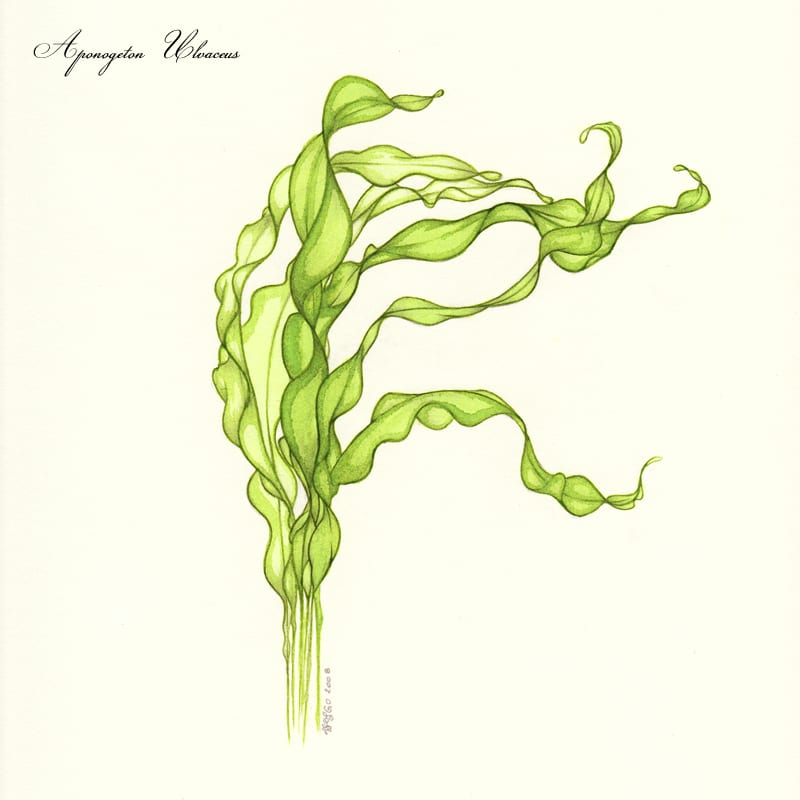 © Wigoelbar / CC BY-SA 3.0
Aponogeton ulvaceus
Aponogeton ulvaceus
A bulb plant from Madagascar that unfurls more than 40 translucent, pale green leaves with strongly waved margins. A single plant spreads about 50 cm wide, so it makes a centrepiece for large tanks. Some forms need a dormant period.
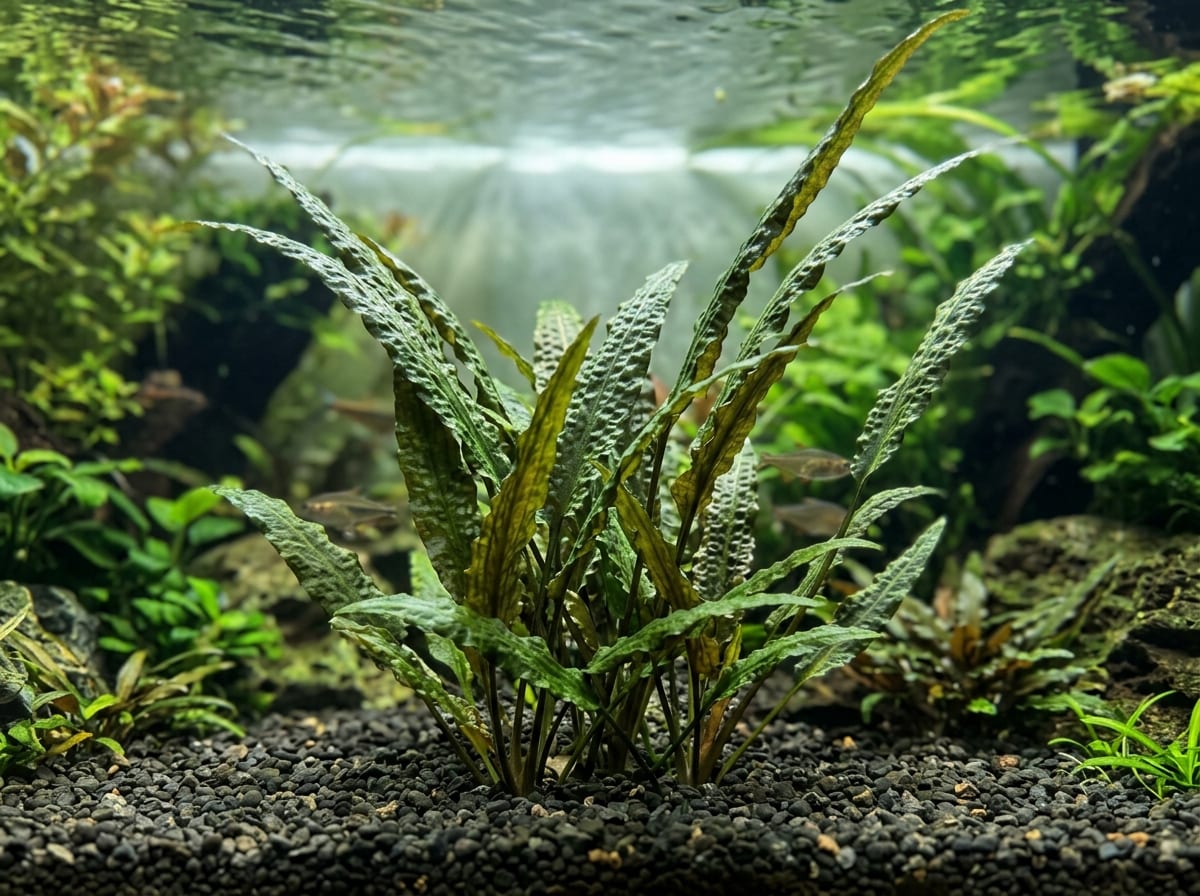
Cryptocoryne crispatula var. balansae
Cryptocoryne crispatula var. balansae
A Cryptocoryne with long, strap-like, strongly hammered leaves that can exceed 50 cm, used as a background thicket. Native to hard limestone waters, it shows twisted leaves when short of calcium.
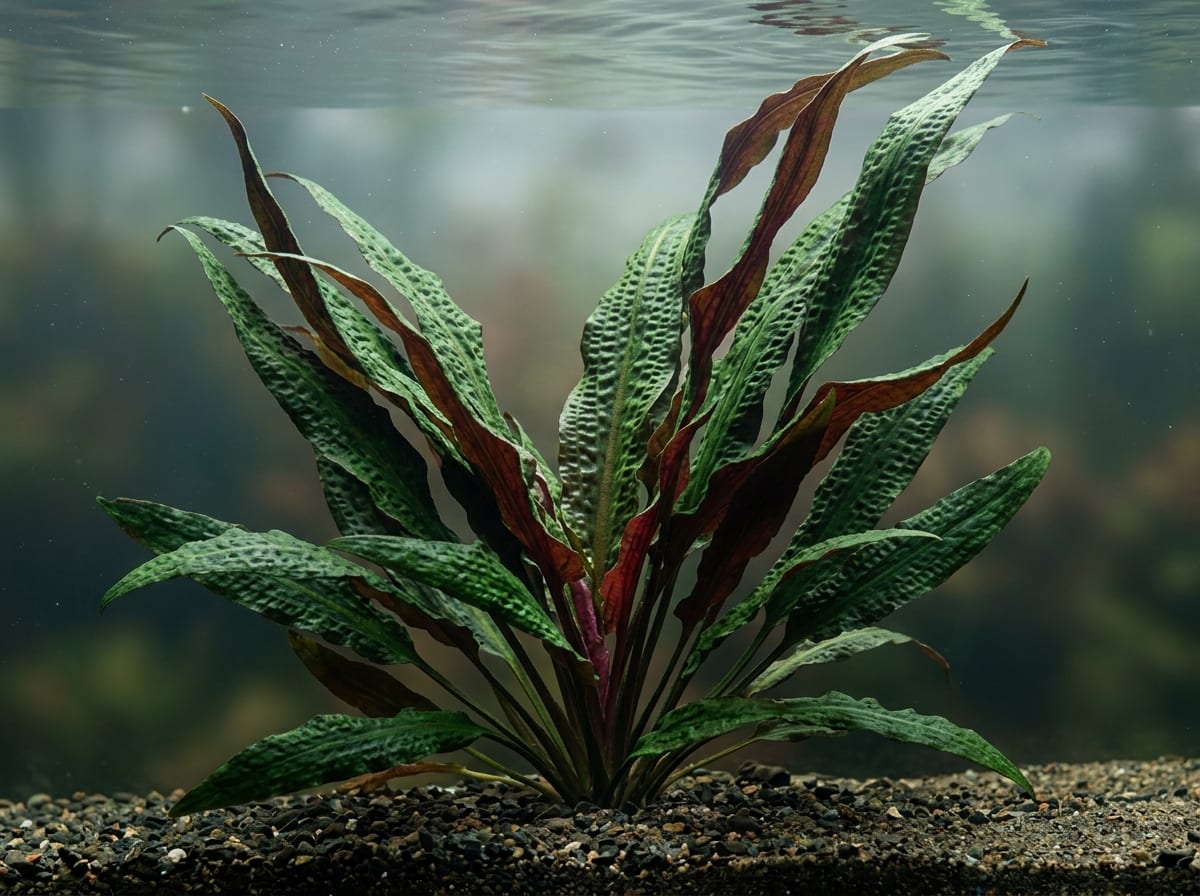
Cryptocoryne usteriana
Cryptocoryne usteriana
A large Cryptocoryne from Guimaras in the Philippines. Its embossed leaves, 3–5 cm wide, grow beyond 50 cm and turn wine-red beneath under good light and fertilisation. It likes hard water and is not eaten by fish.
Echinodorus 'Rubin'
Echinodorus 'Rubin'
A large hybrid sword plant with long, leathery leaves up to about 60 cm. Young leaves are vivid red-brown with conspicuously pale veins. Bred by Hans Barth of Dessau.
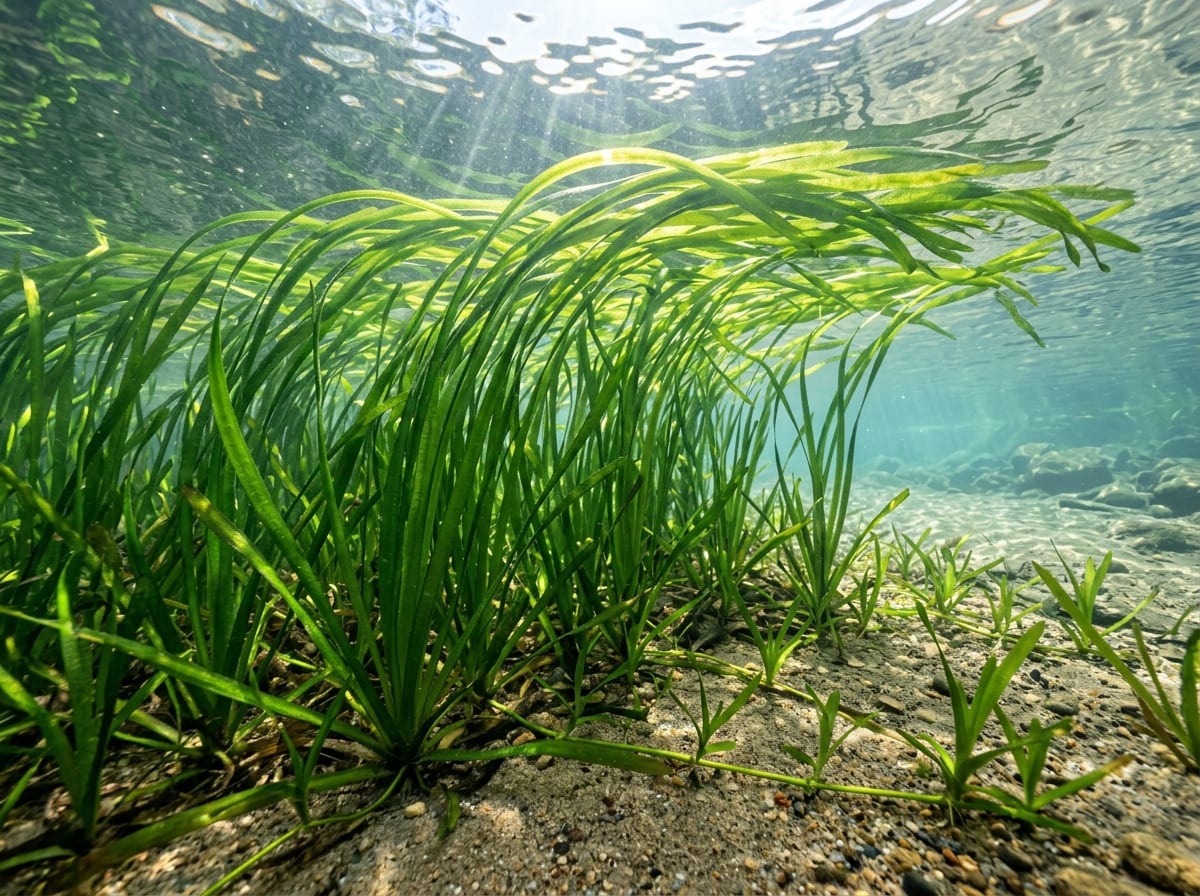
Giant vallisneria
Vallisneria australis
A large vallisneria with tough ribbon leaves about 2 cm wide that grow over 1 m long and spread across the surface. It multiplies freely by runners and resists herbivorous fish. Naturalised in Japan and listed as a Priority Control Alien Species.
Related Content
Aquatic Plant FAQ
- How much do aquatic plants cost?
- Common Rotala and Anubias cost 300-1,000 yen, Bucephalandra 1,000-5,000 yen, and rare wild-collected specimens 5,000-20,000+ yen depending on species.
- Can beginners grow aquatic plants?
- Anubias Nana and Java Moss require no CO2 injection and grow in low light, making them ideal for beginners. Start with hardy shade-loving plants.
- What equipment is needed for aquatic plants?
- A tank, LED light, filter, and aqua soil are the basics. For advanced layouts, CO2 injection and high-performance lighting significantly improve growth and coloration.
- What should I check when buying aquatic plants?
- Ensure leaves are green and healthy, not melting or dying, and free of snails or pests. Tissue-cultured cups are pest-free and reliable.
- Why do aquatic plants die?
- Insufficient light, CO2, or nutrients are the main causes. Each species has different requirements, so matching the environment to your specific plants is essential.