Aquatic Plant Encyclopedia
Encyclopedia of popular aquatic plants with care guides, traits, and aquascaping tips.
Showing 28 of 127 species(1–24)
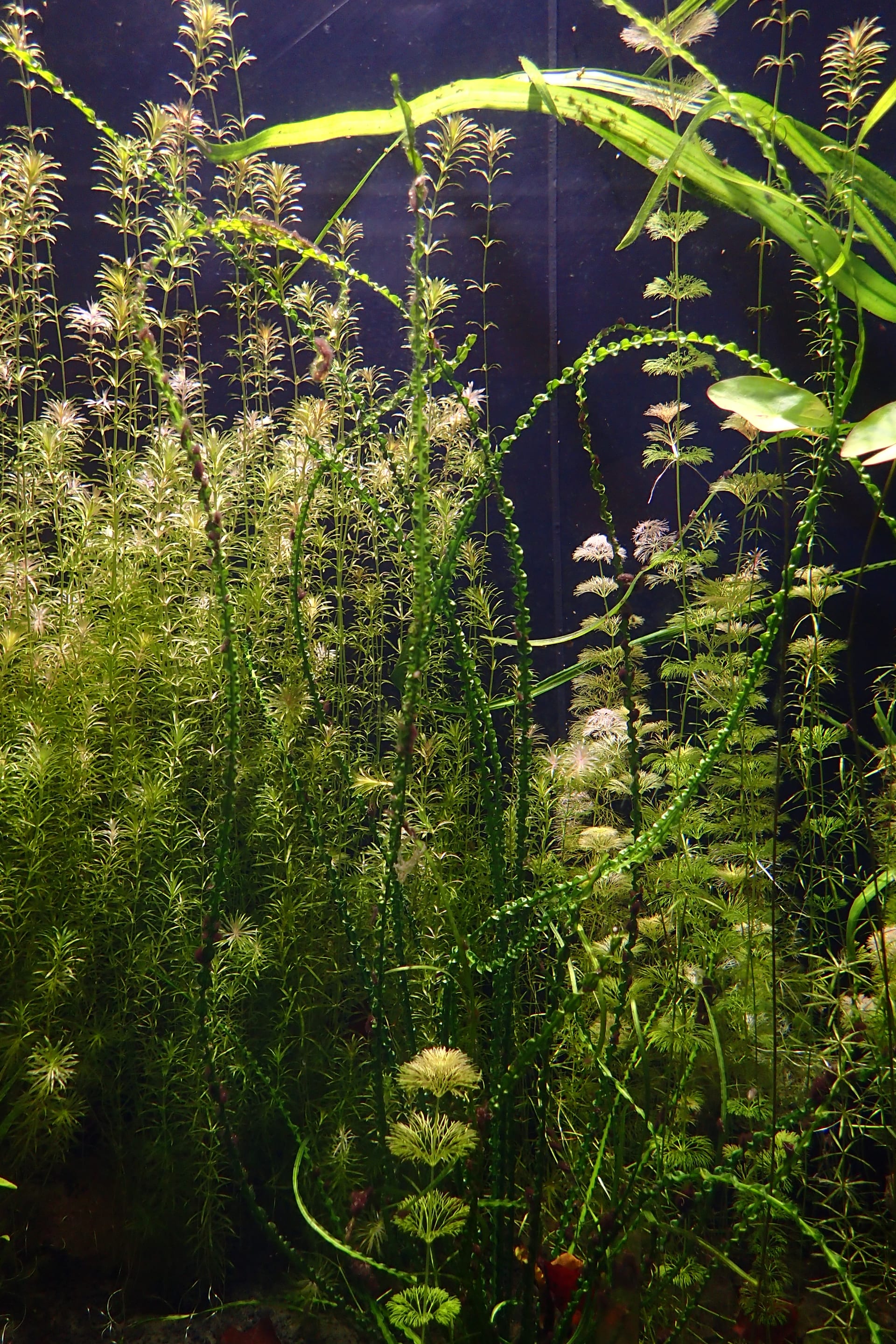 © Krzysztof Ziarnek, Kenraiz / CC BY-SA 4.0
African onion plant
Crinum calamistratum
A Cameroonian aquatic plant that grows long, narrow, crinkled dark green ribbon leaves from a small bulb. Leaves reach 40–120 cm in aquaria and stream in the current. Slow but tough, and herbivorous fish leave it alone.
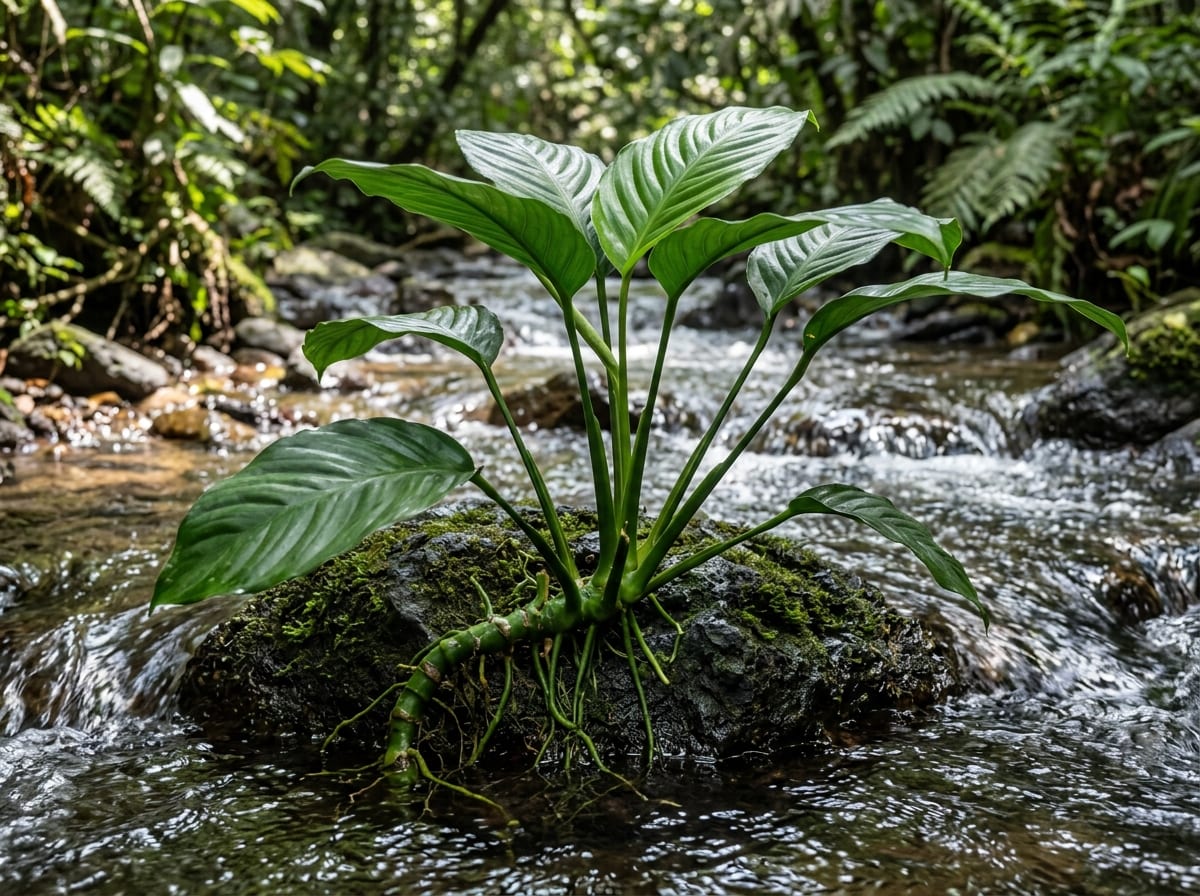
Anubias barteri var. barteri
Anubias barteri var. barteri
The type variety of Anubias barteri, with broad, thick, leathery leaves. It grows larger than var. nana and even young plants can be told apart by their longer petioles. Tough enough to survive herbivorous fish and dim tanks.
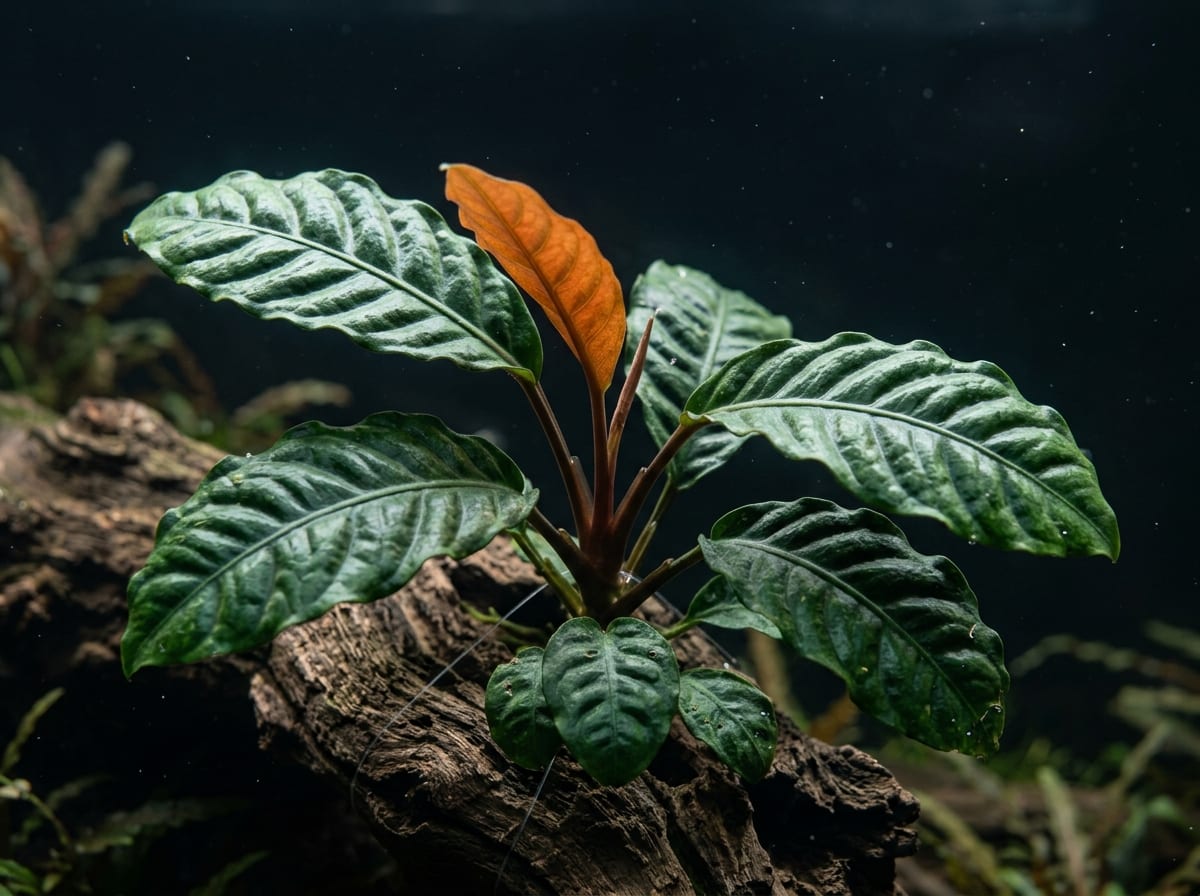
Anubias barteri var. coffeifolia
Anubias barteri var. coffeifolia
An Anubias whose leaf blades bulge strongly between the veins, like coffee leaves. New leaves emerge orange- to red-brown and turn dark green. It often flowers under water.
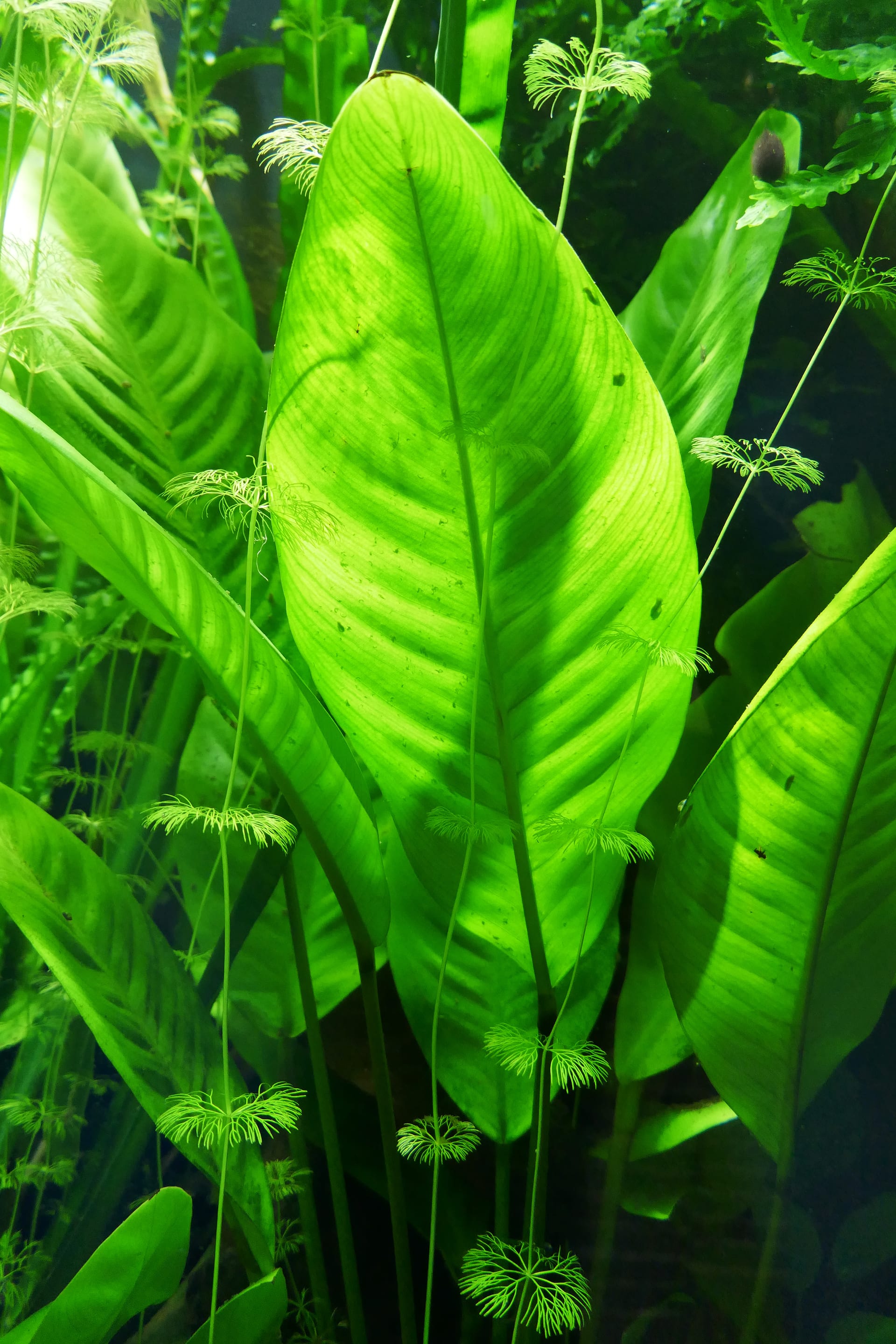 © Ji-Elle / CC BY-SA 4.0
Anubias barteri var. glabra
Anubias barteri var. glabra
A variety of Anubias barteri with elliptic to narrowly lanceolate leaves, slimmer than the rounded nana or var. barteri. Also traded as 'minima' or 'lanceolata'. Very tough and happy in shade.
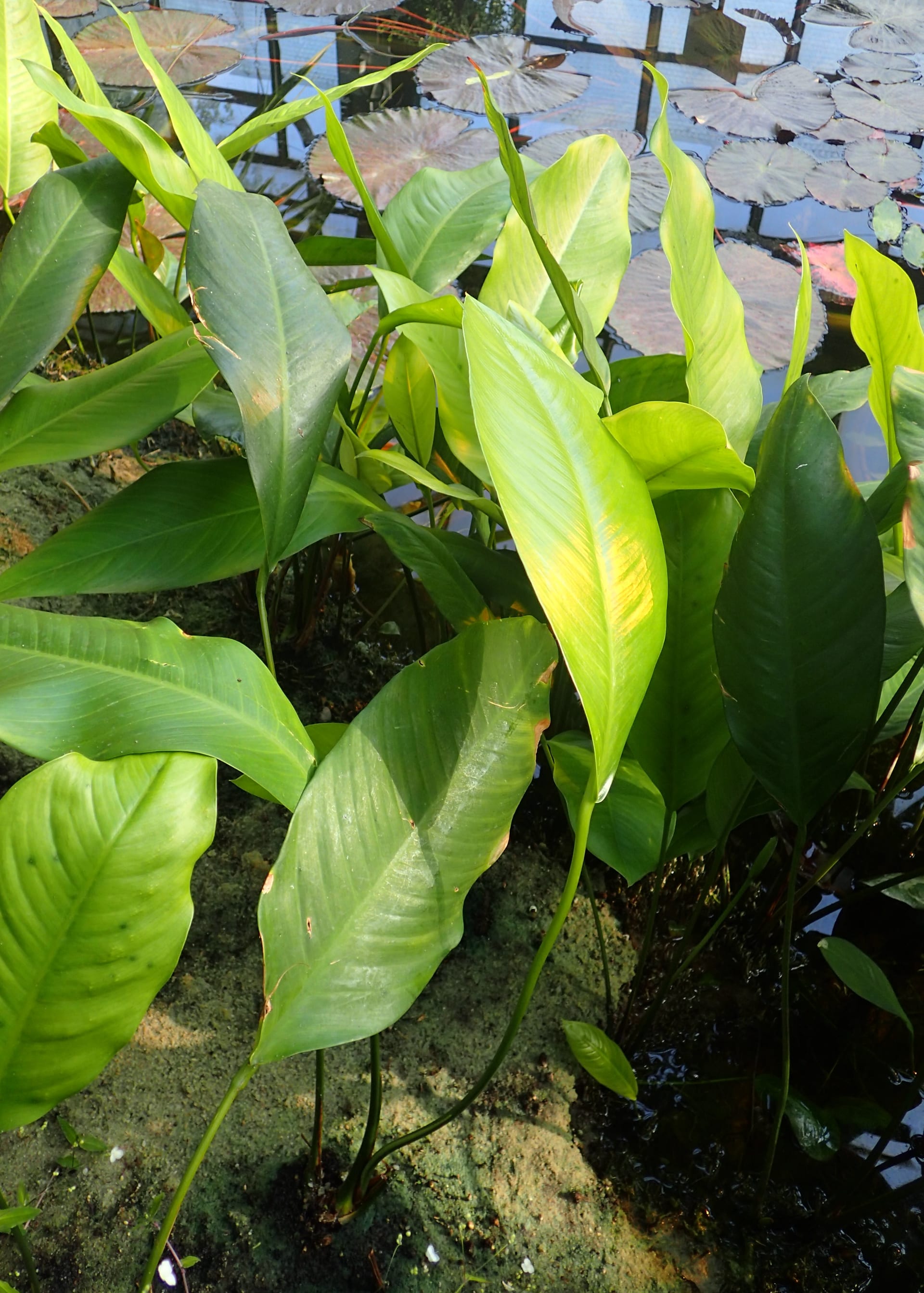
Anubias barteri var. nana 'Gold'
Anubias barteri var. nana 'Golden'
A selection of Anubias nana whose new leaves emerge light green to golden yellow, clearly unlike the dark green standard form. Leaves darken in weak light. It traces back to a mutant found at a Taiwanese nursery.
 © Krzysztof Ziarnek, Kenraiz / CC BY-SA 4.0
Anubias heterophylla
Anubias heterophylla
A large Anubias carrying elliptic to lanceolate leathery blades on long petioles, the margins often somewhat wavy. Naturally a marsh plant, it grows permanently submerged too, staying smaller than on land.
 © Drhyperlaur at English Wikipedia / Public domain
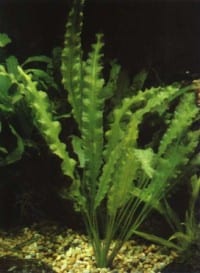
Aponogeton crispus
Aponogeton crispus
A large Sri Lankan aquatic plant that grows a rosette of long, wavy-edged leaves from a tuber. It needs no dormant period in aquaria and often flowers, but its leaves can reach the surface, so it suits larger tanks.
 © Kristian Peters -- Fabelfroh / CC BY-SA 3.0
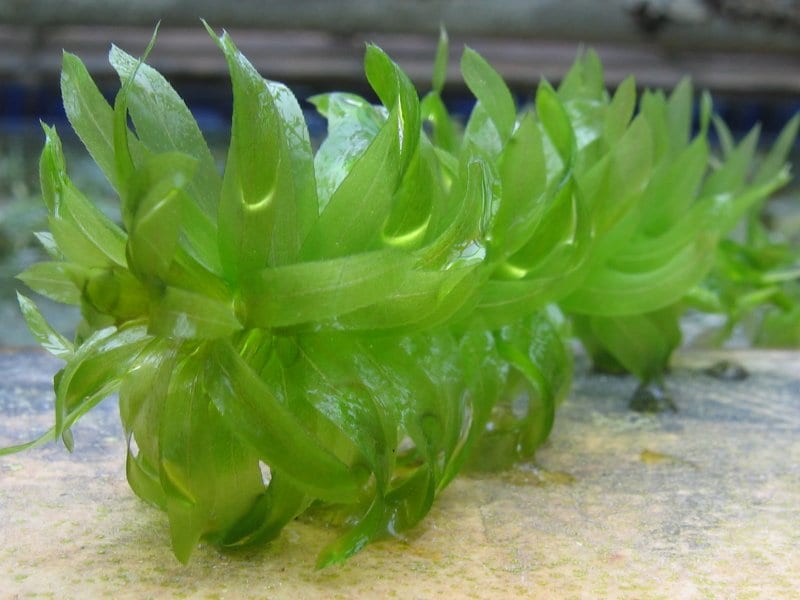
Brazilian waterweed
Egeria densa
The classic goldfish weed (Japanese name Ōkanadamo), with narrow leaves in whorls of three to six at each node. It tolerates cold and poor water and grows even floating loose. Naturalised in rivers and lakes across Japan and listed as a Priority Control Alien Species.
 © Krzysztof Ziarnek, Kenraiz / CC BY-SA 4.0
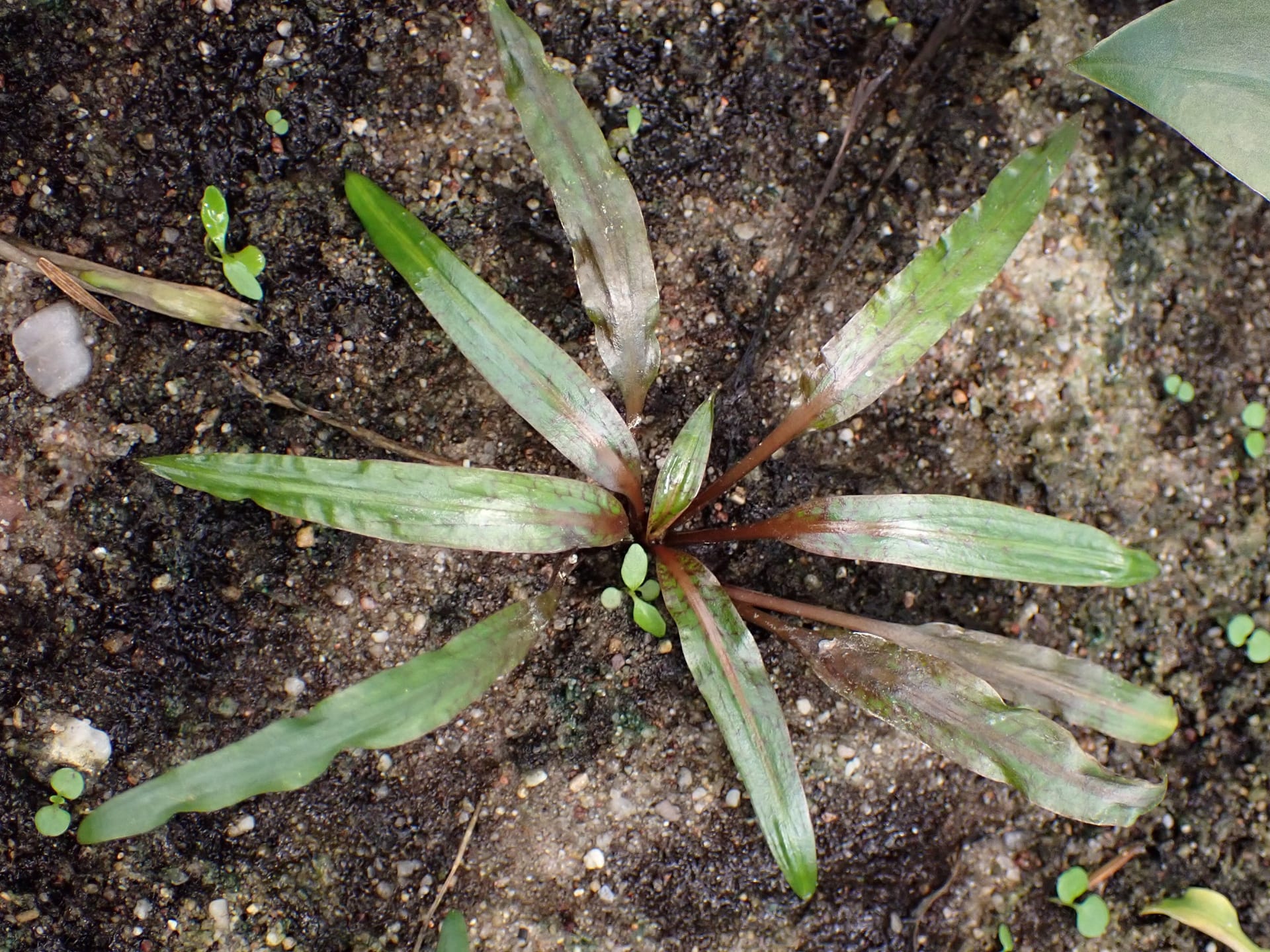
Cryptocoryne albida
Cryptocoryne albida
A Cryptocoryne with narrow lanceolate leaves and gently wavy margins. Both a green form and a 'Brown' form with red-brown, darkly feather-marked leaves are traded. It tolerates low light and combines easily with other plants.
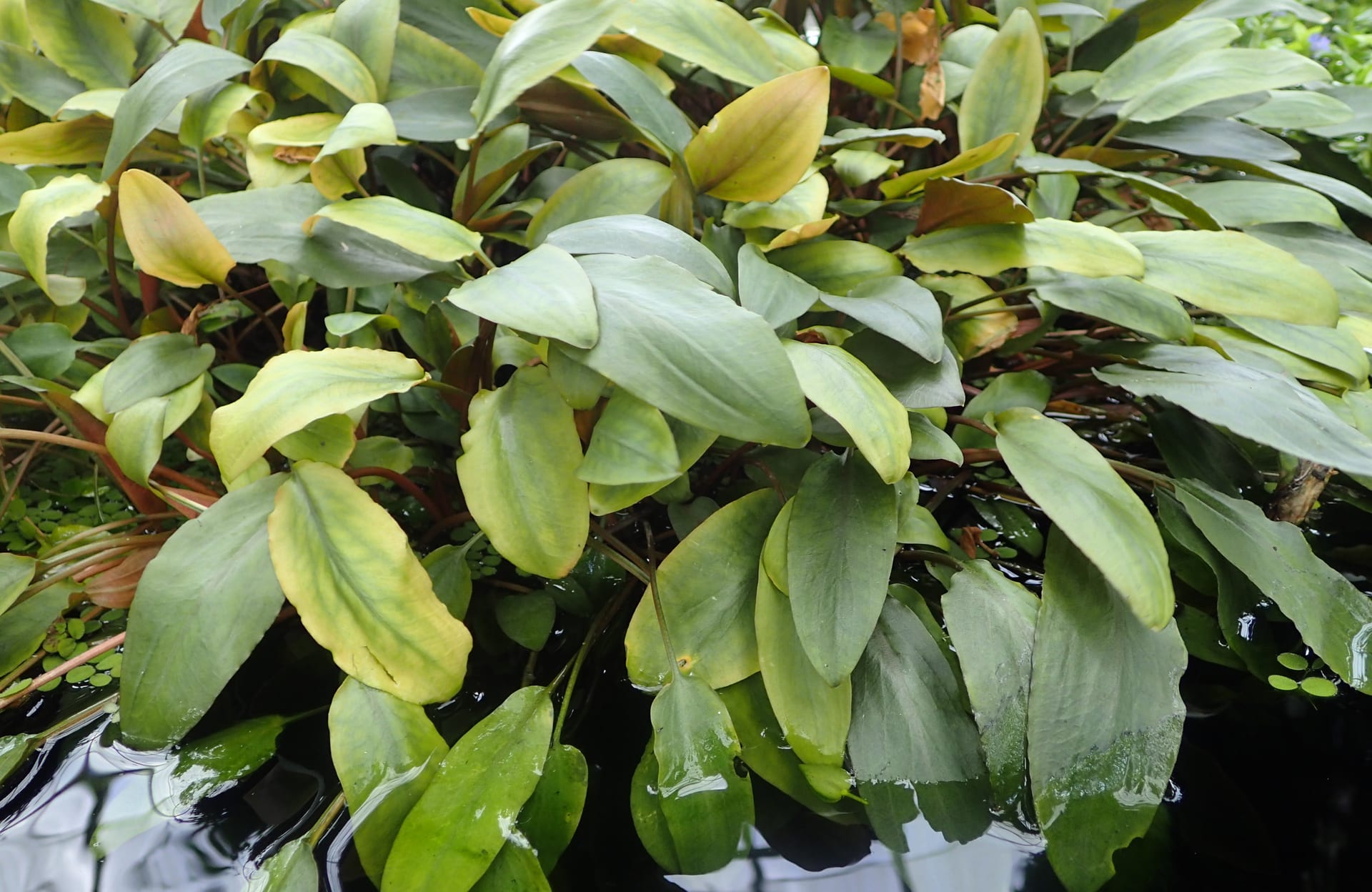 © Krzysztof Ziarnek, Kenraiz / CC BY-SA 4.0
Cryptocoryne beckettii
Cryptocoryne beckettii
A Sri Lankan Cryptocoryne with pointed olive-brown to green leaves and purplish undersides. Grown for over 60 years, it adapts to soft or hard water and forms bushy stands by runners.
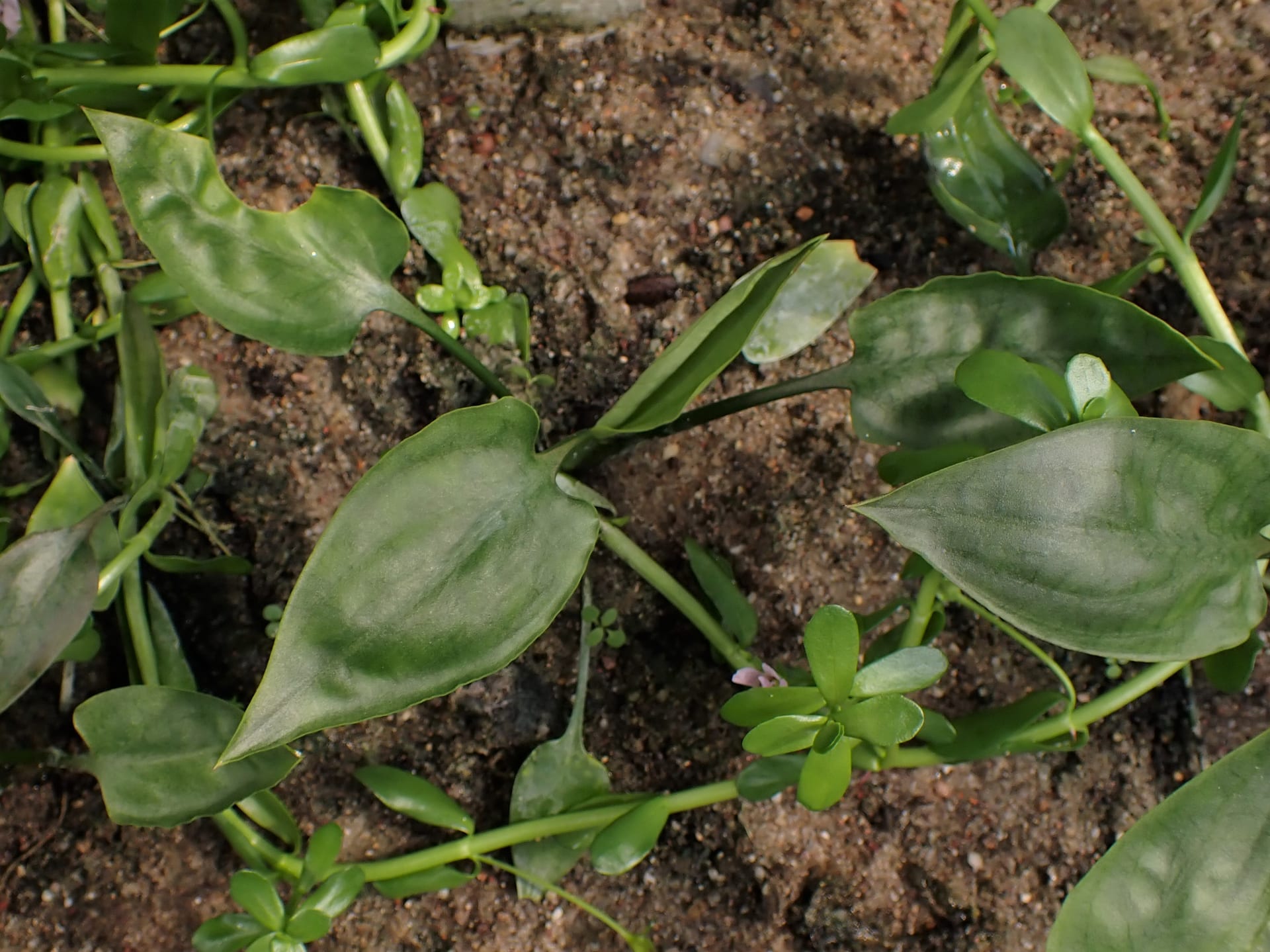 © Krzysztof Ziarnek, Kenraiz / CC BY-SA 4.0
Cryptocoryne pontederiifolia
Cryptocoryne pontederiifolia
A fairly large Sumatran Cryptocoryne with broad, heart-shaped leaves, often brownish to faintly violet beneath and slightly hammered. It rarely suffers crypt melt and can stand in for Anubias.
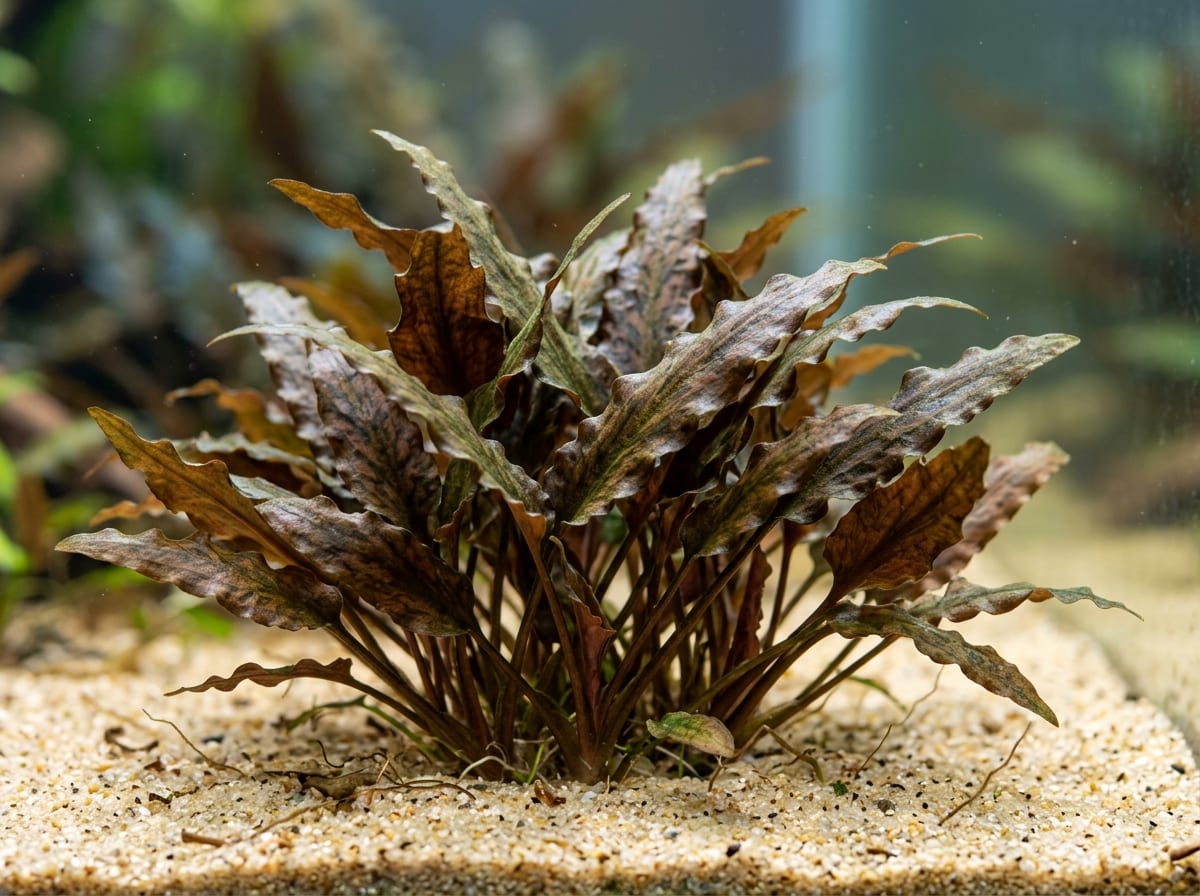
Cryptocoryne undulata
Cryptocoryne undulata
A Sri Lankan Cryptocoryne with brown, slightly wavy and sometimes marbled leaves. It grows without fertiliser in low light, and the more light and nutrients it gets, the lower and denser it becomes. A broad-leaved triploid form is also traded.
Cryptocoryne walkeri 'Lutea'
Cryptocoryne walkeri 'Lutea'
A form of the Sri Lankan Cryptocoryne walkeri, once treated as the species C. lutea. Its 8–12 cm leaves have finely wavy margins on the lower half. Both purple-red and green-brown plants are sold under the name.
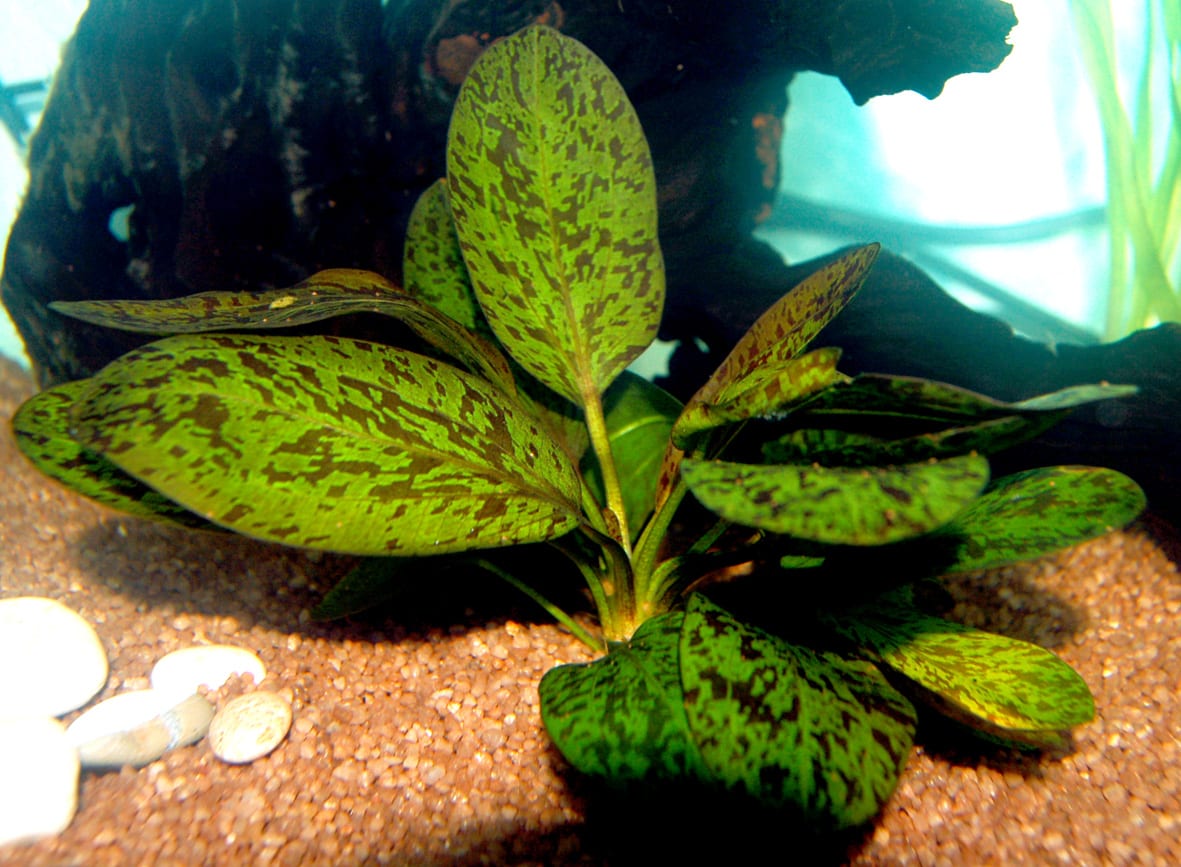 © Marrabbio2 / CC BY-SA 3.0
Echinodorus 'Ozelot'
Echinodorus 'Ozelot'
A hybrid sword plant with elliptical black spots on red-brown leaves. The spots are darkest on young leaves and, unlike many spotted swords, persist even in low light. Hardy and suitable for beginners.
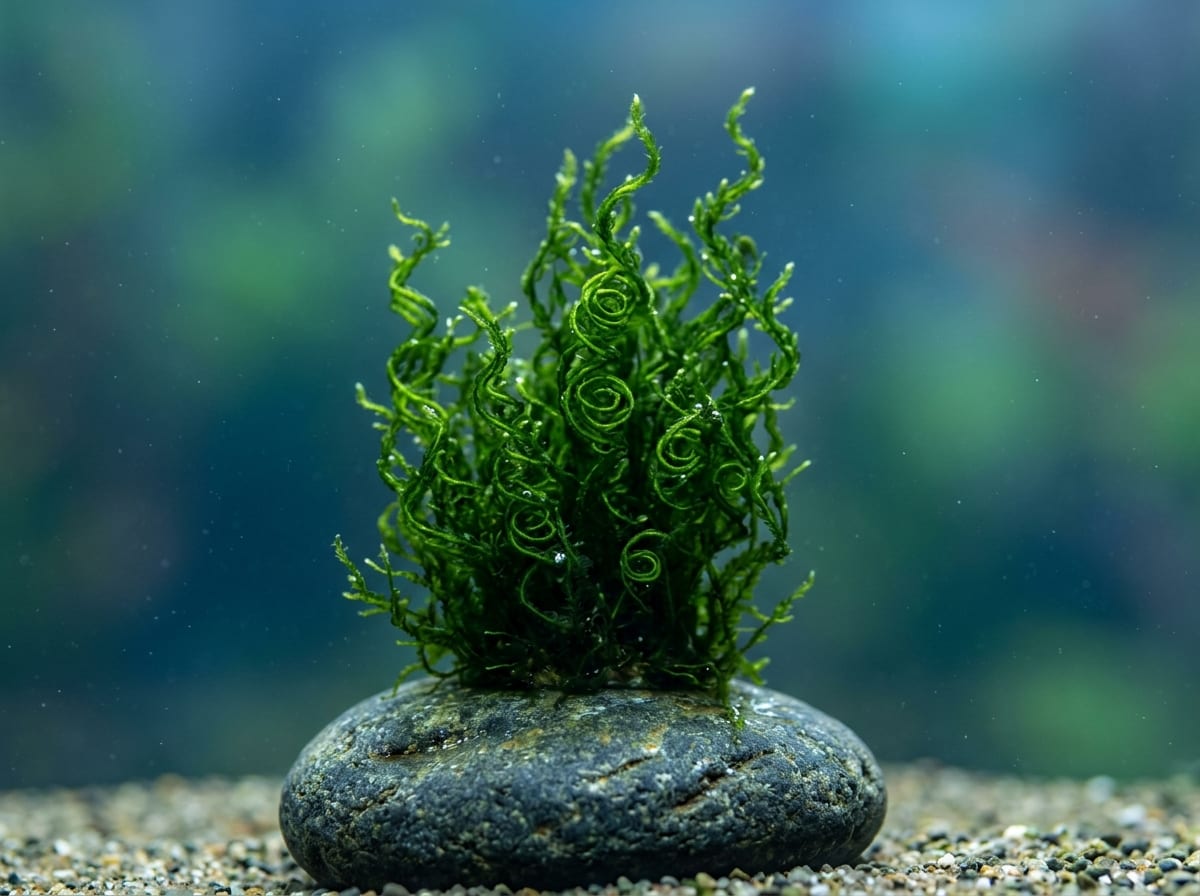
Flame moss
Taxiphyllum sp. 'Flame'
An aquatic moss whose sparsely branched shoots twist upward like rising flames. It spreads little sideways, so it is attached to the tops of wood or stones to add height.
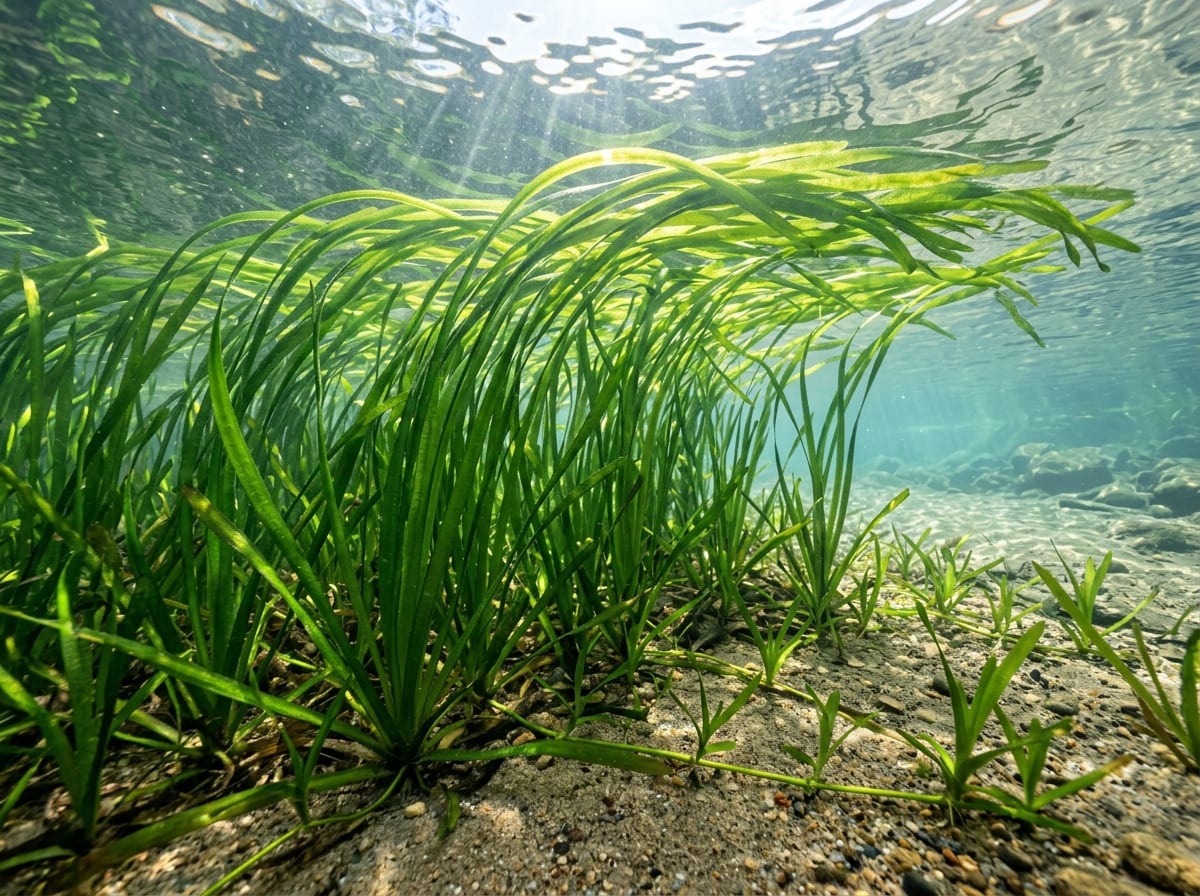
Giant vallisneria
Vallisneria australis
A large vallisneria with tough ribbon leaves about 2 cm wide that grow over 1 m long and spread across the surface. It multiplies freely by runners and resists herbivorous fish. Naturalised in Japan and listed as a Priority Control Alien Species.
Java fern 'Narrow'
Microsorum pteropus 'Narrow'
A narrow-leaved form of Java fern. Its long leaves, about 1–2 cm wide, spread from the rhizome at a wider angle than the standard plant. Compact and easy to tie onto wood or stone, though differently shaped plants are sold under the same name.
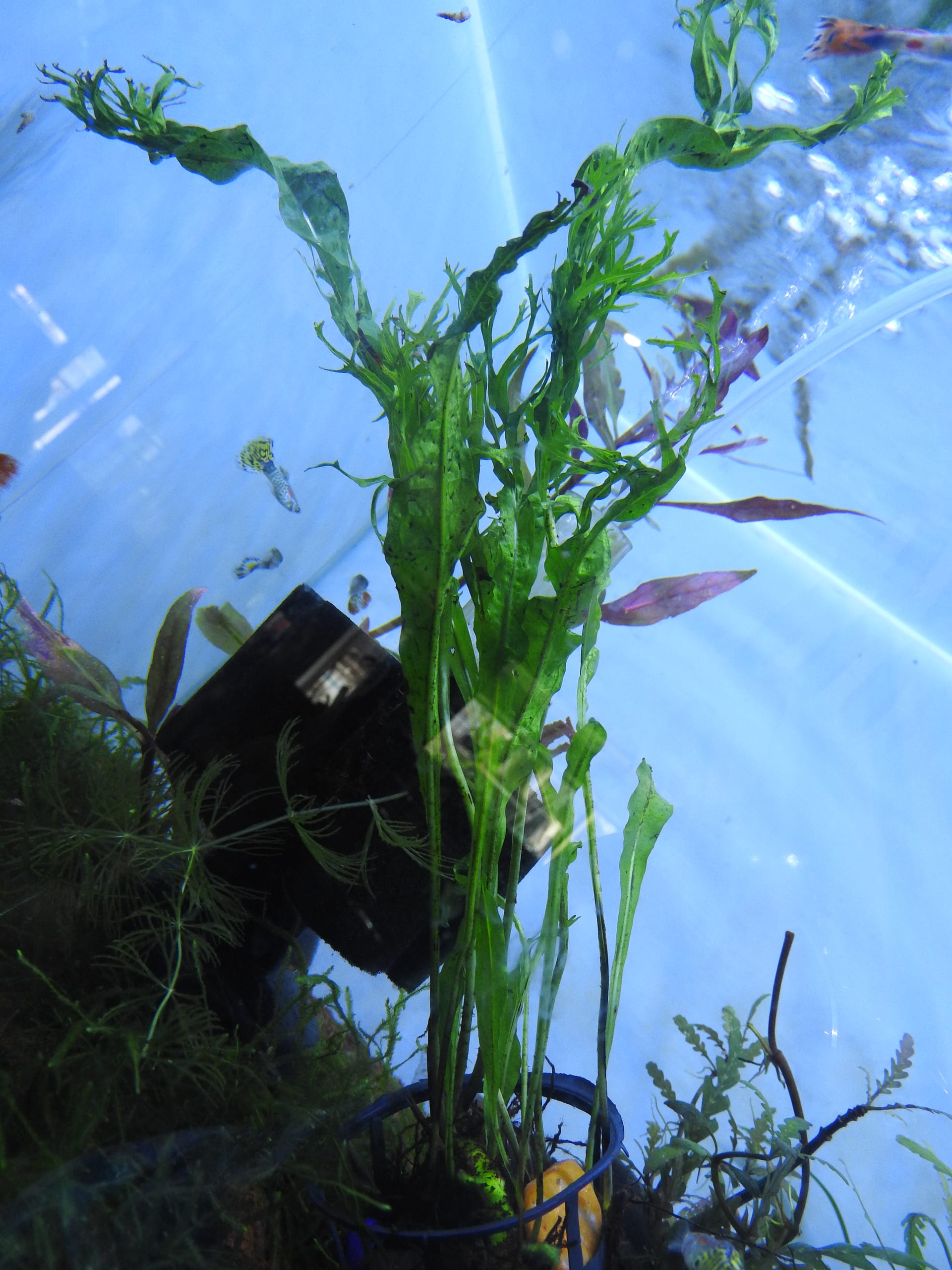 © Yercaud-elango / CC BY 4.0
Java fern 'Windeløv'
Microsorum pteropus 'Windeløv'
A Java fern cultivar whose leaf tips fork repeatedly into fine tufts. Named after the founder of a Danish aquatic plant nursery, it entered the trade in 1994 and forms bushy clumps about 10–20 cm tall.
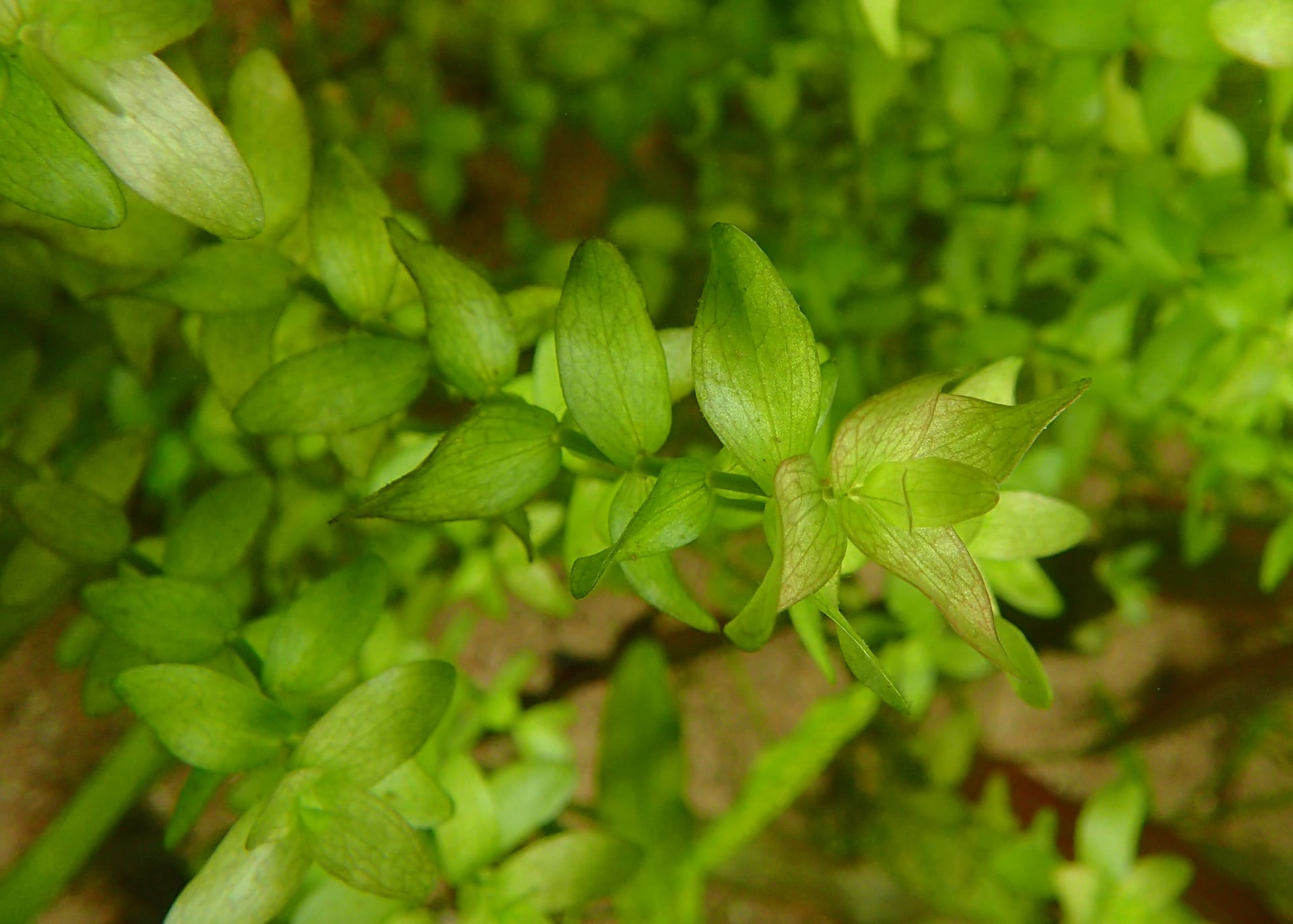 © Krzysztof Ziarnek, Kenraiz / CC BY-SA 4.0
Lemon bacopa
Bacopa caroliniana
A tough, slow-growing stem plant with thick oval leaves in opposite pairs. Crushed leaves smell of lemon, and under strong light the leaves take on a bronze to reddish-brown tint.
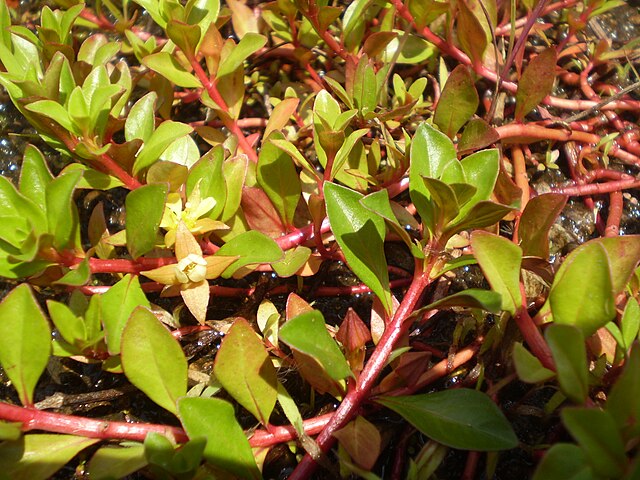
Ludwigia Repens
Ludwigia repens
A popular stem plant that turns red-orange with adequate light and CO2.
 © Krzysztof Ziarnek, Kenraiz / CC BY-SA 4.0
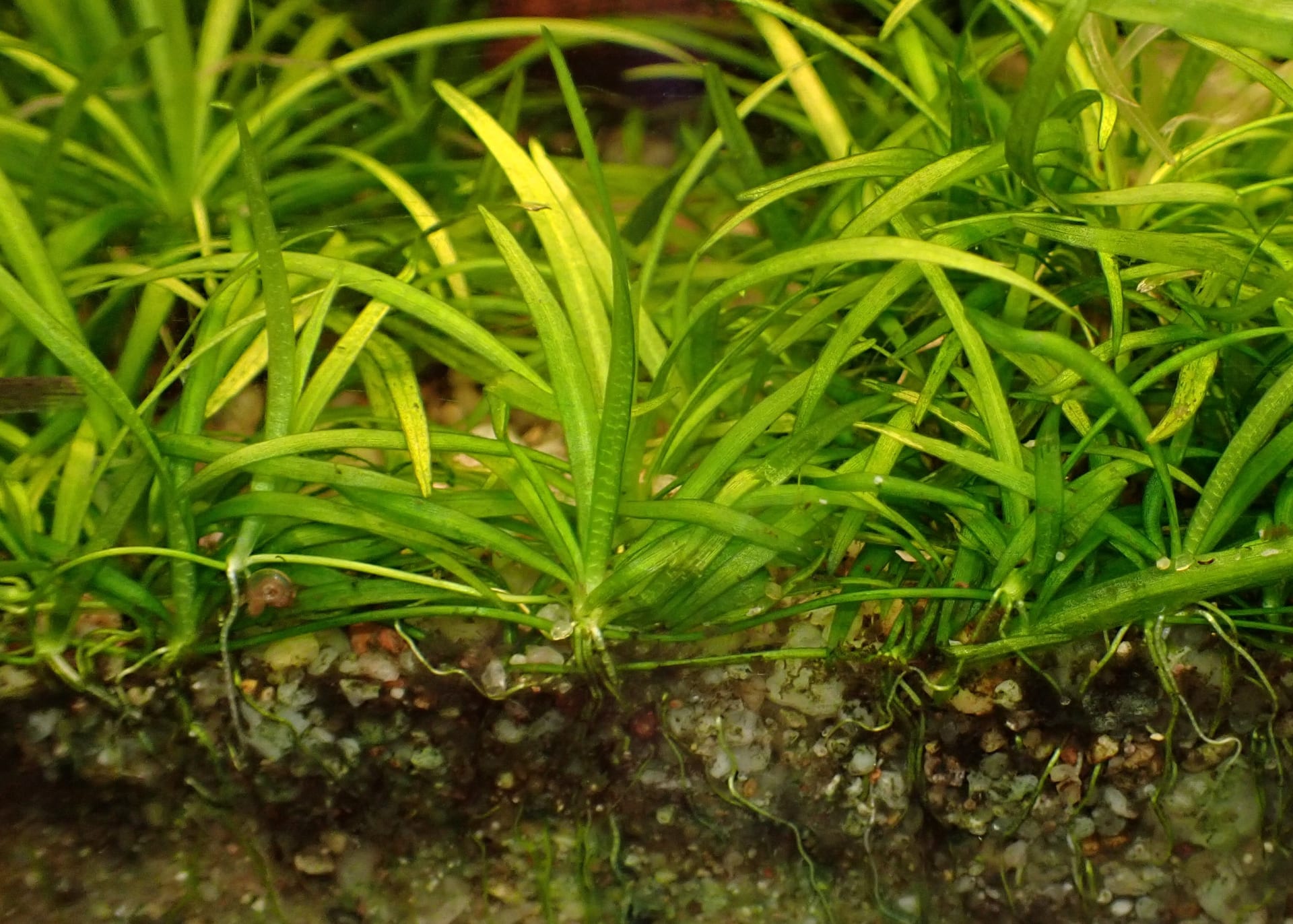
Pygmy chain sword (Helanthium tenellum)
Helanthium tenellum
A small plant with leaves about 1.5 mm wide that spreads by runners into a foreground lawn. Best known by its old name Echinodorus tenellus. It reddens in strong light; a 'Green' form that stays green is also sold.
 © Krzysztof Ziarnek, Kenraiz / CC BY-SA 4.0
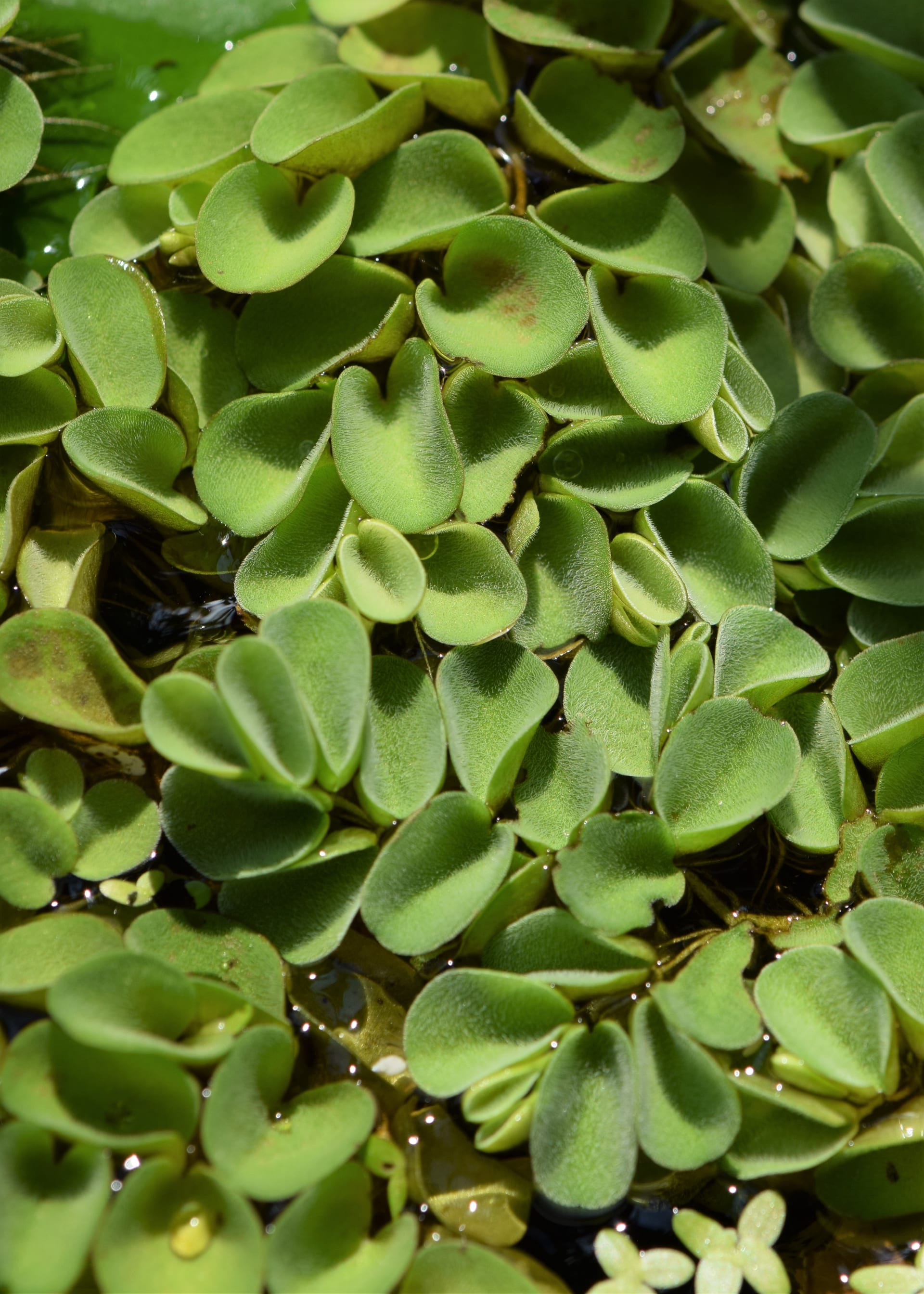
Salvinia cucullata
Salvinia cucullata
A tropical Asian floating fern whose velvety, light green floating leaves curl up like boats or hoods. Well grown it forms thick cushions; under poor conditions the leaves lie flat.
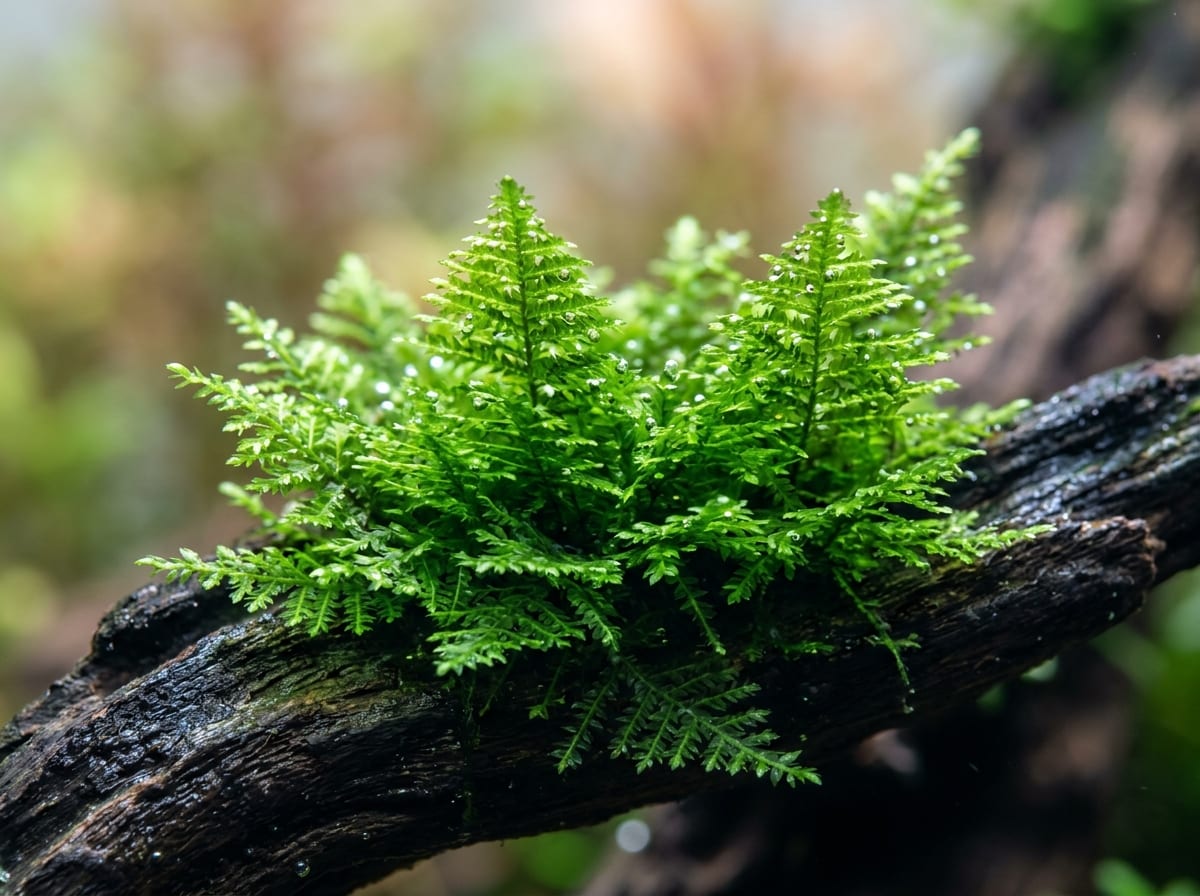
South American moss
Vesicularia sp. (South America)
A full, fairly bright green aquatic moss whose branches spread in neat triangles. Despite the name there is no evidence it comes from South America. It grows in low light without CO2 and is tied onto wood or stone.
 © Krzysztof Ziarnek, Kenraiz / CC BY-SA 4.0
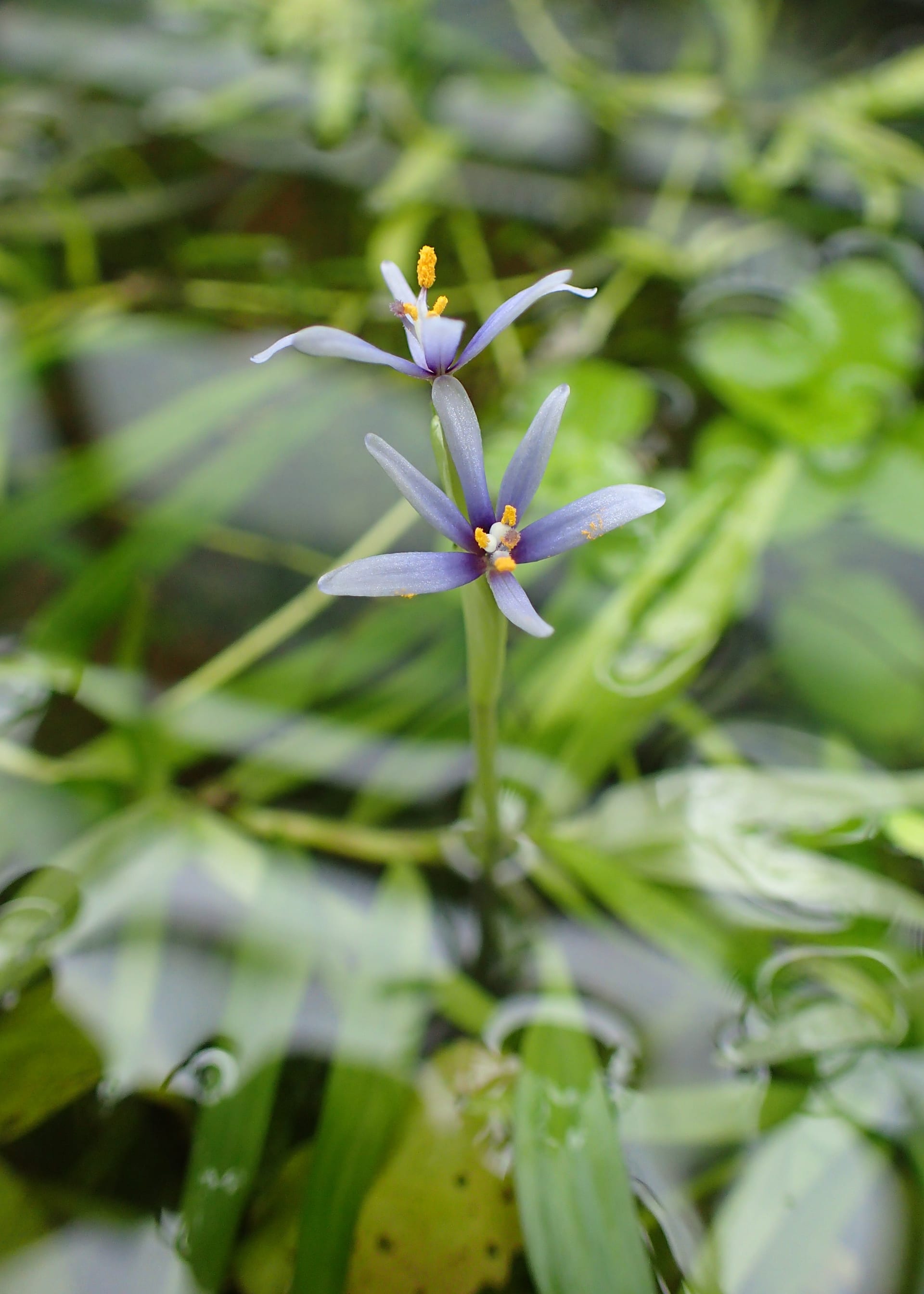
Stargrass
Heteranthera zosterifolia
A Brazilian stem plant with narrow, bright green lanceolate leaves that branches freely into a bush. Easily trimmed to any height, it works from foreground to background, and shoots reaching the surface bear small blue flowers.
Related Content
Aquatic Plant FAQ
- How much do aquatic plants cost?
- Common Rotala and Anubias cost 300-1,000 yen, Bucephalandra 1,000-5,000 yen, and rare wild-collected specimens 5,000-20,000+ yen depending on species.
- Can beginners grow aquatic plants?
- Anubias Nana and Java Moss require no CO2 injection and grow in low light, making them ideal for beginners. Start with hardy shade-loving plants.
- What equipment is needed for aquatic plants?
- A tank, LED light, filter, and aqua soil are the basics. For advanced layouts, CO2 injection and high-performance lighting significantly improve growth and coloration.
- What should I check when buying aquatic plants?
- Ensure leaves are green and healthy, not melting or dying, and free of snails or pests. Tissue-cultured cups are pest-free and reliable.
- Why do aquatic plants die?
- Insufficient light, CO2, or nutrients are the main causes. Each species has different requirements, so matching the environment to your specific plants is essential.